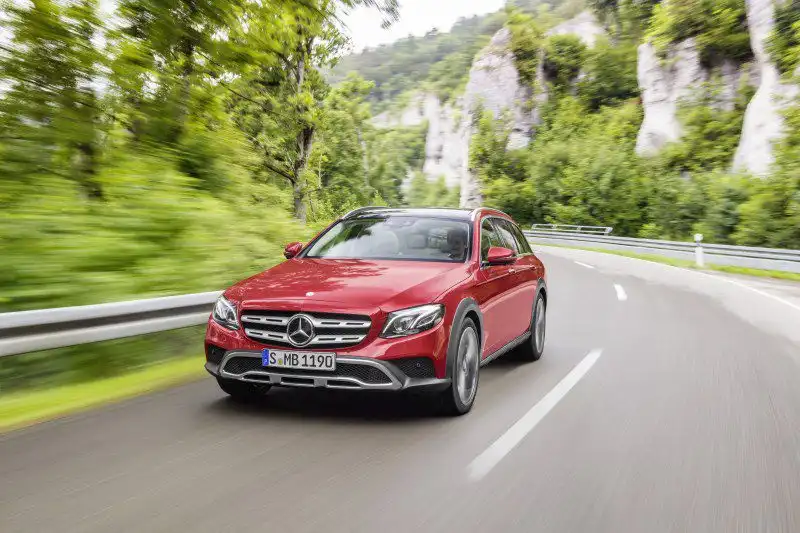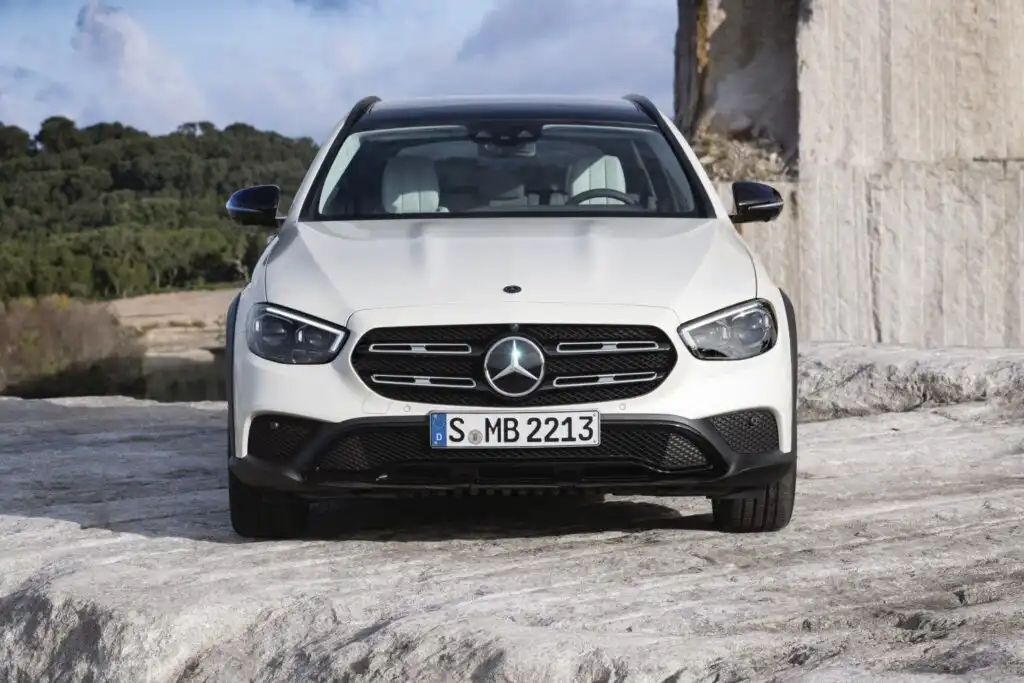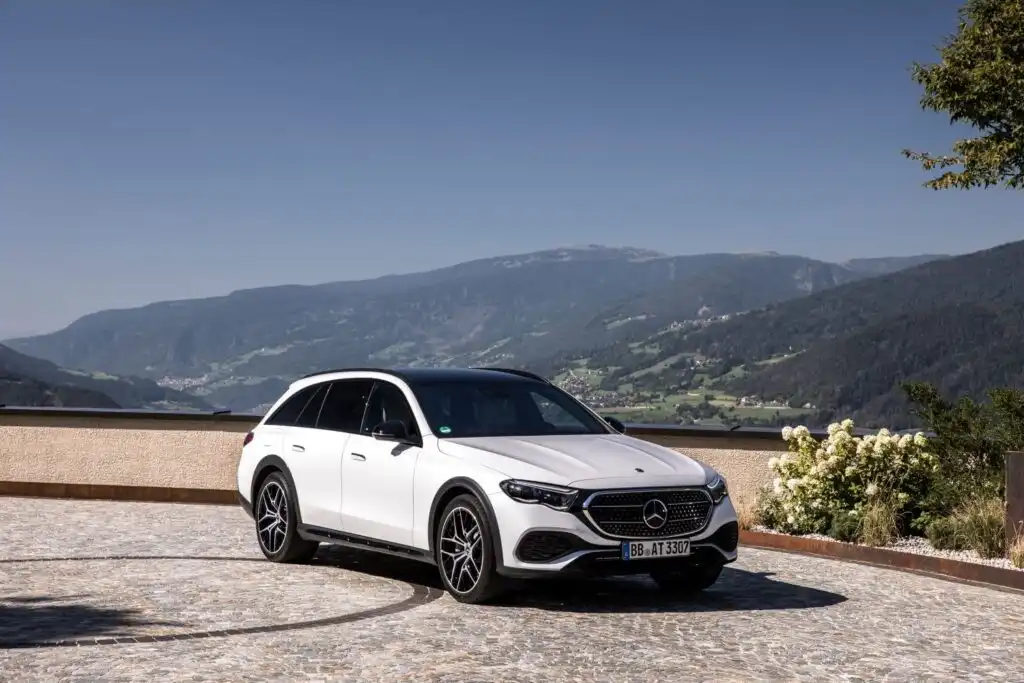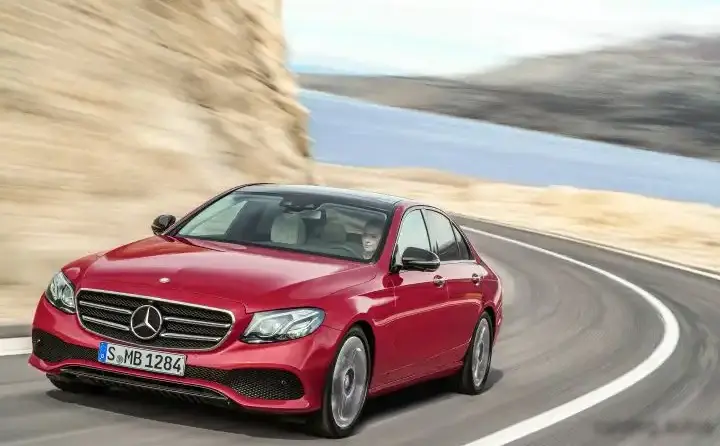
The Mercedes-Benz E 300 (W213), specifically the variant produced from December 2018 to 2020 featuring a 258 horsepower engine with EQ Boost and a 9G-TRONIC automatic transmission, represents a significant step in the evolution of the E-Class. Positioned as a mid-range offering within the W213 generation, it bridged the gap between the more economical base models and the higher-performance AMG variants. This model year marked a key point in Mercedes-Benz’s implementation of mild-hybrid technology, aiming to improve fuel efficiency and reduce emissions without sacrificing the driving experience expected of an E-Class. The W213 E-Class, launched in 2016, aimed to modernize the traditionally conservative E-Class, incorporating design cues from the S-Class and a wealth of advanced technology.
Technical Specifications
| Brand | Mercedes-Benz |
| Model | E-class |
| Generation | E-class (W213) |
| Type | E 300 (258 Hp) EQ Boost 9G-TRONIC |
| Start of production | December, 2018 |
| End of production | 2020 |
| Powertrain Architecture | MHEV (Mild Hybrid Electric Vehicle) |
| Body type | Sedan |
| Seats | 5 |
| Doors | 4 |
| Fuel consumption at Low speed (WLTP) | 6.9 l/100 km (34.1 US mpg, 40.9 UK mpg, 14.5 km/l) |
| Fuel consumption at very high speed (WLTP) | 8 l/100 km (29.4 US mpg, 35.3 UK mpg, 12.5 km/l) |
| CO2 emissions (WLTP) | 158-188 g/km |
| Fuel consumption (economy) – urban | 8.0-8.6 l/100 km (29.4 – 27.4 US mpg, 35.3 – 32.8 UK mpg, 12.5 – 11.6 km/l) |
| Fuel consumption (economy) – extra urban | 5.1-5.4 l/100 km (46.1 – 43.6 US mpg, 55.4 – 52.3 UK mpg, 19.6 – 18.5 km/l) |
| Fuel consumption (economy) – combined | 6.1-6.6 l/100 km (38.6 – 35.6 US mpg, 46.3 – 42.8 UK mpg, 16.4 – 15.2 km/l) |
| CO2 emissions | 140-150 g/km |
| Fuel Type | Petrol (Gasoline) |
| Acceleration 0 – 100 km/h | 6.3 sec |
| Acceleration 0 – 62 mph | 6.3 sec |
| Acceleration 0 – 60 mph | 6 sec |
| Maximum speed | 250 km/h (155.34 mph), Electronically limited |
| Emission standard | Euro 6d-TEMP-EVAP |
| Weight-to-power ratio | 6.1 kg/Hp, 163.3 Hp/tonne |
| Weight-to-torque ratio | 4.3 kg/Nm, 234.2 Nm/tonne |
| Battery voltage | 48 V |
| Electric motor power | 14 Hp |
| Electric motor location | Front, Longitudinal |
| Power | 258 Hp |
| Torque | 370 Nm @ 1800-4000 rpm (272.9 lb.-ft. @ 1800-4000 rpm) |
| Engine layout | Front, Longitudinal |
| Engine Model/Code | M 264 |
| Engine displacement | 1991 cm3 (121.5 cu. in.) |
| Number of cylinders | 4 |
| Engine configuration | Inline |
| Compression ratio | 9.8:1 |
| Number of valves per cylinder | 4 |
| Fuel injection system | Direct injection |
| Engine aspiration | Twin-scroll turbo, Intercooler |
| Valvetrain | DOHC |
| Engine oil capacity | 6.6 l (6.97 US qt, 5.81 UK qt) |
| Coolant | 11 l (11.62 US qt, 9.68 UK qt) |
| Kerb Weight | 1580 kg (3483.3 lbs.) |
| Max. weight | 2295 kg (5059.61 lbs.) |
| Max load | 715 kg (1576.31 lbs.) |
| Trunk (boot) space – minimum | 540 l (19.07 cu. ft.) |
| Fuel tank capacity | 66 l (17.44 US gal, 14.52 UK gal) |
| Permitted trailer load with brakes (12%) | 2100 kg (4629.71 lbs.) |
| Length | 4923 mm (193.82 in.) |
| Width | 1852 mm (72.91 in.) |
| Width including mirrors | 2065 mm (81.3 in.) |
| Height | 1468 mm (57.8 in.) |
| Wheelbase | 2939 mm (115.71 in.) |
| Front overhang | 841 mm (33.11 in.) |
| Rear overhang | 1143 mm (45 in.) |
| Minimum turning circle | 11.6 m (38.06 ft.) |
| Drivetrain Architecture | Rear wheel drive. MHEV. ICE and electric motor drive rear wheels. |
| Number of gears and type of gearbox | 9 gears, automatic transmission G-TRONIC |
| Front suspension | Independent multi-link suspension |
| Rear suspension | Independent multi-link suspension |
| Front brakes | Ventilated discs |
| Rear brakes | Ventilated discs |
Powertrain & Engine Architecture
The heart of the E 300 is the M 264 2.0-liter inline-four cylinder engine. This engine utilizes direct injection and a twin-scroll turbocharger to deliver 258 horsepower and 272.9 lb.-ft. of torque between 1800 and 4000 rpm. The “EQ Boost” system adds a 48-volt mild-hybrid component, integrating a 14 horsepower electric motor. This motor doesn’t provide full electric drive capability but assists the engine during acceleration, allowing for smoother starts and improved fuel economy. The 9G-TRONIC nine-speed automatic transmission is standard, offering quick and seamless gear changes. This transmission is known for its wide gear ratio spread, contributing to both fuel efficiency and responsive acceleration. The engine’s design prioritizes thermal efficiency, featuring an intercooler and optimized combustion chamber geometry.
Driving Characteristics
The E 300 2.0L Automatic delivers a refined and comfortable driving experience. While not as overtly sporty as some of its competitors or the higher-trim E-Class models, it provides ample power for everyday driving and highway cruising. The EQ Boost system provides a noticeable boost during initial acceleration, minimizing turbo lag. The 9G-TRONIC transmission is generally smooth and responsive, although some drivers may find it occasionally hesitant in certain driving situations. Compared to a manual transmission equipped E 300, the automatic prioritizes convenience and ease of use over outright driver engagement. The gear ratios are tuned for efficiency, meaning the engine doesn’t always feel as eager to rev as it might in a more performance-focused application.
Equipment & Trim Levels
The E 300 typically came well-equipped, even in its base form. Standard features included MB-Tex upholstery, automatic climate control, a 12.3-inch digital instrument cluster, and the Mercedes-Benz User Experience (MBUX) infotainment system. Optional extras included leather upholstery, a premium sound system, a panoramic sunroof, and a suite of advanced driver-assistance systems such as adaptive cruise control, lane-keeping assist, and automatic emergency braking. The interior design emphasized luxury and technology, with high-quality materials and a minimalist aesthetic. Trim levels often varied by region, but generally offered packages that bundled popular options together.
Chassis & Braking
The W213 E-Class utilizes an independent multi-link suspension at both the front and rear, providing a comfortable and controlled ride. The suspension is tuned to prioritize comfort over outright sportiness, but still offers good handling characteristics. The E 300 typically features ventilated disc brakes on all four wheels, providing ample stopping power. Anti-lock braking system (ABS) and electronic stability control (ESC) are standard safety features. The steering is electrically assisted, offering a light and precise feel.
Market Reception & Comparison
The E 300 with EQ Boost was generally well-received by automotive critics. It was praised for its refined driving experience, luxurious interior, and advanced technology. Fuel economy was a particular highlight, with the mild-hybrid system contributing to noticeable improvements over previous generations. Compared to the E 350 (with its V6 engine), the E 300 offered a more affordable entry point into the E-Class range, albeit with slightly less power. Compared to the E 220d diesel, the E 300 provided a more responsive and refined driving experience, but at the cost of fuel efficiency.
Legacy
The E 300 (W213) with the M 264 engine and 9G-TRONIC transmission has proven to be a reliable and durable powertrain. The mild-hybrid system, while relatively simple, has generally held up well over time. On the used car market, these models are often sought after for their balance of luxury, technology, and fuel efficiency. Common maintenance items include routine oil changes, brake pad replacements, and occasional sensor replacements. The M 264 engine is known for its relatively low maintenance requirements, making it a practical choice for long-term ownership.