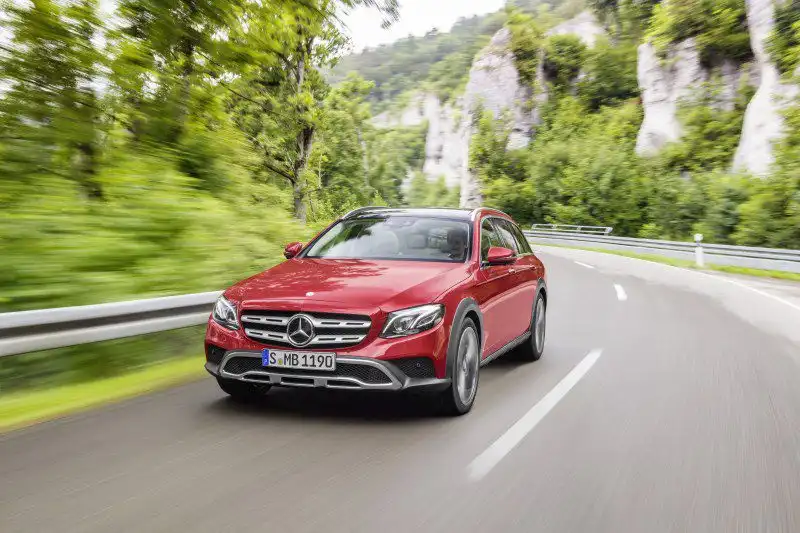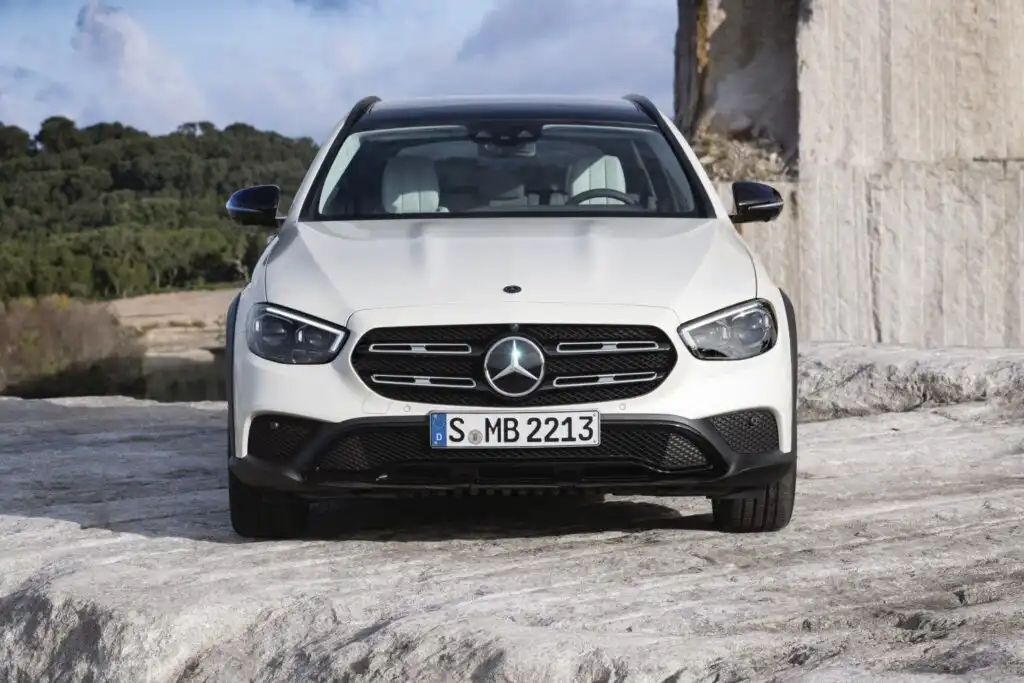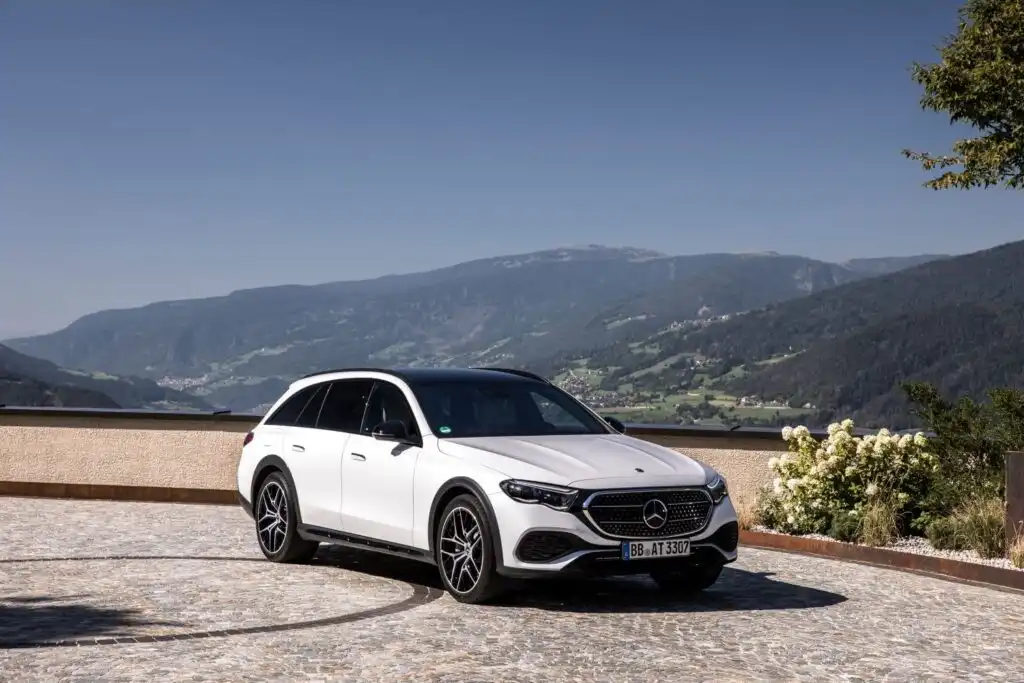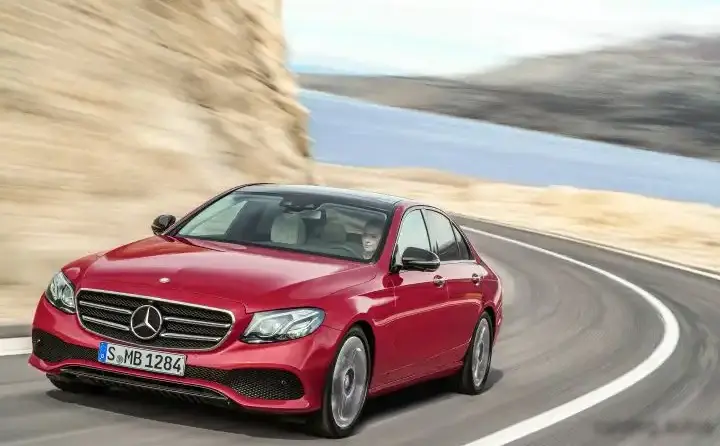
The Mercedes-Benz E 300e, a plug-in hybrid variant of the W213 E-Class, was produced from 2018 to 2020. Positioned as a mid-range offering within the E-Class lineup, it aimed to bridge the gap between traditional gasoline engines and the fully electric EQ models. The E 300e represented Mercedes-Benz’s early foray into offering a practical, everyday electric driving experience combined with the reassurance of a gasoline engine for longer journeys. It was primarily marketed in Europe and other regions with established charging infrastructure, offering a blend of performance, efficiency, and luxury characteristic of the E-Class nameplate.
Technical Specifications
| Brand | Mercedes-Benz |
| Model | E-class |
| Generation | E-class (W213) |
| Type | E 300e (320 Hp) Plug-In Hybrid 9G-TRONIC |
| Start of production | 2018 |
| End of production | 2020 |
| Powertrain Architecture | PHEV (Plug-in Hybrid Electric Vehicle) |
| Body type | Sedan |
| Seats | 5 |
| Doors | 4 |
| Fuel consumption at Low speed (WLTP) | 1.5 l/100 km (156.8 US mpg, 188.3 UK mpg, 66.7 km/l) |
| Fuel consumption at very high speed (WLTP) | 2 l/100 km (117.6 US mpg, 141.2 UK mpg, 50 km/l) |
| CO2 emissions (WLTP) | 35-45 g/km |
| Fuel consumption (economy) – combined | 1.74 l/100 km (135.2 US mpg, 162.3 UK mpg, 57.5 km/l) |
| CO2 emissions | 46 g/km |
| Fuel Type | Petrol / electricity |
| Acceleration 0 – 100 km/h | 5.7 sec |
| Acceleration 0 – 62 mph | 5.7 sec |
| Acceleration 0 – 60 mph | 5.4 sec |
| Maximum speed | 250 km/h (155.34 mph) |
| Emission standard | Euro 6 |
| Weight-to-power ratio | 6.2 kg/Hp, 161.2 Hp/tonne |
| Weight-to-torque ratio | 2.8 kg/Nm, 352.6 Nm/tonne |
| Gross battery capacity | 13.5 kWh |
| Battery technology | Lithium-ion (Li-Ion) |
| Average Energy consumption | 14.5 kWh/100 km (23.34 kWh/100 mi, 144 MPGe, 6.9 km/kWh, 4.3 mi/kWh) |
| Electric motor power | 122 Hp @ 2500 rpm |
| Electric motor Torque | 440 Nm @ 0-2000 rpm (324.53 lb.-ft. @ 0-2000 rpm) |
| Electric motor location | Between the combustion engine and the transmission |
| System power | 320 Hp @ 4500-5500 rpm |
| System torque | 700 Nm (516.29 lb.-ft.) |
| Internal combustion engine Power | 211 Hp @ 5500 rpm |
| Power per litre | 106 Hp/l |
| Torque | 350 Nm @ 1200-4000 rpm (258.15 lb.-ft. @ 1200-4000 rpm) |
| Engine layout | Front, Longitudinal |
| Engine Model/Code | M 274 DE 20 LA |
| Engine displacement | 1991 cm3 (121.5 cu. in.) |
| Number of cylinders | 4 |
| Engine configuration | Inline |
| Compression ratio | 9.8:1 |
| Number of valves per cylinder | 4 |
| Fuel injection system | Direct injection |
| Engine aspiration | Turbocharger |
| Engine oil capacity | 7 l (7.4 US qt | 6.16 UK qt) |
| Kerb Weight | 1985 kg (4376.18 lbs.) |
| Max. weight | 2625 kg (5787.13 lbs.) |
| Max load | 640 kg (1410.96 lbs.) |
| Fuel tank capacity | 60 l (15.85 US gal | 13.2 UK gal) |
| Permitted trailer load with brakes (12%) | 2100 kg (4629.71 lbs.) |
| Permitted trailer load without brakes | 750 kg (1653.47 lbs.) |
| Length | 4923 mm (193.82 in.) |
| Width | 1852 mm (72.91 in.) |
| Width including mirrors | 2065 mm (81.3 in.) |
| Height | 1468 mm (57.8 in.) |
| Wheelbase | 2939 mm (115.71 in.) |
| Front track | 1616 mm (63.62 in.) |
| Rear (Back) track | 1619 mm (63.74 in.) |
| Front overhang | 841 mm (33.11 in.) |
| Rear overhang | 1143 mm (45 in.) |
| Minimum turning circle | 11.60 m (38.06 ft.) |
| Drive wheel | Rear wheel drive |
| Number of gears and type of gearbox | 9 gears, automatic transmission G-TRONIC |
| Front suspension | Independent multi-link suspension |
| Rear suspension | Independent multi-link suspension |
| Front brakes | Ventilated discs |
| Rear brakes | Ventilated discs |
| Assisting systems | ABS (Anti-lock braking system) |
| Steering type | Steering rack and pinion |
| Power steering | Electric Steering |
| Tires size | 245/45 R18; 275/40 R18 |
| Wheel rims size | 18 |
Powertrain & Engine Architecture
The E 300e’s powertrain centers around a 2.0-liter turbocharged inline-four cylinder engine (M 274 DE 20 LA) paired with a 122 hp electric motor. The internal combustion engine produces 211 hp and 350 Nm of torque, while the electric motor contributes 440 Nm of torque. Combined, the system delivers a total output of 320 hp and 700 Nm of torque. The engine utilizes direct fuel injection and a single turbocharger to maximize efficiency and power. The electric motor is integrated between the engine and the 9G-TRONIC nine-speed automatic transmission, allowing for both electric-only driving and power assistance during acceleration. The 13.5 kWh lithium-ion battery pack is positioned under the rear seats, minimizing impact on cabin space. The 9G-TRONIC transmission is specifically calibrated for hybrid operation, offering smooth shifts and optimized gear ratios for both fuel efficiency and performance.
Driving Characteristics
The E 300e offers a refined driving experience, with the ability to operate in various modes – Electric, Hybrid, and Sport. In Electric mode, the car can travel up to approximately 30-40 miles on a full charge, depending on driving conditions. The instant torque from the electric motor provides brisk acceleration in urban environments. In Hybrid mode, the system intelligently manages the interplay between the engine and motor, prioritizing efficiency. The Sport mode maximizes performance, utilizing both power sources for quicker acceleration. Compared to the standard E 300 with a gasoline engine, the E 300e offers similar overall performance, with a slight advantage in low-speed acceleration due to the electric motor’s instant torque. However, the added weight of the battery pack does slightly impact handling agility compared to lighter E-Class models. The 9G-TRONIC transmission provides smooth and responsive gear changes, contributing to a comfortable ride.
Equipment & Trim Levels
The E 300e typically came well-equipped, reflecting its position as a premium model. Standard features included Mercedes-Benz’s MBUX infotainment system with a large touchscreen display, leather upholstery, automatic climate control, and a suite of safety features such as adaptive cruise control, lane keeping assist, and automatic emergency braking. Optional extras included a premium sound system, panoramic sunroof, head-up display, and various interior trim options. The E 300e was often offered with AMG Line styling packages, which added sportier exterior and interior elements. Interior color schemes were typically conservative, with black, grey, and beige options being the most common.
Chassis & Braking
The E 300e utilizes a sophisticated chassis design featuring an independent multi-link suspension at both the front and rear. This setup provides a comfortable ride and good handling characteristics. The suspension is tuned to accommodate the added weight of the battery pack. Braking duties are handled by ventilated disc brakes on all four wheels, providing ample stopping power. The regenerative braking system captures energy during deceleration, helping to recharge the battery and improve efficiency. The E 300e typically features electric power steering, offering precise and responsive steering feel.
Market Reception & Comparison
The E 300e was generally well-received by automotive critics, who praised its fuel efficiency, refined driving experience, and luxurious interior. However, some reviewers noted the added weight of the battery pack and the limited all-electric range compared to some competitors. Compared to the E 300 with a traditional gasoline engine, the E 300e offered significantly better fuel economy, particularly in urban driving conditions. It also provided the benefit of zero-emission driving for shorter commutes. Compared to other plug-in hybrid models in its class, the E 300e offered a compelling combination of performance, luxury, and efficiency.
Legacy
The E 300e represents an important step in Mercedes-Benz’s transition towards electrification. While production was relatively short-lived, the model helped to pave the way for the company’s broader range of plug-in hybrid and fully electric vehicles. The powertrain, while not without its complexities, has proven to be reasonably reliable in real-world use. On the used car market, the E 300e remains a desirable option for buyers seeking a luxurious and efficient sedan with the added benefit of plug-in hybrid technology. Battery health is a key consideration for potential buyers, as battery capacity degrades over time. However, with proper maintenance and care, the E 300e can provide many years of reliable service.