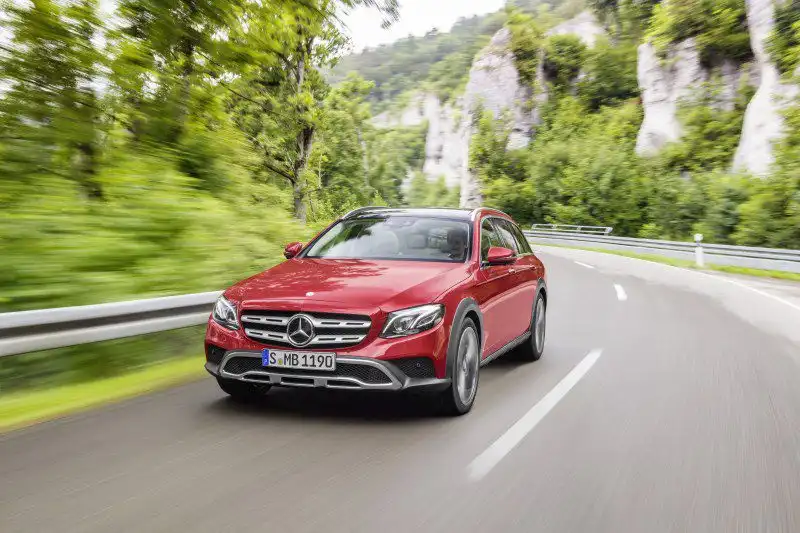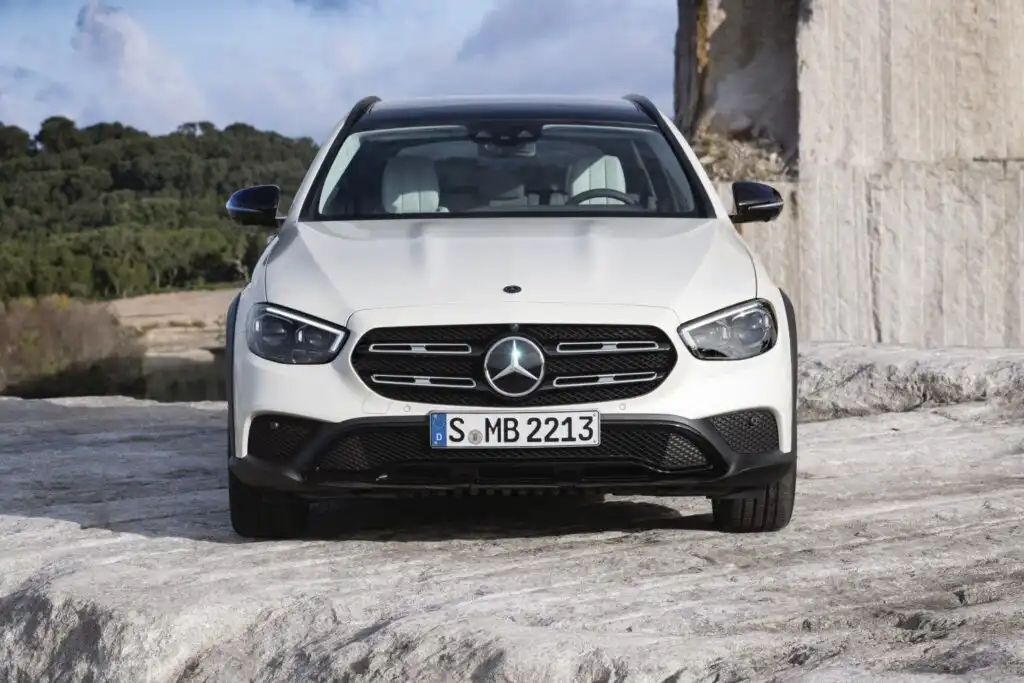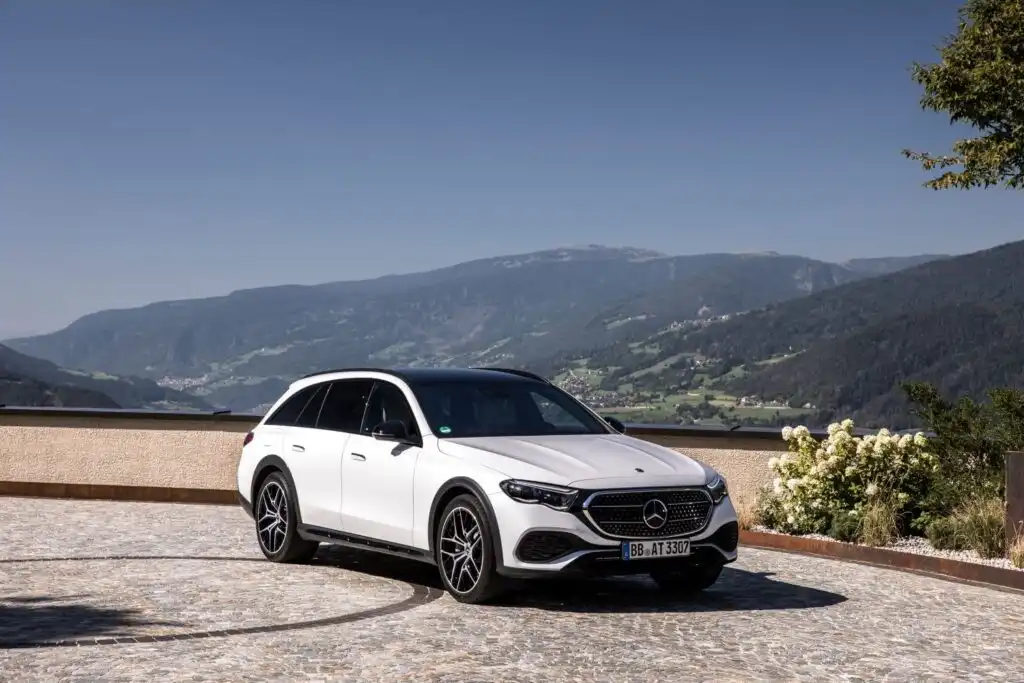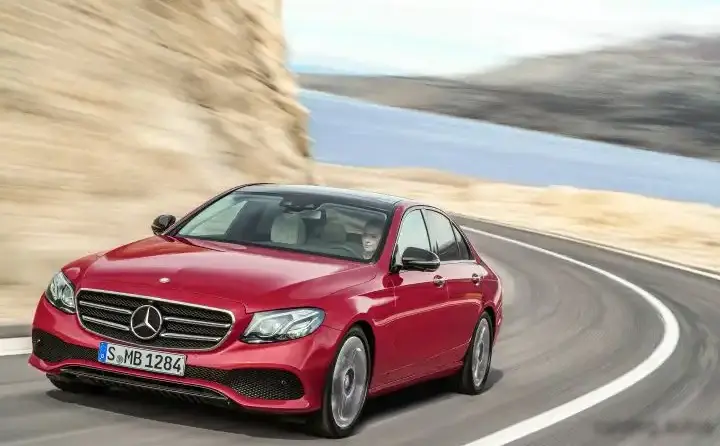
The Mercedes-Benz E 350e, a plug-in hybrid variant of the W213 E-Class, was produced from July 2016 to April 2018. Positioned as a mid-range offering within the fifth generation E-Class (W213) lineup, it aimed to provide a balance between luxury, performance, and fuel efficiency. The E 350e represented Mercedes-Benz’s early foray into more widespread electrification, offering a compelling alternative to traditional gasoline-powered E-Class models, particularly in markets with increasing environmental regulations and incentives for hybrid vehicles. It utilized a combination of a turbocharged four-cylinder gasoline engine and an electric motor, offering both all-electric driving capability and the extended range of a conventional hybrid.
Technical Specifications
| Brand | Mercedes-Benz |
| Model | E-class |
| Generation | E-class (W213) |
| Type | E 350e (286 Hp) Plug-in Hybrid 9G-TRONIC |
| Start of production | July, 2016 |
| End of production | April, 2018 |
| Powertrain Architecture | PHEV (Plug-in Hybrid Electric Vehicle) |
| Body type | Sedan |
| Seats | 5 |
| Doors | 4 |
| Fuel consumption (combined) | 2.1-2.5 l/100 km (112 – 94.1 US mpg, 134.5 – 113 UK mpg, 47.6 – 40 km/l) |
| CO2 emissions | 49-57 g/km |
| Fuel Type | Petrol / electricity |
| Acceleration 0 – 100 km/h | 6.2 sec |
| Acceleration 0 – 62 mph | 6.2 sec |
| Acceleration 0 – 60 mph | 5.9 sec |
| Maximum speed | 250 km/h (155.34 mph) |
| Emission standard | Euro 6 |
| Weight-to-power ratio | 6.5 kg/Hp, 154.6 Hp/tonne |
| Weight-to-torque ratio | 3.4 kg/Nm, 297.3 Nm/tonne |
| Gross battery capacity | 6.2 kWh |
| Battery technology | Lithium-ion (Li-Ion) |
| Battery weight | 100 kg (220.46 lbs) |
| Battery location | Inside the trunk |
| All-electric range | 33 km (20.51 mi) |
| Average Energy consumption | 11.5 kWh/100 km (18.51 kWh/100 mi, 182 MPGe, 8.7 km/kWh, 5.4 mi/kWh) |
| Max speed (electric) | 130 km/h (80.78 mph) |
| Electric motor power | 88 Hp |
| Electric motor Torque | 440 Nm @ 0-1000 rpm (324.53 lb.-ft. @ 0-1000 rpm) |
| Electric motor location | Between the combustion engine and the transmission |
| System power | 286 Hp |
| System torque | 550 Nm (405.66 lb.-ft.) |
| Engine Power | 211 Hp @ 5500 rpm |
| Power per litre | 106 Hp/l |
| Engine Torque | 350 Nm @ 1200-4000 rpm (258.15 lb.-ft. @ 1200-4000 rpm) |
| Engine layout | Front, Longitudinal |
| Engine Model/Code | M 274.920 |
| Engine displacement | 1991 cm3 (121.5 cu. in.) |
| Number of cylinders | 4 |
| Engine configuration | Inline |
| Cylinder Bore | 83 mm (3.27 in.) |
| Piston Stroke | 92 mm (3.62 in.) |
| Compression ratio | 9.8:1 |
| Number of valves per cylinder | 4 |
| Fuel injection system | Direct injection |
| Engine aspiration | Turbocharger, Intercooler |
| Valvetrain | DOHC |
| Engine oil capacity | 7 l (7.4 US qt | 6.16 UK qt) |
| Coolant | 9 l (9.51 US qt | 7.92 UK qt) |
| Kerb Weight | 1850 kg (4078.55 lbs) |
| Max. weight | 2565 kg (5654.86 lbs) |
| Max load | 715 kg (1576.31 lbs) |
| Trunk (boot) space – minimum | 450 l (15.89 cu. ft.) |
| Trunk (boot) space – maximum | 1470 l (51.91 cu. ft.) |
| Fuel tank capacity | 50 l (13.21 US gal | 11 UK gal) |
| Max. roof load | 100 kg (220.46 lbs) |
| Permitted trailer load with brakes (12%) | 2100 kg (4629.71 lbs) |
| Permitted trailer load without brakes | 750 kg (1653.47 lbs) |
| Length | 4923 mm (193.82 in.) |
| Width | 1852 mm (72.91 in.) |
| Width including mirrors | 2065 mm (81.3 in.) |
| Height | 1468 mm (57.8 in.) |
| Wheelbase | 2939 mm (115.71 in.) |
| Rear (Back) track | 1619 mm (63.74 in.) |
| Front overhang | 841 mm (33.11 in.) |
| Rear overhang | 1143 mm (45 in.) |
| Drag coefficient (Cd) | 0.26 |
| Minimum turning circle | 11.6 m (38.06 ft.) |
| Front suspension | Double wishbone, Transverse stabilizer, Air suspension |
| Rear suspension | Independent multi-link suspension, Air suspension, Transverse stabilizer |
| Front brakes | Ventilated discs |
| Rear brakes | Ventilated discs |
| Gearbox | 9 gears, automatic transmission G-TRONIC |
Powertrain & Engine Architecture
The E 350e’s powertrain centers around the M 274.920 2.0-liter inline-four cylinder gasoline engine, turbocharged and direct-injected. This engine produces 211 horsepower at 5500 rpm and 350 Nm (258 lb-ft) of torque between 1200 and 4000 rpm. Coupled with this is an 88 horsepower electric motor, generating 440 Nm (325 lb-ft) of torque available instantly from 0-1000 rpm. The electric motor is integrated between the engine and the 9G-TRONIC nine-speed automatic transmission. The combined system output is 286 horsepower and 550 Nm (406 lb-ft) of torque. The 6.2 kWh lithium-ion battery pack is located under the trunk floor, reducing cargo capacity compared to non-hybrid E-Class models. The engine utilizes a sophisticated direct injection system and a turbocharger with an intercooler to optimize performance and efficiency. The 9G-TRONIC transmission is specifically calibrated to work seamlessly with the electric motor, providing smooth transitions between electric, hybrid, and gasoline power modes.
Driving Characteristics
The E 350e offers a unique driving experience. In pure electric mode, it can travel up to 33 kilometers (20.5 miles) on the NEDC cycle, making it suitable for short commutes. The instant torque from the electric motor provides brisk acceleration from a standstill. When the battery is depleted or more power is needed, the gasoline engine seamlessly kicks in. The combined power output delivers a 0-60 mph time of around 5.9 seconds. Compared to the E 300 (with a similar engine but without the hybrid system), the E 350e feels slightly heavier due to the battery pack, but the added torque from the electric motor compensates for this, particularly at lower speeds. The 9G-TRONIC transmission is well-tuned, offering smooth and responsive gear changes. The hybrid system prioritizes efficiency, and the car generally feels more relaxed and refined than higher-performance E-Class variants.
Equipment & Trim Levels
The E 350e typically came well-equipped, reflecting its position as a premium model. Standard features included leather upholstery, automatic climate control, a high-resolution infotainment system with navigation, and a suite of driver-assistance technologies such as adaptive cruise control and lane-keeping assist. Optional extras included a premium sound system, a panoramic sunroof, and upgraded interior trim materials. The interior design mirrored that of other W213 E-Class models, with a focus on luxury and technology. The dashboard featured a dual-screen display, and the ambient lighting system allowed for customization. Specific trim packages, such as AMG Line, were available to enhance the exterior and interior styling.
Chassis & Braking
The E 350e utilizes a sophisticated chassis design, featuring a double-wishbone front suspension and an independent multi-link rear suspension. Air suspension was often included, providing a comfortable ride and adjustable ride height. Ventilated disc brakes are used on all four wheels, providing ample stopping power. The car is equipped with ABS, electronic stability control, and other advanced safety systems. The added weight of the battery pack necessitated a slightly stiffer suspension setup compared to some other E-Class models, but the air suspension helped to mitigate this and maintain a comfortable ride quality.
Market Reception & Comparison
The E 350e was generally well-received by critics, who praised its fuel efficiency, smooth ride, and refined driving experience. However, some reviewers noted the reduced trunk space due to the battery pack. Compared to the E 300, the E 350e offered lower running costs and the ability to drive in all-electric mode, but it came at a higher purchase price. Against competitors like the BMW 330e and the Volvo XC60 T8, the E 350e offered a compelling combination of luxury, performance, and efficiency. Its real-world fuel economy varied depending on driving conditions and charging habits, but it consistently outperformed traditional gasoline-powered E-Class models in terms of fuel consumption.
Legacy
The E 350e represented an important step in Mercedes-Benz’s electrification strategy. While its production run was relatively short, it paved the way for the more advanced plug-in hybrid models that followed. The powertrain proved to be generally reliable, with few widespread issues reported. On the used car market, the E 350e remains a desirable option for buyers seeking a luxurious and fuel-efficient sedan. The battery pack’s longevity is a key consideration for potential buyers, but with proper maintenance, it can provide many years of reliable service. The E 350e’s blend of comfort, technology, and efficiency continues to appeal to a wide range of drivers.