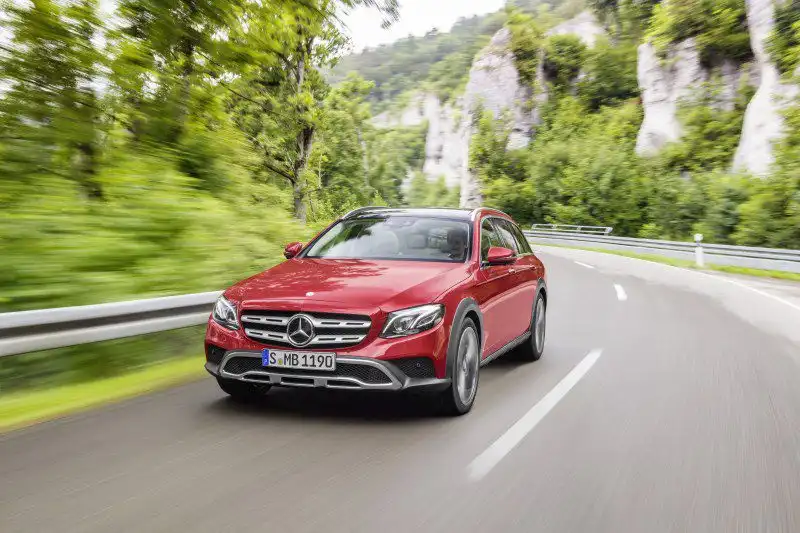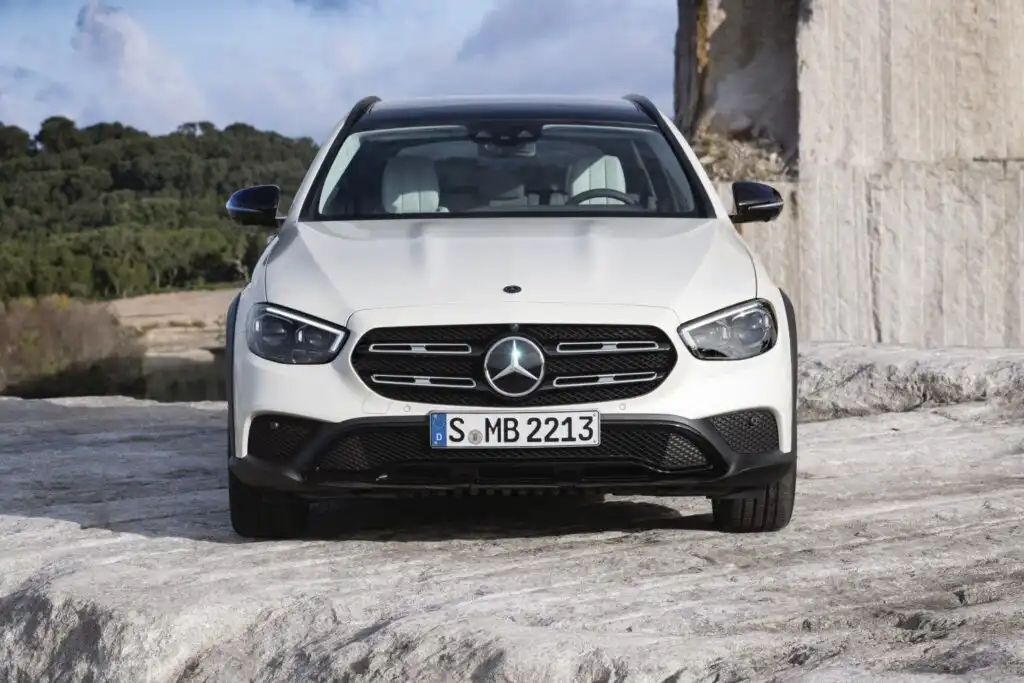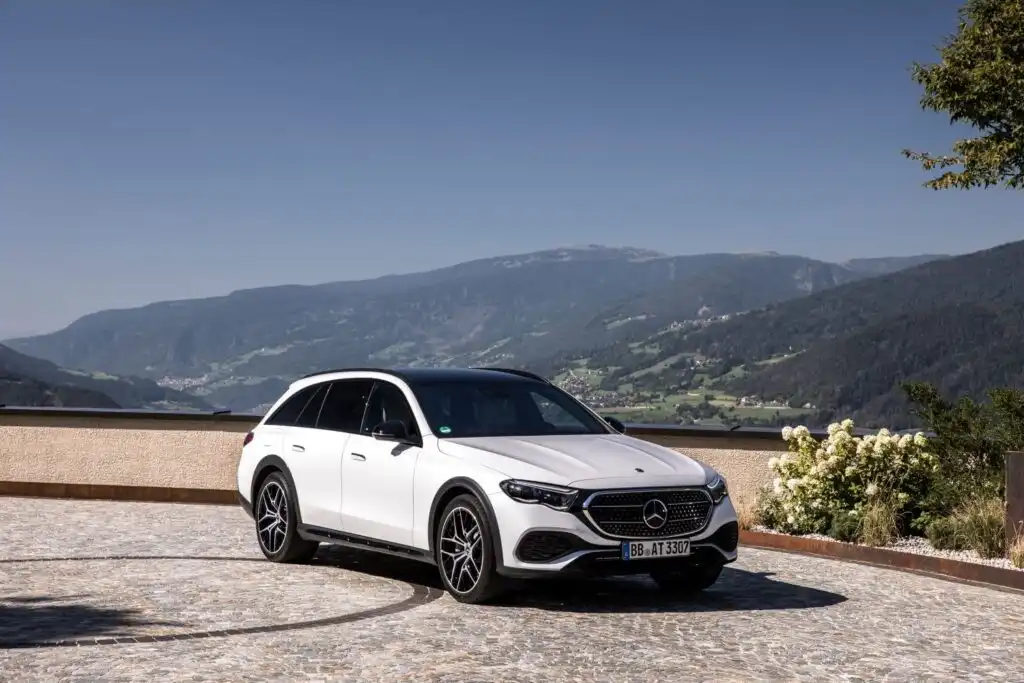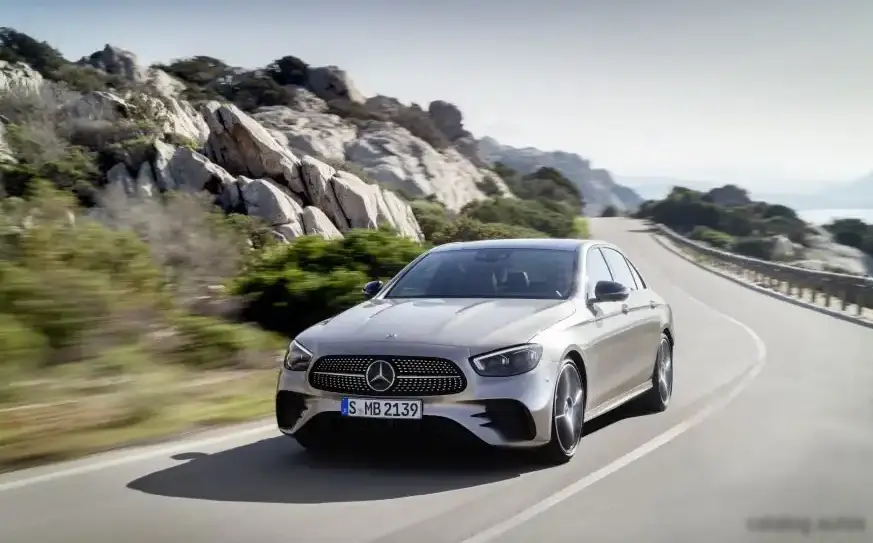
The Mercedes-Benz E 200 4MATIC, produced from 2020 to 2023 as part of the W213 facelift generation, represents a key entry point into the E-Class range. This variant combines a 2.0-liter turbocharged inline-four engine with a 48-volt mild hybrid system (EQ Boost) and a nine-speed 9G-TRONIC automatic transmission, coupled with Mercedes’ 4MATIC all-wheel-drive system. Positioned as a balance between efficiency and performance, the E 200 4MATIC aimed to deliver a comfortable and technologically advanced driving experience for a broad customer base in European and global markets.
Technical Specifications
| Brand | Mercedes-Benz |
| Model | E-class |
| Generation | E-class (W213, facelift 2020) |
| Type | E 200 (197 Hp) EQ Boost 4MATIC 9G-TRONIC |
| Start of production | 2020 |
| End of production | 2023 |
| Powertrain Architecture | MHEV (Mild Hybrid Electric Vehicle) |
| Body type | Sedan |
| Seats | 5 |
| Doors | 4 |
| Fuel consumption (urban) | 9.2-9.6 l/100 km (25.6 – 24.5 US mpg) |
| Fuel consumption (extra urban) | 5.6-6.1 l/100 km (42 – 38.6 US mpg) |
| Fuel consumption (combined) | 7.0-7.3 l/100 km (33.6 – 32.2 US mpg) |
| CO2 emissions | 159-159 g/km |
| Fuel Type | Petrol (Gasoline) |
| Acceleration 0 – 100 km/h | 7.6 sec |
| Acceleration 0 – 62 mph | 7.6 sec |
| Acceleration 0 – 60 mph | 7.2 sec |
| Maximum speed | 232 km/h (144.16 mph) |
| Emission standard | Euro 6d-ISC-FCM |
| Weight-to-power ratio | 8.6 kg/Hp |
| Weight-to-torque ratio | 5.3 kg/Nm |
| Battery voltage | 48 V |
| Electric motor power | 14 Hp |
| Power | 197 Hp @ 5500-6100 rpm |
| Torque | 320 Nm @ 1650-4000 rpm (236.02 lb.-ft.) |
| Engine layout | Front, Longitudinal |
| Engine Model/Code | M 264 |
| Engine displacement | 1991 cm3 (121.5 cu. in.) |
| Number of cylinders | 4 |
| Engine configuration | Inline |
| Compression ratio | 10.5:1 |
| Fuel injection system | Direct injection |
| Engine aspiration | Twin-scroll turbo, Intercooler |
| Valvetrain | DOHC |
| Engine oil capacity | 6 l (6.34 US qt | 5.28 UK qt) |
| Kerb Weight | 1690 kg (3725.81 lbs.) |
| Max. weight | 2425 kg (5346.21 lbs.) |
| Max load | 735 kg (1620.4 lbs.) |
| Trunk (boot) space (minimum) | 540 l (19.07 cu. ft.) |
| Fuel tank capacity | 50 l (13.21 US gal | 11 UK gal) |
| Permitted trailer load (with brakes) | 2100 kg (4629.71 lbs.) |
| Permitted trailer load (without brakes) | 750 kg (1653.47 lbs.) |
| Length | 4935 mm (194.29 in.) |
| Width | 1852 mm (72.91 in.) |
| Width including mirrors | 2065 mm (81.3 in.) |
| Height | 1460 mm (57.48 in.) |
| Wheelbase | 2939 mm (115.71 in.) |
| Front track | 1604 mm (63.15 in.) |
| Rear track | 1608 mm (63.31 in.) |
| Front overhang | 853 mm (33.58 in.) |
| Rear overhang | 1143 mm (45 in.) |
| Minimum turning circle | 11.60 m (38.06 ft.) |
| Drivetrain Architecture | All wheel drive (4×4) |
| Number of gears | 9 |
| Gearbox type | Automatic transmission G-TRONIC |
| Front brakes | Ventilated discs |
| Rear brakes | Ventilated discs |
INTRODUCTION
The W213 facelift E-Class, launched in 2020, brought a significant refresh to Mercedes-Benz’s mid-size executive car. The E 200 4MATIC variant, powered by the M 264 engine, served as a crucial volume seller, offering a blend of luxury, technology, and reasonable running costs. It occupied the lower-mid range of the E-Class lineup, sitting below the more powerful E 300 and AMG models, but offering a more accessible price point than the diesel variants. The introduction of the 48V EQ Boost system marked a step towards electrification, enhancing both fuel efficiency and driving refinement.
Powertrain & Engine Architecture
At the heart of the E 200 4MATIC lies the M 264 2.0-liter inline-four cylinder engine. This engine is a key component of Mercedes-Benz’s modular engine family, known for its efficiency and advanced technology. It features direct fuel injection, a twin-scroll turbocharger, and an intercooler to maximize power output and minimize turbo lag. The engine’s aluminum block and head contribute to weight reduction. The M 264 engine produces 197 horsepower at 5500-6100 rpm and 320 Nm (236 lb-ft) of torque between 1650 and 4000 rpm.
The EQ Boost system adds a 48-volt integrated starter-generator (ISG). This ISG not only enables a smoother and quieter start/stop function but also provides a temporary power boost of up to 14 horsepower and 150 Nm (111 lb-ft). This electric assistance fills in torque gaps during acceleration, improving responsiveness. The 9G-TRONIC nine-speed automatic transmission is standard, offering smooth and efficient gear changes. The transmission is designed for both comfort and performance, with closely spaced gear ratios to keep the engine in its optimal power band. The 4MATIC all-wheel-drive system distributes power between the front and rear axles as needed, providing enhanced traction and stability in all weather conditions.
Driving Characteristics
The E 200 4MATIC delivers a refined and comfortable driving experience. While not overtly sporty, the combination of the turbocharged engine, EQ Boost, and 9G-TRONIC transmission provides adequate performance for everyday driving and highway cruising. Acceleration from 0 to 100 km/h (0-62 mph) takes approximately 7.6 seconds. The EQ Boost system is particularly noticeable during initial acceleration and overtaking maneuvers, providing a subtle but effective power boost. Compared to the more powerful E 300, the E 200 feels less urgent, but the difference is not dramatic. The 9G-TRONIC transmission shifts smoothly and efficiently, contributing to a relaxed driving experience. The 4MATIC system provides confident handling in various conditions, enhancing stability and grip.
Equipment & Trim Levels
The E 200 4MATIC typically came well-equipped as standard, reflecting the E-Class’s position as a premium vehicle. Standard features included Mercedes-Benz User Experience (MBUX) infotainment system with a touchscreen display, leather upholstery, automatic climate control, and a suite of safety features such as adaptive cruise control, lane keeping assist, and automatic emergency braking. Optional extras included a larger touchscreen display, premium sound system, panoramic sunroof, and various driver assistance packages. Interior trim options ranged from wood veneers to aluminum accents, allowing customers to personalize the cabin to their preferences.
Chassis & Braking
The W213 E-Class features a sophisticated chassis design focused on comfort and handling. The front suspension utilizes a four-link independent setup, while the rear suspension employs a multi-link independent design. This configuration provides a smooth and controlled ride. The E 200 4MATIC is equipped with ventilated disc brakes on all four wheels, providing ample stopping power. Anti-lock braking system (ABS), electronic stability control (ESC), and brake assist are standard safety features. The suspension tuning is generally geared towards comfort, but the chassis remains stable and predictable during cornering.
Market Reception & Comparison
The E 200 4MATIC was generally well-received by automotive critics. It was praised for its comfortable ride, refined interior, and advanced technology. The EQ Boost system was seen as a positive addition, enhancing fuel efficiency and responsiveness. Compared to the E 300, the E 200 offered a more affordable entry point into the E-Class range, making it attractive to a wider range of buyers. Fuel economy figures of around 7.0-7.3 l/100 km (33.6-32.2 US mpg) were competitive for its class. Reliability reports have been generally positive, with the M 264 engine proving to be a robust and dependable unit.
Legacy
The E 200 4MATIC (W213 facelift) represents a significant step in Mercedes-Benz’s transition towards electrification. The introduction of the 48V EQ Boost system paved the way for more advanced hybrid and electric powertrains. On the used car market, these models are sought after for their blend of luxury, technology, and reasonable running costs. The M 264 engine has proven to be a reliable and durable unit, making the E 200 4MATIC a sensible choice for buyers looking for a well-equipped and dependable executive car. Its continued presence in the used car market demonstrates its enduring appeal and the quality of engineering that defines the Mercedes-Benz E-Class.