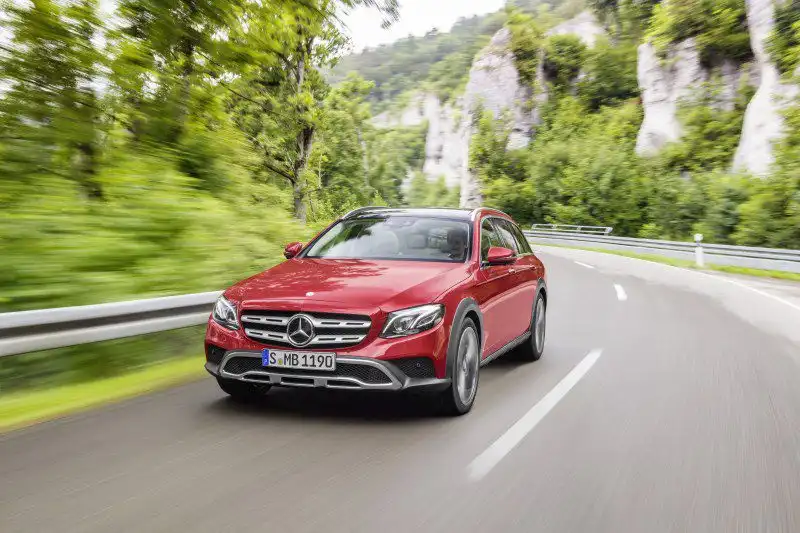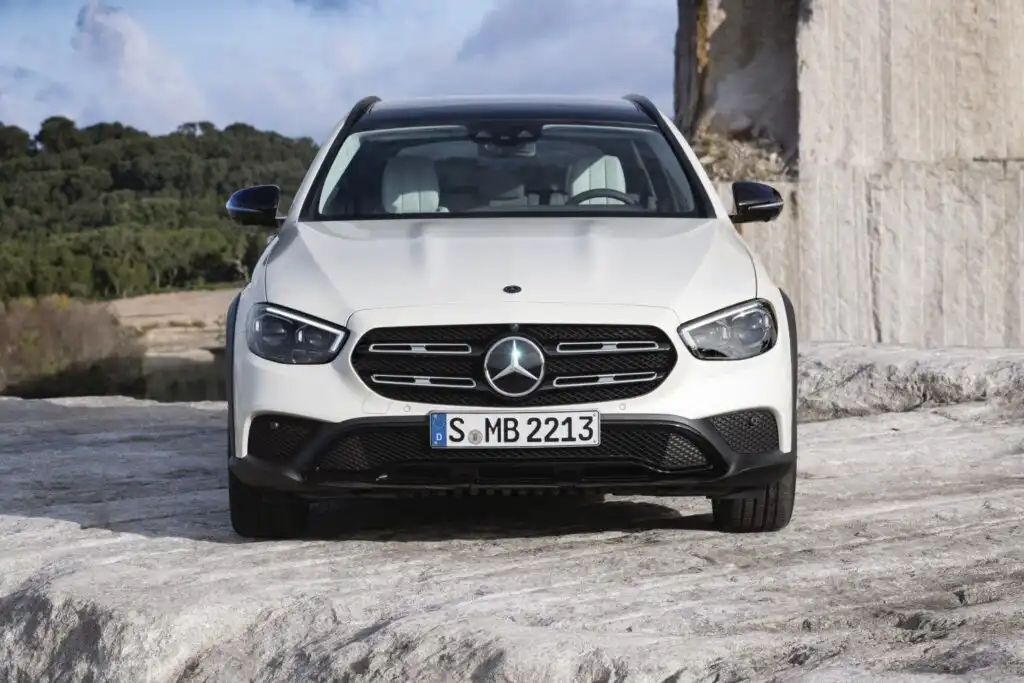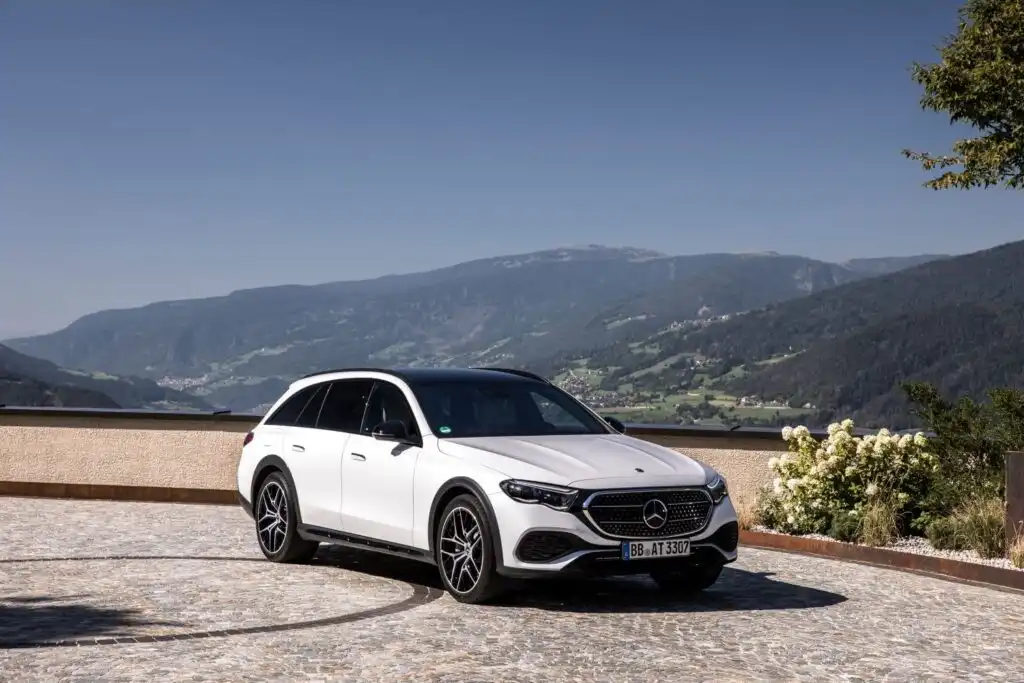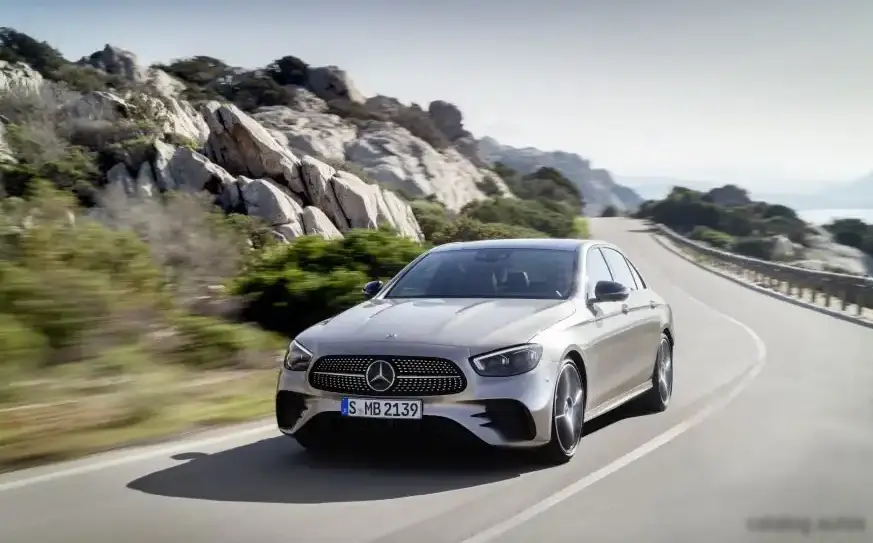
The Mercedes-Benz E 300de, introduced in June 2020 as part of the W213 facelift, represents a significant step in the brand’s push towards electrified luxury. This plug-in hybrid (PHEV) variant combines a diesel engine with an electric motor, offering a blend of efficiency, performance, and reduced emissions. Production continued through 2023, positioning the E 300de as a key model within the E-Class range, particularly in European markets where diesel-electric hybrids were highly favored. It sits as a premium offering, bridging the gap between traditional combustion engine E-Class models and fully electric alternatives.
Technical Specifications
| Brand | Mercedes-Benz |
| Model | E-class |
| Generation | E-class (W213, facelift 2020) |
| Type (Engine) | E 300de (306 Hp) Plug-in Hybrid 9G-TRONIC |
| Start of production | June, 2020 |
| End of production | 2023 |
| Powertrain Architecture | PHEV (Plug-in Hybrid Electric Vehicle) |
| Body type | Sedan |
| Seats | 5 |
| Doors | 4 |
| Combined fuel consumption (WLTP) | 1.2-1.6 l/100 km (196 – 147 US mpg, 235.4 – 176.6 UK mpg, 83.3 – 62.5 km/l) |
| CO2 emissions (WLTP) | 32-41 g/km |
| Fuel consumption (economy) – combined (NEDC) | 1.4 l/100 km (168 US mpg, 201.8 UK mpg, 71.4 km/l) |
| CO2 emissions (NEDC) | 38 g/km |
| Fuel Type | Diesel / electricity |
| Acceleration 0 – 100 km/h | 5.9 sec |
| Acceleration 0 – 62 mph | 5.9 sec |
| Acceleration 0 – 60 mph | 5.6 sec |
| Maximum speed | 235 km/h (146.02 mph) |
| Emission standard | EURO 6d-ISC-FCM |
| Weight-to-power ratio | 6.5 kg/Hp, 154.2 Hp/tonne |
| Weight-to-torque ratio | 2.8 kg/Nm, 352.6 Nm/tonne |
| Gross battery capacity | 13.5 kWh |
| Net (usable) battery capacity | 9.3 kWh |
| Battery technology | Lithium-ion (Li-Ion) |
| Battery location | Inside the trunk |
| All-electric range (WLTP) | 48-55 km (29.83 – 34.18 mi) |
| All-electric range (NEDC) | 59 km (36.66 mi) |
| Average Energy consumption (WLTP) | 16.1-17.4 kWh/100 km (25.91 – 28 kWh/100 mi, 130 – 120 MPGe, 6.2 – 5.7 km/kWh, 3.9 – 3.6 mi/kWh) |
| Average Energy consumption (NEDC) | 15.5 kWh/100 km (24.94 kWh/100 mi, 135 MPGe, 6.5 km/kWh, 4 mi/kWh) |
| Max speed (electric) | 130 km/h (80.78 mph) |
| Electric motor power | 122 Hp @ 2000 rpm |
| Electric motor Torque | 440 Nm (324.53 lb.-ft.) |
| Electric motor location | Between the combustion engine and the transmission |
| System power | 306 Hp @ 3500-4000 rpm |
| System torque | 700 Nm (516.29 lb.-ft.) |
| Power | 194 Hp @ 3800 rpm |
| Torque | 400 Nm @ 1600-2800 rpm (295.02 lb.-ft. @ 1600-2800 rpm) |
| Engine layout | Front, Longitudinal |
| Engine Model/Code | OM 654.920 |
| Engine displacement | 1950 cm3 (119 cu. in.) |
| Number of cylinders | 4 |
| Engine configuration | Inline |
| Cylinder Bore | 82 mm (3.23 in.) |
| Piston Stroke | 92.3 mm (3.63 in.) |
| Compression ratio | 15.5:1 |
| Number of valves per cylinder | 4 |
| Fuel injection system | Diesel Commonrail |
| Engine aspiration | Turbocharger, Intercooler |
| Valvetrain | DOHC |
| Engine oil capacity | 6.3 l (6.66 US qt | 5.54 UK qt) |
| Coolant | 11 l (11.62 US qt | 9.68 UK qt) |
| Kerb Weight | 1985 kg (4376.18 lbs.) |
| Max. weight | 2720 kg (5996.57 lbs.) |
| Max load | 735 kg (1620.4 lbs.) |
| Trunk (boot) space – minimum | 370 l (13.07 cu. ft.) |
| Fuel tank capacity | 50 l (13.21 US gal | 11 UK gal) |
| AdBlue tank | 23.5 l (6.21 US gal | 5.17 UK gal) |
| Max. roof load | 100 kg (220.46 lbs.) |
| Permitted trailer load with brakes (12%) | 2100 kg (4629.71 lbs.) |
| Permitted trailer load without brakes | 750 kg (1653.47 lbs.) |
| Permitted towbar download | 84 kg (185.19 lbs.) |
| Length | 4935 mm (194.29 in.) |
| Width | 1852 mm (72.91 in.) |
| Width including mirrors | 2065 mm (81.3 in.) |
| Height | 1481 mm (58.31 in.) |
| Wheelbase | 2939 mm (115.71 in.) |
| Front track | 1594 mm (62.76 in.) |
| Rear (Back) track | 1577 mm (62.09 in.) |
| Front overhang | 853 mm (33.58 in.) |
| Rear overhang | 1143 mm (45 in.) |
| Drag coefficient (Cd) | 0.26 |
| Minimum turning circle (turning diameter) | 11.6 m (38.06 ft.) |
| Front suspension | Coil spring, Double wishbone, Transverse stabilizer |
| Rear suspension | Independent multi-link suspension, Transverse stabilizer, Coil spring |
| Front brakes | Ventilated discs |
| Rear brakes | Ventilated discs |
| Drive wheel | Rear wheel drive |
| Number of gears and type of gearbox | 9 gears, automatic transmission G-TRONIC |
| Tires size | Front wheel tires: 245/45 R18; 245/40 R19 Rear wheel tires: 275/40 R18; 275/35 R19 |
| Wheel rims size | Front wheel rims: 8J x 18; 8J x 19 Rear wheel rims: 9J x 18; 9J x 19 |
Powertrain & Engine Architecture
The E 300de’s powertrain centers around the OM 654.920, a 2.0-liter inline-four diesel engine. This engine, a hallmark of modern Mercedes-Benz diesel technology, features a high compression ratio of 15.5:1 and utilizes a commonrail direct injection system for precise fuel delivery. A turbocharger with intercooling further enhances performance. The engine produces 194 horsepower at 3800 rpm and 400 Nm (295 lb-ft) of torque between 1600 and 2800 rpm. Integrated with the diesel engine is a 122 hp electric motor, powered by a 13.5 kWh (9.3 kWh usable) lithium-ion battery pack. The electric motor delivers 440 Nm (324 lb-ft) of torque. The combined system output reaches 306 hp and 700 Nm (516 lb-ft) of torque. The 9G-TRONIC nine-speed automatic transmission efficiently manages power delivery, offering smooth shifts and optimized fuel economy. The electric motor is positioned between the engine and transmission, allowing for both electric-only driving and cooperative power delivery.
Driving Characteristics
The E 300de offers a unique driving experience. In electric mode, it provides near-silent operation and brisk acceleration for urban commutes, with a range of 48-55 km (29.83-34.18 miles) on the WLTP cycle. Switching to hybrid mode seamlessly blends the power of the diesel engine and electric motor, resulting in a 0-100 km/h (0-62 mph) time of 5.9 seconds. The 9G-TRONIC transmission is well-tuned to the hybrid system, providing smooth and responsive gear changes. Compared to the petrol-powered E 300, the E 300de offers superior torque and fuel efficiency, while the higher-output E 450 provides more overall power but lacks the electric driving capability. The weight of the battery pack does impact handling slightly, but the E-Class’s sophisticated suspension mitigates this effect.
Equipment & Trim Levels
The E 300de typically came well-equipped, reflecting its position as a premium model. Standard features included Mercedes-Benz’s MBUX infotainment system with a large touchscreen display, leather upholstery, automatic climate control, and a suite of driver-assistance systems such as adaptive cruise control and lane-keeping assist. Optional extras included a panoramic sunroof, premium sound system, and various interior trim upgrades. The specific trim levels and available options varied slightly depending on the market.
Chassis & Braking
The E 300de utilizes a sophisticated chassis setup. The front suspension features coil springs and a double-wishbone design with a transverse stabilizer, while the rear employs an independent multi-link suspension, also with a transverse stabilizer and coil springs. This configuration provides a comfortable ride and precise handling. Ventilated disc brakes are used on all four wheels, providing ample stopping power. ABS (Anti-lock Braking System) is standard, enhancing safety and control.
Market Reception & Comparison
The E 300de was generally well-received by automotive critics, praised for its fuel efficiency, smooth ride, and refined interior. Its ability to operate in electric mode for shorter journeys was a significant selling point, particularly in urban environments. Compared to other E-Class variants, the E 300de offered a compelling balance of performance and economy. While the petrol-powered models might have appealed to those prioritizing outright power, the E 300de attracted buyers seeking a more sustainable and cost-effective driving experience. Fuel economy figures of 1.2-1.6 l/100 km (WLTP) and low CO2 emissions of 32-41 g/km were key advantages.
Legacy
The Mercedes-Benz E 300de represents an important step in the evolution of the E-Class, showcasing the brand’s commitment to hybrid technology. The OM 654 diesel engine has proven to be a reliable and durable unit, and the 9G-TRONIC transmission is known for its smooth operation. On the used car market, the E 300de holds its value well, appealing to buyers seeking a luxurious and efficient vehicle. Long-term reliability appears to be good, with few widespread issues reported. The battery pack’s longevity is a key consideration for potential buyers, but Mercedes-Benz offers warranties and service plans to address this concern. The E 300de paved the way for further electrification of the E-Class range, ultimately leading to the introduction of fully electric models.