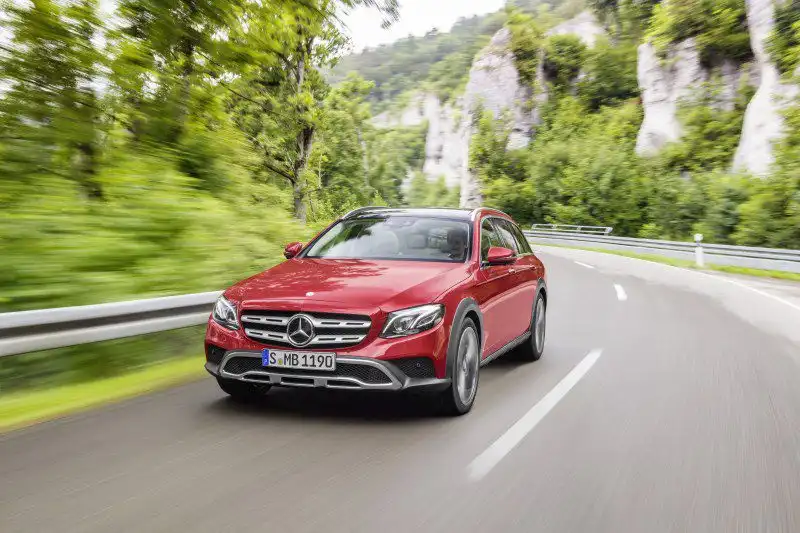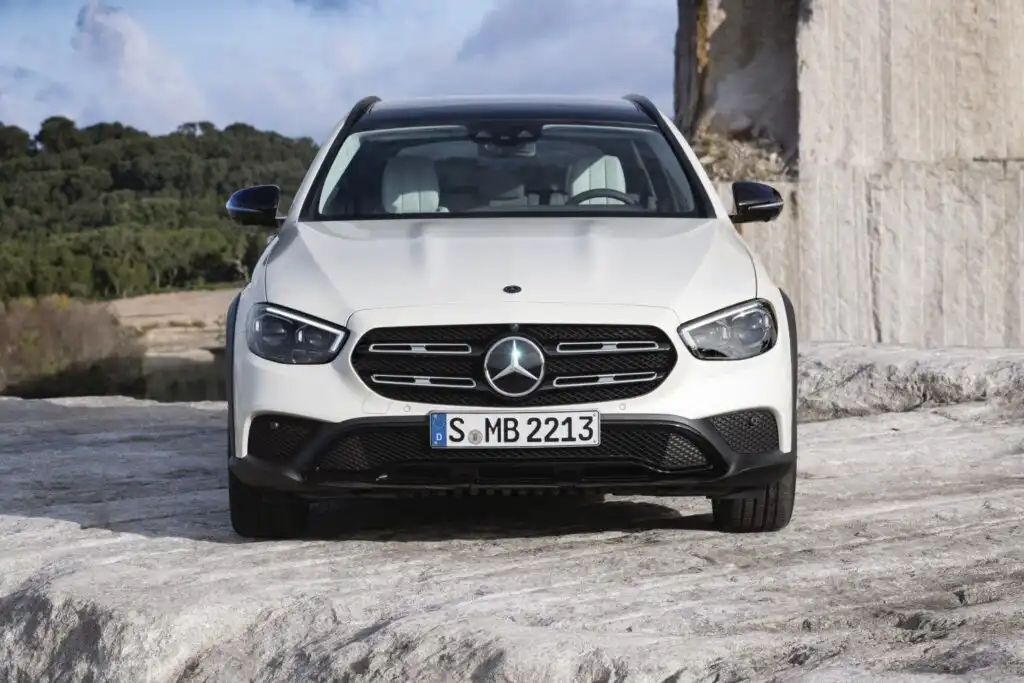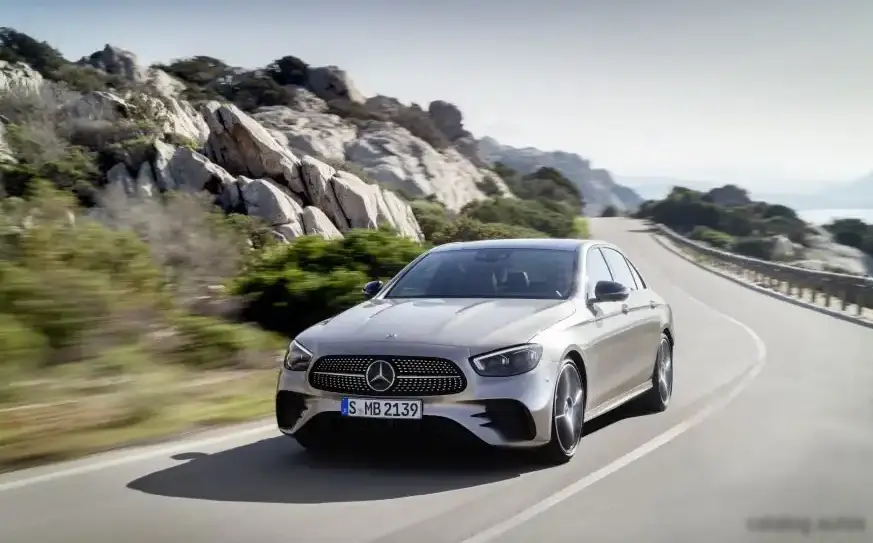
The Mercedes-Benz E 300e (320 hp) 4MATIC, introduced in June 2020 as part of the W213 facelift, represents a significant step in the E-Class’s evolution towards electrification. This plug-in hybrid variant combines a 2.0-liter turbocharged inline-four gasoline engine with an electric motor, offering a balance of performance, efficiency, and reduced emissions. Production continued through 2023, positioning the E 300e as a key offering in the premium executive sedan segment, particularly in markets prioritizing environmental regulations and fuel economy. It sits within the broader W213 E-Class range, offering a more accessible entry point into the E-Class lineup compared to the more powerful E 450 or AMG variants.
Technical Specifications
| Brand | Mercedes-Benz |
| Model | E-class |
| Generation | E-class (W213, facelift 2020) |
| Type | E 300e (320 Hp) Plug-in Hybrid 4MATIC 9G-TRONIC |
| Start of production | June, 2020 |
| End of production | 2023 |
| Powertrain Architecture | PHEV (Plug-in Hybrid Electric Vehicle) |
| Body type | Sedan |
| Seats | 5 |
| Doors | 4 |
| Combined fuel consumption (WLTP) | 1.7-1.8 l/100 km (138.4 – 130.7 US mpg, 166.2 – 156.9 UK mpg, 58.8 – 55.6 km/l) |
| CO2 emissions (WLTP) | 38-41 g/km |
| Fuel consumption (NEDC) | 1.9-2 l/100 km (123.8 – 117.6 US mpg, 148.7 – 141.2 UK mpg, 52.6 – 50 km/l) |
| CO2 emissions (NEDC) | 44-45 g/km |
| Fuel Type | Petrol / electricity |
| Acceleration 0 – 100 km/h | 5.8 sec |
| Acceleration 0 – 62 mph | 5.8 sec |
| Acceleration 0 – 60 mph | 5.5 sec |
| Maximum speed | 245 km/h (152.24 mph) |
| Emission standard | EURO 6d-ISC-FCM |
| Weight-to-power ratio | 6.2 kg/Hp, 160.8 Hp/tonne |
| Weight-to-torque ratio | 2.8 kg/Nm, 351.8 Nm/tonne |
| Gross battery capacity | 13.5 kWh |
| Net (usable) battery capacity | 9.3 kWh |
| Battery technology | Lithium-ion (Li-Ion) |
| Battery location | Inside the trunk |
| All-electric range (WLTP) | 46-49 km (28.58 – 30.45 mi) |
| All-electric range (NEDC) | 54 km (33.55 mi) |
| Average Energy consumption (WLTP) | 16.3-16.7 kWh/100 km (26.23 – 26.88 kWh/100 mi, 128 – 125 MPGe, 6.1 – 6 km/kWh, 3.8 – 3.7 mi/kWh) |
| Average Energy consumption (NEDC) | 15.9-16.2 kWh/100 km (25.59 – 26.07 kWh/100 mi, 132 – 129 MPGe, 6.3 – 6.2 km/kWh, 3.9 – 3.8 mi/kWh) |
| Max speed (electric) | 130 km/h (80.78 mph) |
| Electric motor power | 122 Hp @ 2000 rpm |
| Electric motor Torque | 440 Nm (324.53 lb.-ft.) |
| Electric motor location | Between the combustion engine and the transmission |
| System power | 320 Hp @ 4500-5500 rpm |
| System torque | 700 Nm (516.29 lb.-ft.) |
| Engine Power | 211 Hp @ 5500 rpm |
| Power per litre | 106 Hp/l |
| Engine Torque | 350 Nm @ 1600-4000 rpm (258.15 lb.-ft. @ 1600-4000 rpm) |
| Engine layout | Front, Longitudinal |
| Engine Model/Code | M 274.920 |
| Engine displacement | 1991 cm3 (121.5 cu. in.) |
| Number of cylinders | 4 |
| Engine configuration | Inline |
| Cylinder Bore | 83 mm (3.27 in.) |
| Piston Stroke | 92 mm (3.62 in.) |
| Compression ratio | 9.8:1 |
| Number of valves per cylinder | 4 |
| Fuel injection system | Direct injection |
| Engine aspiration | Turbocharger, Intercooler |
| Valvetrain | DOHC |
| Engine oil capacity | 6.5 l (6.87 US qt | 5.72 UK qt) |
| Coolant | 13 l (13.74 US qt | 11.44 UK qt) |
| Kerb Weight | 1990 kg (4387.2 lbs.) |
| Max. weight | 2725 kg (6007.6 lbs.) |
| Max load | 735 kg (1620.4 lbs.) |
| Trunk (boot) space – minimum | 370 l (13.07 cu. ft.) |
| Fuel tank capacity | 50 l (13.21 US gal | 11 UK gal) |
| Max. roof load | 100 kg (220.46 lbs.) |
| Permitted trailer load with brakes (12%) | 2100 kg (4629.71 lbs.) |
| Permitted trailer load without brakes | 750 kg (1653.47 lbs.) |
| Permitted towbar download | 84 kg (185.19 lbs.) |
| Length | 4935 mm (194.29 in.) |
| Width | 1852 mm (72.91 in.) |
| Width including mirrors | 2065 mm (81.3 in.) |
| Height | 1481 mm (58.31 in.) |
| Wheelbase | 2939 mm (115.71 in.) |
| Front track | 1596 mm (62.83 in.) |
| Rear (Back) track | 1575 mm (62.01 in.) |
| Front overhang | 853 mm (33.58 in.) |
| Rear overhang | 1143 mm (45 in.) |
| Drag coefficient (Cd) | 0.27 |
| Minimum turning circle (turning diameter) | 11.9 m (39.04 ft.) |
| Approach angle | 14.5° |
| Departure angle | 11.8° |
| Ramp-over (brakeover) angle | 8.7° |
| Drivetrain Architecture | The Internal combustion engine (ICE) and the electric motor permanently drive the four wheels of the car with the ability to work in full electric or mixed mode. |
| Drive wheel | All wheel drive (4×4) |
| Number of gears and type of gearbox | 9 gears, automatic transmission G-TRONIC |
| Front suspension | Coil spring, Double wishbone, Transverse stabilizer |
| Rear suspension | Independent multi-link suspension, Transverse stabilizer, Coil spring |
| Front brakes | Ventilated discs |
| Rear brakes | Ventilated discs |
| Assisting systems | ABS (Anti-lock braking system) |
| Steering type | Steering rack and pinion |
| Power steering | Electric Steering |
| Tires size | Front wheel tires: 245/45 R18; 245/40 R19Rear wheel tires: 275/40 R18; 275/35 R19 |
| Wheel rims size | Front wheel rims: 8J x 18; 8J x 19Rear wheel rims: 9J x 18; 9J x 19 |
INTRODUCTION
The Mercedes-Benz E 300e (320 hp) 4MATIC, launched in 2020 as part of the W213 facelift, is a plug-in hybrid variant of the popular E-Class executive sedan. Built on the 1HX0/A3 platform, it combines a 2.0-liter turbocharged four-cylinder gasoline engine with an electric motor, delivering a combined output of 320 horsepower and 700 Nm of torque. This model aimed to provide a compelling alternative to traditional internal combustion engine vehicles, offering reduced emissions and the ability to drive short distances on electric power alone. The E 300e was positioned as a mid-range offering within the E-Class lineup, bridging the gap between the base models and the higher-performance variants.
Powertrain & Engine Architecture
At the heart of the E 300e lies the M 274.920 2.0-liter inline-four cylinder gasoline engine. This engine utilizes direct fuel injection and is equipped with a turbocharger and intercooler to enhance performance. It produces 211 hp at 5500 rpm and 350 Nm of torque between 1600-4000 rpm. The engine is paired with a 9G-TRONIC nine-speed automatic transmission, optimized for smooth and efficient gear changes. The electric motor, located between the engine and transmission, contributes an additional 122 hp at 2000 rpm and 440 Nm of torque. The combined system output is 320 hp and 700 Nm. The 13.5 kWh lithium-ion battery pack, with a usable capacity of 9.3 kWh, is located under the trunk floor. The battery supports AC charging, allowing for a full charge in approximately 3-4 hours from a standard household outlet or faster with a dedicated charging station. The E 300e employs a sophisticated power management system that seamlessly blends the power from the gasoline engine and electric motor, optimizing for efficiency or performance as needed.
Driving Characteristics
The E 300e offers a refined and comfortable driving experience. In electric mode, it provides near-silent operation and instant torque, making it ideal for city driving. The electric range of 46-49 km (WLTP) allows for many daily commutes to be completed without using the gasoline engine. When the electric range is depleted, the gasoline engine seamlessly kicks in, providing ample power for highway cruising and overtaking. The 9G-TRONIC transmission contributes to smooth gear changes and efficient power delivery. Compared to the standard E 300 with a gasoline engine, the E 300e offers quicker acceleration due to the electric motor’s instant torque. While not as sporty as the E 450 or AMG models, the E 300e provides a balanced blend of performance and efficiency. The added weight of the battery pack does slightly impact handling, but the well-tuned suspension minimizes body roll and provides a comfortable ride.
Equipment & Trim Levels
The E 300e typically came well-equipped, reflecting its position as a premium model. Standard features included Mercedes-Benz’s MBUX infotainment system with a large touchscreen display, leather upholstery, automatic climate control, and a suite of advanced driver-assistance systems such as adaptive cruise control, lane-keeping assist, and automatic emergency braking. Optional extras included a premium sound system, panoramic sunroof, head-up display, and various interior trim options. The interior design mirrored that of other W213 E-Class models, with a focus on luxury and technology. The dashboard featured a dual-screen display, and the cabin was finished with high-quality materials.
Chassis & Braking
The E 300e utilizes a coil spring, double wishbone front suspension and an independent multi-link rear suspension, both incorporating transverse stabilizers. This setup provides a comfortable ride and good handling characteristics. Ventilated disc brakes are used on all four wheels, providing ample stopping power. The E 300e is equipped with ABS (Anti-lock braking system) and other electronic stability control systems. Due to the added weight of the battery pack, the suspension was slightly retuned compared to the standard E-Class models to maintain ride quality and handling balance.
Market Reception & Comparison
The E 300e was generally well-received by critics, who praised its fuel efficiency, smooth ride, and quiet operation. It was seen as a compelling alternative to other plug-in hybrid sedans in the premium segment. Compared to the standard E 300, the E 300e offered significantly better fuel economy and lower emissions, but at a higher price point. Compared to the E 450, it offered similar performance but with the added benefit of electric driving capability. The E 300e’s reliability was generally good, although some owners reported minor issues with the charging system or battery management system.
Legacy
The Mercedes-Benz E 300e (W213) represents an important step in Mercedes-Benz’s transition towards electrification. It demonstrated the feasibility of combining a gasoline engine with an electric motor to deliver a compelling driving experience with reduced emissions. On the used car market, the E 300e remains a popular choice for buyers seeking a luxurious and efficient sedan. The longevity of the battery pack is a key consideration for potential buyers, but with proper maintenance, the powertrain is expected to provide reliable service for many years. The E 300e paved the way for future generations of Mercedes-Benz plug-in hybrid vehicles, solidifying the brand’s commitment to sustainable mobility.