
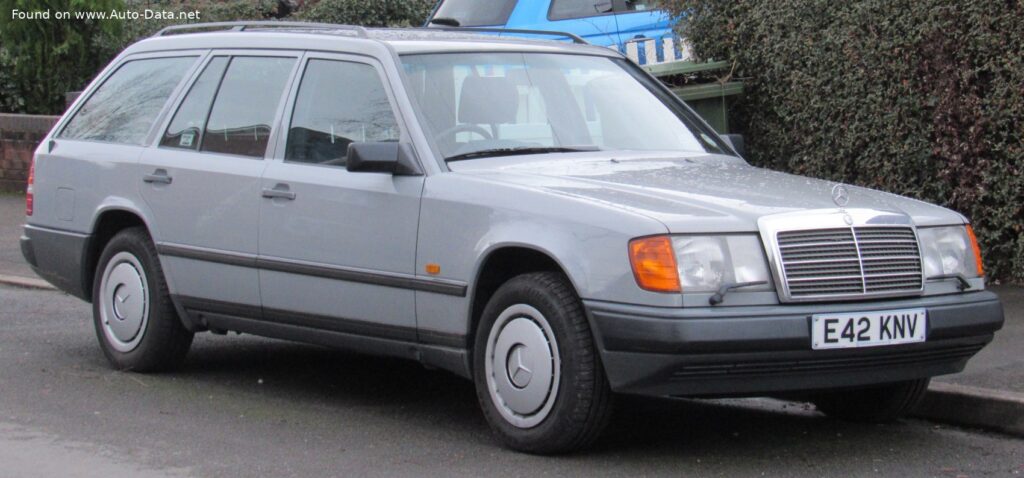
The Mercedes-Benz S124 200 TE (118 Hp) Automatic: A Pillar of German Engineering
The Mercedes-Benz S124 200 TE (118 Hp) Automatic represents a significant chapter in the history of premium executive automobiles, specifically within the highly esteemed W124 generation. Produced between July 1988 and August 1989, this particular variant of the S124 series was a station wagon (known as an “estate” in European markets), embodying Mercedes-Benz’s commitment to combining luxury, durability, and practical utility. While not a common sight in the United States in this specific engine configuration, the W124 chassis, in general, achieved legendary status worldwide for its robust engineering, timeless design, and exceptional longevity. The 200 TE, with its 2.0-liter engine and automatic transmission, was primarily targeted at the European market, serving as a reliable and comfortable family hauler or a dependable vehicle for professionals requiring ample cargo space without sacrificing the prestige associated with the three-pointed star. It stood as a testament to Mercedes-Benz’s philosophy of “over-engineering,” a characteristic that would define an era for the German automaker.
Engine and Performance of the Mercedes-Benz S124 200 TE (118 Hp) Automatic
Under the hood, the Mercedes-Benz S124 200 TE (118 Hp) Automatic was powered by the M 102 E 20 engine, specifically code 102.963. This was a 2.0-liter (1996 cm³ or 121.8 cu. in.) naturally aspirated inline-four gasoline engine. Engineered with a Single Overhead Camshaft (SOHC) valvetrain and two valves per cylinder, it featured a multi-port manifold injection system, a sophisticated setup for its time that ensured precise fuel delivery and efficiency. The engine produced a respectable 118 horsepower at 5200 rpm, with a power-per-liter figure of 59.1 HP/l, indicating a focus on smooth, reliable power delivery rather than outright high performance. Torque was rated at 126.86 lb.-ft. (172 Nm) at a relatively low 3500 rpm, providing ample pulling power for everyday driving and hauling.
Power was sent to the rear wheels via a 4-speed automatic transmission, a common and robust choice for Mercedes-Benz models of this era, known for its smooth shifts and durability. In terms of acceleration, the S124 200 TE could reach 60 mph from a standstill in an estimated 12.4 seconds, with a 0-62 mph (0-100 km/h) time of 13.1 seconds. Its maximum speed was 108.74 mph (175 km/h). While these figures might seem modest by today’s standards, they were entirely adequate for a family-oriented station wagon of the late 1980s, prioritizing comfort, stability, and fuel economy over blistering acceleration. The vehicle’s weight-to-power ratio stood at 11.9 kg/Hp (approximately 26.2 lbs/Hp), reflecting its solid construction and the pragmatic nature of its powertrain.
Fuel economy, an important consideration for a practical family vehicle, was rated at approximately 19.6 US mpg in urban conditions and an impressive 29.4 US mpg on the highway, thanks to its efficient engine and aerodynamic design. The 72-liter (19.02 US gallon) fuel tank provided a substantial cruising range, making it well-suited for long European road trips.
Design and Features
The Mercedes-Benz S124 200 TE showcased the iconic W124 design language, characterized by its understated elegance, clean lines, and exceptional build quality. The station wagon (estate) body type offered immense practicality, featuring five doors and comfortable seating for five occupants. The exterior design was remarkably aerodynamic for its time, contributing to both fuel efficiency and reduced wind noise at speed. Its length of 187.6 inches (4765 mm), width of 68.5 inches (1740 mm), and height of 58.66 inches (1490 mm) gave it a substantial yet balanced presence on the road. The wheelbase of 110.24 inches (2800 mm) was generous, ensuring excellent ride comfort and stable handling, especially at higher speeds.
Inside, the S124 200 TE upheld Mercedes-Benz’s reputation for superior craftsmanship. The cabin was designed with ergonomics in mind, featuring high-quality materials, comfortable seating, and a logical layout of controls. The station wagon configuration provided a versatile cargo area, making it ideal for families or those needing to transport larger items. While specific interior features varied by market and optional extras, the standard equipment typically included power steering, a robust heating and ventilation system, and a focus on long-term durability of all components.
The chassis and suspension system were hallmarks of the W124 generation’s advanced engineering. The front suspension utilized a wishbone setup, while the rear featured an independent multi-link suspension. This multi-link system was groundbreaking for its time, significantly enhancing ride comfort, handling precision, and stability—a feature that set the W124 apart from many competitors. Braking was handled by disc brakes on both the front and rear wheels, augmented by an Anti-lock Braking System (ABS), a crucial safety feature for the era. Steering was a hydraulic power-assisted cone worm with recirculation balls system, providing precise and effortless control. The vehicle rode on 195/65 R15 tires mounted on 6.5J x 15 wheel rims, offering a good balance of grip and ride comfort.
Technical Specifications
| Category | Specification |
|---|---|
| General Information | |
| Brand | Mercedes-Benz |
| Model | W124 |
| Generation | S124 |
| Type (Engine) | 200 TE (118 Hp) Automatic |
| Start of Production | July, 1988 |
| End of Production | August, 1989 |
| Powertrain Architecture | Internal Combustion engine |
| Body type | Station wagon (estate) |
| Seats | 5 |
| Doors | 5 |
| Performance Specs | |
| Fuel consumption (economy) – urban | 19.6 US mpg (12 l/100 km) |
| Fuel consumption (economy) – extra urban | 29.4 US mpg (8 l/100 km) |
| Fuel Type | Petrol (Gasoline) |
| Acceleration 0 – 60 mph | 12.4 sec |
| Acceleration 0 – 62 mph (0-100 km/h) | 13.1 sec |
| Maximum speed | 108.74 mph (175 km/h) |
| Weight-to-power ratio | 11.9 kg/Hp, 83.7 Hp/tonne |
| Weight-to-torque ratio | 8.2 kg/Nm, 122 Nm/tonne |
| Engine Specs | |
| Power | 118 Hp @ 5200 rpm |
| Power per liter | 59.1 Hp/l |
| Torque | 126.86 lb.-ft. (172 Nm) @ 3500 rpm |
| Engine layout | Front, Longitudinal |
| Engine Model/Code | M 102 E 20 / 102.963 |
| Engine displacement | 2.0 liters (1996 cm³, 121.8 cu. in.) |
| Number of cylinders | 4 |
| Engine configuration | Inline |
| Cylinder Bore | 3.5 in. (89 mm) |
| Piston Stroke | 3.16 in. (80.2 mm) |
| Compression ratio | 9.1:1 |
| Number of valves per cylinder | 2 |
| Fuel injection system | Multi-port manifold injection |
| Engine aspiration | Naturally aspirated engine |
| Valvetrain | SOHC |
| Engine oil capacity | 5.28 US qt (5 l) |
| Coolant | 8.98 US qt (8.5 l) |
| Space, Volume and Weights | |
| Kerb Weight | 3108.52 lbs. (1410 kg) |
| Max. weight | 4475.38 lbs. (2030 kg) |
| Max load | 1366.87 lbs. (620 kg) |
| Fuel tank capacity | 19.02 US gal (72 l) |
| Dimensions | |
| Length | 187.6 in. (4765 mm) |
| Width | 68.5 in. (1740 mm) |
| Height | 58.66 in. (1490 mm) |
| Wheelbase | 110.24 in. (2800 mm) |
| Front track | 58.94 in. (1497 mm) |
| Rear (Back) track | 58.58 in. (1488 mm) |
| Drivetrain, Brakes and Suspension Specs | |
| Drivetrain Architecture | The Internal combustion engine (ICE) drives the rear wheels of the vehicle. |
| Drive wheel | Rear wheel drive |
| Number of gears and type of gearbox | 4 gears, automatic transmission |
| Front suspension | Wishbone |
| Rear suspension | Independent multi-link suspension |
| Front brakes | Disc |
| Rear brakes | Disc |
| Assisting systems | ABS (Anti-lock braking system) |
| Steering type | Cone worm with recirculation balls |
| Power steering | Hydraulic Steering |
| Tires size | Front: 195/65 R15, Rear: 195/65 R15 |
| Wheel rims size | Front: 6.5J x 15, Rear: 6.5J x 15 |
Legacy and Market Impact of the S124 Generation
The Mercedes-Benz S124, and the W124 generation as a whole, carved out an almost mythical reputation for itself in the automotive world. It is widely considered by enthusiasts and experts alike to be one of the last “over-engineered” Mercedes-Benz models, built to exceptionally high standards of quality, durability, and reliability. This philosophy meant that components were often designed to exceed anticipated stresses, leading to vehicles that could effortlessly accumulate hundreds of thousands of miles with proper maintenance. The S124 200 TE, though not the most powerful variant, benefited from this same meticulous engineering, making it a highly dependable and long-lasting vehicle.
In its primary European market, the S124 200 TE competed in the executive station wagon segment, facing rivals such as the BMW 5 Series Touring (E34 generation), Audi 100 Avant, and Volvo 700/900 series wagons. While some competitors might have offered sportier driving dynamics or more avant-garde styling, the S124 stood out for its unparalleled build quality, serene ride comfort, and a sense of understated luxury that few could match. Its multi-link rear suspension, a significant innovation, provided a ride and handling balance that was revolutionary for a mass-produced car, setting new benchmarks for the industry.
The historical significance of the S124 is profound. It cemented Mercedes-Benz’s image as a manufacturer of robust, reliable, and prestigious vehicles. The wagon variants, in particular, were lauded for their practicality, offering generous cargo capacity and often the option for a third-row jump seat, transforming them into versatile family transporters without compromising on luxury or driving refinement. These cars became a common sight across Europe, serving as everything from executive transports to reliable family workhorses, often seen for decades on the road. Today, the W124 generation, including the S124 wagons, is highly sought after by classic car enthusiasts who appreciate its timeless design, mechanical integrity, and the enduring legacy of an era when Mercedes-Benz prioritized engineering excellence above all else. The 200 TE, with its efficient four-cylinder engine, represents an accessible entry point into this cherished lineage, offering a blend of classic Mercedes charm and day-to-day usability.
