
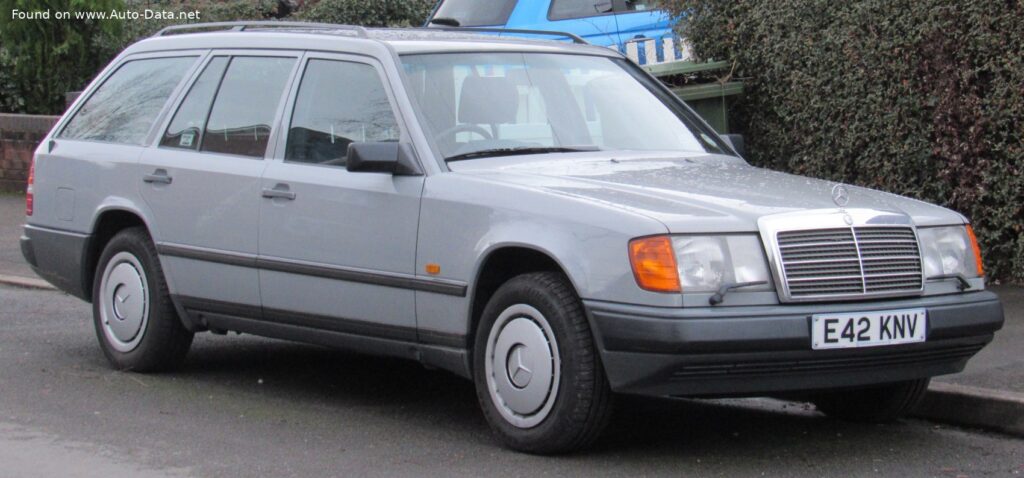
The Mercedes-Benz S124 200 TE (122 Hp) Automatic: A Pillar of German Engineering and Practical Luxury
The Mercedes-Benz S124 200 TE (122 Hp) Automatic represents a significant chapter in the history of the German automaker’s revered W124 series. Produced between July 1988 and August 1989, this particular variant is a station wagon (known as an “estate” in Europe), combining Mercedes-Benz’s legendary build quality and engineering prowess with exceptional practicality. While not a primary model for the American market, the S124 series, in general, set global benchmarks for mid-size luxury vehicles, and the 200 TE offered a compelling, entry-level proposition for European buyers seeking a versatile and durable family hauler.
The W124 chassis, introduced in 1984, quickly earned a reputation for its over-engineered construction, advanced safety features for its time, and a timeless design that has aged gracefully. The “S124” designation specifically refers to the station wagon body style, which was highly popular in Europe for its blend of passenger comfort and cargo capacity. The 200 TE variant, with its 2.0-liter engine and automatic transmission, was positioned as a reliable, economical, and comfortable option within the extensive W124 lineup, embodying the brand’s commitment to durability and refined driving dynamics.
Engine and Performance
At the heart of the Mercedes-Benz S124 200 TE (122 Hp) Automatic lies the M 102 E 20 / 102.963 engine, a naturally aspirated 2.0-liter (1996 cm3 or 121.8 cu. in.) inline-four gasoline unit. This robust powerplant was designed for longevity and smooth operation, delivering 122 horsepower at 5100 rpm. Torque output stands at 131.29 lb.-ft. (178 Nm) at a relatively low 3500 rpm, ensuring accessible pulling power for daily driving and light hauling duties.
The engine features a single overhead camshaft (SOHC) valvetrain with two valves per cylinder, a common and reliable configuration for the era. Fuel delivery is managed by a multi-port manifold injection system, contributing to efficient fuel combustion. With a compression ratio of 9.1:1, the engine was tuned for a balance of performance and fuel economy, suitable for the petrol available in its primary markets.
Power is routed to the rear wheels through a four-speed automatic transmission, a common choice for Mercedes-Benz models of this period, emphasizing smooth shifts and relaxed cruising. While not designed for outright speed, the 200 TE offers respectable performance for its class and era, accelerating from 0 to 60 mph in a calculated 11.9 seconds and reaching a maximum speed of 109.98 mph (177 km/h). Fuel economy figures reflect its practical orientation: approximately 20.3 US mpg in urban driving and a more efficient 30.5 US mpg on the highway, underscoring its suitability for long-distance travel.
Design and Features
The S124 body type, a five-door, five-seat station wagon, is a testament to Mercedes-Benz’s functional yet elegant design philosophy. With a length of 187.6 inches (4765 mm), a width of 68.5 inches (1740 mm), and a height of 58.66 inches (1490 mm), the 200 TE provided substantial interior volume and a commanding road presence. The generous 110.24-inch (2800 mm) wheelbase contributed to a stable ride and ample legroom for passengers.
Beyond its spacious interior, the S124 200 TE was engineered for comfort and safety. Its suspension system featured a wishbone setup at the front and an independent multi-link suspension at the rear, a sophisticated arrangement that provided a refined ride quality and excellent handling characteristics, even when fully loaded. Braking was handled by disc brakes on both the front and rear wheels, complemented by an Anti-lock Braking System (ABS), a significant safety feature for the late 1980s that greatly improved stopping performance and control under adverse conditions.
Steering was managed by a hydraulic power-assisted cone worm with recirculation balls system, offering precise control and comfortable maneuverability. The vehicle rode on 195/65 R15 tires mounted on 6.5J x 15-inch wheel rims, providing a good balance of grip and ride comfort. The interior, though simpler than higher-tier W124 models, maintained Mercedes-Benz’s reputation for high-quality materials and meticulous assembly, ensuring durability and a premium feel that lasts for decades.
Technical Specifications
| Category | Specification |
|---|---|
| General Information | |
| Brand | Mercedes-Benz |
| Model | W124 |
| Generation | S124 |
| Type (Engine) | 200 TE (122 Hp) Automatic |
| Start of Production | July, 1988 |
| End of Production | August, 1989 |
| Powertrain Architecture | Internal Combustion engine |
| Body Type | Station wagon (estate) |
| Seats | 5 |
| Doors | 5 |
| Performance Specs | |
| Fuel Consumption (Urban) | 20.3 US mpg (11.6 l/100 km) |
| Fuel Consumption (Extra Urban) | 30.5 US mpg (7.7 l/100 km) |
| Fuel Type | Petrol (Gasoline) |
| Acceleration 0 – 60 mph | 11.9 sec |
| Maximum Speed | 109.98 mph (177 km/h) |
| Weight-to-power ratio | 11.6 kg/Hp, 86.5 Hp/tonne |
| Weight-to-torque ratio | 7.9 kg/Nm, 126.2 Nm/tonne |
| Engine Specs | |
| Power | 122 Hp @ 5100 rpm |
| Power per liter | 61.1 Hp/l |
| Torque | 131.29 lb.-ft. (178 Nm) @ 3500 rpm |
| Engine Layout | Front, Longitudinal |
| Engine Model/Code | M 102 E 20 / 102.963 |
| Engine Displacement | 121.8 cu. in. (1996 cm3) |
| Number of Cylinders | 4 |
| Engine Configuration | Inline |
| Cylinder Bore | 3.5 in. (89 mm) |
| Piston Stroke | 3.16 in. (80.2 mm) |
| Compression Ratio | 9.1:1 |
| Number of Valves per Cylinder | 2 |
| Fuel Injection System | Multi-port manifold injection |
| Engine Aspiration | Naturally aspirated engine |
| Valvetrain | SOHC |
| Engine Oil Capacity | 5.28 US qt (5 l) |
| Coolant Capacity | 8.98 US qt (8.5 l) |
| Space, Volume and Weights | |
| Kerb Weight | 3108.52 lbs. (1410 kg) |
| Max. Weight | 4475.38 lbs. (2030 kg) |
| Max Load | 1366.87 lbs. (620 kg) |
| Fuel Tank Capacity | 19.02 US gal (72 l) |
| Dimensions | |
| Length | 187.6 in. (4765 mm) |
| Width | 68.5 in. (1740 mm) |
| Height | 58.66 in. (1490 mm) |
| Wheelbase | 110.24 in. (2800 mm) |
| Front Track | 58.94 in. (1497 mm) |
| Rear (Back) Track | 58.58 in. (1488 mm) |
| Drivetrain, Brakes and Suspension Specs | |
| Drivetrain Architecture | Rear-wheel drive |
| Drive Wheel | Rear wheel drive |
| Number of Gears and Type of Gearbox | 4 gears, automatic transmission |
| Front Suspension | Wishbone |
| Rear Suspension | Independent multi-link suspension |
| Front Brakes | Disc |
| Rear Brakes | Disc |
| Assisting Systems | ABS (Anti-lock braking system) |
| Steering Type | Cone worm with recirculation balls |
| Power Steering | Hydraulic Steering |
| Tires Size (Front & Rear) | 195/65 R15 |
| Wheel Rims Size (Front & Rear) | 6.5J x 15 |
Legacy and Market Impact
The Mercedes-Benz W124 series, including the S124 station wagon variants like the 200 TE, is widely regarded as one of the finest vehicles ever produced by the brand. Its reputation for exceptional durability, robust engineering, and a build quality that often surpassed its contemporaries cemented its status as a benchmark in the executive car segment. The S124 200 TE, while being an entry-level model in terms of engine size, still benefited from the same fundamental strengths that made the W124 chassis legendary.
In its primary European markets, the S124 wagon was a highly sought-after vehicle for families, professionals, and even taxi operators due to its cavernous cargo space, comfortable ride, and unwavering reliability. It competed with other premium European wagons of the era, such as the BMW 5 Series Touring (E34 generation) and the Audi 100 Avant (C3/C4 generations), but often stood out for its perceived longevity and more traditional, understated luxury. Its ability to effortlessly cover high mileages with minimal fuss made it a favorite for long-distance travel across the continent.
The 200 TE’s impact was particularly felt in markets where fuel efficiency and lower running costs were prioritized, offering a more accessible entry point into Mercedes-Benz ownership without compromising on the core values of the brand. Its relatively modest 122 horsepower engine, combined with the smooth automatic transmission, provided a relaxed and competent driving experience, perfectly suited for the diverse driving conditions found in Europe.
Today, the Mercedes-Benz S124 models, especially the wagons, enjoy a strong following among classic car enthusiasts and those who appreciate well-engineered, practical vehicles. Their timeless design, combined with their renowned reliability, means that many examples are still on the road, often having covered hundreds of thousands of miles. The S124 200 TE, therefore, stands as a testament to an era when Mercedes-Benz prioritized engineering excellence and long-term ownership satisfaction, making it a significant and respected vehicle in automotive history.
