
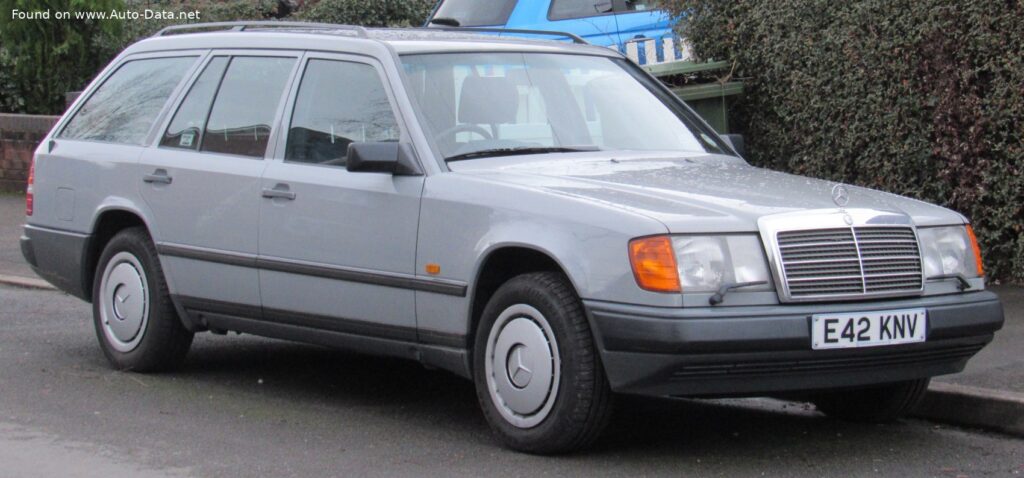
The Mercedes-Benz S124 250 TD (90 Hp) Automatic: A Pillar of Enduring German Engineering
The Mercedes-Benz W124 chassis, launched in 1984, quickly established itself as a benchmark for mid-size executive cars, renowned for its exceptional build quality, engineering prowess, and timeless design. Within this esteemed lineage, the S124 designation refers to the station wagon (estate) variant, which offered unparalleled practicality without compromising on the comfort and luxury associated with the Mercedes-Benz brand. The Mercedes-Benz S124 250 TD (90 Hp) Automatic, produced from June 1985 to February 1989, represented a cornerstone of the lineup, particularly in European markets where its robust diesel engine, impressive fuel economy, and spacious five-door, five-seat configuration made it a highly sought-after vehicle for families, professionals, and even taxi fleets. This particular model, while sharing the W124’s global acclaim, truly shone as a durable workhorse, embodying the brand’s commitment to longevity and reliability during an era of significant automotive advancement.
Engine and Performance: The Robust Diesel Heart of the Mercedes-Benz S124 250 TD (90 Hp) Automatic
At the core of the Mercedes-Benz S124 250 TD (90 Hp) Automatic lies the venerable OM 602 D 25 / 602.912 engine, a 2.5-liter (2497 cm³ or 152.38 cu. in.) inline five-cylinder naturally aspirated diesel unit. This powertrain architecture, featuring a precombustion chamber injection system and a SOHC valvetrain with two valves per cylinder, was engineered for durability and efficiency, rather than outright speed. It delivered a modest but dependable 90 horsepower at 4600 rpm and a healthy 113.58 lb.-ft. of torque at 2800 rpm. These figures, while seemingly conservative by today’s standards, provided ample motivation for the S124’s intended purpose: comfortable, reliable, and economical long-distance travel.
The engine’s robust design, characterized by an impressive 22:1 compression ratio, ensured consistent performance and a long service life, qualities that cemented Mercedes-Benz’s reputation for ‘over-engineering.’ Power was channeled to the rear wheels via a smooth-shifting 4-speed automatic transmission, a common configuration for luxury vehicles of the era, prioritizing refinement and ease of driving.
In terms of performance, the Mercedes-Benz S124 250 TD (90 Hp) Automatic was not designed to be a sprint champion. It accelerated from 0 to 60 mph in a calculated 17.9 seconds, with a top speed of 99.42 mph (160 km/h). These numbers reflect a vehicle optimized for steady cruising on the autobahn or comfortable urban commuting. Where it truly excelled was in fuel economy, offering an impressive 25.3 US mpg in urban conditions and an even more remarkable 37.3 US mpg on the highway (extra-urban). This efficiency, coupled with a generous 19.02 US gallon (72-liter) fuel tank, provided excellent range, making it an ideal companion for extensive journeys across Europe. The vehicle’s weight-to-power ratio stood at 16 kg/Hp (62.5 Hp/tonne), underscoring its focus on reliability and load-carrying capability over raw power.
Design, Engineering, and Features of the S124
The Mercedes-Benz S124 series, penned by legendary designer Bruno Sacco, is celebrated for its elegant, functional, and timeless aesthetics. The station wagon body type, with its five doors and five seats, seamlessly integrated the W124’s distinctive design language with enhanced practicality. Its aerodynamic profile, featuring a low drag coefficient for its time, contributed to both fuel efficiency and reduced wind noise, enhancing passenger comfort.
Measuring 187.6 inches (4765 mm) in length, 68.5 inches (1740 mm) in width, and 58.66 inches (1490 mm) in height, with a substantial 110.24-inch (2800 mm) wheelbase, the S124 offered a spacious and comfortable cabin, complemented by a large and versatile cargo area. The rear load space was a primary selling point, making it a favorite among families and those requiring significant hauling capacity.
Underpinning the S124’s renowned ride quality was a sophisticated suspension system. The front featured a wishbone setup, while the rear employed Mercedes-Benz’s groundbreaking independent multi-link suspension. This advanced rear axle design, a hallmark of the W124, provided exceptional stability, precise handling, and superior ride comfort, isolating occupants from road imperfections effectively. Braking duties were handled by disc brakes at both the front and rear, ensuring confident stopping power. The hydraulic power steering system, utilizing a cone worm with recirculation balls, offered a precise and well-weighted feel, characteristic of Mercedes-Benz vehicles of the era.
Standard equipment included 195/65 R15 tires mounted on 6.5J x 15-inch wheel rims, providing a comfortable ride and predictable grip. While specific interior features varied by market and options, Mercedes-Benz vehicles of this period were known for their high-quality materials, robust construction, ergonomic control layouts, and a strong emphasis on passive safety, which was a core tenet of the W124’s design philosophy. The kerb weight of the Mercedes-Benz S124 250 TD (90 Hp) Automatic stood at 3174.66 lbs (1440 kg), with a maximum permissible weight of 4541.52 lbs (2060 kg), allowing for a substantial maximum load of 1366.87 lbs (620 kg).
Technical Specifications for the Mercedes-Benz S124 250 TD (90 Hp) Automatic
| Category | Specification |
|---|---|
| Brand | Mercedes-Benz |
| Model | W124 |
| Generation | S124 |
| Type (Engine) | 250 TD (90 Hp) Automatic |
| Start of Production | June, 1985 |
| End of Production | February, 1989 |
| Powertrain Architecture | Internal Combustion Engine |
| Body type | Station wagon (estate) |
| Seats | 5 |
| Doors | 5 |
| Performance Specs | |
| Fuel consumption (economy) – urban | 9.3 l/100 km (25.3 US mpg) |
| Fuel consumption (economy) – extra urban | 6.3 l/100 km (37.3 US mpg) |
| Fuel Type | Diesel |
| Acceleration 0 – 60 mph (Calculated) | 17.9 sec |
| Acceleration 0 – 100 km/h | 18.8 sec |
| Maximum speed | 160 km/h (99.42 mph) |
| Weight-to-power ratio | 16 kg/Hp (62.5 Hp/tonne) |
| Weight-to-torque ratio | 9.4 kg/Nm (106.9 Nm/tonne) |
| Engine Specs | |
| Power | 90 Hp @ 4600 rpm |
| Power per liter | 36 Hp/l |
| Torque | 154 Nm @ 2800 rpm (113.58 lb.-ft.) |
| Engine layout | Front, Longitudinal |
| Engine Model/Code | OM 602 D 25 / 602.912 |
| Engine displacement | 2497 cm³ (2.5 liters / 152.38 cu. in.) |
| Number of cylinders | 5 |
| Engine configuration | Inline |
| Cylinder Bore | 87 mm (3.43 in.) |
| Piston Stroke | 84 mm (3.31 in.) |
| Compression ratio | 22:1 |
| Number of valves per cylinder | 2 |
| Fuel injection system | Precombustion chamber injection |
| Engine aspiration | Naturally aspirated engine |
| Valvetrain | SOHC |
| Engine oil capacity | 7 l (7.4 US qt) |
| Coolant capacity | 9.5 l (10.04 US qt) |
| Space, Volume and Weights | |
| Kerb Weight | 1440 kg (3174.66 lbs) |
| Max. weight | 2060 kg (4541.52 lbs) |
| Max load | 620 kg (1366.87 lbs) |
| Fuel tank capacity | 72 l (19.02 US gal) |
| Dimensions | |
| Length | 4765 mm (187.6 in.) |
| Width | 1740 mm (68.5 in.) |
| Height | 1490 mm (58.66 in.) |
| Wheelbase | 2800 mm (110.24 in.) |
| Front track | 1497 mm (58.94 in.) |
| Rear (Back) track | 1488 mm (58.58 in.) |
| Drivetrain, Brakes and Suspension Specs | |
| Drivetrain Architecture | Internal Combustion engine drives the rear wheels. |
| Drive wheel | Rear wheel drive |
| Number of gears and type of gearbox | 4 gears, automatic transmission |
| Front suspension | Wishbone |
| Rear suspension | Independent multi-link suspension |
| Front brakes | Disc |
| Rear brakes | Disc |
| Steering type | Cone worm with recirculation balls |
| Power steering | Hydraulic Steering |
| Tires size (Front & Rear) | 195/65 R15 |
| Wheel rims size (Front & Rear) | 6.5J x 15 |
Legacy and Market Impact
The Mercedes-Benz S124, and specifically the 250 TD variant, holds a distinguished place in automotive history. It solidified Mercedes-Benz’s reputation for building vehicles of unparalleled quality, durability, and longevity. Often regarded as one of the last “over-engineered” Mercedes models, these cars were built to withstand the test of time, with many examples still reliably serving their owners decades after rolling off the production line. This inherent robustness contributed to their consistently high resale values, a testament to their enduring appeal.
In its primary European markets, the Mercedes-Benz S124 250 TD (90 Hp) Automatic was a formidable competitor against other premium station wagons of the era, such as the BMW 5 Series Touring (E34), the Audi 100 Avant (C3/C4), and the Volvo 740/940 Estate. While BMW and Audi offered sportier alternatives, and Volvo was known for its practicality, the S124 carved out its niche through a unique blend of refined comfort, load-carrying capability, and the prestige associated with the three-pointed star. Its diesel engine was particularly advantageous in regions with favorable diesel fuel pricing and demand for high-mileage workhorses.
The S124’s influence extended beyond private ownership. Its reputation for reliability and low running costs (for a premium vehicle) made it a popular choice for taxi services across Europe, where vehicles often accumulated hundreds of thousands of miles. This widespread professional use further cemented its image as an indestructible machine.
Today, the W124 series, including the S124 wagon, is increasingly appreciated as a modern classic. Enthusiasts and collectors are drawn to its straightforward mechanicals, the tangible quality of its construction, and its comfortable, unpretentious driving experience. The Mercedes-Benz S124 250 TD (90 Hp) Automatic, in particular, represents a practical and economical entry into classic Mercedes ownership, offering a glimpse into an era when automotive engineering prioritized endurance and function above all else. Its legacy is one of unwavering reliability and timeless design, making it a true icon of automotive excellence.
