
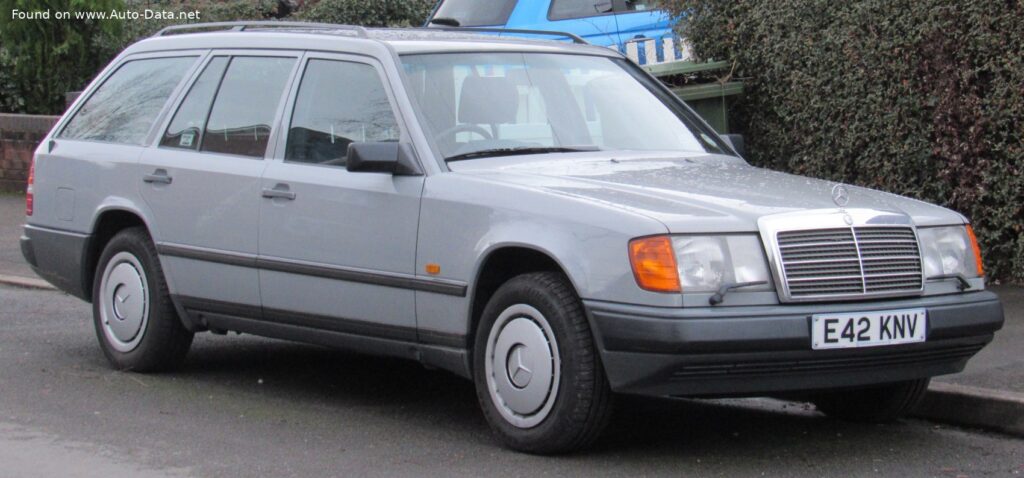
The Mercedes-Benz S124 250 TD (94 Hp): A Pillar of German Engineering
The Mercedes-Benz S124, representing the station wagon (or “estate” in European parlance) variant of the esteemed W124 generation, stands as a testament to the brand’s commitment to durability, practicality, and refined engineering during the late 20th century. Produced for a brief period in its specific 250 TD (94 Hp) guise from February to August 1989, this particular model was a cornerstone of the European market, offering a compelling blend of cargo capacity, robust diesel power, and the legendary build quality associated with Mercedes-Benz. While not typically sold in the United States, the S124 wagon was highly regarded in its primary markets for its ability to serve as a reliable family hauler, a comfortable long-distance cruiser, and even a robust taxi cab, enduring hundreds of thousands of miles with proper maintenance. It embodied the brand’s reputation for “over-engineering,” a term often used to describe the meticulous attention to detail and robust construction that characterized Mercedes-Benz vehicles of this era. The Mercedes-Benz S124 250 TD was, and remains, a symbol of an automotive era where longevity and mechanical integrity were paramount.
Mercedes-Benz S124 250 TD: Powertrain and Performance
Engine Configuration and Output
Under the hood of the 1989 Mercedes-Benz S124 250 TD resides the OM 602 D 25, specifically coded as 602.912, a naturally aspirated inline five-cylinder diesel engine. This robust powertrain, displacing 2,497 cubic centimeters (approximately 2.5 liters or 152.38 cubic inches), was renowned for its reliability and fuel efficiency rather than outright speed. The engine utilized a precombustion chamber injection system, a common diesel technology of the era that contributed to smoother operation and lower noise levels compared to direct injection systems of the time, albeit at a slight compromise to ultimate efficiency. With a compression ratio of 22:1, typical for a naturally aspirated diesel, the engine produced a modest but highly usable 94 horsepower at 4,600 rpm. Torque figures were equally pragmatic, peaking at 116.53 lb.-ft. (158 Nm) available across a useful band from 2,600 to 3,100 rpm. This torque delivery, coupled with the engine’s longitudinal front layout, provided ample pulling power for daily driving and highway cruising, especially when paired with the standard 5-speed manual transmission driving the rear wheels.
Performance Metrics and Fuel Economy
Given its focus on utility and economy, the S124 250 TD was not designed for blistering acceleration. It achieved a 0-60 mph sprint in a measured 16.7 seconds, with a top speed of 102.53 mph (165 km/h). These figures, while not competitive with its gasoline counterparts, were perfectly adequate for the European autobahns and urban environments it was designed to navigate. Where the 250 TD truly excelled was in its fuel economy. Mercedes-Benz quoted an urban consumption of 9.5 liters per 100 km (24.8 US mpg) and an impressive extra-urban (highway) figure of 5.8 liters per 100 km (40.6 US mpg). For a large, heavy station wagon from 1989, these numbers underscored the inherent efficiency of the diesel powerplant, making it a cost-effective choice for drivers covering significant mileage. The vehicle’s weight-to-power ratio stood at 15.7 kg/Hp (63.5 Hp/tonne), reflecting its emphasis on sturdy construction over raw power.
Design and Features of the S124 Wagon
Timeless Aesthetics and Practical Design
The Mercedes-Benz S124 station wagon, like its sedan sibling, is celebrated for its clean, functional design that has aged remarkably well. Measuring 187.6 inches in length, 68.5 inches in width, and 58.66 inches in height, with a substantial 110.24-inch wheelbase, the S124 offered a commanding presence and a spacious interior. The five-door body style provided excellent accessibility to both the passenger compartment and the generous cargo area, making it an ideal choice for families and professionals requiring significant hauling capability. The design ethos was one of understated elegance and aerodynamic efficiency, with smooth lines and minimal ornamentation.
Interior Comfort and Engineering
Inside, the S124 maintained Mercedes-Benz’s reputation for high-quality materials and ergonomic design. The standard five-seat configuration provided ample room for occupants, with comfortable seating and excellent visibility. While specific trim levels and optional features are not detailed in the provided data, typical Mercedes-Benz appointments of the era would have included durable upholstery, a well-laid-out dashboard, and robust switchgear designed for longevity. The S124 chassis was particularly praised for its ride comfort and handling, attributes largely due to its sophisticated suspension system. It featured a wishbone front suspension and an independent multi-link rear suspension, an advanced setup for its time that contributed to its refined road manners and stable handling even when fully laden.
Safety and Durability
Safety was a paramount concern for Mercedes-Benz, even in 1989. The S124 came equipped with disc brakes on all four wheels, a standard feature for higher-end vehicles, and notably included an Anti-lock Braking System (ABS) as an assisting system. This was a significant safety innovation for the time, greatly enhancing braking performance and control in adverse conditions. The hydraulic power steering, utilizing a cone worm with recirculation balls, provided precise and effortless steering. The vehicle’s robust construction, with a kerb weight of 3,262.84 lbs (1,480 kg) and a maximum permissible weight of 4,629.71 lbs (2,100 kg), underscored its inherent structural integrity and passive safety capabilities. The S124’s reputation for being “built like a tank” was well-earned, contributing to its enduring appeal and long service life.
Technical Specifications: Mercedes-Benz S124 250 TD (94 Hp)
| Category | Specification |
|---|---|
| Brand | Mercedes-Benz |
| Model | W124 S124 |
| Type (Engine) | 250 TD (94 Hp) |
| Production Start | February, 1989 |
| Production End | August, 1989 |
| Powertrain Architecture | Internal Combustion Engine |
| Body Type | Station wagon (estate) |
| Seats | 5 |
| Doors | 5 |
| Performance Specs | |
| Fuel Consumption (Urban) | 9.5 l/100 km (24.8 US mpg) |
| Fuel Consumption (Extra Urban) | 5.8 l/100 km (40.6 US mpg) |
| Fuel Type | Diesel |
| Acceleration 0 – 60 mph | 16.7 sec |
| Maximum Speed | 102.53 mph (165 km/h) |
| Weight-to-power ratio | 15.7 kg/Hp (63.5 Hp/tonne) |
| Weight-to-torque ratio | 9.4 kg/Nm (106.8 Nm/tonne) |
| Engine Specs | |
| Power | 94 Hp @ 4600 rpm |
| Power per liter | 37.6 Hp/l |
| Torque | 116.53 lb.-ft. (158 Nm) @ 2600-3100 rpm |
| Engine Layout | Front, Longitudinal |
| Engine Model/Code | OM 602 D 25 / 602.912 |
| Engine Displacement | 2497 cm3 (2.5 l, 152.38 cu. in.) |
| Number of Cylinders | 5 |
| Engine Configuration | Inline |
| Cylinder Bore | 3.43 in (87 mm) |
| Piston Stroke | 3.31 in (84 mm) |
| Compression Ratio | 22:1 |
| Valves per Cylinder | 2 |
| Fuel Injection System | Precombustion chamber injection |
| Engine Aspiration | Naturally aspirated engine |
| Valvetrain | SOHC |
| Engine Oil Capacity | 7 l (7.4 US qt) |
| Coolant Capacity | 9.5 l (10.04 US qt) |
| Space, Volume and Weights | |
| Kerb Weight | 3262.84 lbs (1480 kg) |
| Max. Weight | 4629.71 lbs (2100 kg) |
| Max Load | 1366.87 lbs (620 kg) |
| Fuel Tank Capacity | 19.02 US gal (72 l) |
| Dimensions | |
| Length | 187.6 in (4765 mm) |
| Width | 68.5 in (1740 mm) |
| Height | 58.66 in (1490 mm) |
| Wheelbase | 110.24 in (2800 mm) |
| Front Track | 58.94 in (1497 mm) |
| Rear (Back) Track | 58.58 in (1488 mm) |
| Drivetrain, Brakes and Suspension Specs | |
| Drivetrain Architecture | Internal combustion engine drives the rear wheels |
| Drive Wheel | Rear wheel drive |
| Number of Gears/Gearbox Type | 5 gears, manual transmission |
| Front Suspension | Wishbone |
| Rear Suspension | Independent multi-link suspension |
| Front Brakes | Disc |
| Rear Brakes | Disc |
| Assisting Systems | ABS (Anti-lock braking system) |
| Steering Type | Cone worm with recirculation balls |
| Power Steering | Hydraulic Steering |
| Tires Size (Front/Rear) | 195/65 R15 |
| Wheel Rims Size (Front/Rear) | 9.5J x 15 |
Legacy and Market Impact
The Mercedes-Benz W124 series, and particularly its S124 station wagon variant, occupies a hallowed place in automotive history, especially within its primary European markets. The Mercedes-Benz S124 250 TD, with its robust diesel engine, was a quintessential workhorse. It was highly prized for its exceptional build quality, comfort, and remarkable longevity, often accumulating hundreds of thousands of miles without major mechanical issues, a testament to Mercedes-Benz’s engineering principles of the era.
Reputation and Competitors
The S124 earned a reputation for being virtually indestructible, a quality that endeared it to a wide range of buyers, from large families needing spacious transport to taxi operators demanding unwavering reliability. In its time, the S124 wagon competed with other premium European estates such as the BMW 5 Series Touring (E34 generation) and the Audi 100 Avant (C3/C4 generations). While its German rivals offered compelling alternatives, the S124 often stood out for its perceived superior build quality, more compliant ride, and particularly, the legendary durability of its diesel powertrains. Its conservative styling, while perhaps less flashy than some competitors, conveyed an image of solidity and understated luxury that resonated deeply with its target demographic.
Historical Significance
The W124 generation, including the S124 wagon, is often considered the last “over-engineered” Mercedes-Benz, a period before cost-cutting measures began to subtly influence vehicle design and construction. This perception has contributed to its strong classic car status today, with well-maintained examples commanding premium prices. The 250 TD variant, in particular, represents a specific slice of this legacy: a highly efficient, incredibly durable, and practical vehicle that perfectly balanced Mercedes-Benz’s luxury aspirations with the pragmatic needs of European consumers. Its impact can still be seen on the roads of Europe, where many S124s continue to serve daily duties, a testament to their inherent quality and the foresight of their original design. It remains a benchmark for automotive durability and a reminder of an era when engineering integrity was the ultimate luxury.
