
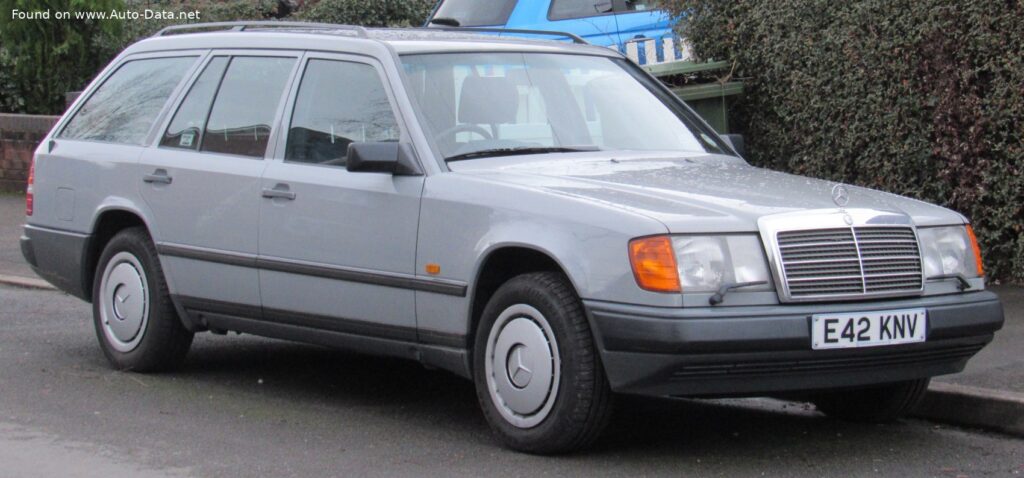
The Mercedes-Benz S124 300 TD Turbo: A Pillar of Engineering Excellence
The Mercedes-Benz S124 300 TD Turbo, produced from May 1985 to September 1988, represents a significant chapter in the history of premium executive automobiles. As part of the iconic W124 generation, the S124 designation specifically refers to the station wagon (estate) variant, which seamlessly combined Mercedes-Benz’s renowned build quality, sophisticated engineering, and the practicality demanded by families and professionals alike. This particular model, equipped with a turbocharged diesel engine and an automatic transmission, was a quintessential European luxury workhorse, embodying the brand’s commitment to durability, comfort, and efficiency during the mid-to-late 1980s. While not as widely available in the United States in this exact diesel configuration as its gasoline counterparts, the W124 chassis itself earned immense respect for its “over-engineered” quality, setting a benchmark for automotive longevity and reliability. The Mercedes-Benz S124 300 TD Turbo was more than just a car; it was a statement of pragmatic luxury and robust design, built to tackle countless miles with unwavering composure.
Engine and Performance
At the heart of the Mercedes-Benz S124 300 TD Turbo lies the formidable OM 603 D 30 A / 603.960 engine, a 3.0-liter (2996 cm3 or 182.83 cu. in.) inline-six diesel powerplant. This engine was a marvel of its time, showcasing Mercedes-Benz’s leadership in diesel technology. Featuring a turbocharger, it produced a respectable 143 horsepower at 4600 rpm and a robust 197 lb.-ft. (267 Nm) of torque at a low 2400 rpm. The inclusion of a turbocharger was crucial, transforming the performance characteristics of the diesel engine from merely economical to genuinely capable, offering a substantial boost in power and refinement over naturally aspirated diesel predecessors.
Power was delivered to the rear wheels via a smooth and durable 4-speed automatic transmission, a common and highly regarded setup for Mercedes-Benz vehicles of this era, emphasizing comfort and effortless cruising. This powertrain enabled the S124 300 TD Turbo to accelerate from 0 to 60 mph in a competitive 10.4 seconds, with a top speed of 121 mph (195 km/h). For a substantial station wagon powered by a diesel engine in the 1980s, these figures were quite impressive, allowing for confident highway merging and sustained high-speed travel on the autobahns.
Fuel efficiency was a key selling point, especially in European markets where diesel was prevalent. The Mercedes-Benz S124 300 TD Turbo achieved an estimated 25 US miles per gallon (9.4 liters/100 km) in urban driving and an even more impressive 34.1 US miles per gallon (6.9 liters/100 km) on the highway. These figures underscored its economic appeal, making it an ideal choice for long-distance journeys and daily commutes without frequent stops at the pump, thanks also to its generous 19.02 US gallon (72 liter) fuel tank. The engine’s precombustion chamber injection system and SOHC valvetrain further contributed to its efficient and relatively quiet operation for a diesel of its generation.
Design and Features
The S124 300 TD Turbo, as a station wagon (known as an “estate” in many markets), embodied the W124 generation’s timeless design philosophy: elegant, functional, and built to last. Its exterior lines, penned by Bruno Sacco, were both aerodynamically efficient for its time and remarkably understated, contributing to its enduring appeal. The five-door, five-seat configuration offered ample space for passengers and cargo, making it an exceptionally practical vehicle. The cargo area was particularly versatile, often featuring an optional rear-facing third-row seat, increasing passenger capacity to seven and highlighting its family-friendly design.
Inside, the S124 presented an environment of understated luxury and exceptional build quality. Materials were chosen for their durability and tactile appeal, with precise fit and finish throughout the cabin. Ergonomics were a strong suit, with controls intuitively placed and seats designed for long-distance comfort. While devoid of the digital screens and myriad electronic aids of modern vehicles, the S124 offered a classic, driver-focused cockpit that prioritized clarity and functionality.
From a technical standpoint, the S124 was well-appointed for its era. Safety was a paramount concern for Mercedes-Benz, and the 300 TD Turbo included Anti-lock Braking System (ABS) as a standard or widely available feature, significantly enhancing braking control in adverse conditions. The vehicle’s suspension system, featuring a wishbone front setup and a sophisticated independent multi-link rear suspension, provided an unparalleled balance of ride comfort and handling precision. This advanced rear suspension design was a hallmark of the W124 chassis, offering superior wheel control and stability. The hydraulic power steering, utilizing a cone worm with recirculation balls type, provided precise and communicative feedback, contributing to the car’s confident driving dynamics.
Technical Specifications
| Feature | Value |
|---|---|
| Brand | Mercedes-Benz |
| Model | W124 (S124 Generation) |
| Type (Engine) | 300 TD Turbo (143 Hp) Automatic |
| Production Start | May, 1985 |
| Production End | September, 1988 |
| Body Type | Station wagon (estate) |
| Seats | 5 |
| Doors | 5 |
| Fuel Type | Diesel |
| Fuel Consumption (City) | 9.4 L/100 km (25 US mpg) |
| Fuel Consumption (Highway) | 6.9 L/100 km (34.1 US mpg) |
| Acceleration 0-60 mph | 10.4 sec |
| Maximum Speed | 195 km/h (121.17 mph) |
| Power | 143 Hp @ 4600 rpm |
| Torque | 267 Nm (196.93 lb.-ft.) @ 2400 rpm |
| Engine Layout | Front, Longitudinal |
| Engine Model/Code | OM 603 D 30 A / 603.960 |
| Engine Displacement | 2996 cm3 (3.0 L / 182.83 cu. in.) |
| Number of Cylinders | 6, Inline |
| Cylinder Bore | 87 mm (3.43 in.) |
| Piston Stroke | 84 mm (3.31 in.) |
| Compression Ratio | 22:1 |
| Valves per Cylinder | 2 |
| Fuel Injection System | Precombustion chamber injection |
| Engine Aspiration | Turbocharger |
| Valvetrain | SOHC |
| Engine Oil Capacity | 7.5 L (7.93 US qt) |
| Coolant Capacity | 9.5 L (10.04 US qt) |
| Kerb Weight | 1560 kg (3439.21 lbs.) |
| Max. Weight | 2180 kg (4806.08 lbs.) |
| Max Load | 620 kg (1366.87 lbs.) |
| Fuel Tank Capacity | 72 L (19.02 US gal) |
| Length | 4765 mm (187.6 in.) |
| Width | 1740 mm (68.5 in.) |
| Height | 1490 mm (58.66 in.) |
| Wheelbase | 2800 mm (110.24 in.) |
| Front Track | 1497 mm (58.94 in.) |
| Rear Track | 1488 mm (58.58 in.) |
| Drivetrain Architecture | Rear wheel drive |
| Transmission | 4 gears, automatic transmission |
| Front Suspension | Wishbone |
| Rear Suspension | Independent multi-link suspension |
| Front Brakes | Ventilated discs |
| Rear Brakes | Disc |
| Assisting Systems | ABS (Anti-lock braking system) |
| Steering Type | Cone worm with recirculation balls |
| Power Steering | Hydraulic Steering |
| Front Tires | 195/65 R15 |
| Rear Tires | 195/65 R15 |
| Front Wheel Rims | 6.5J x 15 |
| Rear Wheel Rims | 6.5J x 15 |
Legacy and Market Impact
The Mercedes-Benz S124 300 TD Turbo, and indeed the entire W124 generation, left an indelible mark on the automotive landscape, particularly in its primary European markets. It quickly gained a reputation for being “over-engineered,” a term that became synonymous with Mercedes-Benz’s commitment to uncompromising quality and durability. This specific diesel wagon variant was a testament to that philosophy, proving to be an exceptionally reliable and long-lasting vehicle, with many examples still operating reliably today, decades after their production.
In Europe, the S124 station wagon was a dominant force in the premium executive segment. It served as a versatile family hauler, a comfortable long-distance cruiser for business professionals, and even as a preferred choice for taxi fleets in Germany due to its legendary robustness and low running costs. Its competitors included vehicles like the BMW 5-Series Touring (though the E34 Touring arrived slightly later), the Audi 100/A6 Avant, and the Volvo 740/940 Estate. However, the Mercedes-Benz offered a unique blend of understated luxury, sophisticated diesel engineering, and peerless build quality that often set it apart.
While the diesel S124 was less common in the United States compared to its gasoline siblings (like the 300E and 300TE), the W124 chassis itself was highly revered. American buyers who sought out the diesel variants appreciated their superior fuel economy and renowned longevity, even if diesel fuel was not as widely available or as favorably priced as in Europe. These vehicles fostered a dedicated niche following among those who valued long-term ownership and a robust, no-nonsense driving experience.
The historical significance of the Mercedes-Benz S124 300 TD Turbo extends beyond its sales figures. It set new benchmarks for vehicle safety, ride comfort, and overall structural integrity. Its advanced multi-link rear suspension, a feature that would become standard across many manufacturers, demonstrated Mercedes-Benz’s innovative engineering prowess. Today, the S124 generation, especially well-preserved diesel wagons, are considered modern classics. They are highly sought after by enthusiasts and collectors globally for their timeless design, exceptional driving dynamics, and the unparalleled feeling of solidity that only a vintage Mercedes-Benz can provide. The Mercedes-Benz S124 300 TD Turbo continues to represent an era when automotive engineering prioritized durability and craftsmanship above all else, securing its legacy as one of the finest vehicles ever produced by the Stuttgart-based automaker.
