
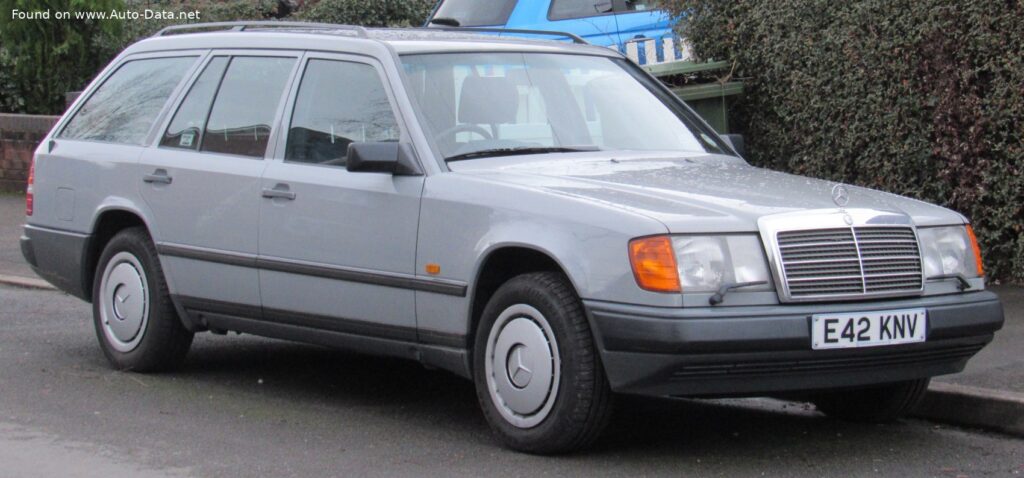
Mercedes-Benz S124 300 TD Turbo (147 Hp) 4MATIC Automatic: A Legacy of Engineering and Versatility
The Mercedes-Benz S124 300 TD Turbo (147 Hp) 4MATIC Automatic represents a significant chapter in the history of premium station wagons, embodying Mercedes-Benz’s renowned commitment to engineering excellence, durability, and passenger comfort. Part of the iconic W124 generation, the S124 chassis designated the station wagon body style. Produced between September 1988 and August 1989, this particular variant combined a potent turbocharged diesel engine with Mercedes-Benz’s innovative 4MATIC all-wheel-drive system and a smooth automatic transmission, creating a highly capable and sophisticated vehicle for its era. While not a direct mass-market model in the United States, its mechanical underpinnings and design language were familiar to American consumers through other W124 sedans and coupes, making it a highly respected, albeit rare, specimen among enthusiasts and collectors seeking the pinnacle of German automotive engineering in a versatile package.
The W124 Generation: A Benchmark for Mercedes-Benz S124 Engineering
The W124 series, introduced in 1984, quickly established itself as a benchmark for mid-size luxury cars. Known for its exceptional build quality, advanced safety features, and a timeless design penned by Bruno Sacco, the W124 platform offered various body styles, including sedans (W124), coupes (C124), convertibles (A124), and the highly practical station wagons (S124). The S124 models, in particular, were celebrated for their spacious interiors, robust construction, and ability to effortlessly combine luxury with utility. The 1988-1989 Mercedes-Benz S124 300 TD Turbo 4MATIC Automatic stood out by integrating a powerful diesel engine with an advanced all-wheel-drive system, offering superior traction and performance in diverse driving conditions. This combination solidified its reputation as a sophisticated and highly competent vehicle, particularly appealing in European markets where diesel power and all-wheel-drive were increasingly valued.
Engine and Performance: Powering the Mercedes-Benz S124
At the heart of the Mercedes-Benz S124 300 TD Turbo (147 Hp) 4MATIC Automatic lies the legendary OM 603 D 30 A / 603.963 inline-six diesel engine. With an engine displacement of 2,996 cubic centimeters (approximately 182.83 cubic inches), this powerplant was equipped with a turbocharger, a relatively advanced feature for diesel engines of its time, significantly boosting its output. It produced a respectable 147 horsepower at 4,600 rpm and an impressive 273 Newton-meters (201.35 pound-feet) of torque at a low 2,400 rpm. This torque output was particularly beneficial for a station wagon, providing ample pulling power for hauling cargo or passengers.
Power was delivered through a smooth 4-speed automatic transmission, known for its durability and refined shifts. The vehicle’s performance figures were commendable for a turbocharged diesel station wagon weighing 3,725.81 pounds (1,690 kg). It could accelerate from 0 to 60 mph in a brisk 12.2 seconds, with a top speed of 116.82 mph (188 km/h). Fuel efficiency was also a strong suit, with urban consumption rated at 23.1 US mpg and extra-urban figures reaching 31.4 US mpg, showcasing the inherent economy of diesel propulsion. The engine utilized a precombustion chamber injection system, a common technology for diesel engines of that era, ensuring reliable and efficient fuel delivery. Its single overhead camshaft (SOHC) design with two valves per cylinder emphasized durability and straightforward maintenance.
Design and Features: Form Meets Function in the Mercedes-Benz S124
The S124 station wagon body style was celebrated for its elegant yet practical design. With five doors and seating for five, it offered generous cargo capacity and comfortable accommodation for occupants. The exterior dimensions—187.6 inches (4765 mm) in length, 68.5 inches (1740 mm) in width, and 58.98 inches (1498 mm) in height—contributed to a commanding road presence while maintaining a sleek profile. The long 110.24-inch (2800 mm) wheelbase ensured a smooth ride and stable handling, typical of Mercedes-Benz vehicles.
Key features for this period included the advanced 4MATIC all-wheel-drive system. This intelligent system was designed to drive the rear wheels permanently, engaging the front wheels through an electrically or mechanically operated clutch only when necessary, such as during slippage, significantly enhancing traction and stability in adverse weather conditions or on challenging terrain. For safety, the S124 came equipped with an Anti-lock Braking System (ABS) as standard, a crucial active safety feature in the late 1980s. The suspension setup comprised a wishbone front suspension and an independent multi-link rear suspension, a sophisticated arrangement that provided a remarkable balance of ride comfort and precise handling. Stopping power was handled by ventilated discs at the front and disc brakes at the rear. The hydraulic power steering, with its cone worm with recirculation balls type, offered a reassuringly direct feel and reduced driver effort. The vehicle rode on 195/65 R15 tires mounted on 6.5J x 15 wheel rims, providing a comfortable and stable contact patch with the road.
Technical Specifications
| General Information | |
|---|---|
| Brand | Mercedes-Benz |
| Model | W124 |
| Generation | S124 |
| Type (Engine) | 300 TD Turbo (147 Hp) 4MATIC Automatic |
| Start of Production | September, 1988 year |
| End of Production | August, 1989 year |
| Powertrain Architecture | Internal Combustion engine |
| Body type | Station wagon (estate) |
| Seats | 5 |
| Doors | 5 |
| Performance Specs | |
| Fuel consumption (economy) – urban | 10.2 l/100 km (23.1 US mpg) |
| Fuel consumption (economy) – extra urban | 7.5 l/100 km (31.4 US mpg) |
| Fuel Type | Diesel |
| Acceleration 0 – 60 mph | 12.2 sec |
| Maximum speed | 188 km/h (116.82 mph) |
| Weight-to-power ratio | 11.5 kg/Hp (87 Hp/tonne) |
| Weight-to-torque ratio | 6.2 kg/Nm (161.5 Nm/tonne) |
| Engine Specs | |
| Power | 147 Hp @ 4600 rpm |
| Power per liter | 49.1 Hp/l |
| Torque | 273 Nm @ 2400 rpm (201.35 lb.-ft. @ 2400 rpm) |
| Engine layout | Front, Longitudinal |
| Engine Model/Code | OM 603 D 30 A / 603.963 |
| Engine displacement | 2996 cm3 (182.83 cu. in.) |
| Number of cylinders | 6 |
| Engine configuration | Inline |
| Cylinder Bore | 87 mm (3.43 in.) |
| Piston Stroke | 84 mm (3.31 in.) |
| Compression ratio | 22:1 |
| Number of valves per cylinder | 2 |
| Fuel injection system | Precombustion chamber injection |
| Engine aspiration | Turbocharger |
| Valvetrain | SOHC |
| Engine oil capacity | 7.5 l (7.93 US qt) |
| Coolant | 9.5 l (10.04 US qt) |
| Space, Volume and Weights | |
| Kerb Weight | 1690 kg (3725.81 lbs) |
| Max. weight | 2260 kg (4982.45 lbs) |
| Max load | 570 kg (1256.63 lbs) |
| Fuel tank capacity | 72 l (19.02 US gal) |
| Dimensions | |
| Length | 4765 mm (187.6 in.) |
| Width | 1740 mm (68.5 in.) |
| Height | 1498 mm (58.98 in.) |
| Wheelbase | 2800 mm (110.24 in.) |
| Front track | 1497 mm (58.94 in.) |
| Rear (Back) track | 1485 mm (58.46 in.) |
| Drivetrain, Brakes and Suspension Specs | |
| Drivetrain Architecture | Internal combustion engine (ICE) drives the rear wheels permanently, and the front wheels are driven through an electrically or mechanically operated clutch if necessary. |
| Drive wheel | All wheel drive (4×4) |
| Number of gears and type of gearbox | 4 gears, automatic transmission |
| Front suspension | Wishbone |
| Rear suspension | Independent multi-link suspension |
| Front brakes | Ventilated discs |
| Rear brakes | Disc |
| Assisting systems | ABS (Anti-lock braking system) |
| Steering type | Cone worm with recirculation balls |
| Power steering | Hydraulic Steering |
| Tires size | Front: 195/65 R15, Rear: 195/65 R15 |
| Wheel rims size | Front: 6.5J x 15, Rear: 6.5J x 15 |
Legacy and Market Impact of the Mercedes-Benz S124
The Mercedes-Benz S124, particularly the 300 TD Turbo 4MATIC, holds a significant place in automotive history as an exemplar of Mercedes-Benz’s “over-engineering” philosophy. Its reputation for bulletproof reliability, exceptional build quality, and long-term durability is legendary. These vehicles were designed to withstand hundreds of thousands of miles, often outliving their original owners. While premium station wagons faced stiff competition in the late 1980s, primarily from rivals like the BMW E34 Touring and the Audi 100 Avant (which also offered Quattro all-wheel-drive), the S124 differentiated itself with its unique blend of robust diesel power, luxurious comfort, and the innovative 4MATIC system.
The 4MATIC system, in particular, was a technological highlight. It represented Mercedes-Benz’s early foray into sophisticated all-wheel-drive, offering enhanced safety and performance in varying conditions without sacrificing the refined driving dynamics expected of the brand. For markets like Europe, where harsh winters and varied terrain are common, the 300 TD Turbo 4MATIC was an ideal choice, combining fuel efficiency with superior traction.
Today, the S124 generation, and especially well-preserved examples of the 300 TD Turbo 4MATIC, are highly sought after by collectors and enthusiasts who appreciate their classic design, mechanical integrity, and the enduring quality that defines this era of Mercedes-Benz production. They are considered modern classics, embodying a period when automotive engineering prioritized longevity and driver experience above all else. Its legacy is one of a supremely capable, comfortable, and durable vehicle that set high standards for premium station wagons and showcased Mercedes-Benz’s pioneering spirit in both diesel technology and all-wheel-drive systems.
