
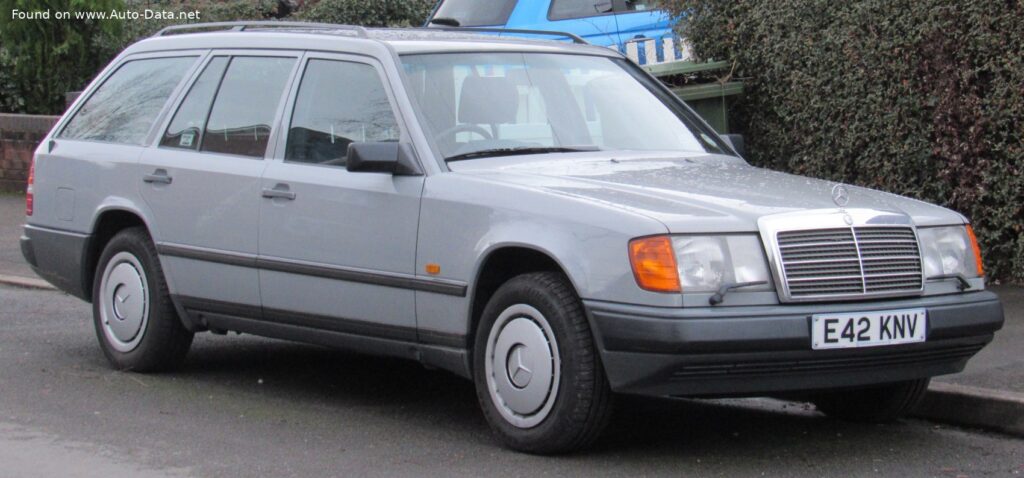
The Enduring Legacy of the Mercedes-Benz S124 300 TE (188 Hp)
The Mercedes-Benz W124 series, produced from 1984 to 1995, stands as a monumental achievement in automotive engineering, a testament to Mercedes-Benz’s commitment to quality, durability, and refined performance during the late 20th century. Within this highly acclaimed generation, the Mercedes-Benz S124 300 TE (188 Hp) represents the station wagon variant, often referred to as an “estate” in European markets, and specifically a potent and highly sought-after iteration. Launched in May 1985 and produced until August 1989, the S124 300 TE carved out a significant niche as a premium family hauler that offered executive comfort, robust performance, and unparalleled practicality. Though not as widely sold in the United States as its sedan counterpart, the S124 station wagon was a cornerstone of the European luxury market, embodying a blend of sophistication and utilitarian design that few competitors could match. It quickly became a benchmark for executive wagons, celebrated for its advanced engineering, elegant styling, and an almost bulletproof reputation for reliability.
Engineering Excellence and the Mercedes-Benz S124 300 TE Powertrain
At the heart of the Mercedes-Benz S124 300 TE (188 Hp) was the venerable M 103 E 30 / 103.983 engine, a naturally aspirated, 3.0-liter (2962 cm3 or 180.75 cu. in.) inline-six gasoline engine. This powerplant was a marvel of its time, known for its smooth operation, robust construction, and ample power delivery. Featuring a Single Overhead Camshaft (SOHC) valvetrain with two valves per cylinder, and a multi-port manifold injection system, the engine was designed for efficiency and responsiveness. It produced a healthy 188 horsepower at 5700 rpm, translating to a power-per-liter output of 63.5 horsepower per liter. Torque figures were equally impressive for the era, reaching 260 Nm (191.77 lb.-ft.) at 4400 rpm, providing strong pulling power across the rev range.
The powertrain architecture of the S124 300 TE was classic Mercedes-Benz: a front-mounted, longitudinal engine driving the rear wheels. This configuration ensured excellent weight distribution, contributing to the vehicle’s stable and predictable handling characteristics. Power was routed through a precise 5-speed manual transmission, offering an engaging driving experience that allowed the driver to fully exploit the engine’s capabilities. This combination resulted in spirited performance for a family wagon of its size and era, with the S124 300 TE capable of accelerating from 0 to 60 mph in a swift 7.8 seconds (0-100 km/h in 8.2 seconds) and reaching a maximum speed of 133.59 mph (215 km/h).
Fuel economy, while not a primary selling point for a luxury inline-six in the 1980s, was respectable. The urban consumption was rated at 13.8 liters per 100 km (approximately 17 US mpg), while extra-urban driving could achieve 7.4 liters per 100 km (around 31.8 US mpg). These figures underscored the engine’s balance of performance and reasonable efficiency for a vehicle of its class, further solidifying its appeal to European consumers who often faced higher fuel costs.
Design, Features, and Practicality
The S124 station wagon, or “estate,” variant of the W124 series was a triumph of functional design. Its timeless styling, characterized by clean lines, a robust stance, and an aerodynamic profile (for its time), has ensured its enduring aesthetic appeal. The body type, a 5-door station wagon, offered immense practicality, seating five occupants comfortably with generous cargo space. The thoughtful engineering extended to the vehicle’s dimensions, with a length of 187.6 inches, a width of 68.5 inches, and a height of 58.66 inches, all contributing to a spacious interior. A wheelbase of 110.24 inches provided a stable ride and ample legroom.
Beyond aesthetics, the S124 300 TE was engineered for superior ride comfort and handling. The front suspension utilized a wishbone setup, while the rear featured an independent multi-link suspension system, a sophisticated design that was groundbreaking for its time and significantly contributed to the W124’s reputation for excellent road manners and passenger comfort, even under load. Braking was handled by ventilated discs at the front and solid discs at the rear, providing confident stopping power. The steering system, a cone worm with recirculation balls, was complemented by hydraulic power steering, offering precise control and ease of maneuverability.
Standard features for the S124 300 TE reflected its premium positioning. These included durable interior materials, meticulous build quality, and a focus on occupant safety that was advanced for the mid-1980s. The station wagon body offered exceptional versatility, making it ideal for families, professionals, and anyone needing substantial cargo capacity without compromising on luxury or driving dynamics. The vehicle’s kerb weight of 3240.8 lbs (1470 kg) and a maximum load capacity of 1366.87 lbs (620 kg) further highlighted its robust construction and utility.
Technical Specifications: Mercedes-Benz S124 300 TE (188 Hp)
| Specification | Value |
|---|---|
| General Information | |
| Brand | Mercedes-Benz |
| Model | W124 |
| Generation | S124 |
| Type (Engine) | 300 TE (188 Hp) |
| Start of Production | May, 1985 |
| End of Production | August, 1989 |
| Powertrain Architecture | Internal Combustion engine |
| Body Type | Station wagon (estate) |
| Seats | 5 |
| Doors | 5 |
| Performance Specs | |
| Fuel Consumption (Urban) | 13.8 l/100 km (17 US mpg) |
| Fuel Consumption (Extra Urban) | 7.4 l/100 km (31.8 US mpg) |
| Fuel Type | Petrol (Gasoline) |
| Acceleration 0 – 60 mph | 7.8 sec |
| Acceleration 0 – 100 km/h | 8.2 sec |
| Maximum Speed | 215 km/h (133.59 mph) |
| Weight-to-Power Ratio | 7.8 kg/Hp (127.9 Hp/tonne) |
| Weight-to-Torque Ratio | 5.7 kg/Nm (176.9 Nm/tonne) |
| Engine Specs | |
| Power | 188 Hp @ 5700 rpm |
| Power per Liter | 63.5 Hp/l |
| Torque | 260 Nm @ 4400 rpm (191.77 lb.-ft. @ 4400 rpm) |
| Engine Layout | Front, Longitudinal |
| Engine Model/Code | M 103 E 30 / 103.983 |
| Engine Displacement | 2962 cm3 (180.75 cu. in.) |
| Number of Cylinders | 6 |
| Engine Configuration | Inline |
| Cylinder Bore | 88.5 mm (3.48 in.) |
| Piston Stroke | 80.25 mm (3.16 in.) |
| Compression Ratio | 9.2:1 |
| Number of Valves per Cylinder | 2 |
| Fuel Injection System | Multi-port manifold injection |
| Engine Aspiration | Naturally aspirated engine |
| Valvetrain | SOHC |
| Engine Oil Capacity | 6.5 l (6.87 US qt) |
| Engine Oil Specification | Information not available |
| Coolant Capacity | 9 l (9.51 US qt) |
| Space, Volume and Weights | |
| Kerb Weight | 1470 kg (3240.8 lbs.) |
| Max. Weight | 2090 kg (4607.66 lbs.) |
| Max Load | 620 kg (1366.87 lbs.) |
| Fuel Tank Capacity | 72 l (19.02 US gal) |
| Dimensions | |
| Length | 4765 mm (187.6 in.) |
| Width | 1740 mm (68.5 in.) |
| Height | 1490 mm (58.66 in.) |
| Wheelbase | 2800 mm (110.24 in.) |
| Front Track | 1497 mm (58.94 in.) |
| Rear (Back) Track | 1488 mm (58.58 in.) |
| Drivetrain, Brakes and Suspension Specs | |
| Drivetrain Architecture | Internal Combustion engine drives the rear wheels |
| Drive Wheel | Rear wheel drive |
| Number of Gears and Type of Gearbox | 5 gears, manual transmission |
| Front Suspension | Wishbone |
| Rear Suspension | Independent multi-link suspension |
| Front Brakes | Ventilated discs |
| Rear Brakes | Disc |
| Steering Type | Cone worm with recirculation balls |
| Power Steering | Hydraulic Steering |
| Tires Size (Front/Rear) | 195/65 R15 |
| Wheel Rims Size (Front/Rear) | 6.5J x 15 |
Legacy and Market Impact of the S124 300 TE
The Mercedes-Benz W124 generation, and particularly its S124 station wagon variant, holds an esteemed place in automotive history. The Mercedes-Benz S124 300 TE (188 Hp), with its potent inline-six engine and practical body style, was a significant player in the European executive wagon segment. It competed fiercely with rivals such as the BMW 5-Series Touring (E34 generation) and the Audi 100 Avant, often surpassing them in terms of perceived build quality, ride comfort, and long-term durability. Mercedes-Benz’s reputation for engineering overkill was evident in every aspect of the W124, from its robust chassis to its meticulously crafted interior, contributing to its legendary reliability and longevity.
The S124 300 TE was not merely a mode of transport; it was a statement. It appealed to a demographic that valued understated luxury, practicality, and unflappable dependability. Its advanced multi-link rear suspension, a feature that would become a standard across many manufacturers, provided a ride quality that was both supple and controlled, even when fully loaded. This made it a favorite among families needing space for luggage and passengers, or professionals requiring a versatile vehicle for both work and leisure.
Decades after its production ceased, the W124 series, including the S124 300 TE, continues to command a strong following among enthusiasts and collectors. Its status as a “last of the over-engineered” Mercedes-Benz models contributes to its enduring appeal. Many examples are still on the road today, a testament to their exceptional build quality and the foresight of their designers and engineers. The S124 300 TE cemented Mercedes-Benz’s position as a leader in the luxury station wagon segment, influencing subsequent generations of premium family vehicles and leaving an indelible mark on the automotive landscape. Its blend of performance, practicality, and timeless design ensures its legacy as one of the finest wagons ever produced.
