
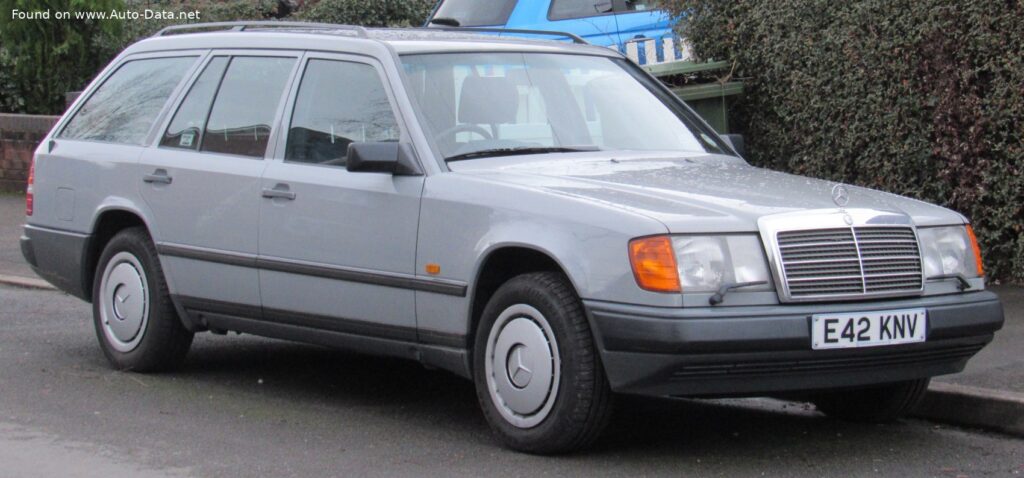
Mercedes-Benz S124 300 TE (188 Hp) 4MATIC: A Paragon of Executive Wagons
The Mercedes-Benz S124 300 TE (188 Hp) 4MATIC represents a significant chapter in the history of luxury executive vehicles, embodying Mercedes-Benz’s renowned commitment to engineering excellence, durability, and refined performance. Part of the iconic W124 generation, which debuted in 1984, the S124 designation specifically refers to the station wagon (or estate) variant. Produced between August 1986 and August 1989, this particular model was notable for its powerful inline-six engine and, critically, its advanced 4MATIC all-wheel-drive system, a technological marvel for its era. While not as commonly seen in the United States as its sedan counterpart, the S124 300 TE 4MATIC carved out a formidable reputation in its primary European markets as a versatile, comfortable, and exceptionally capable family hauler, blending the practicality of a wagon with the sophistication and performance expected of a Mercedes-Benz.
The W124 platform itself is widely regarded as one of the finest automobiles ever produced by Mercedes-Benz, often lauded for its “over-engineered” quality, robust construction, and timeless design. The S124 wagon capitalized on these virtues, offering an expansive and highly functional interior without compromising the elegant aesthetics or dynamic driving characteristics of the W124 sedan. The introduction of the 4MATIC system further cemented its status as a technological leader, providing enhanced traction and stability in challenging driving conditions, a feature that was particularly appealing in the diverse climates of Europe. This blend of luxury, utility, and advanced technology made the Mercedes-Benz S124 300 TE (188 Hp) 4MATIC a highly desirable vehicle for discerning buyers who demanded both prestige and practicality.
Engine and Performance: The Heart of the Mercedes-Benz S124 300 TE (188 Hp) 4MATIC
At the core of the Mercedes-Benz S124 300 TE (188 Hp) 4MATIC lies the formidable M 103 E 30 / 103.985 inline-six gasoline engine. This naturally aspirated 3.0-liter (2962 cm3 or 180.75 cu. in.) powerplant was a hallmark of Mercedes-Benz engineering during the late 1980s, known for its smooth operation, robust construction, and reliable performance. The engine features a Single Overhead Camshaft (SOHC) valvetrain with two valves per cylinder and utilizes a multi-port manifold injection system for precise fuel delivery, ensuring efficient combustion and responsive throttle input.
The M 103 engine in the 300 TE delivered a healthy 188 horsepower at 5700 rpm, which, for a luxury wagon of its time, provided ample motivation. Torque output stood at 191.77 lb.-ft. (260 Nm) at a relatively accessible 4400 rpm, contributing to strong mid-range acceleration and effortless cruising. This power enabled the S124 300 TE 4MATIC to accelerate from 0 to 60 mph in a respectable 8.9 seconds, with a top speed of 128.62 mph (207 km/h). These figures underscored its capability as a swift and composed long-distance tourer, despite its substantial kerb weight of 3527.4 lbs. (1600 kg).
Fuel economy, while not a primary selling point for a luxury vehicle of this era, was competitive for its class. The official figures indicated an urban consumption of approximately 16.1 US mpg (14.6 l/100 km) and an extra-urban consumption of around 29 US mpg (8.1 l/100 km). These numbers reflect the balance Mercedes-Benz struck between performance and efficiency, especially considering the added complexity and weight of the 4MATIC all-wheel-drive system. The 72-liter (19.02 US gal) fuel tank provided a generous cruising range, further enhancing its suitability for extended journeys.
The defining feature of this particular model was its innovative 4MATIC drivetrain. Unlike modern permanent all-wheel-drive systems, the W124’s 4MATIC architecture was a sophisticated, on-demand system. The internal combustion engine primarily drove the rear wheels, with the front wheels engaged only when necessary through an electrically or mechanically operated clutch. This intelligent system monitored wheel slip and automatically distributed power to the front axle to maximize traction, providing superior grip in slippery conditions while maintaining the rear-wheel-drive dynamics under normal circumstances. This system was revolutionary, offering enhanced safety and performance without the fuel economy penalties or steering compromises often associated with early all-wheel-drive designs.
Design and Features
The S124 generation station wagon, or estate, is a masterclass in functional design, blending the timeless elegance of the W124 sedan with unparalleled practicality. With five doors and seating for five, the S124 300 TE was conceived as a highly versatile luxury vehicle, capable of comfortably transporting passengers and a substantial amount of cargo. Its dimensions – 187.6 inches (4765 mm) long, 68.5 inches (1740 mm) wide, and 58.98 inches (1498 mm) high – provided a commanding road presence while ensuring ample interior space. The generous 110.24-inch (2800 mm) wheelbase contributed to a smooth ride and stable handling, hallmarks of the W124 platform.
The exterior design of the S124 is characterized by clean lines, a robust stance, and an understated sophistication that has aged remarkably well. Its aerodynamic profile, developed extensively in the wind tunnel, was cutting-edge for the 1980s, contributing to reduced wind noise and improved fuel efficiency. The large glass area provided excellent visibility, a practical consideration for a family-oriented vehicle. The build quality, a legendary aspect of the W124, was evident in every panel gap and door thud, speaking to the meticulous engineering and high-quality materials used in its construction.
Inside, the S124 300 TE offered a cabin designed for comfort and ergonomic efficiency. High-quality materials, including durable fabrics or optional leather upholstery, wood trim, and precise switchgear, created an atmosphere of understated luxury. The dashboard layout was logical and driver-focused, with clear instrumentation and easily accessible controls. A significant feature for its time was the advanced independent multi-link rear suspension, a Mercedes-Benz innovation that delivered exceptional ride comfort, precise handling, and superior load-carrying capabilities. This was complemented by a wishbone front suspension, ensuring a balanced and refined driving experience.
Safety was a paramount concern for Mercedes-Benz, even in the 1980s. The S124 300 TE came equipped with an Anti-lock Braking System (ABS) as standard, a crucial active safety feature that prevented wheel lock-up under heavy braking, allowing the driver to maintain steering control. The braking system itself consisted of ventilated discs at the front and solid discs at the rear, providing strong and consistent stopping power. Steering was handled by a cone worm with recirculation balls system, augmented by hydraulic power steering, offering precise control and a comfortable steering effort. The car rode on 195/65 R15 tires mounted on 6.5J x 15-inch wheel rims, providing a good balance of grip, comfort, and durability.
Technical Specifications
| Category | Specification | Value |
|---|---|---|
| General Information | Brand | Mercedes-Benz |
| Model | W124 | |
| Generation | S124 | |
| Type (Engine) | 300 TE (188 Hp) 4MATIC | |
| Start of production | August, 1986 year | |
| End of production | August, 1989 year | |
| Powertrain Architecture | Internal Combustion engine | |
| Body type | Station wagon (estate) | |
| Seats | 5 | |
| Doors | 5 | |
| Performance Specs | Fuel consumption (economy) – urban | 14.6 l/100 km (16.1 US mpg) |
| Fuel consumption (economy) – extra urban | 8.1 l/100 km (29 US mpg) | |
| Fuel Type | Petrol (Gasoline) | |
| Acceleration 0 – 60 mph | 8.9 sec | |
| Acceleration 0 – 100 km/h | 9.4 sec | |
| Maximum speed | 207 km/h (128.62 mph) | |
| Weight-to-power ratio | 8.5 kg/Hp (117.5 Hp/tonne) | |
| Weight-to-torque ratio | 6.2 kg/Nm (162.5 Nm/tonne) | |
| Engine Specs | Power | 188 Hp @ 5700 rpm |
| Power per liter | 63.5 Hp/l | |
| Torque | 260 Nm @ 4400 rpm (191.77 lb.-ft. @ 4400 rpm) | |
| Engine layout | Front, Longitudinal | |
| Engine Model/Code | M 103 E 30 / 103.985 | |
| Engine displacement | 2962 cm3 (180.75 cu. in.) | |
| Number of cylinders | 6 | |
| Engine configuration | Inline | |
| Cylinder Bore | 88.5 mm (3.48 in.) | |
| Piston Stroke | 80.25 mm (3.16 in.) | |
| Compression ratio | 9.2:1 | |
| Number of valves per cylinder | 2 | |
| Fuel injection system | Multi-port manifold injection | |
| Engine aspiration | Naturally aspirated engine | |
| Valvetrain | SOHC | |
| Engine oil capacity | 6.5 l (6.87 US qt) | |
| Coolant | 9 l (9.51 US qt) | |
| Space, Volume and Weights | Kerb Weight | 1600 kg (3527.4 lbs.) |
| Max. weight | 2180 kg (4806.08 lbs.) | |
| Max load | 580 kg (1278.68 lbs.) | |
| Fuel tank capacity | 72 l (19.02 US gal) | |
| Dimensions | Length | 4765 mm (187.6 in.) |
| Width | 1740 mm (68.5 in.) | |
| Height | 1498 mm (58.98 in.) | |
| Wheelbase | 2800 mm (110.24 in.) | |
| Front track | 1497 mm (58.94 in.) | |
| Rear (Back) track | 1485 mm (58.46 in.) | |
| Drivetrain, Brakes and Suspension Specs | Drivetrain Architecture | The Internal combustion engine (ICE) drives the rear wheels permanently, and the front wheels are driven through an electrically or mechanically operated clutch if necessary. |
| Drive wheel | All wheel drive (4×4) | |
| Front suspension | Wishbone | |
| Rear suspension | Independent multi-link suspension | |
| Front brakes | Ventilated discs | |
| Rear brakes | Disc | |
| Assisting systems | ABS (Anti-lock braking system) | |
| Steering type | Cone worm with recirculation balls | |
| Power steering | Hydraulic Steering | |
| Tires size | Front wheel tires: 195/65 R15; Rear wheel tires: 195/65 R15 | |
| Wheel rims size | Front wheel rims: 6.5J x 15; Rear wheel rims: 6.5J x 15 |
Legacy and Market Impact
The Mercedes-Benz S124 300 TE (188 Hp) 4MATIC holds a significant place in automotive history, particularly within the context of European luxury wagons. Its legacy is deeply intertwined with the W124 generation’s reputation for being one of the most robust, reliable, and meticulously engineered vehicles ever produced by Mercedes-Benz. Often referred to as “the last of the over-engineered Mercedes,” the W124, and especially its wagon variant, set incredibly high benchmarks for build quality and longevity that few subsequent models have matched.
In its primary markets, particularly across Europe, the S124 300 TE 4MATIC was highly esteemed by professionals and families who required a vehicle that combined executive luxury with genuine utility and all-weather capability. Its spacious interior and impressive cargo capacity, coupled with the refined driving dynamics and comfort of a Mercedes-Benz, made it an ideal choice for long-distance travel and daily family duties. The optional third-row jump seats, a common feature in S124 wagons, further enhanced its versatility, making it a true seven-seater in a pinch.
Competitors in the executive wagon segment during its production years included models such as the BMW 5-Series Touring (E34 generation), the Audi 100 Avant (C3/C4 generations), and to some extent, premium wagons from Volvo like the 740 and 940 series. However, the S124 300 TE 4MATIC often distinguished itself through its superior ride comfort, the perceived higher quality of its interior materials, and the advanced engineering of its 4MATIC system. While BMW and Audi were also developing their all-wheel-drive technologies, Mercedes-Benz’s implementation in the 4MATIC system was particularly sophisticated for its time, offering a blend of traditional rear-wheel-drive feel with the added security of on-demand all-wheel drive.
The historical significance of the S124 300 TE 4MATIC extends beyond its immediate market success. It represents a period when Mercedes-Benz was at the zenith of its engineering prowess, creating cars that were not only luxurious but also built to last for decades. Many examples of W124s, including the S124 wagon, are still on the road today, a testament to their inherent durability and timeless appeal. The 4MATIC system, in particular, foreshadowed the widespread adoption of all-wheel drive in luxury and performance vehicles, demonstrating Mercedes-Benz’s foresight in anticipating consumer demand for enhanced traction and safety.
Today, the Mercedes-Benz S124 300 TE 4MATIC is highly regarded by classic car enthusiasts and collectors. Its combination of robust mechanics, classic Mercedes-Benz design, and the rarity of the 4MATIC system makes it a sought-after model. It serves as a potent reminder of an era when automotive engineering prioritized longevity and quality above all else, solidifying its status as an iconic and influential vehicle in the pantheon of German automotive excellence.
