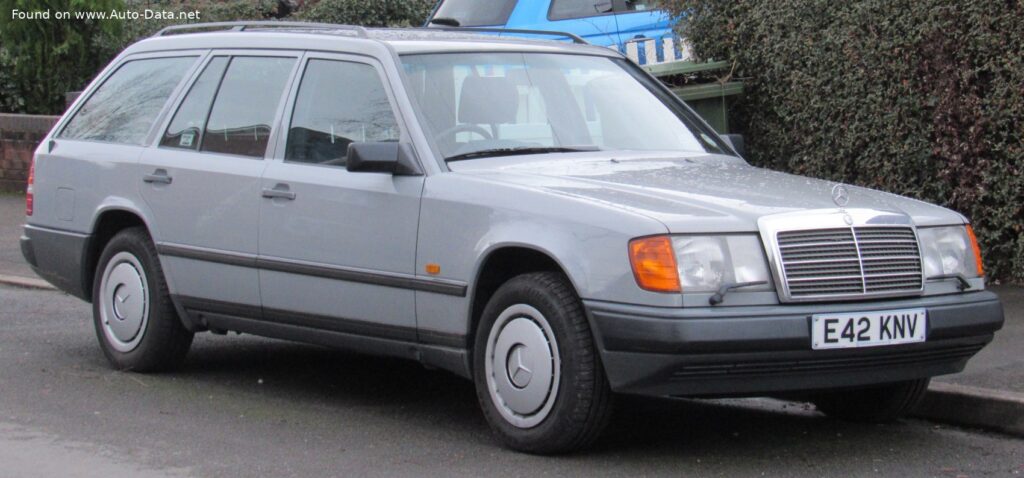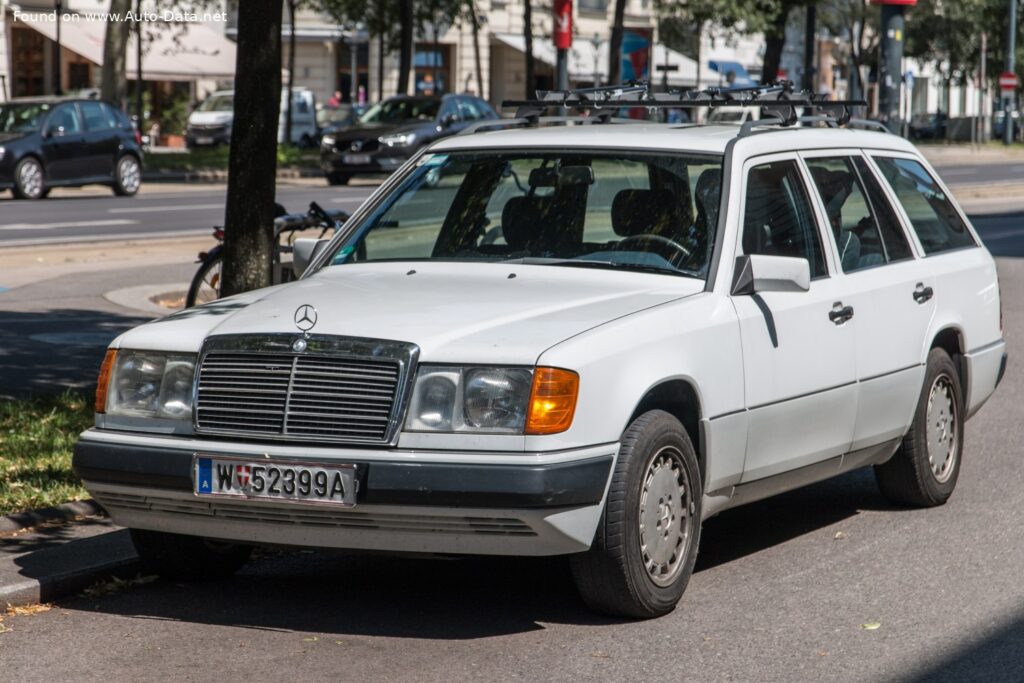
The Mercedes-Benz S124 (facelift 1989) 200 T (105 Hp) Automatic: A Pillar of Practicality and Engineering Excellence
The Mercedes-Benz W124 series, introduced in 1984, quickly established itself as a benchmark for mid-size luxury and engineering prowess. Renowned for its unparalleled build quality, durability, and sophisticated design, the W124 became an icon of German automotive excellence. Among its diverse lineup, the S124 station wagon variant offered remarkable practicality without compromising on the W124’s core attributes. This article delves into the specifics of the Mercedes-Benz S124 (facelift 1989) 200 T (105 Hp) Automatic, a model produced from September 1989 to May 1990, representing a crucial period in the W124’s lifecycle with its significant mid-cycle refresh.
The 1989 facelift, often referred to as the ‘MOPF 1’ (Modellpflege 1 – model refinement 1), brought subtle yet impactful changes to the W124 range, enhancing its aesthetics and updating its technology. The 200 T, specifically, was positioned as an entry-level, highly practical option within the S124 lineup, catering to European markets where its blend of space, reliability, and conservative running costs made it an ideal family or business vehicle. While not a performance powerhouse, its enduring appeal lay in its robustness and the inherent quality associated with the Mercedes-Benz marque.
Engine and Performance of the Mercedes-Benz S124 (facelift 1989) 200 T (105 Hp) Automatic
At the heart of the Mercedes-Benz S124 (facelift 1989) 200 T (105 Hp) Automatic was the M 102 V 20 (code 102.922) inline four-cylinder engine. This naturally aspirated, carbureted unit featured a Single Overhead Camshaft (SOHC) valvetrain with two valves per cylinder, a configuration common for reliability and straightforward maintenance in its era. With a displacement of 1996 cubic centimeters (121.8 cubic inches), the engine produced a modest 105 horsepower at 5500 rpm and 116.53 lb.-ft. of torque at 3500 rpm. Its power output per liter stood at 52.6 horsepower, reflecting its design for longevity and smooth operation rather than outright speed.
Power was delivered to the rear wheels via a four-speed automatic transmission, a common and comfortable choice for Mercedes-Benz drivers of the time. This powertrain combination resulted in a leisurely, yet perfectly adequate, performance for its intended purpose. The 200 T could accelerate from 0 to 60 mph in a calculated 13.8 seconds, reaching a top speed of 104.39 mph. While these figures might seem unremarkable by today’s standards, they were competitive for a family station wagon in the late 1980s, especially one prioritizing comfort and load-carrying capability.
Fuel economy, while not a primary selling point for all Mercedes models, was respectable for a vehicle of its size and weight. The 200 T achieved approximately 19.6 US mpg in urban driving and an improved 29 US mpg on the extra-urban cycle. With a substantial 19.02 US gallon fuel tank, the vehicle offered a commendable cruising range, further cementing its appeal for long-distance travel across Europe.
Design and Features: The Enduring Appeal of the S124
The Mercedes-Benz S124 station wagon (or “estate” in European parlance) was a masterclass in functional design. Its five-door, five-seat configuration provided exceptional versatility and cargo capacity, making it a favorite among families and professionals requiring substantial luggage space. The facelifted S124 retained the W124’s timeless, understated elegance, characterized by clean lines, a robust stance, and a high-quality finish that exuded understated luxury.
Measuring 187.6 inches in length, 68.5 inches in width, and 58.62 inches in height, with a generous 110.24-inch wheelbase, the S124 offered a spacious interior and a remarkably stable ride. The curb weight of the Mercedes-Benz S124 (facelift 1989) 200 T (105 Hp) Automatic was 3196.7 lbs., with a maximum permissible weight of 4563.57 lbs., allowing for a substantial maximum load of 1366.87 lbs. This impressive payload capacity underscored its utility as a true workhorse.
Mechanically, the S124 benefited from Mercedes-Benz’s commitment to advanced engineering. It featured a sophisticated independent multi-link rear suspension, which provided an excellent balance of ride comfort and handling stability – a hallmark of the W124 series. The front suspension utilized a wishbone design. Stopping power came from disc brakes on both the front and rear axles, complemented by an Anti-lock Braking System (ABS), which was a significant safety feature for its time. The hydraulic power steering, using a cone worm with recirculation balls, offered precise and comfortable control, further enhancing the driving experience.
Technical Specifications
| Category | Specification | Value |
|---|---|---|
| Brand | Mercedes-Benz | |
| Model | W124 | |
| Generation | S124 (facelift 1989) | |
| Type (Engine) | 200 T (105 Hp) Automatic | |
| Production Start | September, 1989 | |
| Production End | May, 1990 | |
| Powertrain Architecture | Internal Combustion Engine | |
| Body Type | Station wagon (estate) | |
| Seats | 5 | |
| Doors | 5 | |
| Performance Specs | ||
| Fuel Consumption (Urban) | 19.6 US mpg (12 l/100 km) | |
| Fuel Consumption (Extra Urban) | 29 US mpg (8.1 l/100 km) | |
| Fuel Type | Petrol (Gasoline) | |
| Acceleration 0-60 mph | 13.8 sec | |
| Acceleration 0-62 mph (0-100 km/h) | 14.5 sec | |
| Maximum Speed | 104.39 mph (168 km/h) | |
| Weight-to-Power Ratio | 13.8 kg/Hp, 72.4 Hp/tonne | |
| Weight-to-Torque Ratio | 9.2 kg/Nm, 109 Nm/tonne | |
| Engine Specs | ||
| Power | 105 Hp @ 5500 rpm | |
| Power per Liter | 52.6 Hp/l | |
| Torque | 116.53 lb.-ft. @ 3500 rpm (158 Nm) | |
| Engine Layout | Front, Longitudinal | |
| Engine Model/Code | M 102 V 20 / 102.922 | |
| Engine Displacement | 2.0 liters (1996 cm3 / 121.8 cu. in.) | |
| Number of Cylinders | 4 | Inline |
| Cylinder Bore | 3.5 in. (89 mm) | |
| Piston Stroke | 3.16 in. (80.19 mm) | |
| Compression Ratio | 9.1:1 | |
| Valves per Cylinder | 2 | |
| Fuel Injection System | Carburettor | |
| Engine Aspiration | Naturally Aspirated | |
| Valvetrain | SOHC | |
| Engine Oil Capacity | 5.28 US qt (5 l) | |
| Coolant Capacity | 8.98 US qt (8.5 l) | |
| Space, Volume and Weights | ||
| Kerb Weight | 3196.7 lbs. (1450 kg) | |
| Max. Weight | 4563.57 lbs. (2070 kg) | |
| Max Load | 1366.87 lbs. (620 kg) | |
| Fuel Tank Capacity | 19.02 US gal (72 l) | |
| Dimensions | ||
| Length | 187.6 in. (4765 mm) | |
| Width | 68.5 in. (1740 mm) | |
| Height | 58.62 in. (1489 mm) | |
| Wheelbase | 110.24 in. (2800 mm) | |
| Front Track | 58.94 in. (1497 mm) | |
| Rear Track | 58.94 in. (1497 mm) | |
| Drivetrain, Brakes and Suspension Specs | ||
| Drivetrain Architecture | Rear Wheel Drive (ICE drives rear wheels) | |
| Drive Wheel | Rear wheel drive | |
| Number of Gears & Type | 4 gears, automatic transmission | |
| Front Suspension | Wishbone | |
| Rear Suspension | Independent multi-link suspension | |
| Front Brakes | Disc | |
| Rear Brakes | Disc | |
| Assisting Systems | ABS (Anti-lock braking system) | |
| Steering Type | Cone worm with recirculation balls | |
| Power Steering | Hydraulic Steering | |
| Tires Size (Front/Rear) | 195/65 R15 | |
| Wheel Rims Size (Front/Rear) | 6.5J x 15 | |
Legacy and Market Impact
The Mercedes-Benz W124 series, including the S124 wagon, is widely regarded as one of the finest automobiles ever produced by the German manufacturer. Its reputation for “over-engineering” and exceptional longevity cemented its status as a benchmark for quality and reliability. The Mercedes-Benz S124 (facelift 1989) 200 T (105 Hp) Automatic, despite being an entry-level variant, fully embodied these characteristics.
In its primary European markets, the 200 T found favor with buyers who valued practicality, robust construction, and the prestige of the Mercedes-Benz badge over outright performance. It competed indirectly with other European executive station wagons such as the BMW 5 Series Touring (E34 generation) and the Audi 100 Avant. While BMW often emphasized sportiness and Audi front-wheel-drive sophistication, the Mercedes-Benz S124 stood out for its unwavering commitment to comfort, safety, and enduring quality. The 200 T’s carbureted engine and automatic transmission made it a smooth, if not thrilling, daily driver, perfectly suited for the urban sprawl and autobahn cruises of the late 20th century.
The W124’s robust construction and timeless design have ensured its continued appreciation in the classic car market. Many examples of the S124, even the lower-powered 200 T, remain in active use today, a testament to their incredible durability. Collectors and enthusiasts often seek out well-maintained W124s for their mechanical integrity, comfortable ride, and the unique driving experience they offer. The 1989 facelift models, with their updated styling cues, represent a refined iteration of this iconic platform, bridging the gap between the original W124 design and its later, more aerodynamic evolution.
Ultimately, the Mercedes-Benz S124 (facelift 1989) 200 T (105 Hp) Automatic stands as a significant model in automotive history, embodying an era when German engineering prioritized durability, comfort, and practicality. It remains a beloved classic, admired for its unwavering quality and its role in solidifying Mercedes-Benz’s reputation as a purveyor of exceptionally built vehicles.