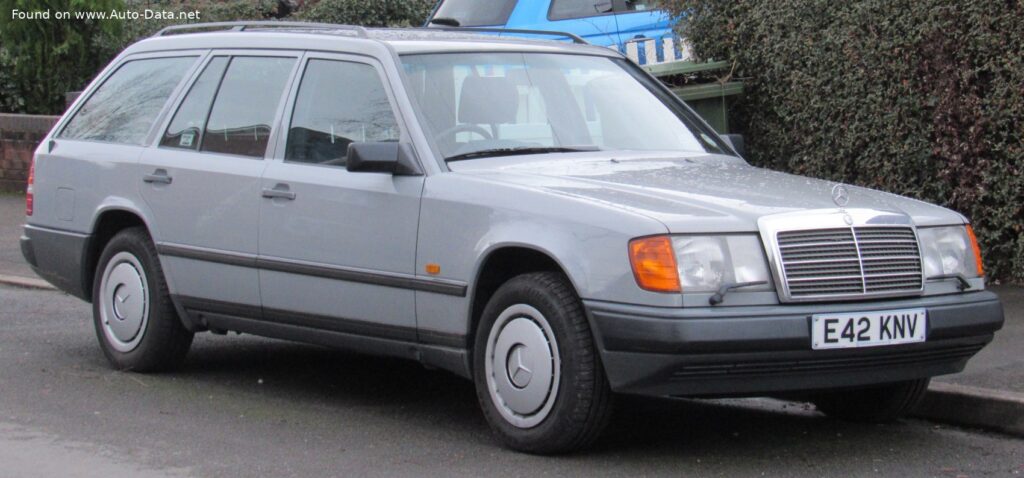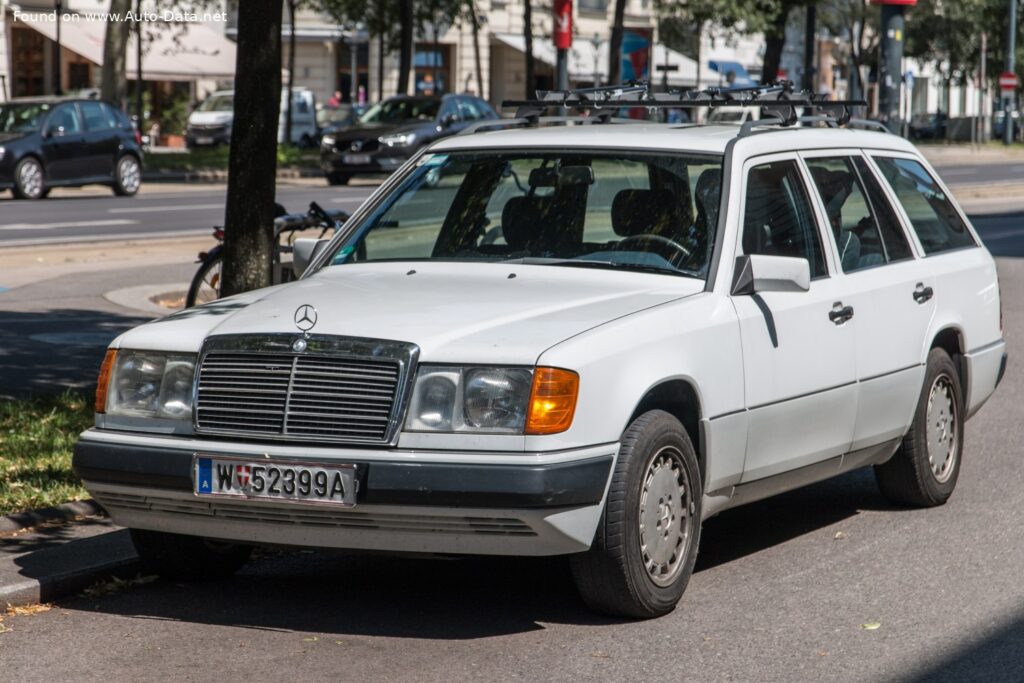
The Enduring Legacy of the Mercedes-Benz S124 (facelift 1989) 200 TD
The Mercedes-Benz W124 series, produced from 1984 to 1995, stands as a monumental achievement in automotive engineering, often cited as one of the last “over-engineered” Mercedes-Benz vehicles. Renowned for its unparalleled build quality, durability, and a driving experience that blended comfort with confidence, the W124 platform encompassed sedans (W124), coupes (C124), convertibles (A124), and station wagons (S124). Among these, the S124 variant, particularly the Mercedes-Benz S124 (facelift 1989) 200 TD, represented the epitome of practical luxury and rugged reliability for the European market. This specific model, produced from September 1989 to June 1991, embodies the post-facelift enhancements of the W124 generation, focusing on subtle design refinements and continuous mechanical improvements.
The 200 TD, while not offered in the North American market, played a crucial role in its primary European territory. It was conceived as a workhorse, a highly economical and dependable family hauler or business vehicle, particularly favored by taxi fleets and individuals prioritizing longevity and low running costs over outright performance. Its naturally aspirated diesel engine, modest power output, and robust construction made it a common sight on European roads for decades, solidifying its reputation as a bulletproof classic.
Engine and Performance: The Heart of the Mercedes-Benz S124 (facelift 1989) 200 TD
At the core of the Mercedes-Benz S124 (facelift 1989) 200 TD lies the OM 601 D 20 / 601.912 engine, a 2.0-liter (1997 cubic centimeters or 121.86 cubic inches) inline four-cylinder diesel unit. Despite the “TD” designation in its model name, the technical specifications confirm this engine is naturally aspirated, meaning it does not utilize a turbocharger. This configuration, while delivering modest power figures, was a hallmark of reliability and simplicity for Mercedes-Benz’s entry-level diesel offerings of the era.
The engine produces 75 horsepower at 4600 revolutions per minute, with a peak torque of 92.93 lb.-ft. (126 Nm) available between 2700 and 3550 rpm. Power is delivered to the rear wheels via a robust 4-speed automatic transmission. Performance, as expected from a vehicle prioritizing economy and durability, was leisurely. The S124 200 TD accelerates from 0 to 60 miles per hour in approximately 21.9 seconds, with a top speed of 90.1 mph (145 km/h). These figures clearly indicate that the vehicle was not designed for spirited driving but rather for comfortable, efficient long-distance cruising and urban utility.
Fuel efficiency was a strong suit for the 200 TD. It achieved an urban fuel consumption of around 27.7 US mpg (8.5 liters per 100 km) and an impressive extra-urban (highway) economy of 37.3 US mpg (6.3 liters per 100 km). This made it an economically sensible choice, especially in regions with higher fuel prices. The engine featured a precombustion chamber injection system, a common and reliable diesel injection method of its time, contributing to its smooth operation and longevity. With a high compression ratio of 22:1 and a SOHC (Single Overhead Camshaft) valvetrain with two valves per cylinder, the OM 601 was engineered for sustained, trouble-free operation, often accumulating hundreds of thousands of miles with proper maintenance.
Design and Features: Practical Elegance
The Mercedes-Benz S124 (facelift 1989) 200 TD, like all W124 models, epitomized a design philosophy that combined timeless elegance with exceptional functionality. The station wagon, or “estate” as it’s known in Europe, offered a highly practical five-door body with seating for five occupants. Its exterior dimensions – a length of 187.6 inches, width of 68.5 inches, and height of 58.62 inches – provided a commanding road presence while maintaining a manageable footprint for European city driving. The generous 110.24-inch wheelbase ensured a smooth ride and ample interior space.
The 1989 facelift brought subtle but effective aesthetic updates, including revised side cladding (often called “Sacco planks”), body-colored bumpers, and minor interior trim changes, refreshing the W124’s already modern appearance. Inside, the S124 was a testament to Mercedes-Benz’s commitment to ergonomic design and high-quality materials. While the 200 TD was a more utilitarian model, it still benefited from the W124’s inherently robust and comfortable cabin, featuring durable upholstery and logical control layouts. The large cargo area, a defining characteristic of the S124 wagon, offered immense practicality for families and professionals alike, often featuring an optional third-row rear-facing seat, though not specified for this exact model.
Mechanically, the S124 200 TD was engineered for supreme ride comfort and stability. It featured a sophisticated wishbone front suspension and an independent multi-link rear suspension, a groundbreaking design for its time that significantly improved handling and ride quality. Braking was handled by disc brakes at both the front and rear, complemented by an Anti-lock Braking System (ABS), a significant safety feature for the era. The hydraulic power steering, utilizing a cone worm with recirculation balls type, provided precise and effortless maneuverability, enhancing the driving experience. The vehicle rode on 195/65 R15 tires mounted on 6.5J x 15-inch wheel rims, providing a comfortable and stable contact patch with the road.
Technical Specifications
| Category | Specification |
|---|---|
| General Information | |
| Brand | Mercedes-Benz |
| Model | W124 |
| Generation | S124 (facelift 1989) |
| Type (Engine) | 200 TD (75 Hp) Automatic |
| Start of Production | September, 1989 |
| End of Production | June, 1991 |
| Powertrain Architecture | Internal Combustion engine |
| Body Type | Station wagon (estate) |
| Seats | 5 |
| Doors | 5 |
| Performance Specs | |
| Fuel Consumption (Urban) | 8.5 l/100 km (27.7 US mpg) |
| Fuel Consumption (Extra Urban) | 6.3 l/100 km (37.3 US mpg) |
| Fuel Type | Diesel |
| Acceleration 0 – 60 mph | 21.9 sec |
| Maximum Speed | 145 km/h (90.1 mph) |
| Engine Specs | |
| Power | 75 Hp @ 4600 rpm |
| Power per liter | 37.6 Hp/l |
| Torque | 126 Nm (92.93 lb.-ft.) @ 2700-3550 rpm |
| Engine Layout | Front, Longitudinal |
| Engine Model/Code | OM 601 D 20 / 601.912 |
| Engine Displacement | 1997 cm3 (121.86 cu. in.) |
| Number of Cylinders | 4 |
| Engine Configuration | Inline |
| Cylinder Bore | 87 mm (3.43 in.) |
| Piston Stroke | 84 mm (3.31 in.) |
| Compression Ratio | 22:1 |
| Number of Valves per Cylinder | 2 |
| Fuel Injection System | Precombustion chamber injection |
| Engine Aspiration | Naturally aspirated engine |
| Valvetrain | SOHC |
| Engine Oil Capacity | 6.5 l (6.87 US qt) |
| Coolant Capacity | 8.5 l (8.98 US qt) |
| Space, Volume and Weights | |
| Fuel Tank Capacity | 72 l (19.02 US gal) |
| Dimensions | |
| Length | 4765 mm (187.6 in.) |
| Width | 1740 mm (68.5 in.) |
| Height | 1489 mm (58.62 in.) |
| Wheelbase | 2800 mm (110.24 in.) |
| Front Track | 1497 mm (58.94 in.) |
| Rear (Back) Track | 1497 mm (58.94 in.) |
| Drivetrain, Brakes and Suspension Specs | |
| Drivetrain Architecture | The Internal combustion engine (ICE) drives the rear wheels of the vehicle. |
| Drive Wheel | Rear wheel drive |
| Number of Gears and Type of Gearbox | 4 gears, automatic transmission |
| Front Suspension | Wishbone |
| Rear Suspension | Independent multi-link suspension |
| Front Brakes | Disc |
| Rear Brakes | Disc |
| Assisting Systems | ABS (Anti-lock braking system) |
| Steering Type | Cone worm with recirculation balls |
| Power Steering | Hydraulic Steering |
| Tires Size (Front & Rear) | 195/65 R15 |
| Wheel Rims Size (Front & Rear) | 6.5J x 15 |
Legacy and Market Impact
The Mercedes-Benz S124 (facelift 1989) 200 TD, along with its W124 brethren, holds a revered position in automotive history. It solidified Mercedes-Benz’s reputation for building vehicles of exceptional quality, durability, and engineering integrity. In its primary European market, the 200 TD was a highly competitive offering, particularly against rivals like the BMW 5-Series Touring (E34) and the Audi 100 Avant (C3/C4). While BMW and Audi might have offered more overtly sporty or technologically advanced options in certain trims, the W124 200 TD carved its niche as the undisputed champion of reliability and long-term value.
Its robust diesel engine, though not powerful, was incredibly frugal and capable of astronomical mileage, making it a favorite for taxi operators across Europe. This real-world endurance test only further enhanced its legend. For families, the S124 offered unparalleled cargo capacity and a comfortable, safe ride for long journeys. Its blend of practical utility, understated luxury, and bulletproof mechanics made it a sensible, aspirational choice.
Today, the W124 series, including the S124 200 TD, is highly sought after by classic car enthusiasts and collectors. Its enduring appeal lies not in its speed or cutting-edge technology (though it was advanced for its time), but in its sheer quality and the confidence it instills in its owners. Many W124s are still in daily use worldwide, a testament to their engineering prowess. The 200 TD specifically represents a segment of Mercedes-Benz history where pragmatic engineering and longevity were prioritized above all else, creating a vehicle that truly stood the test of time and continues to be appreciated for its intrinsic value and historical significance.