Mercedes-Benz S124 (facelift 1989) 200 TE (118 Hp) Automatic: A Pillar of German Engineering
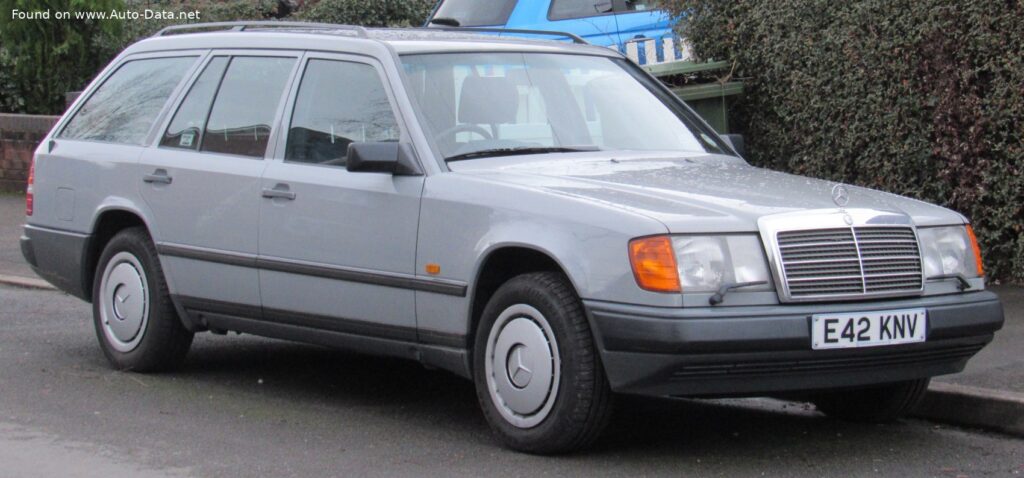
The Mercedes-Benz W124 series, produced from 1984 to 1996, stands as a testament to the brand’s commitment to engineering excellence, durability, and understated luxury. Among its various iterations, the station wagon variant, internally designated S124, carved out a significant niche, particularly in the European market. This article delves into the specifics of the Mercedes-Benz S124 (facelift 1989) 200 TE (118 Hp) Automatic, a model that, while not a powerhouse, embodied the practical elegance and legendary reliability for which the W124 generation is revered. Introduced as part of the significant 1989 facelift, this 200 TE variant represented an accessible entry point into Mercedes-Benz’s executive wagon lineup, offering a blend of comfort, utility, and the brand’s characteristic robust construction.
The W124 series itself replaced the venerable W123, inheriting a legacy of bulletproof reliability and setting new benchmarks for automotive engineering. The S124 station wagon, in particular, was lauded for its exceptional cargo capacity, sophisticated multi-link rear suspension, and timeless design. The 1989 facelift brought subtle yet impactful changes, including updated engines, refined interior trim, and minor exterior tweaks that kept the model competitive and fresh until its eventual replacement by the E-Class W210 in the mid-1990s. The 200 TE, with its 2.0-liter four-cylinder engine and automatic transmission, was a quintessential European-market offering, prioritizing fuel efficiency and smooth operation for daily driving over outright performance.
Engine and Performance: The Heart of the Mercedes-Benz S124 (facelift 1989) 200 TE (118 Hp) Automatic
Under the hood of the Mercedes-Benz S124 (facelift 1989) 200 TE (118 Hp) Automatic lies the M 102 E 20 engine, an inline-four gasoline unit known for its simplicity and robustness. This naturally aspirated, multi-port manifold injected engine displaces 1996 cm³ (121.8 cu. in.), featuring two valves per cylinder and a Single OverHead Camshaft (SOHC) valvetrain. With a compression ratio of 9.1:1, it was designed for smooth, reliable operation rather than high-revving performance.
The engine generates a respectable 118 horsepower at 5200 rpm, translating to a power output of 59.1 horsepower per liter. Torque peaks at 172 Nm (126.86 lb.-ft.) at a relatively low 3500 rpm, providing adequate thrust for city driving and highway cruising. Power is delivered to the rear wheels via a smooth-shifting 4-speed automatic transmission, a common and well-regarded setup for Mercedes-Benz models of this era, emphasizing comfort and longevity.
While not built for drag strip heroics, the 200 TE offered competent performance for its class. It could accelerate from 0 to 60 mph in an estimated 12.4 seconds, with a top speed of 108.74 mph (175 km/h). These figures reflect its role as a comfortable family hauler or executive transport rather than a sports wagon. Fuel economy, a key consideration for European buyers, was reasonable for its time: approximately 19.6 US mpg in urban conditions and a more impressive 29.4 US mpg on the extra-urban cycle, thanks to its relatively modest engine and efficient drivetrain architecture. The fuel tank capacity of 19.02 US gallons (72 liters) provided a substantial cruising range.
Design and Features: Timeless Utility and Mercedes-Benz Quality
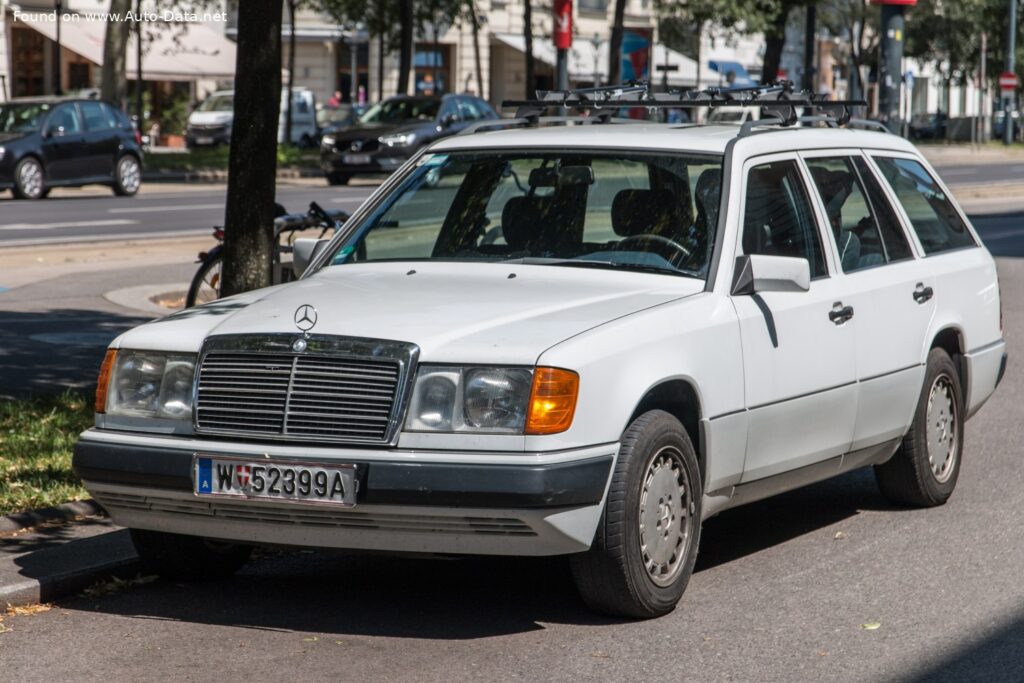
The design of the Mercedes-Benz S124 series, penned by Bruno Sacco, is often cited as a masterpiece of automotive styling. Its clean lines, robust stance, and functional elegance have ensured its enduring appeal. The station wagon, or “estate” as it’s known in Europe, maintained the sedan’s sophisticated front end and passenger compartment, seamlessly extending into a highly practical cargo area. The five-door, five-seat configuration made it an ideal vehicle for families or professionals requiring significant hauling capacity.
Key design elements of the facelifted 1989 model included integrated side cladding (often referred to as “Sacco panels”) that extended to the bumpers, providing a more cohesive and modern look. The interior, renowned for its ergonomic layout and high-quality materials, offered a comfortable and refined environment. While the 200 TE was an entry-level model, it still benefited from the W124’s exemplary build quality, featuring durable fabrics, well-fitted plastics, and a sense of solidity that few competitors could match.
In terms of features, the S124 200 TE provided a solid foundation of safety and convenience. Standard equipment included an Anti-lock Braking System (ABS) for enhanced stopping power and control, a hydraulic power steering system for effortless maneuverability, and four-wheel disc brakes. The suspension system was a particular highlight: independent wishbone suspension at the front combined with Mercedes-Benz’s sophisticated independent multi-link suspension at the rear. This setup provided an exceptional balance of ride comfort, handling precision, and stability, even when fully loaded. The vehicle rode on 195/65 R15 tires mounted on 6.5J x 15-inch wheel rims, a practical choice offering a good blend of grip and ride quality.
Technical Specifications
| Category | Specification |
|---|---|
| General Information | |
| Brand | Mercedes-Benz |
| Model | W124 |
| Generation | S124 (facelift 1989) |
| Type (Engine) | 200 TE (118 Hp) Automatic |
| Production Start | September, 1989 |
| Production End | October, 1992 |
| Powertrain Architecture | Internal Combustion Engine |
| Body Type | Station wagon (estate), 5 Doors, 5 Seats |
| Performance Specs | |
| Fuel Consumption (Urban) | 12 l/100 km (19.6 US mpg) |
| Fuel Consumption (Extra Urban) | 8 l/100 km (29.4 US mpg) |
| Fuel Type | Petrol (Gasoline) |
| Acceleration 0 – 60 mph | 12.4 sec |
| Acceleration 0 – 100 km/h | 13.1 sec |
| Maximum Speed | 175 km/h (108.74 mph) |
| Weight-to-Power Ratio | 12.4 kg/Hp (80.8 Hp/tonne) |
| Weight-to-Torque Ratio | 8.5 kg/Nm (117.8 Nm/tonne) |
| Engine Specs | |
| Power | 118 Hp @ 5200 rpm |
| Power per Liter | 59.1 Hp/l |
| Torque | 172 Nm @ 3500 rpm (126.86 lb.-ft. @ 3500 rpm) |
| Engine Layout | Front, Longitudinal |
| Engine Model/Code | M 102 E 20 / 102.963 |
| Engine Displacement | 1996 cm³ (121.8 cu. in.) |
| Number of Cylinders | 4, Inline |
| Cylinder Bore | 89 mm (3.5 in.) |
| Piston Stroke | 80.19 mm (3.16 in.) |
| Compression Ratio | 9.1:1 |
| Valves per Cylinder | 2 |
| Fuel Injection System | Multi-port manifold injection |
| Engine Aspiration | Naturally aspirated |
| Valvetrain | SOHC |
| Engine Oil Capacity | 5 l (5.28 US qt) |
| Coolant Capacity | 8.5 l (8.98 US qt) |
| Space, Volume, and Weights | |
| Kerb Weight | 1460 kg (3218.75 lbs) |
| Max. Weight | 2080 kg (4585.62 lbs) |
| Max Load | 620 kg (1366.87 lbs) |
| Fuel Tank Capacity | 72 l (19.02 US gal) |
| Dimensions | |
| Length | 4765 mm (187.6 in.) |
| Width | 1740 mm (68.5 in.) |
| Height | 1489 mm (58.62 in.) |
| Wheelbase | 2800 mm (110.24 in.) |
| Front Track | 1497 mm (58.94 in.) |
| Rear Track | 1497 mm (58.94 in.) |
| Drivetrain, Brakes, and Suspension Specs | |
| Drivetrain Architecture | Internal Combustion Engine drives the rear wheels. |
| Drive Wheel | Rear wheel drive |
| Gearbox | 4 gears, automatic transmission |
| Front Suspension | Wishbone |
| Rear Suspension | Independent multi-link suspension |
| Front Brakes | Disc |
| Rear Brakes | Disc |
| Assisting Systems | ABS (Anti-lock braking system) |
| Steering Type | Cone worm with recirculation balls |
| Power Steering | Hydraulic Steering |
| Front Wheel Tires | 195/65 R15 |
| Rear Wheel Tires | 195/65 R15 |
| Front Wheel Rims | 6.5J x 15 |
| Rear Wheel Rims | 6.5J x 15 |
Legacy and Market Impact
The Mercedes-Benz W124 series, including the S124 station wagon, is widely regarded as one of the finest vehicles ever produced by the German automaker. Its reputation for exceptional build quality, engineering integrity, and long-term reliability has made it a sought-after classic, particularly well-maintained examples. The Mercedes-Benz S124 (facelift 1989) 200 TE (118 Hp) Automatic, while an entry-level powertrain, benefited from all the core attributes of its more powerful siblings.
In its primary European market, the 200 TE was a popular choice for families and businesses that valued Mercedes-Benz prestige and durability without necessarily needing the larger engines offered in models like the 300 TE or later E320 wagons. It competed with executive wagons such as the BMW 5 Series Touring (E34 generation) and the Audi 100 Avant (C3/C4 generations), often outshining them in terms of perceived robustness and longevity. While the 200 TE with its specific engine was less common in the North American market, where larger engines were preferred, it still contributed to the W124’s global image as a benchmark luxury-executive car.
The W124 S124 wagons are particularly prized today for their practicality and the unique blend of classic Mercedes-Benz aesthetics with modern usability. Many examples are still on the road, a testament to their over-engineered construction. Their spacious interiors, comfortable ride, and timeless design continue to attract enthusiasts and collectors. The 200 TE, in particular, represents a financially accessible entry point into W124 ownership, offering the same fundamental qualities of a more expensive variant, albeit with a more modest performance envelope. Its legacy is one of a practical, reliable, and impeccably built executive station wagon that perfectly encapsulated the Mercedes-Benz ethos of its era.