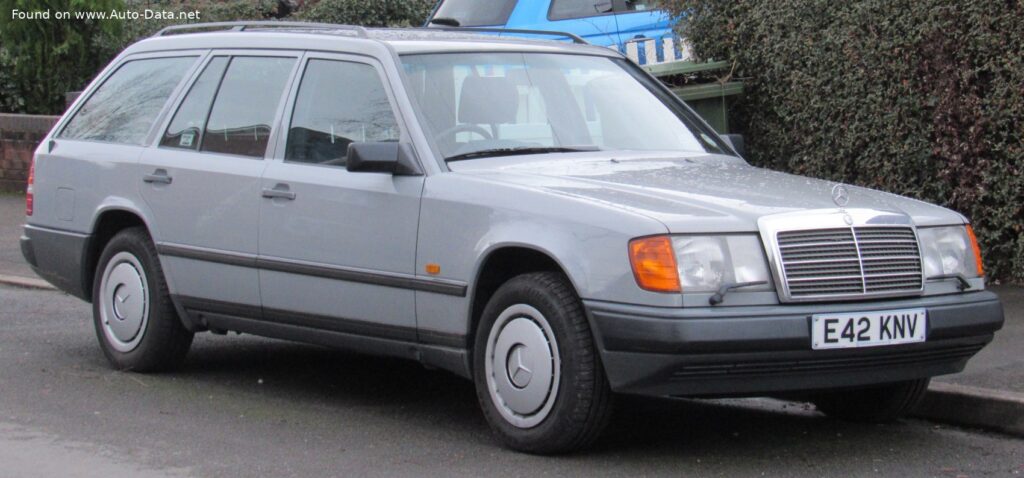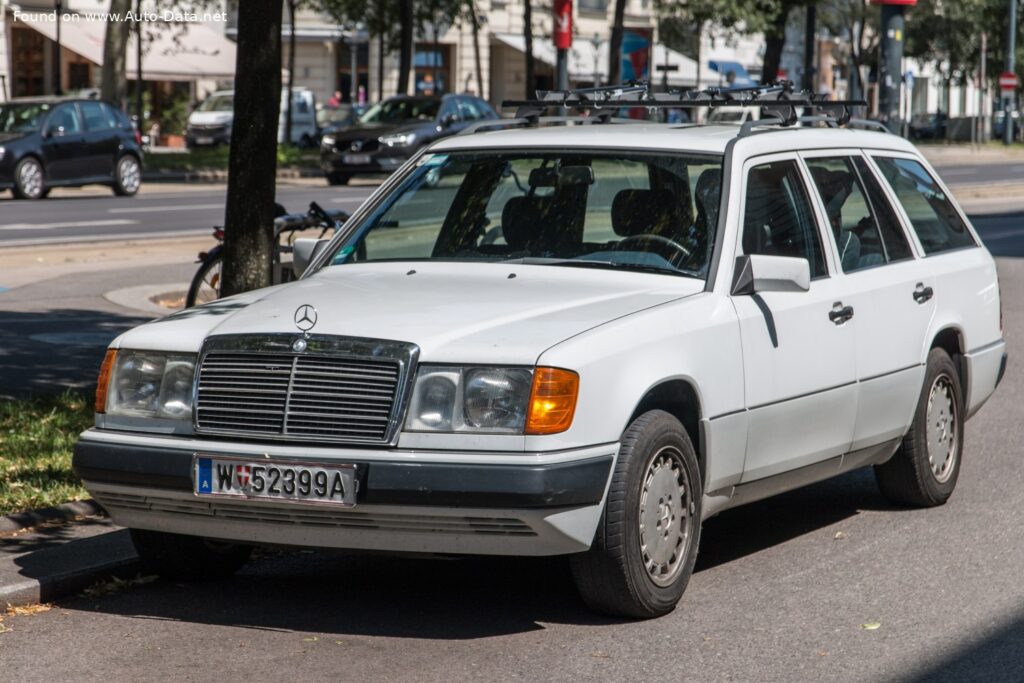
Mercedes-Benz S124 (facelift 1989) 200 TE (136 Hp): A Pillar of German Engineering
The Mercedes-Benz W124 series, produced from 1984 to 1996, stands as a testament to the brand’s commitment to durability, engineering excellence, and timeless design. Among its various iterations, the S124 wagon (estate) body style, particularly the facelifted 1989 model year, represents a pinnacle of practical luxury. The Mercedes-Benz S124 (facelift 1989) 200 TE (136 Hp), produced from July 1992 to July 1993, embodied the core values of the W124 platform for the European market. While not officially imported to the United States in this specific configuration, the W124 wagon was highly regarded globally for its robust construction, refined ride, and unparalleled versatility, setting a benchmark for executive wagons of its era.
The W124 generation replaced the W123 series and introduced a more aerodynamic and modern aesthetic while retaining the brand’s signature build quality. The “S” designation in S124 specifically denotes the station wagon variant, which offered superior cargo capacity and passenger comfort compared to its sedan counterpart. The 200 TE variant, equipped with a 2.0-liter engine, was positioned as an accessible entry point into the premium wagon segment, offering a balance of performance, economy, and Mercedes-Benz prestige, particularly popular in markets where fuel efficiency and taxation favored smaller displacement engines.
Engine and Performance of the Mercedes-Benz S124 200 TE
At the heart of the Mercedes-Benz S124 (facelift 1989) 200 TE (136 Hp) lies the M 111 E 20 (code 111.940) engine, a naturally aspirated, inline four-cylinder gasoline (petrol) unit. This 2.0-liter (1998 cubic centimeters or 121.93 cubic inches) engine was a significant development, featuring a Double Overhead Camshaft (DOHC) valvetrain with four valves per cylinder, a modern configuration for its time that improved breathing and efficiency. It utilized a multi-port manifold injection system for precise fuel delivery.
The M111 engine delivered a respectable 136 horsepower at 5500 rpm and 140.14 lb.-ft. of torque at 4000 rpm. While these figures might seem modest by today’s standards, they provided ample power for daily driving and highway cruising, consistent with the car’s role as a comfortable and reliable family or executive transporter. The engine’s layout was front-mounted and longitudinal, driving the rear wheels, a classic Mercedes-Benz drivetrain architecture that contributed to its balanced handling characteristics.
Performance figures for the 200 TE included an acceleration time from 0 to 60 mph in approximately 11 seconds, with a top speed of 116.82 mph (188 km/h). Fuel economy was a notable consideration for this model in its primary markets. It achieved an urban fuel consumption of around 19.8 US mpg (11.9 liters per 100 km) and an impressive extra-urban (highway) economy of 33.6 US mpg (7 liters per 100 km). These figures demonstrated the M111 engine’s efficiency, especially when paired with the robust 4-speed manual transmission, which offered direct engagement and reliable operation.
Design and Features
The S124’s design, penned by Bruno Sacco, is widely celebrated for its elegant proportions, functional aesthetics, and remarkable longevity. The station wagon body type, with its five doors and seating for five, offered exceptional practicality without sacrificing the sophisticated lines of the W124 sedan. Its length of 187.6 inches (4765 mm) and width of 68.5 inches (1740 mm) provided a substantial road presence, while the 110.24-inch (2800 mm) wheelbase contributed to a smooth and stable ride.
Inside, the S124 200 TE featured a cabin renowned for its ergonomic layout, high-quality materials, and meticulous craftsmanship. While specific luxury features varied by market and optional packages, standard Mercedes-Benz appointments typically included comfortable seating, clear instrumentation, and intuitive controls. The S124 wagon was particularly lauded for its cargo capacity and versatile loading floor, making it a favorite for families and professionals requiring ample space. The self-leveling rear suspension (often standard on wagons) ensured that the vehicle maintained its ride height even when fully loaded, enhancing both comfort and handling.
Safety was a paramount concern for Mercedes-Benz, and the W124 series incorporated advanced features for its time. The 200 TE came equipped with an Anti-lock Braking System (ABS), providing enhanced control during emergency stops. The robust body structure, combined with features like front ventilated disc brakes and rear disc brakes, ensured a high level of passive and active safety. The hydraulic power steering, utilizing a cone worm with recirculation balls, offered precise and comfortable steering feedback, characteristic of Mercedes-Benz vehicles of this era.
Technical Specifications
| Category | Specification | US/Imperial Equivalent |
|---|---|---|
General Information |
||
| Brand | Mercedes-Benz | |
| Model | W124 | |
| Generation | S124 (facelift 1989) | |
| Type (Engine) | 200 TE (136 Hp) | |
| Start of production | July, 1992 year | |
| End of production | July, 1993 year | |
| Powertrain Architecture | Internal Combustion engine | |
| Body type | Station wagon (estate) | |
| Seats | 5 | |
| Doors | 5 | |
Performance Specs |
||
| Fuel consumption (economy) – urban | 11.9 l/100 km | 19.8 US mpg |
| Fuel consumption (economy) – extra urban | 7 l/100 km | 33.6 US mpg |
| Fuel Type | Petrol (Gasoline) | |
| Acceleration 0 – 60 mph | 11 sec | |
| Maximum speed | 188 km/h | 116.82 mph |
| Weight-to-power ratio | 10.8 kg/Hp | 92.5 Hp/tonne |
| Weight-to-torque ratio | 7.7 kg/Nm | 129.3 Nm/tonne |
Engine Specs |
||
| Power | 136 Hp @ 5500 rpm | |
| Power per liter | 68.1 Hp/l | |
| Torque | 190 Nm @ 4000 rpm | 140.14 lb.-ft. @ 4000 rpm |
| Engine layout | Front, Longitudinal | |
| Engine Model/Code | M 111 E 20 / 111.940 | |
| Engine displacement | 1998 cm3 | 2.0 liters / 121.93 cu. in. |
| Number of cylinders | 4 | |
| Engine configuration | Inline | |
| Cylinder Bore | 89.9 mm | 3.54 in. |
| Piston Stroke | 78.7 mm | 3.1 in. |
| Compression ratio | 9.6:1 | |
| Number of valves per cylinder | 4 | |
| Fuel injection system | Multi-port manifold injection | |
| Engine aspiration | Naturally aspirated engine | |
| Valvetrain | DOHC | |
| Engine oil capacity | 5.5 l | 5.81 US qt |
| Engine oil specification | Refer to manufacturer’s manual | |
| Coolant capacity | 8.5 l | 8.98 US qt |
Space, Volume and Weights |
||
| Kerb Weight | 1470 kg | 3240.8 lbs. |
| Max. weight (Gross Vehicle Weight Rating) | 2120 kg | 4673.8 lbs. |
| Max load | 650 kg | 1433 lbs. |
| Fuel tank capacity | 72 l | 19.02 US gal |
Dimensions |
||
| Length | 4765 mm | 187.6 in. |
| Width | 1740 mm | 68.5 in. |
| Height | 1489 mm | 58.62 in. |
| Wheelbase | 2800 mm | 110.24 in. |
| Front track | 1497 mm | 58.94 in. |
| Rear (Back) track | 1497 mm | 58.94 in. |
Drivetrain, Brakes and Suspension Specs |
||
| Drivetrain Architecture | Internal combustion engine (ICE) drives the rear wheels. | |
| Drive wheel | Rear wheel drive | |
| Number of gears and type of gearbox | 4 gears, manual transmission | |
| Front suspension | Wishbone | |
| Rear suspension | Independent multi-link suspension | |
| Front brakes | Ventilated discs | |
| Rear brakes | Disc | |
| Assisting systems | ABS (Anti-lock braking system) | |
| Steering type | Cone worm with recirculation balls | |
| Power steering | Hydraulic Steering | |
| Tires size (Front & Rear) | 195/65 R15 | |
| Wheel rims size (Front & Rear) | 6.5J x 15 | |
Legacy and Market Impact
The Mercedes-Benz W124 series, including the S124 wagon, is widely regarded as one of the most significant and enduring vehicles in automotive history. Its reputation for “over-engineering” and exceptional build quality has solidified its status as a modern classic. The Mercedes-Benz S124 (facelift 1989) 200 TE (136 Hp), while a relatively humble variant in terms of engine size compared to its six- and eight-cylinder siblings, played a crucial role in Mercedes-Benz’s market strategy in Europe.
In its primary European markets, the 200 TE offered a compelling package for buyers seeking the prestige and quality of a Mercedes-Benz without the higher running costs associated with larger engines. It competed effectively against rivals such as the BMW E34 Touring (e.g., 520i Touring) and the Audi 100 Avant (later A6 Avant), often surpassing them in perceived durability and long-term reliability. Its robust mechanicals and corrosion resistance meant that many S124s remained on the road for decades, accumulating hundreds of thousands of miles, a testament to their inherent quality.
The S124 wagon’s impact extends beyond mere sales figures. It helped cement Mercedes-Benz’s image as a manufacturer of practical, yet luxurious, vehicles capable of handling diverse demands, from family transport to demanding professional use. Its timeless design has aged gracefully, and today, well-maintained examples of the S124 are highly sought after by enthusiasts and collectors globally, not just for their classic appeal but for their continued usability and driving pleasure. The 200 TE, in particular, is valued for its mechanical simplicity and fuel efficiency, offering a gateway to classic Mercedes-Benz ownership for many. The W124 generation, and especially its versatile wagon variant, stands as a benchmark for automotive engineering, influencing subsequent generations of luxury and executive vehicles with its blend of style, safety, and unwavering reliability.