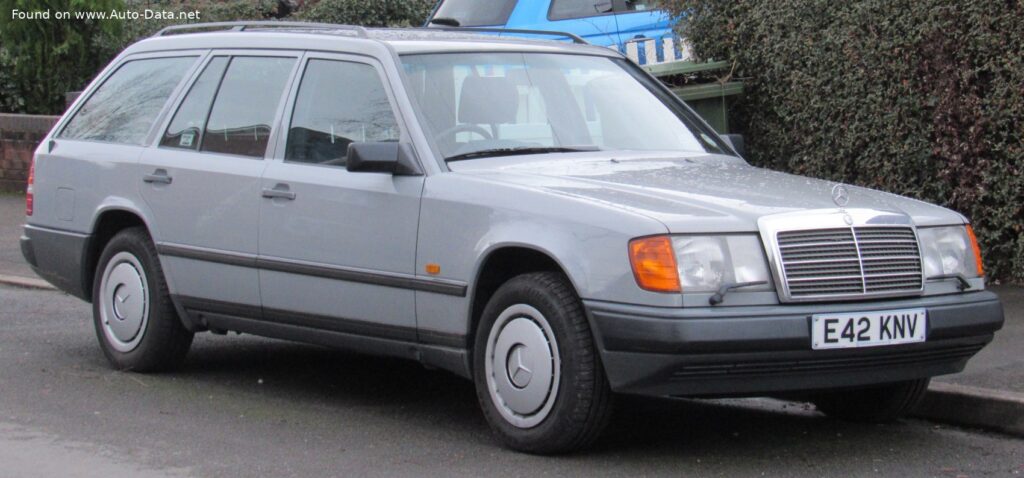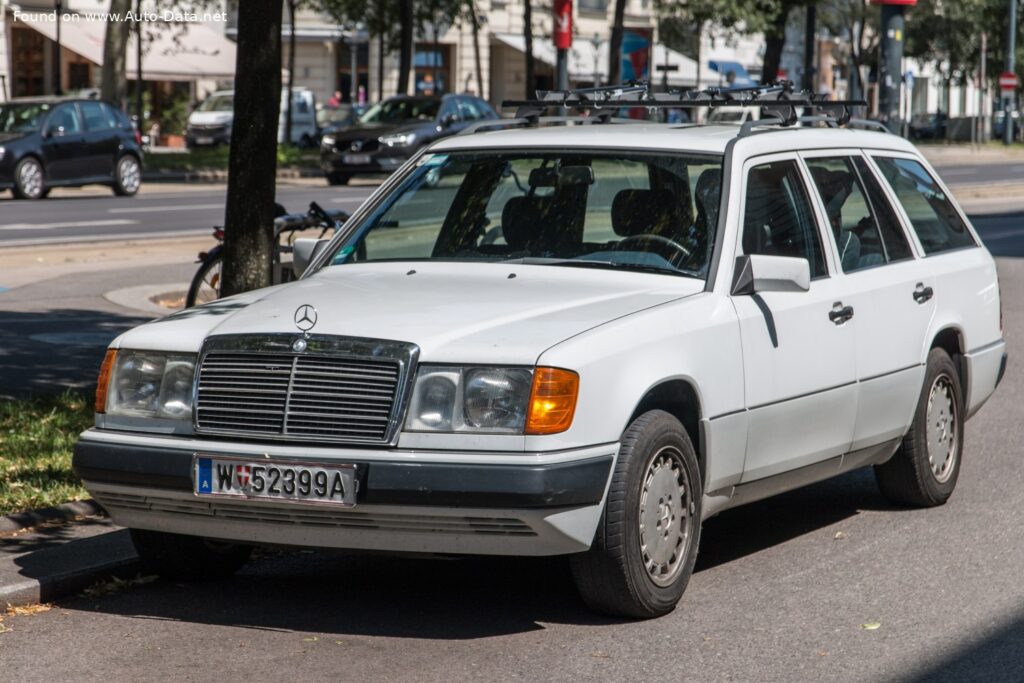
The Mercedes-Benz S124 (facelift 1989) 220 TE (150 Hp): A Paragon of German Engineering
The Mercedes-Benz S124 (facelift 1989) 220 TE (150 Hp) represents a significant chapter in the history of the German automaker’s revered W124 generation. Produced from June 1992 to July 1993, this particular variant, identifiable by its “S124” chassis code for the station wagon body style and the “TE” designation for the gasoline-powered Touring Estate, was a refined iteration of an already highly acclaimed platform. Positioned in the executive car segment, the W124 series, introduced in 1984, quickly established itself as a benchmark for build quality, durability, and engineering excellence. The 1989 facelift brought subtle yet impactful enhancements, primarily aesthetic and technological, keeping the model competitive and fresh through the early 1990s. While not a common sight on American roads during its original production run, its reputation for robust construction and sophisticated ride quality resonated globally, making it a highly sought-after classic in the enthusiast community today, particularly in its primary European market.
Engine & Performance: The M 111 E 22 and its Capabilities
Under the hood of the Mercedes-Benz S124 (facelift 1989) 220 TE (150 Hp) lies the M 111 E 22 engine, a naturally aspirated inline-four-cylinder powerplant renowned for its smooth operation and reliability. With an engine displacement of 2199 cubic centimeters (approximately 2.2 liters or 134.19 cubic inches), this engine generated a respectable 150 horsepower at 5500 revolutions per minute. Its power-per-liter output stood at 68.2 horsepower per liter, a solid figure for a non-turbocharged engine of its era.
Torque delivery was equally impressive, peaking at 154.89 pound-feet (210 Newton-meters) at 4000 rpm, providing ample pulling power for a family wagon. The engine’s layout was a classic front, longitudinal configuration, driving the rear wheels, a hallmark of Mercedes-Benz engineering for balanced weight distribution and driving dynamics. The M 111 E 22 featured a Double Overhead Camshaft (DOHC) valvetrain with four valves per cylinder, a relatively advanced setup for the time, contributing to its efficiency and power output. Fuel was delivered via a multi-port manifold injection system, ensuring precise fuel metering.
Mated to a 5-speed manual transmission, the 220 TE offered an engaging driving experience. This powertrain enabled the station wagon to accelerate from 0 to 60 miles per hour in a brisk 10.3 seconds (0-100 km/h in 10.8 seconds), reaching a maximum speed of 123.03 miles per hour (198 km/h). Despite its focus on practicality and comfort, these performance figures were competitive within its segment. Fuel economy for the 220 TE was rated at approximately 19.3 US miles per gallon in urban driving conditions and an impressive 32.2 US miles per gallon on the extra-urban cycle, making it a relatively economical choice for long-distance travel, especially considering its size and weight.
Design and Features of the Mercedes-Benz S124 (facelift 1989)
The S124 station wagon, or “Estate” as it was known in Europe, was celebrated for its elegant and functional design. Measuring 187.6 inches in length, 68.5 inches in width, and 58.62 inches in height, with a substantial 110.24-inch wheelbase, the 220 TE offered generous interior space and cargo capacity. The five-door, five-seat configuration made it a versatile family vehicle, capable of accommodating passengers and luggage with ease. Its design language, characterized by clean lines and a purposeful stance, has aged remarkably well, contributing to its classic appeal.
Mercedes-Benz’s commitment to safety and comfort was evident in the S124. The car featured a robust chassis and body structure, engineered to provide excellent occupant protection. Standard assisting systems included ABS (Anti-lock Braking System), a significant safety feature for the early 1990s, enhancing braking control in adverse conditions. The braking system itself comprised ventilated discs at the front and solid discs at the rear, providing strong and consistent stopping power.
Suspension-wise, the S124 employed a sophisticated setup: wishbones at the front and an independent multi-link suspension at the rear. This arrangement was crucial to the W124’s renowned ride quality, offering a superb balance of comfort and handling stability. Steering was managed by a hydraulic power-assisted cone worm system with recirculation balls, providing precise feedback and effortless maneuverability. The vehicle rode on 195/65 R15 tires mounted on 6.5J x 15-inch wheel rims, a practical choice that prioritized ride comfort and tire availability. The enduring quality of materials and meticulous assembly were hallmarks of the W124, contributing to its legendary reputation for longevity.
Technical Specifications: Mercedes-Benz S124 (facelift 1989) 220 TE (150 Hp)
| Category | Specification |
|---|---|
| General Information | |
| Brand | Mercedes-Benz |
| Model | W124 |
| Generation | S124 (facelift 1989) |
| Type (Engine) | 220 TE (150 Hp) |
| Start of Production | June, 1992 |
| End of Production | July, 1993 |
| Powertrain Architecture | Internal Combustion engine |
| Body Type | Station wagon (estate) |
| Seats | 5 |
| Doors | 5 |
| Performance Specs | |
| Fuel Consumption (Urban) | 12.2 l/100 km (19.3 US mpg) |
| Fuel Consumption (Extra Urban) | 7.3 l/100 km (32.2 US mpg) |
| Fuel Type | Petrol (Gasoline) |
| Acceleration 0 – 60 mph | 10.3 sec |
| Acceleration 0 – 62 mph (0 – 100 km/h) | 10.8 sec |
| Maximum Speed | 123.03 mph (198 km/h) |
| Weight-to-Power Ratio | 9.9 kg/Hp (21.8 lbs/Hp), 101.4 Hp/tonne |
| Weight-to-Torque Ratio | 7 kg/Nm (15.4 lbs/Nm), 141.9 Nm/tonne |
| Engine Specs | |
| Power | 150 Hp @ 5500 rpm |
| Power per Liter | 68.2 Hp/l |
| Torque | 210 Nm @ 4000 rpm (154.89 lb.-ft. @ 4000 rpm) |
| Engine Layout | Front, Longitudinal |
| Engine Model/Code | M 111 E 22 / 111.960 |
| Engine Displacement | 2199 cm3 (2.2 liters / 134.19 cu. in.) |
| Number of Cylinders | 4 |
| Engine Configuration | Inline |
| Cylinder Bore | 89.9 mm (3.54 in.) |
| Piston Stroke | 86.6 mm (3.41 in.) |
| Compression Ratio | 10:1 |
| Number of Valves per Cylinder | 4 |
| Fuel Injection System | Multi-port manifold injection |
| Engine Aspiration | Naturally aspirated engine |
| Valvetrain | DOHC |
| Engine Oil Capacity | 5.5 l (5.81 US qt) |
| Engine Oil Specification | Not specified |
| Coolant Capacity | 8.5 l (8.98 US qt) |
| Space, Volume and Weights | |
| Kerb Weight | 1480 kg (3262.84 lbs) |
| Max. Weight (Gross Vehicle Weight) | 2130 kg (4695.85 lbs) |
| Max Load | 650 kg (1433 lbs) |
| Fuel Tank Capacity | 72 l (19.02 US gal) |
| Dimensions | |
| Length | 4765 mm (187.6 in.) |
| Width | 1740 mm (68.5 in.) |
| Height | 1489 mm (58.62 in.) |
| Wheelbase | 2800 mm (110.24 in.) |
| Front Track | 1497 mm (58.94 in.) |
| Rear Track | 1497 mm (58.94 in.) |
| Drivetrain, Brakes and Suspension Specs | |
| Drivetrain Architecture | The Internal combustion engine (ICE) drives the rear wheels of the vehicle. |
| Drive Wheel | Rear wheel drive |
| Number of Gears and Type of Gearbox | 5 gears, manual transmission |
| Front Suspension | Wishbone |
| Rear Suspension | Independent multi-link suspension |
| Front Brakes | Ventilated discs |
| Rear Brakes | Disc |
| Assisting Systems | ABS (Anti-lock braking system) |
| Steering Type | Cone worm with recirculation balls |
| Power Steering | Hydraulic Steering |
| Tires Size | 195/65 R15 |
| Wheel Rims Size | 6.5J x 15 |
Legacy and Market Impact
The Mercedes-Benz W124 series, including the S124 station wagon, is widely regarded as one of the finest vehicles ever produced by Mercedes-Benz. Its reputation for over-engineering, meticulous build quality, and exceptional longevity solidified its place in automotive history. While the 220 TE variant specifically was targeted at the European market, where station wagons enjoyed immense popularity for their blend of luxury and practicality, its influence extended globally.
In its primary European market, the S124 220 TE competed against formidable rivals such as the BMW 5 Series Touring (E34 generation) and the Audi 100 Avant (C4 generation). What set the Mercedes apart was its almost indestructible nature, often capable of accumulating hundreds of thousands of miles with proper maintenance. This durability, combined with its refined driving characteristics and timeless design, made it a preferred choice for discerning buyers who valued long-term ownership and understated luxury.
The W124’s mechanical impact was profound. It showcased Mercedes-Benz’s commitment to traditional engineering principles, utilizing robust components and innovative suspension designs that influenced subsequent generations. The multi-link rear suspension, for instance, offered a level of ride comfort and handling precision that was class-leading at the time. The M111 engine, first introduced in the early 1990s, also proved to be a durable and versatile powerplant, used in various Mercedes-Benz models for many years.
Today, the S124, particularly well-preserved examples like the 220 TE, is highly sought after by classic car enthusiasts. Its blend of classic Mercedes-Benz aesthetics, practical utility, and legendary reliability makes it a desirable collector’s item and a very usable classic. It stands as a testament to an era when Mercedes-Benz built cars with an uncompromising focus on engineering excellence and durability, forging a legacy that continues to command respect and admiration worldwide. The Mercedes-Benz S124 (facelift 1989) 220 TE (150 Hp) is more than just a car; it’s a piece of automotive history, embodying the pinnacle of German engineering from its time.