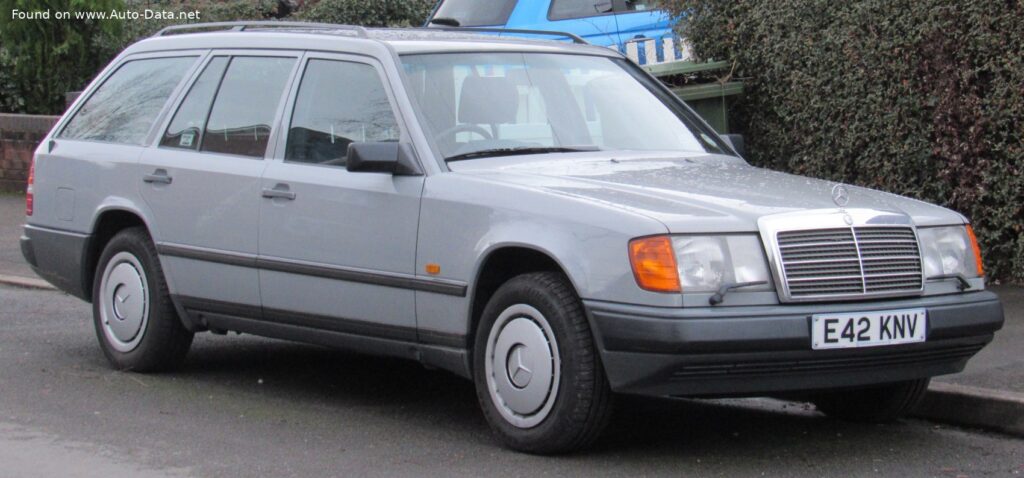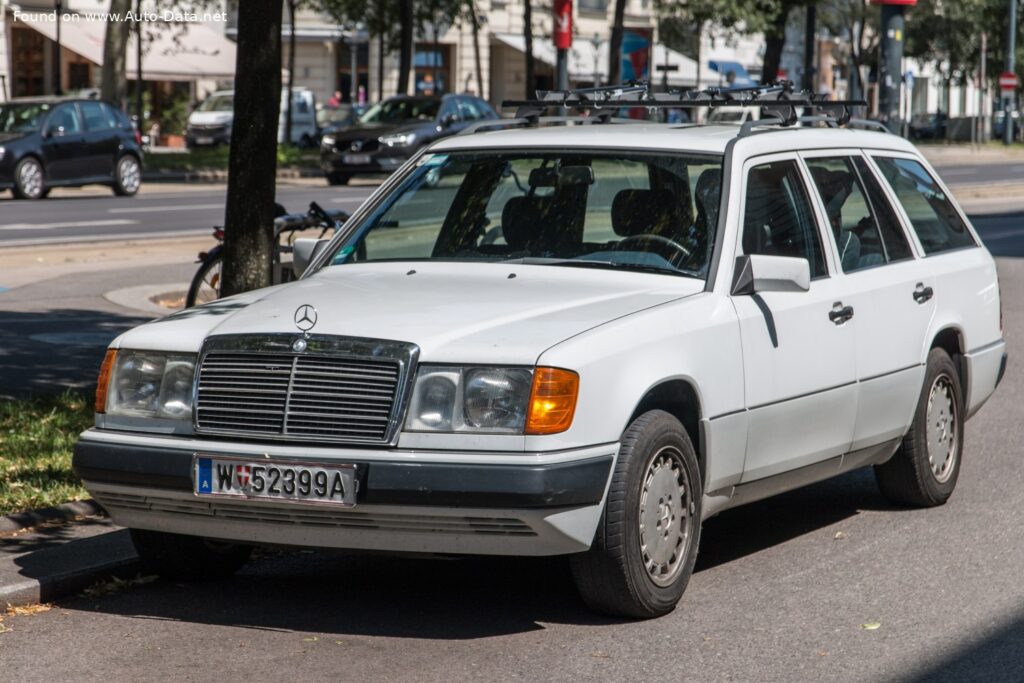
The Mercedes-Benz S124 (facelift 1989) 220 TE: A Pillar of German Engineering
The Mercedes-Benz W124 series, produced from 1984 to 1996, stands as one of the most revered and iconic vehicle generations in the marque’s long history. Renowned for its unparalleled build quality, engineering integrity, and understated elegance, the W124 set benchmarks in the executive car segment. The S124 designation refers specifically to the station wagon (estate) variant, a highly practical and versatile offering that combined the sedan’s sophisticated dynamics with enhanced cargo capacity. The model under scrutiny, the Mercedes-Benz S124 (facelift 1989) 220 TE, represents a refined iteration from the later stages of the W124’s production, specifically manufactured between June 1992 and July 1993. This particular variant, featuring a 2.2-liter inline-four engine paired with an automatic transmission, was a popular choice in its primary European market, embodying Mercedes-Benz’s commitment to durability, comfort, and safety.
While the W124 sedan and coupe variants were sold in the United States, the S124 station wagon, particularly with its four-cylinder gasoline engine, played a crucial role in Europe, offering a practical yet luxurious family hauler. It competed fiercely with contemporaries like the BMW 5 Series Touring and the Audi 100 Avant, often surpassing them in perceived robustness and longevity. The 1989 facelift, which this 220 TE model incorporates, brought subtle but significant changes, including redesigned side moldings, integrated side cladding, and updated engine options, further cementing its status as a technologically advanced and aesthetically pleasing vehicle for its time.
Engine and Performance of the Mercedes-Benz S124 (facelift 1989) 220 TE
At the heart of the Mercedes-Benz S124 (facelift 1989) 220 TE lies the M 111 E 22 engine, specifically designated M 111.960. This 2.2-liter (2199 cm3 or 134.19 cu. in.) inline-four cylinder gasoline engine was a relatively modern powerplant for its era, featuring a Double Overhead Camshaft (DOHC) valvetrain with four valves per cylinder. This configuration, combined with multi-port manifold fuel injection and a naturally aspirated design, allowed the engine to produce a respectable 150 horsepower at 5500 rpm. The power output translated to a robust 68.2 horsepower per liter, indicating an efficient design for a non-turbocharged engine of the early 1990s.
Torque figures for the 220 TE were equally impressive for a four-cylinder, generating 154.89 lb-ft (210 Nm) at 4000 rpm. This ample torque, available at a relatively accessible engine speed, contributed to the car’s smooth and effortless driving characteristics, particularly in everyday scenarios. Power was delivered to the rear wheels via a durable and well-proven 4-speed automatic transmission, a common and reliable choice for Mercedes-Benz models of this period. This powertrain architecture, driving the rear wheels, provided a balanced feel and the traditional Mercedes-Benz driving experience, prioritizing comfort and stability.
In terms of outright performance, the 220 TE was not designed as a sports car, but it offered adequate acceleration for its class. It could sprint from 0 to 60 mph in a calculated 10.5 seconds (0-100 km/h in 11.1 seconds) and reach a top speed of 119.92 mph (193 km/h). Fuel economy, while not stellar by modern standards, was competitive for a luxury station wagon of its size and weight. The urban fuel consumption was rated at 20.3 US mpg (11.6 l/100 km), while extra-urban driving could achieve 30.9 US mpg (7.6 l/100 km), thanks to the engine’s efficient design and the automatic transmission’s smooth operation. With a 19.02 US gallon (72-liter) fuel tank, the 220 TE offered a substantial cruising range, a desirable trait for European long-distance travel.
Design and Features
The S124 station wagon is a testament to Mercedes-Benz’s design philosophy of “form follows function,” combined with an unwavering commitment to quality. The body type, a 5-door, 5-seat station wagon, offered exceptional practicality without sacrificing the elegant lines of the W124 sedan. Measuring 187.6 inches (4765 mm) in length, 68.5 inches (1740 mm) in width, and 58.62 inches (1489 mm) in height, the S124 provided a spacious interior for passengers and a generous cargo area, further expandable by folding the rear seats. Its 110.24-inch (2800 mm) wheelbase contributed to a stable and comfortable ride, a hallmark of the W124 chassis.
The W124 series, and by extension the S124, was celebrated for its robust construction and advanced engineering. The suspension system was particularly noteworthy for its time: a wishbone setup at the front and an independent multi-link suspension at the rear. This multi-link design, a pioneering feature when introduced, provided superior ride comfort, handling precision, and stability, especially when the vehicle was fully loaded. Braking performance was handled by ventilated discs at the front and solid discs at the rear, augmented by an Anti-lock Braking System (ABS) as a standard safety feature, which was still a premium offering in the early 1990s.
Steering was a cone worm with recirculation balls type, enhanced by hydraulic power steering, providing a precise yet comfortable feel. The vehicle rode on 195/65 R15 tires mounted on 6.5J x 15-inch wheel rims, a sensible choice balancing comfort, grip, and durability. The kerb weight of 3262.84 lbs (1480 kg) underscored its solid construction, contributing to its renowned safety and longevity. With a maximum payload capacity of 1433 lbs (650 kg) and a gross weight of 4695.85 lbs (2130 kg), the 220 TE was designed to comfortably carry both passengers and cargo over long distances, making it an ideal choice for families and professionals alike.
Technical Specifications
| Category | Specification | Value (US Units) |
|---|---|---|
| Brand | Mercedes-Benz | – |
| Model | W124 | – |
| Generation | S124 (facelift 1989) | – |
| Type (Engine) | 220 TE (150 Hp) Automatic | – |
| Production Start | June, 1992 | – |
| Production End | July, 1993 | – |
| Body type | Station wagon (estate) | – |
| Seats | 5 | – |
| Doors | 5 | – |
| Fuel Type | Petrol (Gasoline) | – |
| Fuel Economy – Urban | 11.6 l/100 km | 20.3 US mpg |
| Fuel Economy – Extra Urban | 7.6 l/100 km | 30.9 US mpg |
| Acceleration 0-60 mph | 10.5 sec | – |
| Maximum Speed | 193 km/h | 119.92 mph |
| Power | 150 Hp @ 5500 rpm | 150 HP @ 5500 rpm |
| Torque | 210 Nm @ 4000 rpm | 154.89 lb-ft @ 4000 rpm |
| Engine Layout | Front, Longitudinal | – |
| Engine Model/Code | M 111 E 22 / 111.960 | – |
| Engine Displacement | 2199 cm3 | 2.2 Liters / 134.19 cu. in. |
| Number of Cylinders | 4 | – |
| Engine Configuration | Inline | – |
| Valvetrain | DOHC | – |
| Number of Valves per Cylinder | 4 | – |
| Compression Ratio | 10:1 | – |
| Fuel Injection System | Multi-port manifold injection | – |
| Engine Aspiration | Naturally aspirated engine | – |
| Kerb Weight | 1480 kg | 3262.84 lbs |
| Max. Weight | 2130 kg | 4695.85 lbs |
| Max Load | 650 kg | 1433 lbs |
| Fuel Tank Capacity | 72 l | 19.02 US gal |
| Length | 4765 mm | 187.6 in. |
| Width | 1740 mm | 68.5 in. |
| Height | 1489 mm | 58.62 in. |
| Wheelbase | 2800 mm | 110.24 in. |
| Front Track | 1497 mm | 58.94 in. |
| Rear Track | 1497 mm | 58.94 in. |
| Drive Wheel | Rear wheel drive | – |
| Transmission | 4 gears, automatic transmission | – |
| Front Suspension | Wishbone | – |
| Rear Suspension | Independent multi-link suspension | – |
| Front Brakes | Ventilated discs | – |
| Rear Brakes | Disc | – |
| Assisting Systems | ABS (Anti-lock braking system) | – |
| Steering Type | Cone worm with recirculation balls | – |
| Power Steering | Hydraulic Steering | – |
| Front Wheel Tires | 195/65 R15 | – |
| Rear Wheel Tires | 195/65 R15 | – |
| Front Wheel Rims | 6.5J x 15 | – |
| Rear Wheel Rims | 6.5J x 15 | – |
Legacy and Market Impact of the Mercedes-Benz S124 (facelift 1989) 220 TE
The Mercedes-Benz W124 series, including the S124 station wagon, is widely regarded as one of the last “over-engineered” Mercedes-Benz models, a testament to the company’s commitment to quality over cost-cutting. This reputation for exceptional durability and longevity has cemented its place in automotive history. The Mercedes-Benz S124 (facelift 1989) 220 TE, in particular, offered a compelling blend of practicality, luxury, and reliable performance that resonated strongly with European buyers. It was a vehicle designed to withstand the rigors of family life and long-distance touring, often serving its owners for decades and hundreds of thousands of miles.
In its primary markets, the S124 220 TE faced stiff competition from other premium European automakers. BMW’s 5 Series Touring (E34 generation) offered a sportier driving experience, while Audi’s 100 Avant (C4 generation) provided front-wheel drive or quattro all-wheel drive options and a more modern aesthetic. However, the Mercedes-Benz S124 consistently stood out for its unyielding build quality, superior ride comfort, and a sense of solidity that few rivals could match. Its multi-link rear suspension and advanced safety features like ABS were class-leading, contributing to its reputation as a safe and secure family vehicle.
Today, the W124 generation, especially well-maintained S124 wagons, holds a significant place in the classic car market. They are highly sought after by enthusiasts and collectors who appreciate their timeless design, robust engineering, and remarkable reliability. The 220 TE, with its efficient four-cylinder engine, represents a more accessible entry into W124 ownership compared to the larger-engined variants, yet it still delivers the quintessential Mercedes-Benz experience. Its enduring appeal lies not just in its aesthetics or performance, but in its legacy as a benchmark for automotive engineering excellence, a vehicle that was built to last and continues to serve as a symbol of Mercedes-Benz’s golden era of manufacturing.