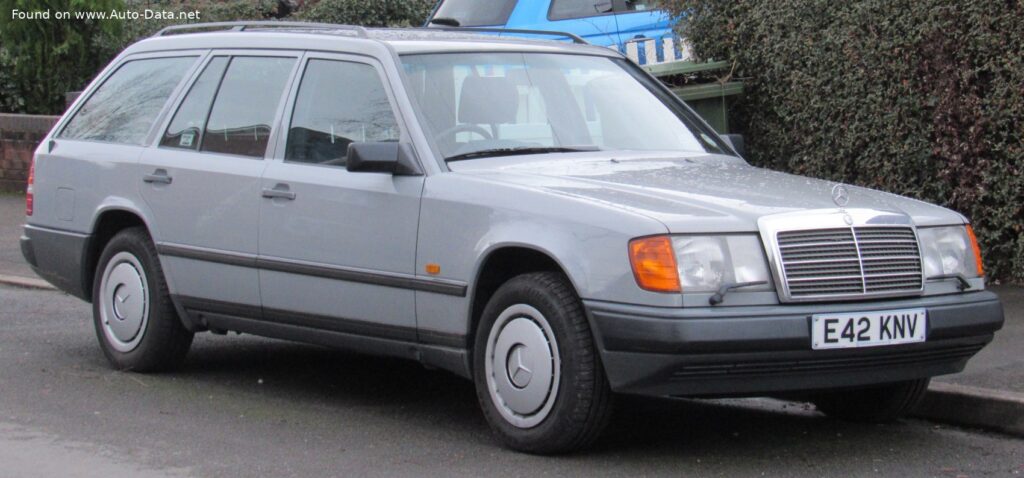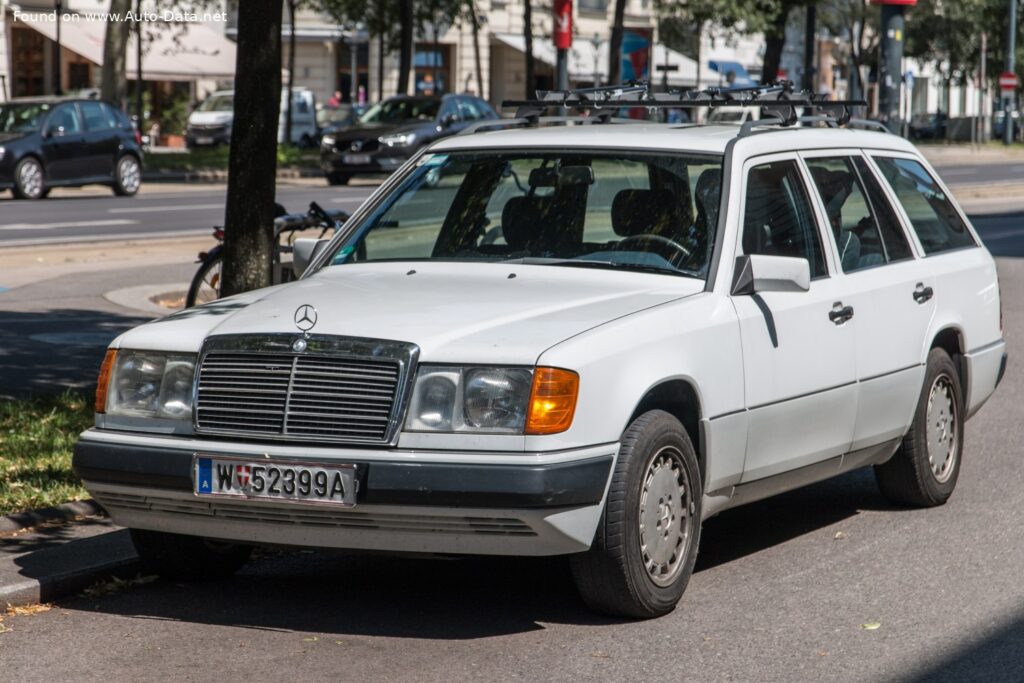
The Enduring Legacy of the Mercedes-Benz S124 (facelift 1989) 230 TE (132 Hp)
The Mercedes-Benz W124 series, produced from 1984 to 1995, stands as a testament to German engineering prowess and a benchmark for automotive durability. Among its celebrated variants, the S124 station wagon (known as an “estate” in Europe) carved out a significant niche, offering unparalleled practicality without compromising the brand’s hallmark luxury and robust build quality. The particular model under scrutiny, the Mercedes-Benz S124 (facelift 1989) 230 TE (132 Hp), represents a pivotal point in this generation’s lifecycle, incorporating a mid-cycle refresh that refined its aesthetics and technology while retaining the core values of the W124 platform. Launched in September 1989, this specific iteration of the 230 TE was a popular choice in its primary European markets, where its combination of space, comfort, and Mercedes-Benz reliability made it an ideal vehicle for families and professionals alike. While not officially sold in the United States in this exact powertrain configuration, its design philosophy and mechanical underpinnings profoundly influenced the automotive landscape and cemented Mercedes-Benz’s reputation globally.
Engine & Performance: The Heart of the Mercedes-Benz S124 (facelift 1989) 230 TE
Powering the 1989 Mercedes-Benz S124 230 TE was the venerable M102 E 23 engine, an inline-four cylinder unit renowned for its robust construction and smooth operation. With a displacement of 2.3 liters (2298 cm³ or 140.23 cubic inches), this naturally aspirated engine featured a Single Overhead Camshaft (SOHC) valvetrain with two valves per cylinder, a common and reliable configuration for the era. Fuel delivery was managed by a multi-port manifold injection system, ensuring efficient combustion and responsive throttle input.
This powertrain delivered 132 horsepower at 5100 rpm, which, while not designed for outright blistering performance, provided ample power for daily driving and highway cruising. Torque output stood at 146.04 lb.-ft. (198 Nm) at a relatively low 3500 rpm, contributing to the car’s tractable nature and ease of driving, particularly when laden with passengers or cargo. The engine’s layout was front-mounted and longitudinal, driving the rear wheels, a classic Mercedes-Benz setup that offered balanced weight distribution and a refined driving experience.
Mated to a 4-speed manual transmission, the 230 TE could accelerate from 0 to 60 mph in a respectable 10.8 seconds. Its top speed was rated at 116.82 mph (188 km/h), making it perfectly capable of handling autobahn speeds. In terms of fuel efficiency, the 230 TE offered competitive figures for its class and time: approximately 19.3 US mpg in urban conditions and an impressive 30.5 US mpg on the extra-urban cycle. These figures underscored the engine’s balance of power and economy, a critical factor for European buyers. The engine’s generous oil capacity of 4.5 liters (4.76 US quarts) and a coolant capacity of 8.5 liters (8.98 US quarts) further hinted at its design for long-term durability and operational stability.
Design & Features: The Practical Elegance of the S124 Station Wagon
The Mercedes-Benz S124 embodied a design philosophy centered on timeless elegance, functionality, and aerodynamic efficiency, all masterfully penned by Bruno Sacco. The 1989 facelift introduced subtle but impactful changes, including color-matched side cladding (often referred to as “Sacco panels”), revised bumpers, and updated interior trim, giving the car a more modern and cohesive appearance. The S124’s body type is a 5-door station wagon (or “estate”), a practical and versatile form factor that significantly contributed to its appeal.
Measuring 187.6 inches in length, 68.5 inches in width, and 58.62 inches in height, with a substantial wheelbase of 110.24 inches, the S124 offered a remarkably spacious and comfortable cabin. The interior was designed to accommodate five occupants with ease, providing ample head, shoulder, and legroom. Mercedes-Benz’s commitment to quality was evident in the choice of materials