The Mercedes-Benz S124 (facelift 1989) 250 TD Automatic: A Benchmark of German Engineering
The Mercedes-Benz W124 series, produced from 1984 to 1995, stands as an enduring testament to the German automaker’s commitment to engineering excellence, durability, and passenger comfort. Within this revered lineage, the S124 designation refers to the station wagon (estate) variant, a highly practical and robust offering particularly popular in European markets. The specific model in focus, the Mercedes-Benz S124 (facelift 1989) 250 TD Automatic, represents a mid-cycle refresh of this iconic platform, integrating subtle design enhancements and mechanical refinements that further solidified its reputation. Launched in 1989, this diesel-powered wagon was conceived as a versatile workhorse, designed to ferry families and cargo with unwavering reliability and a distinct sense of understated luxury. While the W124 sedans and coupes saw limited diesel variants in the U.S. market, the station wagon, especially with a diesel powertrain, epitomized Mercedes-Benz’s core values for its primary European clientele: longevity, efficiency, and a comfortable, high-quality driving experience over many hundreds of thousands of miles.
Engineering and Design of the Mercedes-Benz S124 (facelift 1989) 250 TD Automatic
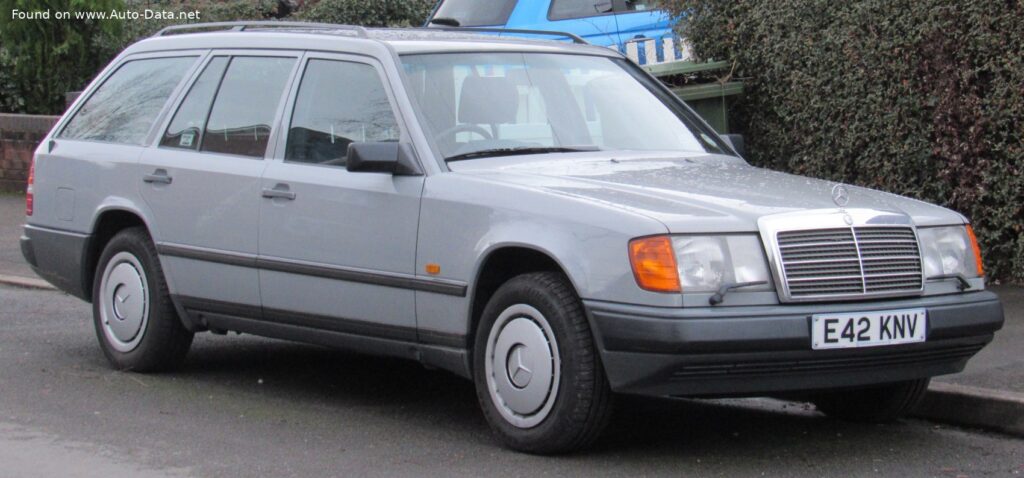
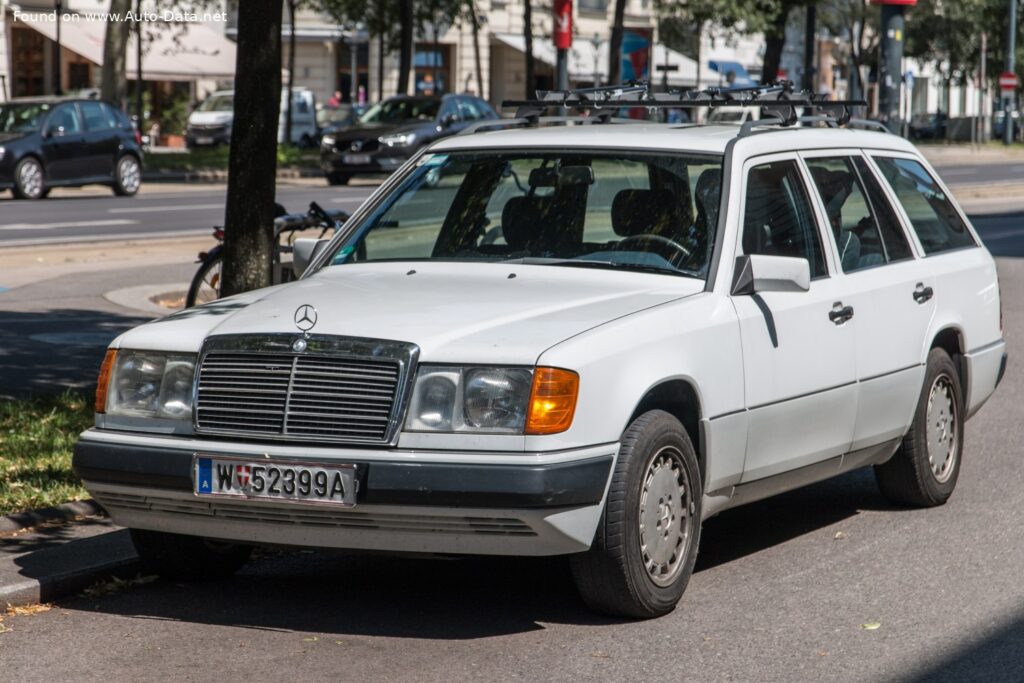
The 1989 facelift brought a series of updates to the W124 platform, primarily focusing on aesthetic refinements and minor mechanical tweaks. For the S124 station wagon, these changes were subtle but impactful, ensuring the car remained competitive and visually fresh. The overall design philosophy remained true to the W124’s original intent: a timeless, elegant, and functional form that prioritized safety and aerodynamic efficiency. The station wagon body, with its expansive cargo area and practical five-door configuration, offered significant utility, making it a favorite among professionals, families, and even as a luxurious taxi in its home market.
Key design elements of the S124 include its distinctive grille, integrated bumpers, and a clean, uncluttered profile. The facelift models often featured color-matched lower body cladding, replacing the earlier contrasting dark gray, lending a more cohesive and modern appearance. The S124’s design was not just about aesthetics; it was engineered for purpose. Its robust construction and high-quality materials were evident throughout, from the solid thunk of the doors to the plush, durable interior fabrics and leathers. The vehicle’s dimensions, measuring 187.6 inches in length and 68.5 inches in width, provided a substantial road presence and a remarkably spacious cabin, especially for its era. With a generous 110.24-inch wheelbase, the ride quality was inherently stable and comfortable, a hallmark of Mercedes-Benz engineering.
Engine & Performance
At the heart of the Mercedes-Benz S124 (facelift 1989) 250 TD Automatic lies the OM 602 D 25, an inline five-cylinder diesel engine with a displacement of 2.5 liters (152.38 cubic inches). This naturally aspirated, SOHC (Single Overhead Camshaft) powerplant was renowned for its legendary durability and efficiency rather than blistering performance. It produced a modest 94 horsepower at 4600 rpm and 116.53 lb.-ft. of torque between 2600-3100 rpm. While these figures might seem conservative by modern standards, they were perfectly adequate for the car’s intended purpose: reliable, long-distance cruising and load-carrying.
The engine featured a precombustion chamber injection system, a common technology for diesels of that era, contributing to its robust nature and tolerance for various fuel qualities. With a high compression ratio of 22:1, the engine was designed for maximum efficiency from diesel fuel. Power was sent to the rear wheels via a smooth-shifting 4-speed automatic transmission, a common choice for Mercedes-Benz models of the time, emphasizing comfort and ease of driving over sporty engagement. The powertrain architecture, with its front-longitudinal engine layout and rear-wheel drive, provided balanced weight distribution and characteristic Mercedes-Benz handling.
In terms of performance, the 250 TD was not built for speed. It accelerated from 0 to 60 mph in a leisurely 17.9 seconds, with a top speed of approximately 99.42 mph (160 km/h). However, its strength lay in its impressive fuel economy for a vehicle of its size and era. It achieved an estimated 25.3 US mpg in urban driving and an even more commendable 37.3 US mpg on the highway, making it an economical choice for European motorists facing higher fuel prices. The vehicle’s kerb weight of 3,328.98 lbs (1510 kg) contributed to its solid feel on the road, while its maximum load capacity of 1,366.87 lbs (620 kg) underscored its utility as a practical estate car.
Design & Features
The S124 station wagon was celebrated for its thoughtful design and robust feature set, which prioritized safety, comfort, and utility. The five-door, five-seat configuration offered ample space for occupants and cargo. The rear cargo area was particularly spacious and well-designed, often featuring an optional rear-facing third-row seat, increasing passenger capacity to seven for shorter trips – a highly desirable feature for European families.
Inside, the W124 cabin was a masterclass in ergonomic design and material quality. The dashboard layout was logical and driver-focused, with clear instrumentation and intuitive controls. Features like hydraulic power steering (cone worm with recirculation balls) ensured effortless maneuverability despite the car’s size. Safety was a paramount concern for Mercedes-Benz, even in the late 1980s. The S124 came equipped with an Anti-lock Braking System (ABS) as standard, a significant safety advancement for its time, enhancing control during emergency braking scenarios. The suspension system, featuring a wishbone setup at the front and an independent multi-link suspension at the rear, provided an exceptional balance of ride comfort and handling stability, allowing the S124 to glide over various road surfaces with composure. Disc brakes on all four wheels provided confident stopping power. The car rode on 195/65 R15 tires mounted on 6.5J x 15-inch wheel rims, a practical size that offered a good balance of comfort and traction.
Technical Specifications
| Category | Specification | US Equivalent / Notes |
|---|---|---|
| Brand | Mercedes-Benz | |
| Model | W124 | |
| Generation | S124 (facelift 1989) | Station Wagon variant |
| Type (Engine) | 250 TD (94 Hp) Automatic | |
| Start of Production | 1989 year | |
| End of Production | July, 1993 year | |
| Powertrain Architecture | Internal Combustion engine | |
| Body Type | Station wagon (estate) | 5 Doors, 5 Seats |
| Performance Specs | ||
| Fuel consumption (economy) – urban | 9.3 l/100 km | 25.3 US mpg |
| Fuel consumption (economy) – extra urban | 6.3 l/100 km | 37.3 US mpg |
| Fuel Type | Diesel | |
| Acceleration 0 – 60 mph | 17.9 sec | |
| Maximum speed | 160 km/h | 99.42 mph |
| Weight-to-power ratio | 16.1 kg/Hp | 35.49 lbs/Hp |
| Weight-to-torque ratio | 9.6 kg/Nm | 21.16 lbs/Nm |
| Engine Specs | ||
| Power | 94 Hp @ 4600 rpm. | |
| Power per liter | 37.6 Hp/l | |
| Torque | 158 Nm @ 2600-3100 rpm. | 116.53 lb.-ft. @ 2600-3100 rpm. |
| Engine Layout | Front, Longitudinal | |
| Engine Model/Code | OM 602 D 25 / 602.912 | |
| Engine displacement | 2497 cm3 | 2.5 liters / 152.38 cu. in. |
| Number of cylinders | 5 | Inline configuration |
| Cylinder Bore | 87 mm | 3.43 in. |
| Piston Stroke | 84 mm | 3.31 in. |
| Compression ratio | 22:1 | |
| Number of valves per cylinder | 2 | |
| Fuel injection system | Precombustion chamber injection | |
| Engine aspiration | Naturally aspirated engine | |
| Valvetrain | SOHC | |
| Engine oil capacity | 7 l | 7.4 US qt |
| Coolant | 9.5 l | 10.04 US qt |
| Space, Volume and Weights | ||
| Kerb Weight | 1510 kg | 3328.98 lbs. |
| Max. weight | 2130 kg | 4695.85 lbs. |
| Max load | 620 kg | 1366.87 lbs. |
| Fuel tank capacity | 72 l | 19.02 US gal |
| Dimensions | ||
| Length | 4765 mm | 187.6 in. |
| Width | 1740 mm | 68.5 in. |
| Height | 1489 mm | 58.62 in. |
| Wheelbase | 2800 mm | 110.24 in. |
| Front track | 1497 mm | 58.94 in. |
| Rear (Back) track | 1497 mm | 58.94 in. |
| Drivetrain, Brakes and Suspension Specs | ||
| Drivetrain Architecture | Internal combustion engine (ICE) drives the rear wheels. | Rear wheel drive |
| Number of gears and type of gearbox | 4 gears, automatic transmission | |
| Front suspension | Wishbone | |
| Rear suspension | Independent multi-link suspension | |
| Front brakes | Disc | |
| Rear brakes | Disc | |
| Assisting systems | ABS (Anti-lock braking system) | |
| Steering type | Cone worm with recirculation balls | |
| Power steering | Hydraulic Steering | |
| Tires size | Front/Rear: 195/65 R15 | |
| Wheel rims size | Front/Rear: 6.5J x 15 | |
Legacy & Market Impact
The Mercedes-Benz W124 series, and particularly the S124 station wagon, left an indelible mark on the automotive landscape, especially in Europe. The Mercedes-Benz S124 (facelift 1989) 250 TD Automatic was a prime example of the “over-engineered” philosophy that defined Mercedes-Benz in this era. These cars were built to last, with many examples still reliably serving their owners decades later, often having accumulated hundreds of thousands of miles. This reputation for unwavering reliability and build quality made them incredibly popular as family cars, executive transports, and even as the preferred choice for taxi fleets across Germany and beyond.
In its primary European market, the S124 250 TD competed with other premium wagons like the BMW 5 Series Touring (E34) and the Audi 100 Avant (C3/C4). While BMW offered a sportier driving experience and Audi pioneered quattro all-wheel drive, the Mercedes-Benz S124 distinguished itself with its superior ride comfort, unparalleled durability, and a more classic, understated luxury. The diesel engine, offering exceptional fuel economy and torque for its size, was a significant selling point in regions where diesel fuel was common and often more affordable.
Today, the W124 series, including the S124 wagon, is highly regarded by enthusiasts and collectors. Its classic lines, robust mechanicals, and comfortable interiors have secured its place as a modern classic. The 250 TD, with its legendary OM602 engine, is particularly sought after for its potential for extreme longevity and relatively straightforward maintenance. Its historical significance lies in its embodiment of a golden era for Mercedes-Benz, where uncompromising quality and engineering integrity were paramount. The S124 remains a tangible symbol of a time when luxury was defined not by flashy gadgets, but by enduring quality, thoughtful design, and a driving experience that prioritized comfort and reliability above all else.