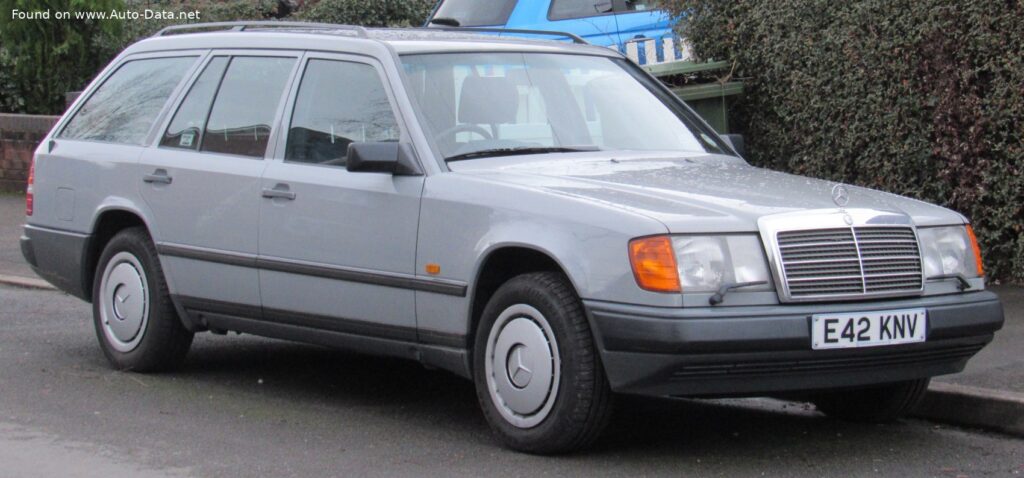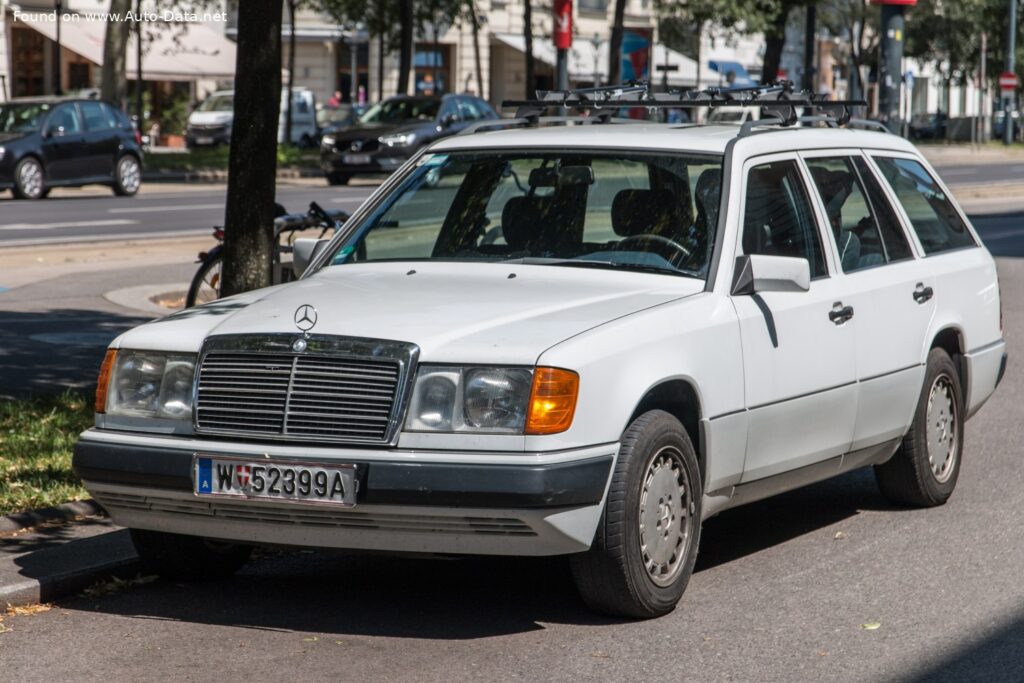
Introduction: The Mercedes-Benz S124 (facelift 1989) 250 TD CAT (90 Hp)
The Mercedes-Benz W124 series, produced from 1984 to 1996, stands as a testament to German engineering prowess and a benchmark for automotive durability. Within this celebrated lineage, the S124 generation denotes the highly versatile and practical station wagon (estate) variant. Unveiled in September 1989 as part of a significant facelift for the W124 platform, the Mercedes-Benz S124 (facelift 1989) 250 TD CAT (90 Hp) represented a quintessential European premium family hauler. While never officially sold in the United States in this specific diesel configuration, the W124 chassis itself earned an iconic status globally, renowned for its exceptional build quality, refined ride, and long-term reliability. This particular model, equipped with a naturally aspirated diesel engine and a catalytic converter, was a workhorse designed for efficiency and endurance on European roads, embodying Mercedes-Benz’s commitment to robust, comfortable, and environmentally conscious (for its era) transportation.
The 1989 facelift brought subtle yet meaningful updates to the W124, including revised styling cues and technological enhancements, though the core engineering remained steadfast. The S124, with its elegant five-door station wagon body, offered unparalleled practicality without compromising the sophisticated driving experience associated with the three-pointed star. This article delves into the specifics of the 250 TD CAT (90 Hp) variant, exploring its mechanical heart, design philosophy, and its enduring legacy as a symbol of automotive excellence.
Engine and Performance: The 250 TD CAT (90 Hp) Powertrain
At the core of the Mercedes-Benz S124 (facelift 1989) 250 TD CAT (90 Hp) lies the revered OM 602 D 25 / 602.912 engine, a 2.5-liter (2497 cm3 or 152.38 cu. in.) naturally aspirated inline-five-cylinder diesel unit. This powertrain was a hallmark of Mercedes-Benz’s commitment to reliability and fuel efficiency during an era when diesel engines were primarily chosen for their longevity and economy, rather than outright performance. Producing a modest 90 horsepower at 4600 rpm and 116.53 lb.-ft. (158 Nm) of torque available between 2600-3100 rpm, the engine was engineered for smooth, consistent power delivery. Its precombustion chamber injection system and two valves per cylinder (SOHC valvetrain) were standard for the period, contributing to its reputation for bulletproof durability.
Performance figures for the 250 TD CAT reflect its pragmatic design philosophy. Acceleration from 0 to 60 mph was achieved in a leisurely 16.7 seconds, with a top speed of 102.53 mph (165 km/h). These numbers might seem modest by today’s standards, but for a family station wagon of its time, they were entirely adequate for comfortable cruising on European highways. The engine’s naturally aspirated nature meant a linear power band without the sudden surge of a turbocharger, favoring smooth operation and reduced mechanical stress. Equipped with a catalytic converter (“CAT”), this model was also an early adopter of emission control technology for diesel passenger cars in Europe, reflecting a forward-thinking approach to environmental responsibility.
Power was delivered to the rear wheels via a robust 5-speed manual transmission, a choice that emphasized driver engagement and allowed for optimal fuel management. The powertrain architecture, with its front, longitudinal engine layout and rear-wheel drive, was classic Mercedes-Benz, offering balanced handling characteristics and a solid feel on the road. Fuel economy was a strong suit for this diesel variant, with urban consumption rated at 24.8 US mpg (9.5 l/100 km) and an impressive 40.6 US mpg (5.8 l/100 km) on the extra-urban cycle, making it an economical choice for long-distance travel. The 72-liter (19.02 US gal) fuel tank provided an excellent cruising range, further cementing its role as a capable tourer.
Design and Features: Form Meets Function in the S124
The S124 generation of the W124 series, specifically the station wagon (estate) body type, perfectly encapsulated Mercedes-Benz’s design ethos of the late 1980s: elegant, understated, and highly functional. Designed by Bruno Sacco, the W124’s lines were clean, aerodynamic for its time, and timeless, contributing to its enduring appeal. The 1989 facelift brought subtle refinements, such as body-colored side cladding (Sacco panels) and revised trim, enhancing its sophisticated presence. With five doors and seating for five, the S124 was designed with versatility in mind, offering substantial cargo capacity that could be expanded further by folding the rear seats. Its dimensions – 187.6 inches (4765 mm) in length, 68.5 inches (1740 mm) in width, and 58.62 inches (1489 mm) in height – ensured a commanding presence while maintaining practical maneuverability. The 110.24-inch (2800 mm) wheelbase contributed to a stable ride and generous interior space.
Inside, the S124 was a masterclass in ergonomic design and material quality. The cabin was built to last, featuring durable fabrics or optional leather, clear instrumentation, and intuitive controls. Comfort was paramount, with well-cushioned seats designed for long journeys. While the 250 TD CAT was a more utilitarian model compared to higher-spec gasoline variants, it still benefited from Mercedes-Benz’s commitment to safety and driver aids. Key features included power steering with a cone worm and recirculation balls system, providing precise and effortless control. An Anti-lock Braking System (ABS) was a standard and crucial safety feature for 1989, enhancing control during emergency stops.
The suspension system was advanced for its era, featuring a wishbone setup at the front and an independent multi-link suspension at the rear. This sophisticated arrangement contributed significantly to the W124’s renowned ride comfort, handling precision, and stability, even when fully loaded. All four wheels were equipped with disc brakes, ensuring confident stopping power. Standard tires were 195/65 R15 on 6.5J x 15 wheel rims, offering a good balance of grip, comfort, and durability. The S124’s design was not just about aesthetics; it was a carefully engineered package focused on safety, comfort, and practicality, making it an ideal choice for discerning European families and professionals.
Technical Specifications: Mercedes-Benz S124 (facelift 1989) 250 TD CAT (90 Hp)
| Category | Specification | Value |
|---|---|---|
| General Information | ||
| Brand | Mercedes-Benz | |
| Model | W124 | |
| Generation | S124 (facelift 1989) | |
| Type (Engine) | 250 TD CAT (90 Hp) | |
| Start of Production | September, 1989 | |
| End of Production | July, 1993 | |
| Powertrain Architecture | Internal Combustion engine | |
| Body type | Station wagon (estate) | |
| Seats | 5 | |
| Doors | 5 | |
| Performance Specs | ||
| Fuel consumption (economy) – urban | 24.8 US mpg (9.5 l/100 km) | |
| Fuel consumption (economy) – extra urban | 40.6 US mpg (5.8 l/100 km) | |
| Fuel Type | Diesel | |
| Acceleration 0 – 60 mph | 16.7 sec | |
| Maximum speed | 102.53 mph (165 km/h) | |
| Weight-to-power ratio | 16.8 kg/Hp (59.6 Hp/tonne) | |
| Weight-to-torque ratio | 9.6 kg/Nm (104.6 Nm/tonne) | |
| Engine Specs | ||
| Power | 90 Hp @ 4600 rpm | |
| Power per liter | 36 Hp/l | |
| Torque | 116.53 lb.-ft. (158 Nm) @ 2600-3100 rpm | |
| Engine layout | Front, Longitudinal | |
| Engine Model/Code | OM 602 D 25 / 602.912 | |
| Engine displacement | 2.5 l (2497 cm3 / 152.38 cu. in.) | |
| Number of cylinders | 5 | Inline |
| Cylinder Bore | 3.43 in. (87 mm) | |
| Piston Stroke | 3.31 in. (84 mm) | |
| Compression ratio | 22:1 | |
| Number of valves per cylinder | 2 | |
| Fuel injection system | Precombustion chamber injection | |
| Engine aspiration | Naturally aspirated engine | |
| Valvetrain | SOHC | |
| Engine oil capacity | 7.4 US qt (7 l) | |
| Coolant | 10.04 US qt (9.5 l) | |
| Space, Volume and Weights | ||
| Kerb Weight | 3328.98 lbs. (1510 kg) | |
| Max. weight | 4695.85 lbs. (2130 kg) | |
| Max load | 1366.87 lbs. (620 kg) | |
| Fuel tank capacity | 19.02 US gal (72 l) | |
| Dimensions | ||
| Length | 187.6 in. (4765 mm) | |
| Width | 68.5 in. (1740 mm) | |
| Height | 58.62 in. (1489 mm) | |
| Wheelbase | 110.24 in. (2800 mm) | |
| Front track | 58.94 in. (1497 mm) | |
| Rear (Back) track | 58.94 in. (1497 mm) | |
| Drivetrain, Brakes and Suspension Specs | ||
| Drivetrain Architecture | The Internal combustion engine (ICE) drives the rear wheels of the vehicle. | |
| Drive wheel | Rear wheel drive | |
| Number of gears and type of gearbox | 5 gears, manual transmission | |
| Front suspension | Wishbone | |
| Rear suspension | Independent multi-link suspension | |
| Front brakes | Disc | |
| Rear brakes | Disc | |
| Assisting systems | ABS (Anti-lock braking system) | |
| Steering type | Cone worm with recirculation balls | |
| Power steering | Hydraulic Steering | |
| Tires size | Front wheel tires: 195/65 R15 Rear wheel tires: 195/65 R15 |
|
| Wheel rims size | Front wheel rims: 6.5J x 15 Rear wheel rims: 6.5J x 15 |
|
Legacy and Market Impact: The W124’s Enduring Appeal
The Mercedes-Benz W124 series, and particularly the S124 station wagon, carved out an indelible niche in automotive history. Its reputation for being “over-engineered” was not a criticism but a badge of honor, signifying a commitment to quality and longevity that few manufacturers could match. The Mercedes-Benz S124 (facelift 1989) 250 TD CAT (90 Hp), though not a high-performance variant, perfectly embodied these core values. In its primary European market, it was a ubiquitous sight, serving as reliable family transport, executive vehicles, and even as the preferred choice for taxi fleets in many cities due to its legendary durability and low running costs.
Competitors in the premium European estate segment included models like the BMW 5-Series Touring (E34 generation), the Audi 100 Avant, and to some extent, the Volvo 740/940 Estate. While BMW offered a sportier driving experience and Audi focused on its quattro all-wheel-drive system, the Mercedes-Benz S124 stood apart with its unparalleled ride comfort, superior build quality, and a more conservative, yet elegant, aesthetic. Its robust diesel engines, like the OM 602 in the 250 TD CAT, were particularly lauded for their ability to cover hundreds of thousands of miles with minimal fuss, making them incredibly attractive to buyers prioritizing long-term ownership and reliability.
Today, the W124 generation, including the S124, is widely regarded as one of the finest cars ever built by Mercedes-Benz. It represents the pinnacle of an era before significant cost-cutting measures became common in the automotive industry. The 250 TD CAT, with its efficient and durable diesel engine, is especially sought after by enthusiasts and collectors who appreciate its mechanical integrity and classic Mercedes appeal. Its legacy is not just about its sales figures, but about the profound impact it had on perceptions of quality, comfort, and engineering excellence. The S124 remains a testament to a time when cars were built to last, providing a comfortable, safe, and reliable means of transportation for decades, truly earning its place as a modern classic.