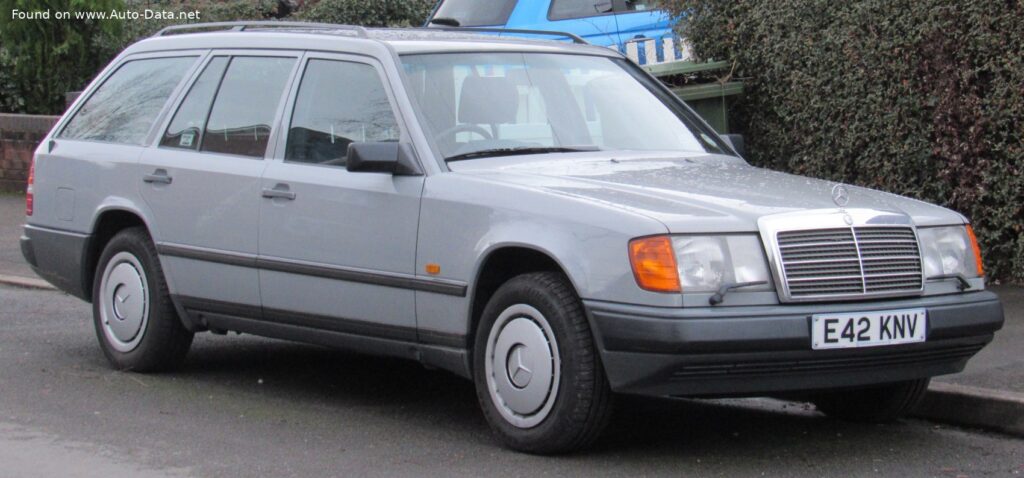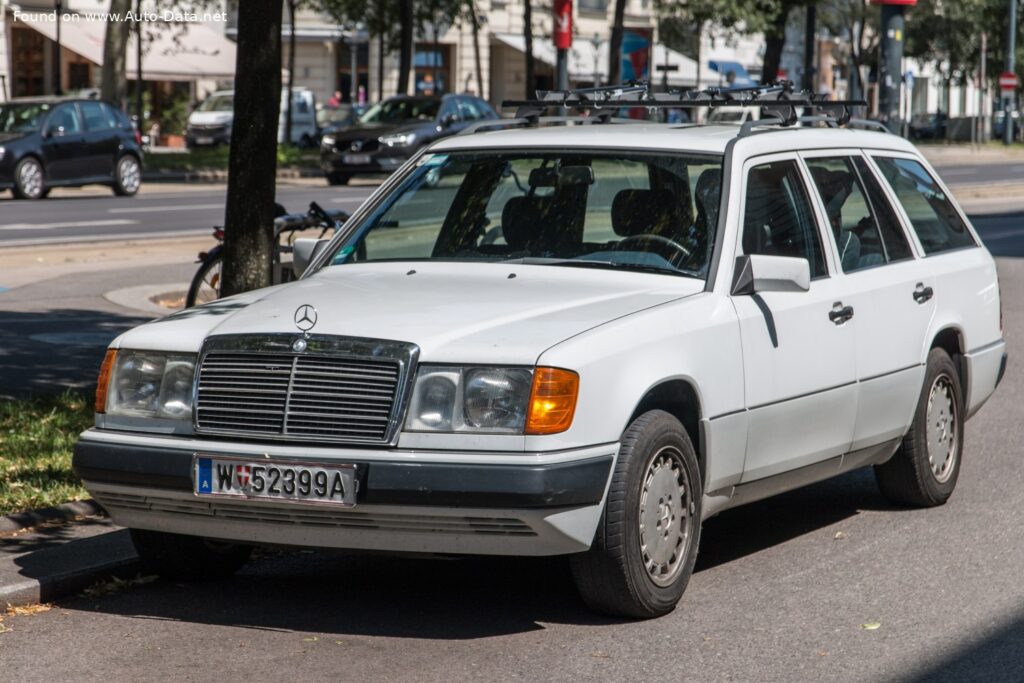
Introduction to the Mercedes-Benz S124 (facelift 1989) 250 TD Turbo
The Mercedes-Benz S124 (facelift 1989) 250 TD Turbo represents a pivotal moment in the history of premium executive automobiles, particularly within the European market. As part of the iconic W124 generation, a series celebrated globally for its unparalleled build quality, engineering integrity, and longevity, the S124 designation refers specifically to the station wagon (estate) variant. Launched in March 1990 as part of the significant 1989 facelift, this model embodied Mercedes-Benz’s commitment to combining luxury, practicality, and robust engineering. The 250 TD Turbo variant, powered by an efficient and durable five-cylinder turbocharged diesel engine, was particularly popular in markets where diesel fuel was favored for its economy and torque characteristics, offering a compelling blend of comfortable long-distance cruising and ample cargo capacity. While not officially sold in the United States in this specific diesel guise, the W124 chassis itself was a strong seller, establishing Mercedes-Benz’s reputation for solidity and sophistication. The Mercedes-Benz S124 (facelift 1989) 250 TD Turbo was produced until July 1993, marking it as a late-era example of the pre-E-Class nomenclature W124 series.
Engine and Performance of the Mercedes-Benz S124 250 TD Turbo
Under the hood of the S124 250 TD Turbo lies Mercedes-Benz’s renowned OM 602 D 25 A / 602.962 engine. This powerplant is an inline five-cylinder, 2.5-liter (2497 cm³ or 152.38 cu. in.) turbocharged diesel unit, a hallmark of Mercedes-Benz’s commitment to durable and efficient diesel technology. With a single overhead camshaft (SOHC) and two valves per cylinder, this engine was designed for reliability and smooth operation rather than outright blistering speed. It produced a respectable 126 horsepower at 4600 rpm, a figure that, while modest by today’s standards, was considered quite competitive for a diesel engine of its era. More importantly for a vehicle of its type, the engine delivered a robust 231 Nm (170.38 lb.-ft.) of torque at a low 2800 rpm. This ample torque, available across a broad rev range, was crucial for effortlessly hauling the S124’s substantial kerb weight of 3439.21 lbs (1560 kg), especially when fully loaded with passengers and cargo.
Power was delivered to the rear wheels via a 5-speed manual transmission, a common configuration for European market vehicles emphasizing driver engagement and fuel efficiency. The turbocharger significantly enhanced performance over naturally aspirated diesel variants, providing a noticeable boost in acceleration and making the S124 250 TD Turbo a capable highway cruiser. It could accelerate from 0 to 60 mph in a respectable 12.3 seconds (0-100 km/h in 12.9 seconds) and achieve a top speed of 118.06 mph (190 km/h).
Fuel efficiency was a key selling point for this diesel model. The S124 250 TD Turbo boasted impressive economy figures for its time: an urban consumption of 10.1 liters per 100 km (23.3 US mpg) and an extra-urban (highway) consumption of 6.2 liters per 100 km (37.9 US mpg). These numbers underscored its suitability for long-distance travel, supported by a generous 19.02 US gallon (72-liter) fuel tank, offering an impressive cruising range. The engine’s precombustion chamber injection system and high 22:1 compression ratio were typical of diesel technology of the period, contributing to its renowned robustness and longevity.
Design and Features
The Mercedes-Benz S124, particularly in its post-1989 facelift guise, showcased a timeless and functional design that prioritized practicality and understated elegance. As a station wagon (often referred to as an “estate” in Europe), the S124 offered exceptional versatility, combining the luxury and comfort of the W124 sedan with significantly expanded cargo space. The body type featured five doors and seating for five, though optional third-row jump seats were sometimes available in the S124, further enhancing its utility for larger families.
Visually, the facelift brought subtle yet impactful changes, including color-matched side cladding (often called “Sacco panels” after their designer, Bruno Sacco), integrated turn signals into the front fenders, and revised grille and tail lamp designs. The overall aesthetic remained true to the W124’s reputation for solidity and quality, with tight panel gaps and a sense of enduring craftsmanship. The vehicle’s dimensions — a length of 187.6 inches (4765 mm), a width of 68.5 inches (1740 mm), and a height of 58.62 inches (1489 mm) — provided a substantial road presence and a spacious interior. The long 110.24-inch (2800 mm) wheelbase contributed significantly to its comfortable ride and stable handling characteristics.
Inside, the S124 offered a classic Mercedes-Benz cabin, characterized by high-quality materials, ergonomic layout, and excellent visibility. Features were designed for durability and ease of use, reflecting the brand’s focus on engineering over fleeting trends. While specific luxury options varied by market and individual configuration, standard features typically included power steering with a hydraulic assist and a cone worm with recirculation balls steering type, ensuring precise control. Safety was a paramount concern, and the S124 came equipped with an Anti-lock Braking System (ABS) as a standard assisting system, a significant safety feature for its time. The suspension system, featuring a wishbone front suspension and an independent multi-link rear suspension, was lauded for its ability to balance ride comfort with confident handling, a hallmark of Mercedes-Benz engineering. Disc brakes were fitted both front and rear, providing reliable stopping power. The car rode on 195/65 R15 tires mounted on 6.5J x 15 wheel rims, a practical setup that contributed to ride comfort and tire longevity.
Technical Specifications: Mercedes-Benz S124 (facelift 1989) 250 TD Turbo (126 Hp)
| General Information | |
|---|---|
| Brand | Mercedes-Benz |
| Model | W124 |
| Generation | S124 (facelift 1989) |
| Type (Engine) | 250 TD Turbo (126 Hp) |
| Start of Production | March, 1990 |
| End of Production | July, 1993 |
| Powertrain Architecture | Internal Combustion engine |
| Body type | Station wagon (estate) |
| Seats | 5 |
| Doors | 5 |
| Performance Specifications | |
| Fuel Consumption (Urban) | 10.1 l/100 km (23.3 US mpg) |
| Fuel Consumption (Extra Urban) | 6.2 l/100 km (37.9 US mpg) |
| Fuel Type | Diesel |
| Acceleration 0 – 60 mph | 12.3 sec |
| Acceleration 0 – 100 km/h | 12.9 sec |
| Maximum Speed | 190 km/h (118.06 mph) |
| Weight-to-Power Ratio | 12.4 kg/Hp (80.8 Hp/tonne) |
| Weight-to-Torque Ratio | 6.8 kg/Nm (148.1 Nm/tonne) |
| Engine Specifications | |
| Power | 126 Hp @ 4600 rpm |
| Power per liter | 50.5 Hp/l |
| Torque | 231 Nm @ 2800 rpm (170.38 lb.-ft. @ 2800 rpm) |
| Engine Layout | Front, Longitudinal |
| Engine Model/Code | OM 602 D 25 A / 602.962 |
| Engine Displacement | 2497 cm³ (2.5 l / 152.38 cu. in.) |
| Number of Cylinders | 5 |
| Engine Configuration | Inline |
| Cylinder Bore | 87 mm (3.43 in.) |
| Piston Stroke | 84 mm (3.31 in.) |
| Compression Ratio | 22:1 |
| Number of Valves per Cylinder | 2 |
| Fuel Injection System | Precombustion chamber injection |
| Engine Aspiration | Turbocharger |
| Valvetrain | SOHC |
| Engine Oil Capacity | 7 l (7.4 US qt) |
| Coolant Capacity | 9.5 l (10.04 US qt) |
| Space, Volume and Weights | |
| Kerb Weight | 1560 kg (3439.21 lbs) |
| Max. Weight | 2180 kg (4806.08 lbs) |
| Max Load | 620 kg (1366.87 lbs) |
| Fuel Tank Capacity | 72 l (19.02 US gal) |
| Dimensions | |
| Length | 4765 mm (187.6 in.) |
| Width | 1740 mm (68.5 in.) |
| Height | 1489 mm (58.62 in.) |
| Wheelbase | 2800 mm (110.24 in.) |
| Front Track | 1497 mm (58.94 in.) |
| Rear (Back) Track | 1497 mm (58.94 in.) |
| Drivetrain, Brakes and Suspension Specifications | |
| Drivetrain Architecture | Internal Combustion engine drives the rear wheels. |
| Drive Wheel | Rear wheel drive |
| Number of Gears and Type of Gearbox | 5 gears, manual transmission |
| Front Suspension | Wishbone |
| Rear Suspension | Independent multi-link suspension |
| Front Brakes | Disc |
| Rear Brakes | Disc |
| Assisting Systems | ABS (Anti-lock braking system) |
| Steering Type | Cone worm with recirculation balls |
| Power Steering | Hydraulic Steering |
| Tires Size (Front/Rear) | 195/65 R15 |
| Wheel Rims Size (Front/Rear) | 6.5J x 15 |
Legacy and Market Impact
The Mercedes-Benz S124, and indeed the entire W124 family, holds a revered place in automotive history, particularly in Europe. The Mercedes-Benz S124 (facelift 1989) 250 TD Turbo cemented its reputation as a benchmark for engineering excellence, durability, and practical luxury. Its robust construction earned it the nickname “over-engineered,” a term of endearment that highlighted its exceptional build quality and ability to withstand hundreds of thousands of miles with proper maintenance. This longevity meant that many W124s, including the S124 station wagon, served as reliable family vehicles, taxis, and business fleets across Europe for decades, often outlasting much newer competitors.
In its primary European market, the S124 250 TD Turbo competed against premium offerings such as the BMW 5 Series Touring (E34 generation) and the Audi 100 Avant (C4 generation). While BMW often emphasized sportiness and Audi highlighted its quattro all-wheel-drive system, the Mercedes-Benz S124 distinguished itself with its unparalleled ride comfort, superior interior quietness, and a perceived solidity that few rivals could match. The diesel engine variants, like the 250 TD Turbo, were especially critical to its success in Europe, where diesel fuel was more affordable and diesel engines were preferred for their efficiency and high torque, making them ideal for Autobahn cruising and heavy loads.
The S124’s market impact was profound. It set high standards for what a premium executive station wagon should be, influencing subsequent generations of luxury family vehicles. Its multi-link rear suspension design, for instance, was revolutionary for its time, providing exceptional handling and ride quality that few could replicate. The car’s timeless design, conceived by Bruno Sacco, has aged gracefully, contributing to its strong classic car status today. Enthusiasts and collectors worldwide value the W124 for its mechanical integrity, ease of maintenance, and the sheer pleasure of driving a vehicle built to an uncompromising standard.
Today, the Mercedes-Benz S124 250 TD Turbo is celebrated not just as a utilitarian classic but as a testament to an era when Mercedes-Benz prioritized engineering longevity above all else. Its legacy is one of unwavering reliability, refined performance, and a practical elegance that continues to captivate automotive aficionados, solidifying its place as one of the finest vehicles ever produced by the German marque.