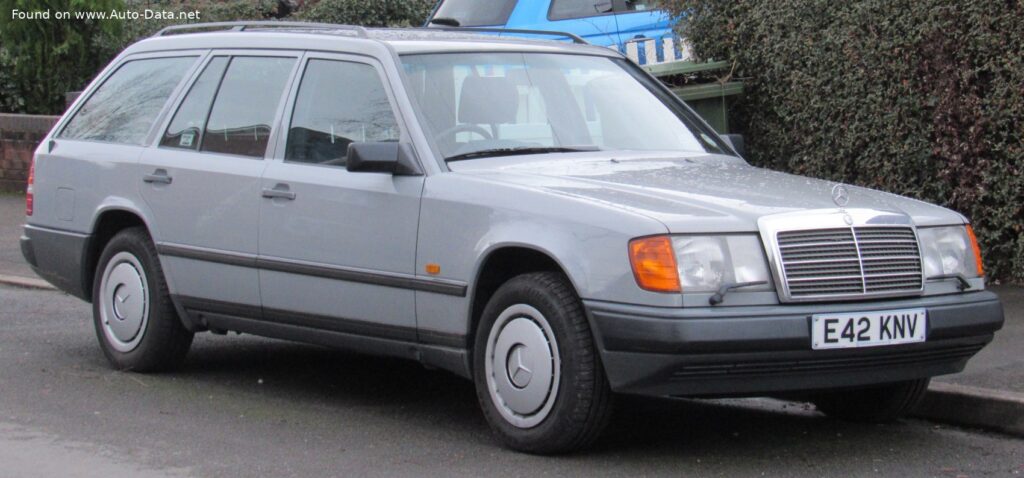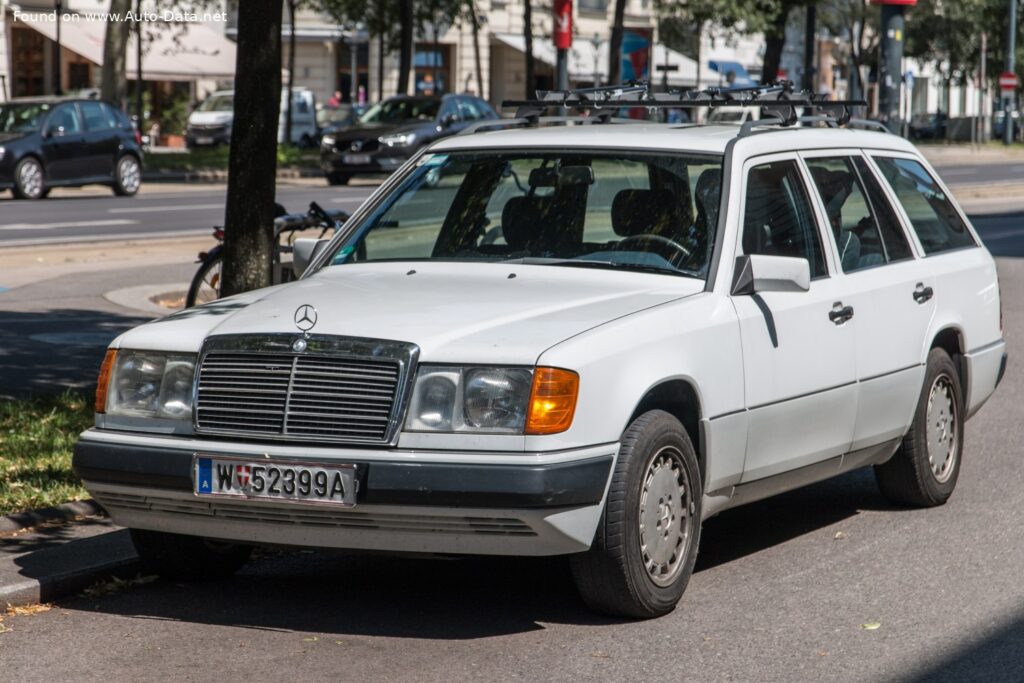
Mercedes-Benz S124 (facelift 1989) 250 TD Turbo (126 Hp) Automatic: A Pillar of German Engineering
The Mercedes-Benz W124 series, produced from 1984 to 1996, stands as a testament to the brand’s commitment to engineering excellence, durability, and understated luxury. Within this highly acclaimed generation, the S124 designation identifies the station wagon (or “estate” in European markets) variant, renowned for its practicality without compromising the W124’s legendary ride quality and robust construction. The focus of this article is the Mercedes-Benz S124 (facelift 1989) 250 TD Turbo (126 Hp) Automatic, a specific model produced between March 1990 and July 1993. This particular iteration represents a prime example of Mercedes-Benz’s strategy during the late 1980s and early 1990s: combining refined diesel powertrain technology with the versatility of a family-oriented vehicle. While the W124 sedan and coupe variants found significant success in the North American market, this specific turbodiesel station wagon was primarily targeted at European consumers, where diesel engines and wagons held a more prominent position in the premium segment. It epitomized the blend of long-distance cruising comfort, cargo capacity, and fuel efficiency that discerning European buyers valued.
Engineering and Performance of the Mercedes-Benz S124 (facelift 1989)
Powertrain: The OM 602 D 25 A Turbodiesel
At the heart of the Mercedes-Benz S124 (facelift 1989) 250 TD Turbo (126 Hp) Automatic lies the formidable OM 602 D 25 A engine, an inline five-cylinder turbodiesel unit. With an engine displacement of 2,497 cubic centimeters (approximately 2.5 liters or 152.38 cubic inches), this powerplant was designed for longevity and efficiency. It featured a single overhead camshaft (SOHC) valvetrain with two valves per cylinder and employed a precombustion chamber injection system, a common and reliable diesel technology of its era, known for smoother operation and reduced noise compared to direct injection systems of the time.
The addition of a turbocharger was a significant enhancement, boosting the engine’s output to a respectable 126 horsepower at 4600 rpm. More importantly for a vehicle designed to carry passengers and cargo, the turbocharger contributed to a robust torque output of 231 Nm (approximately 170.38 lb.-ft.) available at a relatively low 2800 rpm. This ample torque at lower engine speeds provided excellent drivability and pulling power, making the S124 250 TD Turbo well-suited for both urban commuting and sustained highway cruising, even when fully loaded.
Power was delivered to the rear wheels via a smooth-shifting 4-speed automatic transmission, a common and well-regarded setup for Mercedes-Benz vehicles of this period. This transmission was celebrated for its durability and seamless gear changes, contributing to the car’s refined driving experience. Performance figures for this substantial wagon included an acceleration from 0 to 60 mph in a calculated 12.3 seconds, and a top speed of 114.95 mph (185 km/h). While not a performance powerhouse, these figures were more than adequate for a family-oriented turbodiesel wagon of its time, emphasizing comfort and efficiency over outright speed.
Fuel efficiency was a key selling point for diesel models, and the 250 TD Turbo delivered commendable figures. Urban fuel consumption was rated at 10.1 liters per 100 km (23.3 US mpg), while extra-urban (highway) driving yielded an impressive 6.2 liters per 100 km (37.9 US mpg). These numbers underscored the practical advantages of the diesel powertrain for European drivers facing higher fuel prices.
Design and Features: Timeless Practicality
The W124 series, including the S124 station wagon, is celebrated for its clean, functional design, attributed to Bruno Sacco, Mercedes-Benz’s chief designer. The “facelift 1989” introduced subtle but significant updates that modernized the car’s appearance without altering its fundamental character. These changes typically included integrated side cladding (often referred to as “Sacco panels”), redesigned bumpers, and minor interior refinements, aligning its aesthetics more closely with newer Mercedes models like the S-Class (W140) and C-Class (W202) that would follow.
The S124 body style, with its five doors and seating for five, offered exceptional versatility. Its generous dimensions, with a length of 187.6 inches (4765 mm) and a wheelbase of 110.24 inches (2800 mm), translated into a spacious cabin and a substantial cargo area. The rear suspension, an independent multi-link design, was particularly sophisticated for its time, providing a superior balance of ride comfort and handling stability, even when the vehicle was carrying a full load. Many S124 wagons also featured self-leveling rear suspension to maintain ride height under varying loads, further enhancing its practicality.
Inside, the W124’s cabin was a masterclass in ergonomic design and material quality. The dashboard layout was logical and intuitive, featuring clear instrumentation and durable controls. Mercedes-Benz’s commitment to safety was evident with features like robust disc brakes on all four wheels and the inclusion of an Anti-lock Braking System (ABS) as standard, a significant safety advancement for the era. The hydraulic power steering, utilizing a cone worm with recirculation balls system, provided precise and reassuring feedback, contributing to the W124’s reputation for solid, predictable handling. The vehicle rode on 195/65 R15 tires mounted on 6.5J x 15 wheel rims, a sensible setup prioritizing comfort and longevity.
Technical Specifications
General Information |
|
| Brand | Mercedes-Benz |
| Model | W124 |
| Generation | S124 (facelift 1989) |
| Type (Engine) | 250 TD Turbo (126 Hp) Automatic |
| Start of Production | March, 1990 |
| End of Production | July, 1993 |
| Powertrain Architecture | Internal Combustion engine |
| Body type | Station wagon (estate), 5 Doors, 5 Seats |
Performance Specifications |
|
| Fuel Consumption (Urban) | 10.1 l/100 km (23.3 US mpg) |
| Fuel Consumption (Extra Urban) | 6.2 l/100 km (37.9 US mpg) |
| Fuel Type | Diesel |
| Acceleration 0 – 60 mph | 12.3 seconds |
| Maximum Speed | 114.95 mph (185 km/h) |
| Weight-to-Power Ratio | 12.4 kg/Hp (80.8 Hp/tonne) |
| Weight-to-Torque Ratio | 6.8 kg/Nm (148.1 Nm/tonne) |
Engine Specifications |
|
| Power | 126 Hp @ 4600 rpm |
| Power per Liter | 50.5 Hp/l |
| Torque | 231 Nm (170.38 lb.-ft.) @ 2800 rpm |
| Engine Layout | Front, Longitudinal |
| Engine Model/Code | OM 602 D 25 A / 602.962 |
| Engine Displacement | 2497 cm3 (2.5 liters / 152.38 cu. in.) |
| Number of Cylinders | 5 |
| Engine Configuration | Inline |
| Cylinder Bore | 87 mm (3.43 in.) |
| Piston Stroke | 84 mm (3.31 in.) |
| Compression Ratio | 22:1 |
| Number of Valves per Cylinder | 2 |
| Fuel Injection System | Precombustion chamber injection |
| Engine Aspiration | Turbocharger |
| Valvetrain | SOHC |
| Engine Oil Capacity | 7 liters (7.4 US quarts) |
| Coolant Capacity | 9.5 liters (10.04 US quarts) |
Space, Volume and Weights |
|
| Kerb Weight | 1560 kg (3439.21 lbs.) |
| Max. Weight | 2180 kg (4806.08 lbs.) |
| Max Load | 620 kg (1366.87 lbs.) |
| Fuel Tank Capacity | 72 liters (19.02 US gallons) |
Dimensions |
|
| Length | 4765 mm (187.6 in.) |
| Width | 1740 mm (68.5 in.) |
| Height | 1489 mm (58.62 in.) |
| Wheelbase | 2800 mm (110.24 in.) |
| Front Track | 1497 mm (58.94 in.) |
| Rear (Back) Track | 1497 mm (58.94 in.) |
Drivetrain, Brakes and Suspension Specifications |
|
| Drivetrain Architecture | Rear wheel drive, Internal Combustion engine |
| Drive Wheel | Rear wheel drive |
| Number of Gears and Type of Gearbox | 4 gears, automatic transmission |
| Front Suspension | Wishbone |
| Rear Suspension | Independent multi-link suspension |
| Front Brakes | Disc |
| Rear Brakes | Disc |
| Assisting Systems | ABS (Anti-lock braking system) |
| Steering Type | Cone worm with recirculation balls |
| Power Steering | Hydraulic Steering |
| Tires Size (Front) | 195/65 R15 |
| Tires Size (Rear) | 195/65 R15 |
| Wheel Rims Size (Front) | 6.5J x 15 |
| Wheel Rims Size (Rear) | 6.5J x 15 |
Legacy and Market Impact
The Mercedes-Benz W124 series, and particularly the S124 station wagon, enjoys a near-legendary status in automotive history. It is widely considered one of the last “over-engineered” Mercedes-Benz models, built to an exceptionally high standard of quality, durability, and reliability. This reputation has ensured that many W124s, including the S124 250 TD Turbo, remain on the road today, often with hundreds of thousands of miles on their odometers.
In its primary European market, the Mercedes-Benz S124 (facelift 1989) 250 TD Turbo (126 Hp) Automatic was a highly competitive offering in the premium executive wagon segment. Its rivals included vehicles like the BMW 5-Series Touring (E34 generation) and the Audi 100 Avant (C3/C4 generations). While BMW focused more on sporty driving dynamics and Audi on its Quattro all-wheel-drive system, Mercedes-Benz distinguished itself with unparalleled ride comfort, robust build quality, and the perceived prestige of the three-pointed star. The turbodiesel engine, specifically, was a significant advantage in Europe, offering a compelling blend of strong torque, excellent fuel economy, and lower running costs compared to gasoline equivalents, especially for high-mileage drivers.
The S124’s enduring appeal lies in its timeless design, practical utility, and mechanical resilience. It represented a peak in Mercedes-Benz’s traditional engineering philosophy before the industry shifted more towards cost optimization and advanced electronics. Today, well-maintained examples of the S124, particularly the desirable turbodiesel variants like the 250 TD Turbo, are sought after by enthusiasts and collectors who appreciate their classic status, driving dynamics, and the sheer quality of their construction. It stands as a powerful reminder of an era when Mercedes-Benz built cars that were truly designed to last a lifetime, cementing its place as an automotive icon.