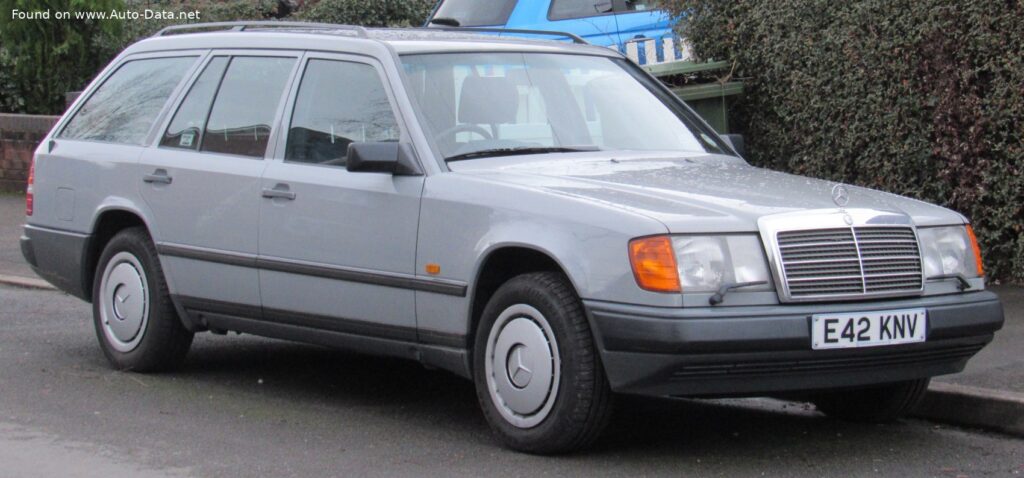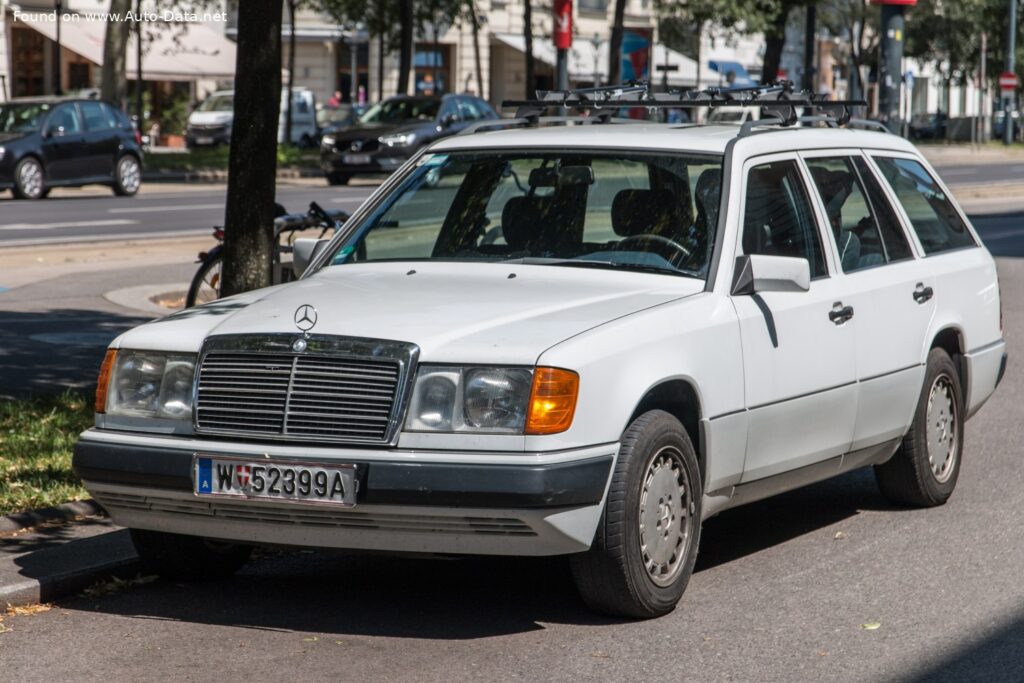
Introduction: The Mercedes-Benz S124 280 TE
The Mercedes-Benz W124 series, produced from 1984 to 1995, stands as a testament to German engineering prowess and timeless design. Among its various iterations, the S124 station wagon (or “estate” in European parlance) carved out a niche for discerning buyers seeking practicality without compromising on luxury, safety, or driving dynamics. The specific model under review, the Mercedes-Benz S124 280 TE, represents a refined and powerful variant from the later production run, manufactured between July 1992 and July 1993. This particular model benefited from the significant “facelift 1989” updates, which brought subtle aesthetic enhancements and, more importantly, a range of powertrain advancements. While the W124 sedan was a common sight in the United States, the 280 TE, especially with its manual transmission, was predominantly a European market offering, renowned for its robust inline-six engine and exceptional build quality.
Positioned as a premium mid-size luxury wagon, the S124 280 TE offered a compelling blend of spaciousness, comfort, and performance. It was designed to cater to families and professionals who required ample cargo capacity and passenger room, coupled with the sophisticated driving experience expected from a Mercedes-Benz. Its enduring appeal is rooted in its reputation for reliability, durability, and a driving feel that many contemporary vehicles struggle to replicate.
Engine and Performance of the Mercedes-Benz S124 280 TE
Powertrain Philosophy
At the heart of the Mercedes-Benz S124 280 TE lies the M 104 E 28 engine, an inline-six cylinder unit (code M 104.942) that was a significant step forward for Mercedes-Benz. This 2.8-liter (2799 cm3 or 170.81 cu. in.) naturally aspirated engine featured a DOHC (Dual Overhead Camshaft) valvetrain with four valves per cylinder, a modern configuration for its time that optimized airflow and combustion efficiency. With a compression ratio of 10:1 and a sophisticated multi-port manifold injection system, the M104 engine was engineered for smooth power delivery and responsiveness.
The engine produced a healthy 197 horsepower at 5500 rpm, translating to a power-per-liter output of 70.4 horsepower per liter. Torque figures were equally impressive for a naturally aspirated engine of this era, peaking at 270 Nm (199.14 lb.-ft.) at 3750 rpm. This robust torque curve ensured strong pulling power across a wide range of engine speeds, crucial for a vehicle designed to carry passengers and cargo. The engine’s front, longitudinal layout contributed to balanced weight distribution, enhancing the car’s handling characteristics.
Performance Characteristics
Despite its substantial kerb weight of 3505.35 lbs. (1590 kg), the Mercedes-Benz S124 280 TE delivered commendable performance. It could accelerate from 0 to 60 mph in a brisk 8.6 seconds (0-100 km/h in 9.1 seconds), making it quite sprightly for a luxury wagon. The top speed was rated at 135.46 mph (218 km/h), demonstrating its capability for sustained high-speed cruising on the autobahns of Europe.
Power was sent to the rear wheels via a 5-speed manual transmission, a choice that appealed to enthusiasts who preferred a more engaging driving experience over the automatic transmissions that were becoming standard in luxury vehicles. This combination of a powerful inline-six and a manual gearbox offered a direct connection between driver and machine. Fuel economy, while not a primary selling point for a luxury vehicle of this class, was respectable for the time, with an estimated 15.9 US mpg in urban driving and 28.3 US mpg on the highway. The 19.02 US gallon (72-liter) fuel tank provided a substantial cruising range.
Design and Features: The Enduring Appeal of the S124 Wagon
Exterior and Interior Design
The S124 generation, particularly after the 1989 facelift, exemplified Mercedes-Benz’s commitment to functional elegance. The design, penned by Bruno Sacco, was characterized by clean lines, a robust stance, and an aerodynamic profile that belied its boxy appearance. The S124 wagon, with its five doors and five seats, offered exceptional versatility. Its dimensions – 187.6 inches in length, 68.5 inches in width, and 58.62 inches in height, with a generous 110.24-inch wheelbase – contributed to a remarkably spacious and comfortable interior. The design emphasized practicality, with a low loading sill and a wide-opening tailgate, making it ideal for hauling luggage, sports equipment, or even furniture.
Inside, the S124 280 TE was a paragon of ergonomic design and high-quality materials. The dashboard layout was straightforward and intuitive, with clear instrumentation. Mercedes-Benz’s reputation for robust build quality was evident in every detail, from the solid feel of the switchgear to the durable upholstery options. The seats were designed for long-distance comfort, and visibility was excellent all around. The facelift models often featured updated trim options and minor interior refinements, maintaining the car’s fresh appeal.
Practicality and Innovation
Beyond aesthetics, the S124 wagon was celebrated for its engineering innovations. The independent multi-link rear suspension, a hallmark of the W124 series, provided an exceptional balance of ride comfort and handling precision, even when fully loaded. The front suspension utilized a wishbone setup, further contributing to its refined ride. Braking performance was handled by ventilated discs at the front and disc brakes at the rear, supported by an Anti-lock Braking System (ABS) as standard, a crucial safety feature for the era. The hydraulic power steering, using a cone worm with recirculation balls, offered precise and predictable control.
The S124 280 TE also boasted impressive load-carrying capabilities, with a maximum payload of 1344.82 lbs. (610 kg) and a gross vehicle weight rating of 4850.17 lbs. (2200 kg). Its standard 195/65 R15 tires on 6.5J x 15 rims provided a comfortable ride and adequate grip. While not overtly flashy, the S124’s features were thoughtfully integrated, focusing on safety, durability, and user-friendliness, cementing its status as a benchmark for practical luxury.
Technical Specifications
| Category | Specification | Value |
|---|---|---|
| General Information | ||
| Brand | Mercedes-Benz | |
| Model | W124 S124 (facelift 1989) | 280 TE (197 Hp) |
| Production Start | July, 1992 | |
| Production End | July, 1993 | |
| Powertrain Architecture | Internal Combustion Engine | |
| Body Type | Station Wagon (Estate) | |
| Seats | 5 | |
| Doors | 5 | |
| Performance Specifications | ||
| Fuel Consumption (Urban) | 14.8 l/100 km | 15.9 US mpg |
| Fuel Consumption (Extra Urban) | 8.3 l/100 km | 28.3 US mpg |
| Fuel Type | Petrol (Gasoline) | |
| Acceleration 0 – 60 mph | 8.6 sec | |
| Acceleration 0 – 100 km/h | 9.1 sec | |
| Maximum Speed | 218 km/h | 135.46 mph |
| Weight-to-Power Ratio | 8.1 kg/Hp | 123.9 Hp/tonne |
| Weight-to-Torque Ratio | 5.9 kg/Nm | 169.8 Nm/tonne |
| Engine Specifications | ||
| Power | 197 Hp @ 5500 rpm | |
| Power per Liter | 70.4 Hp/l | |
| Torque | 270 Nm @ 3750 rpm | 199.14 lb.-ft. @ 3750 rpm |
| Engine Layout | Front, Longitudinal | |
| Engine Model/Code | M 104 E 28 / 104.942 | |
| Engine Displacement | 2799 cm3 | 170.81 cu. in. |
| Number of Cylinders | 6 | |
| Engine Configuration | Inline | |
| Cylinder Bore | 89.9 mm | 3.54 in. |
| Piston Stroke | 73.5 mm | 2.89 in. |
| Compression Ratio | 10:1 | |
| Number of Valves per Cylinder | 4 | |
| Fuel Injection System | Multi-port manifold injection | |
| Engine Aspiration | Naturally aspirated engine | |
| Valvetrain | DOHC | |
| Engine Oil Capacity | 7.5 l | 7.93 US qt |
| Coolant Capacity | 9 l | 9.51 US qt |
| Dimensions, Volume & Weights | ||
| Kerb Weight | 1590 kg | 3505.35 lbs. |
| Max. Weight (GVWR) | 2200 kg | 4850.17 lbs. |
| Max Load | 610 kg | 1344.82 lbs. |
| Fuel Tank Capacity | 72 l | 19.02 US gal |
| Length | 4765 mm | 187.6 in. |
| Width | 1740 mm | 68.5 in. |
| Height | 1489 mm | 58.62 in. |
| Wheelbase | 2800 mm | 110.24 in. |
| Front Track | 1497 mm | 58.94 in. |
| Rear (Back) Track | 1497 mm | 58.94 in. |
| Drivetrain, Brakes & Suspension | ||
| Drivetrain Architecture | Internal combustion engine (ICE) drives the rear wheels of the vehicle. | |
| Drive Wheel | Rear wheel drive | |
| Number of Gears & Gearbox Type | 5 gears, manual transmission | |
| Front Suspension | Wishbone | |
| Rear Suspension | Independent multi-link suspension | |
| Front Brakes | Ventilated discs | |
| Rear Brakes | Disc | |
| Assisting Systems | ABS (Anti-lock braking system) | |
| Steering Type | Cone worm with recirculation balls | |
| Power Steering | Hydraulic Steering | |
| Front Wheel Tires | 195/65 R15 | |
| Rear Wheel Tires | 195/65 R15 | |
| Front Wheel Rims | 6.5J x 15 | |
| Rear Wheel Rims | 6.5J x 15 | |
Legacy and Market Impact
The Mercedes-Benz W124 series, including the S124 wagon, is widely regarded as one of the finest automobiles ever produced by Mercedes-Benz, often referred to as the “last over-engineered Mercedes.” Its reputation for exceptional durability, engineering integrity, and a comfortable yet engaging driving experience has solidified its place as a modern classic. The Mercedes-Benz S124 280 TE, with its potent M104 engine and relatively rare manual transmission, represents a particularly desirable variant for enthusiasts and collectors who appreciate its blend of performance and practicality.
In its primary European market, the S124 wagon competed against other premium estates like the BMW 5 Series Touring (E34) and the Volvo 940/960 Estate. While BMW offered a sportier driving experience and Volvo emphasized safety and practicality, the S124 stood out for its unique combination of Mercedes-Benz’s renowned build quality, refined ride, and timeless elegance. Its multi-link rear suspension was particularly advanced for the time, providing a level of sophistication in ride and handling that few competitors could match.
The historical significance of the W124, and by extension the S124 280 TE, lies in its role as a benchmark for quality and longevity in the luxury segment. Many examples are still in regular use today, a testament to their robust construction and ease of maintenance. The S124 280 TE, in particular, showcases Mercedes-Benz’s ability to integrate a powerful, modern inline-six engine into a highly functional and durable body shell, offering a compelling package that remains relevant and cherished by automotive enthusiasts worldwide. It’s a vehicle that perfectly encapsulates an era when Mercedes-Benz prioritized engineering excellence and long-term ownership satisfaction above all else.