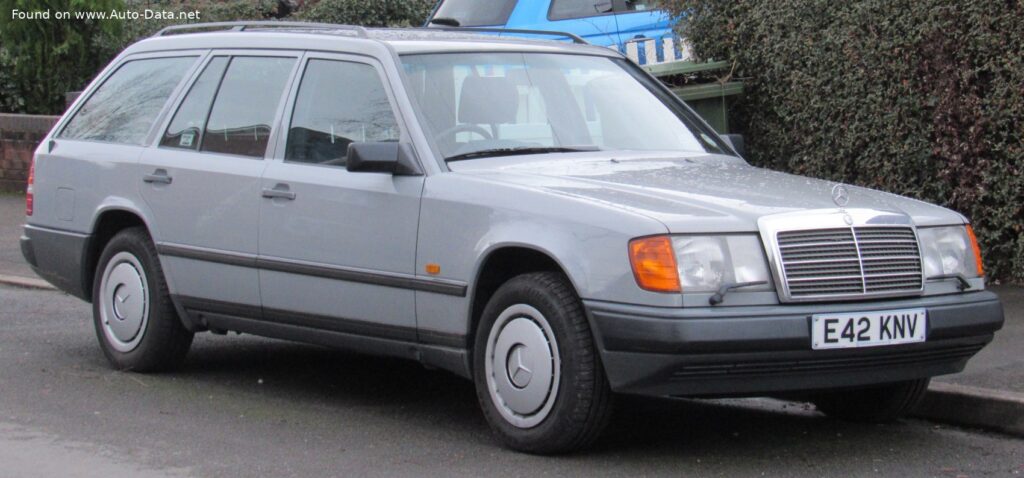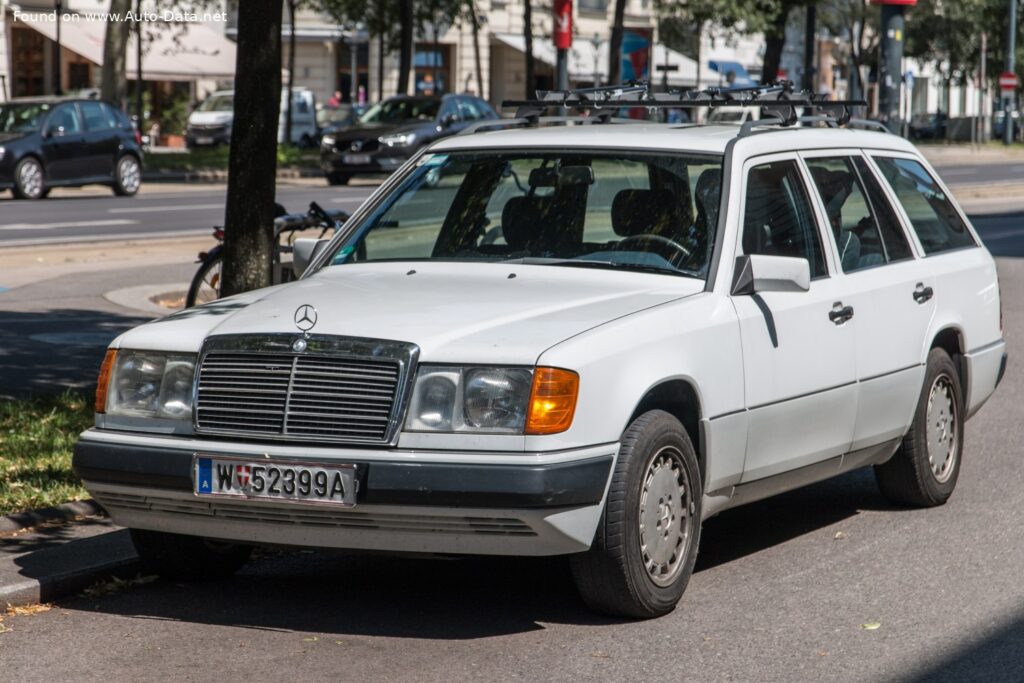
The Mercedes-Benz S124 (facelift 1989) 280 TE: A Benchmark of German Engineering
The Mercedes-Benz W124 series, produced from 1984 to 1996, stands as a testament to the brand’s commitment to engineering excellence, durability, and refined luxury. Among its revered variants, the S124 station wagon (often referred to as an “estate” in European markets) carved out a unique niche, offering unparalleled practicality without compromising the W124’s legendary build quality and sophisticated driving dynamics. The focus of this article is the specific and relatively short-lived Mercedes-Benz S124 (facelift 1989) 280 TE, a potent six-cylinder model produced between July 1992 and July 1993. This particular iteration represented a sweet spot in the W124 wagon’s life cycle, combining the refreshed aesthetics and technological updates of the 1989 facelift with the robust and smooth M104 inline-six engine, paired exclusively with a four-speed automatic transmission.
Positioned in the premium executive segment, the S124 280 TE was designed to cater to discerning buyers who required the versatility of a station wagon for family duties, business transport, or leisure activities, yet demanded the performance, comfort, and prestige associated with the Mercedes-Benz marque. While the W124 platform was globally available, the S124 wagon, particularly with this engine configuration, was a significant player in its primary European market, where station wagons held immense popularity for their blend of utility and status. Its limited production window makes it a noteworthy example of the W124’s continuous evolution and refinement before the introduction of its successor.
Engine & Performance: The Heart of the Mercedes-Benz S124 (facelift 1989) 280 TE
At the core of the Mercedes-Benz S124 (facelift 1989) 280 TE lies the venerable M 104 E 28 engine, an inline-six cylinder unit renowned for its smoothness, reliability, and ample power delivery. This naturally aspirated 2.8-liter (2799 cm3 or 170.81 cu. in.) gasoline engine features a sophisticated DOHC (Double Overhead Camshaft) valvetrain with four valves per cylinder, a significant advancement for its time, ensuring efficient breathing and improved performance across the rev range. With a compression ratio of 10:1 and a multi-port manifold injection system, the engine was engineered for optimal fuel atomization and combustion.
The M 104 E 28 in the 280 TE generates a robust 197 horsepower at 5500 rpm, providing substantial motivation for the executive wagon. Torque output stands at 199.14 lb.-ft. (270 Nm) peaking at 3750 rpm, ensuring strong mid-range acceleration and effortless cruising. Power is transmitted to the rear wheels via a smooth and durable four-speed automatic transmission, a common and well-regarded setup for Mercedes-Benz vehicles of this era, emphasizing comfort and longevity over outright sportiness. Despite its family-hauling capabilities, the 280 TE was no slouch; it could accelerate from 0 to 60 mph in a respectable 8.5 seconds and reach a top speed of 132.35 mph (213 km/h). These figures demonstrated that the S124 280 TE offered a compelling blend of performance and practicality, capable of handling autobahn speeds with ease while comfortably transporting occupants and cargo. Fuel economy, while not a primary selling point for a large luxury wagon of its time, was rated at approximately 17.3 US mpg in urban driving and 26.4 US mpg on the highway, reflecting a balance of power and reasonable efficiency for a vehicle of its class and era.
Design & Features: The Enduring Elegance of the S124 Wagon
The design of the Mercedes-Benz W124 series, including the S124 wagon, is universally praised for its timeless elegance, functional aesthetics, and exceptional build quality. The 1989 facelift, which this 280 TE benefits from, introduced subtle yet impactful changes, most notably body-colored lower body cladding and revised side moldings, giving the car a more cohesive and modern appearance. The S124 maintains the iconic “pillarless” design when all windows are down, a hallmark of Mercedes-Benz coupes and wagons of the period, enhancing its sleek profile.
As a five-door, five-seat station wagon, the S124 280 TE was designed with versatility at its core. Its generous dimensions, with a length of 187.6 inches, a width of 68.5 inches, and a height of 58.62 inches, provided a spacious and accommodating interior. The substantial 110.24-inch wheelbase contributed to a smooth ride and excellent stability. The rear cargo area was particularly spacious and thoughtfully designed, often featuring an optional third-row, rear-facing jump seat, transforming it into a seven-seater for occasional use. This practicality was a key differentiator in the European market, where families often traveled long distances.
Safety features for the era included standard ABS (Anti-lock Braking System), a robust passenger safety cell, and disc brakes all around, with ventilated discs at the front for superior stopping power. The suspension system, featuring a wishbone setup at the front and Mercedes’ acclaimed independent multi-link suspension at the rear, provided a superb balance of ride comfort and handling precision. Hydraulic power steering, utilizing a cone worm with recirculation balls, offered precise and communicative feedback to the driver. Inside, the W124 cabin was a benchmark for ergonomic design and high-quality materials, with durable upholstery, well-laid-out controls, and a sense of solidity that few competitors could match. The 280 TE, as a higher-trim model, would have offered a comprehensive list of standard and optional luxury amenities, including automatic climate control, power windows, and a sophisticated sound system, all contributing to its premium appeal.
Technical Specifications: Mercedes-Benz S124 (facelift 1989) 280 TE (197 Hp) Automatic
| Category | Specification |
|---|---|
| General Information | |
| Brand | Mercedes-Benz |
| Model | W124 |
| Generation | S124 (facelift 1989) |
| Type (Engine) | 280 TE (197 Hp) Automatic |
| Production Start | July 1992 |
| Production End | July 1993 |
| Powertrain Architecture | Internal Combustion Engine |
| Body Type | Station Wagon (Estate) |
| Seats | 5 |
| Doors | 5 |
| Performance Specs | |
| Fuel Consumption (Urban) | 13.6 l/100 km (17.3 US mpg) |
| Fuel Consumption (Extra Urban) | 8.9 l/100 km (26.4 US mpg) |
| Fuel Type | Petrol (Gasoline) |
| Acceleration 0-60 mph | 8.5 sec |
| Acceleration 0-62 mph (0-100 km/h) | 8.9 sec |
| Maximum Speed | 132.35 mph (213 km/h) |
| Weight-to-Power Ratio | 8.1 kg/Hp (123.9 Hp/tonne) |
| Weight-to-Torque Ratio | 5.9 kg/Nm (169.8 Nm/tonne) |
| Engine Specs | |
| Power | 197 Hp @ 5500 rpm |
| Power per Liter | 70.4 Hp/l |
| Torque | 199.14 lb.-ft. (270 Nm) @ 3750 rpm |
| Engine Layout | Front, Longitudinal |
| Engine Model/Code | M 104 E 28 / 104.942 |
| Engine Displacement | 2799 cm3 (2.8 liters / 170.81 cu. in.) |
| Number of Cylinders | 6 |
| Engine Configuration | Inline |
| Cylinder Bore | 3.54 in. (89.9 mm) |
| Piston Stroke | 2.89 in. (73.5 mm) |
| Compression Ratio | 10:1 |
| Valves per Cylinder | 4 |
| Fuel Injection System | Multi-port manifold injection |
| Engine Aspiration | Naturally aspirated |
| Valvetrain | DOHC |
| Engine Oil Capacity | 7.5 l (7.93 US qt) |
| Coolant Capacity | 9 l (9.51 US qt) |
| Space, Volume & Weights | |
| Kerb Weight | 3505.35 lbs. (1590 kg) |
| Max. Weight (Gross Vehicle Weight) | 4850.17 lbs. (2200 kg) |
| Max Load | 1344.82 lbs. (610 kg) |
| Fuel Tank Capacity | 19.02 US gal (72 l) |
| Dimensions | |
| Length | 187.6 in. (4765 mm) |
| Width | 68.5 in. (1740 mm) |
| Height | 58.62 in. (1489 mm) |
| Wheelbase | 110.24 in. (2800 mm) |
| Front Track | 58.94 in. (1497 mm) |
| Rear Track | 58.94 in. (1497 mm) |
| Drivetrain, Brakes & Suspension | |
| Drivetrain Architecture | Internal combustion engine drives the rear wheels |
| Drive Wheel | Rear-wheel drive |
| Number of Gears & Gearbox Type | 4 gears, automatic transmission |
| Front Suspension | Wishbone |
| Rear Suspension | Independent multi-link suspension |
| Front Brakes | Ventilated discs |
| Rear Brakes | Disc |
| Assisting Systems | ABS (Anti-lock braking system) |
| Steering Type | Cone worm with recirculation balls |
| Power Steering | Hydraulic Steering |
| Tire Size (Front/Rear) | 195/65 R15 |
| Wheel Rims Size (Front/Rear) | 6.5J x 15 |
Legacy & Market Impact of the S124 280 TE
The Mercedes-Benz S124, and specifically the 280 TE variant, holds a distinguished place in automotive history, particularly in the premium European market. It was a direct competitor to other executive wagons of its time, such as the BMW E34 Touring and the Audi 100 Avant. However, the W124 series, including the S124, earned a reputation for being “over-engineered,” a term that, in this context, signifies exceptional durability, meticulous attention to detail, and a commitment to longevity that was arguably unparalleled by its rivals. This reputation was built on its robust construction, high-quality materials, and mechanical resilience, making it a favorite among those who valued long-term ownership and minimal maintenance issues.
The 280 TE, with its powerful M104 inline-six engine, offered a compelling blend of performance, luxury, and practicality that resonated strongly with its target demographic. It provided the effortless cruising capabilities expected of a Mercedes-Benz, coupled with the cavernous cargo space and family-friendly attributes of a wagon. Its rear-wheel-drive architecture and sophisticated multi-link rear suspension ensured a dynamic yet comfortable driving experience, setting a high standard for executive wagons.
Even decades after its production, the Mercedes-Benz S124 remains highly sought after by enthusiasts and collectors. Its classic, understated design has aged gracefully, and its legendary reliability means many examples are still on the road today, often with hundreds of thousands of miles on the odometer. The 280 TE, with its potent six-cylinder engine, is particularly prized for its balance of performance and the inherent practicality of the S124 body style. It represents a golden era for Mercedes-Benz, where engineering integrity and build quality were paramount, establishing a legacy that continues to influence the brand’s image and command respect in the automotive world. Its market impact was profound, solidifying Mercedes-Benz’s position as a leader in the luxury segment and proving that a practical family vehicle could also be a sophisticated and high-performing machine.