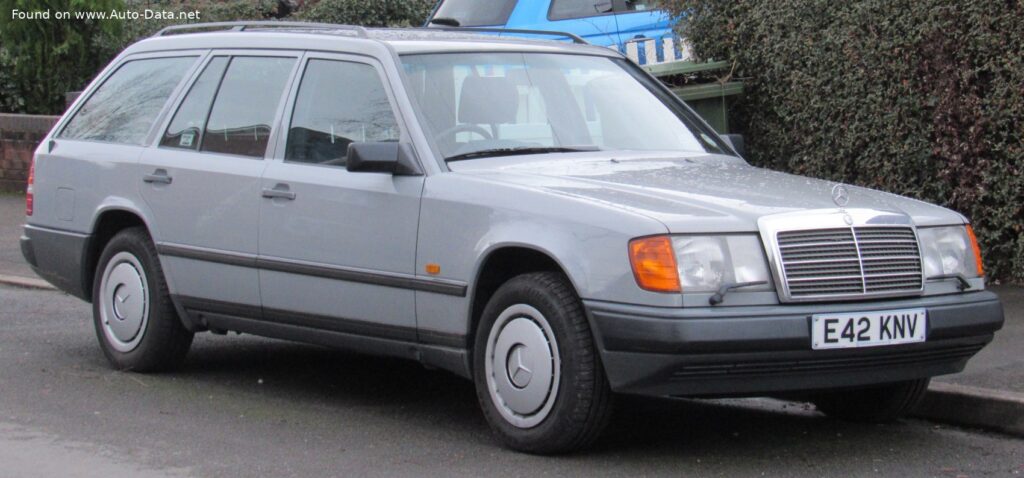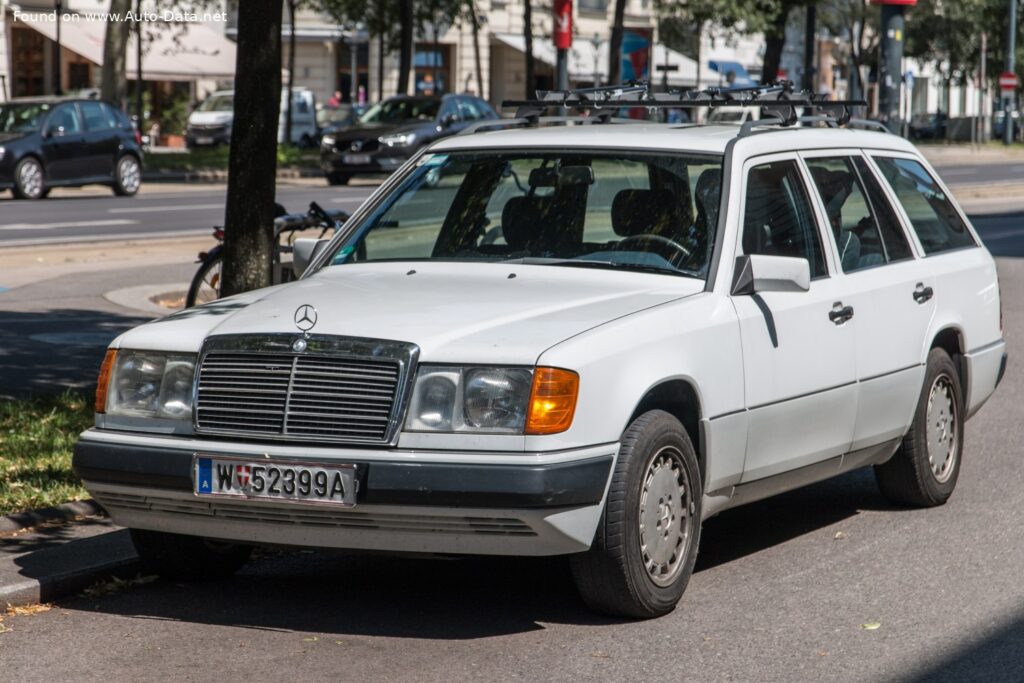
The Mercedes-Benz S124 (facelift 1989) 300 TD CAT: A Timeless Executive Wagon
The Mercedes-Benz W124 series, produced from 1984 to 1996, stands as a testament to German engineering prowess and a benchmark for automotive durability. Among its diverse lineup, the S124 station wagon variant, particularly the Mercedes-Benz S124 (facelift 1989) 300 TD CAT, represents a highly sought-after blend of practicality, luxury, and the legendary build quality synonymous with Mercedes-Benz during its “golden era.” Introduced in September 1989 as part of the W124’s significant facelift, this model, continuing production until August 1993, specifically targeted the European market where diesel engines and station wagons held considerable appeal for their efficiency and versatility. While not a primary sales volume model in the United States in this diesel configuration, its underlying W124 architecture profoundly influenced luxury car design and engineering globally, setting standards for comfort, safety, and longevity. This particular 300 TD CAT model, with its naturally aspirated diesel engine, offered a reliable and economical option for families and professionals seeking a premium vehicle capable of long-distance cruising with ample cargo capacity.
Engine and Performance of the S124 (facelift 1989) 300 TD CAT
Under the hood of the Mercedes-Benz S124 (facelift 1989) 300 TD CAT lies the robust OM 603 D 30 / 603.912 inline-six diesel engine. With an engine displacement of 2996 cubic centimeters (approximately 3.0 liters or 182.83 cubic inches), this powerplant was engineered for smooth operation and remarkable longevity, rather than outright blistering performance. It produces a respectable 110 horsepower at 4600 revolutions per minute, delivering its power in a linear and predictable fashion. Torque figures stand at 140.87 pound-feet (191 Nm), available between 2800 and 3050 rpm, which is crucial for the car’s relaxed cruising ability and its capacity to haul heavy loads without excessive strain.
The OM 603 engine utilizes a naturally aspirated design with a precombustion chamber injection system, a common and reliable setup for diesel engines of its time. Its 22:1 compression ratio is typical for a non-turbocharged diesel, ensuring efficient fuel combustion. Power is sent to the rear wheels via a durable 5-speed manual transmission, offering direct driver engagement and allowing for optimal use of the engine’s torque band. Performance figures reflect the car’s utilitarian nature: acceleration from 0 to 60 mph is achieved in an estimated 13.9 seconds, with a top speed of 111.85 mph (180 km/h). While not a speed demon, these figures were competitive for a family-oriented diesel wagon in the late 1980s and early 1990s, especially considering its substantial curb weight of 3417.17 pounds.
Fuel economy was a key selling point for this diesel variant, particularly in Europe. The 300 TD CAT achieved an urban consumption of approximately 23.8 US mpg (9.9 l/100 km) and an impressive extra-urban (highway) figure of 40.6 US mpg (5.8 l/100 km). These numbers highlight the engine’s efficiency, making it an economical choice for long-distance travel, supported by a generous 19.02 US gallon (72-liter) fuel tank.
Design and Features
The S124 generation of the Mercedes-Benz W124 series is instantly recognizable by its elegant, understated design, a hallmark of Bruno Sacco’s design philosophy. The station wagon, or “estate” as it’s often called, is a five-door, five-seat configuration that masterfully blends aerodynamic efficiency with immense practicality. Its timeless lines and robust construction contributed to its reputation for exceptional longevity and resistance to the elements. The facelift introduced in 1989 brought subtle refinements, including body-colored side moldings, integrated side skirts, and revised bumpers, enhancing its contemporary appeal without altering its fundamental character.
Measuring 187.6 inches in length, 68.5 inches in width, and 58.62 inches in height, with a substantial 110.24-inch wheelbase, the S124 wagon offered generous interior space for passengers and cargo alike. The rear cargo area was particularly spacious and well-designed, making it a favorite among families and those requiring significant hauling capability. The interior, though understated by modern standards, was built with high-quality materials and a focus on ergonomic functionality, ensuring comfort during extended journeys.
From a technological standpoint for its era, the Mercedes-Benz S124 (facelift 1989) 300 TD CAT was well-equipped. It featured an Anti-lock Braking System (ABS) as standard, a crucial safety innovation that helped prevent wheel lock-up during hard braking. The steering system, a cone worm with recirculation balls type, was complemented by hydraulic power steering, providing a smooth and assisted driving experience. Suspension was sophisticated for its time, with a wishbone setup at the front and an independent multi-link suspension at the rear, contributing to the W124’s renowned ride comfort and stable handling. Braking was handled by ventilated discs at the front and solid discs at the rear, offering reliable stopping power. The car rode on 195/65 R15 tires mounted on 6.5J x 15-inch wheel rims, providing a comfortable ride and adequate grip.
Technical Specifications
| Category | Specification | US Equivalent (where applicable) |
|---|---|---|
General Information |
||
| Brand | Mercedes-Benz | |
| Model | W124 | |
| Generation | S124 (facelift 1989) | |
| Type (Engine) | 300 TD CAT (110 Hp) | |
| Start of Production | September, 1989 | |
| End of Production | August, 1993 | |
| Powertrain Architecture | Internal Combustion engine | |
| Body Type | Station wagon (estate) | |
| Seats | 5 | |
| Doors | 5 | |
Performance Specs |
||
| Fuel Consumption (economy) – urban | 9.9 l/100 km | 23.8 US mpg |
| Fuel Consumption (economy) – extra urban | 5.8 l/100 km | 40.6 US mpg |
| Fuel Type | Diesel | |
| Acceleration 0 – 60 mph | 13.9 sec | |
| Maximum Speed | 180 km/h | 111.85 mph |
| Weight-to-power ratio | 14.1 kg/Hp | 31.08 lbs/Hp |
| Weight-to-torque ratio | 8.1 kg/Nm | 17.86 lbs/lb.-ft. |
Engine Specs |
||
| Power | 110 Hp @ 4600 rpm | |
| Power per liter | 36.7 Hp/l | |
| Torque | 191 Nm @ 2800-3050 rpm | 140.87 lb.-ft. @ 2800-3050 rpm |
| Engine Layout | Front, Longitudinal | |
| Engine Model/Code | OM 603 D 30 / 603.912 | |
| Engine Displacement | 2996 cm3 | 182.83 cu. in. |
| Number of Cylinders | 6 | |
| Engine Configuration | Inline | |
| Cylinder Bore | 87 mm | 3.43 in. |
| Piston Stroke | 84 mm | 3.31 in. |
| Compression Ratio | 22:1 | |
| Number of Valves per Cylinder | 2 | |
| Fuel Injection System | Precombustion chamber injection | |
| Engine Aspiration | Naturally aspirated engine | |
| Valvetrain | SOHC (Single Overhead Camshaft) | |
| Engine Oil Capacity | 7.5 l | 7.93 US qt |
Space, Volume and Weights |
||
| Kerb Weight | 1550 kg | 3417.17 lbs |
| Max. Weight | 2170 kg | 4784.03 lbs |
| Max Load | 620 kg | 1366.87 lbs |
| Fuel Tank Capacity | 72 l | 19.02 US gal |
Dimensions |
||
| Length | 4765 mm | 187.6 in. |
| Width | 1740 mm | 68.5 in. |
| Height | 1489 mm | 58.62 in. |
| Wheelbase | 2800 mm | 110.24 in. |
| Front Track | 1497 mm | 58.94 in. |
| Rear (Back) Track | 1497 mm | 58.94 in. |
Drivetrain, Brakes and Suspension Specs |
||
| Drivetrain Architecture | The Internal combustion engine (ICE) drives the rear wheels of the vehicle. | |
| Drive Wheel | Rear wheel drive | |
| Number of Gears and Type of Gearbox | 5 gears, manual transmission | |
| Front Suspension | Wishbone | |
| Rear Suspension | Independent multi-link suspension | |
| Front Brakes | Ventilated discs | |
| Rear Brakes | Disc | |
| Assisting Systems | ABS (Anti-lock braking system) | |
| Steering Type | Cone worm with recirculation balls | |
| Power Steering | Hydraulic Steering | |
| Tires Size | Front: 195/65 R15, Rear: 195/65 R15 | |
| Wheel Rims Size | Front: 6.5J x 15, Rear: 6.5J x 15 | |
Legacy and Market Impact
The Mercedes-Benz W124 series, including the S124 wagon, is widely regarded as one of the finest vehicles ever produced by the German automaker. Its reputation for being “over-engineered” is not a pejorative but a testament to its exceptional build quality, meticulous attention to detail, and a commitment to durability that is rarely seen in modern automotive manufacturing. The Mercedes-Benz S124 (facelift 1989) 300 TD CAT played a significant role in solidifying this legacy, particularly in markets where diesel power was embraced.
In its primary European market, the 300 TD CAT competed against other premium executive wagons such as the BMW 5 Series Touring (E34 generation) and the Audi 100 Avant (C3/C4 generation). While BMW often emphasized sportier driving dynamics and Audi focused on its quattro all-wheel-drive system, the Mercedes-Benz S124 distinguished itself with its unparalleled ride comfort, robust diesel powertrains, and a reputation for sheer indestructibility. It was the preferred choice for discerning buyers who valued long-term reliability, low running costs (thanks to diesel efficiency), and a stately, comfortable driving experience.
The S124 wagon’s impact extended beyond its initial sales period. Even decades later, these vehicles are highly prized by enthusiasts and collectors for their timeless design, mechanical integrity, and surprising practicality. Many examples continue to serve as reliable daily drivers, having accumulated hundreds of thousands of miles, a testament to the engineering and material quality. The naturally aspirated diesel engines, while not the most powerful, are renowned for their simplicity and ease of maintenance, further contributing to their enduring appeal.
The W124 series, and specifically the S124 wagon, represents a high point in Mercedes-Benz history, embodying an era when engineering excellence and longevity were paramount. Its influence can be seen in subsequent generations of Mercedes-Benz vehicles, though few have matched its almost mythical status for robustness and reliability. The 300 TD CAT variant, in particular, remains a cherished classic, offering a unique blend of heritage, efficiency, and the inimitable driving experience of a vintage Mercedes-Benz.