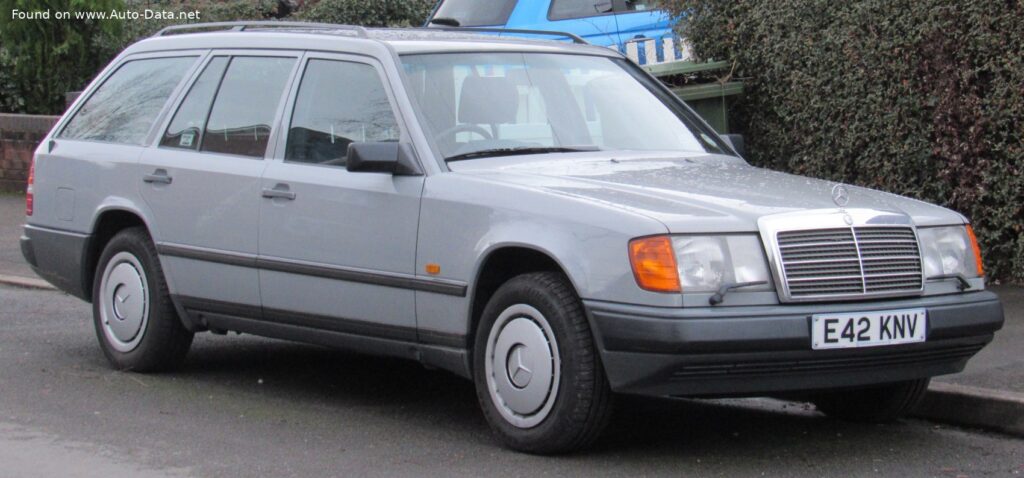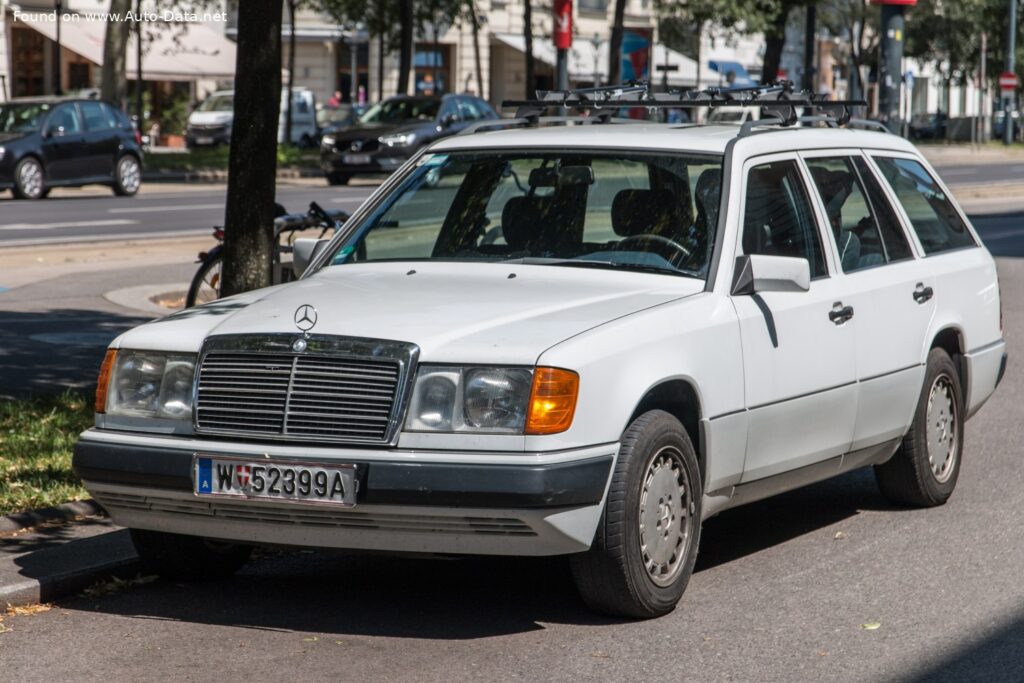
Mercedes-Benz S124 (facelift 1989) 300 TE (180 Hp) 4MATIC
The Mercedes-Benz S124 (facelift 1989) 300 TE (180 Hp) 4MATIC represents a pinnacle of German engineering and luxury from the late 1980s and early 1990s. As part of the iconic W124 generation, often lauded as one of the most robust and over-engineered vehicles ever produced by Mercedes-Benz, the S124 designates the station wagon (estate) variant. The 1989 facelift introduced subtle refinements to an already highly respected platform, enhancing both aesthetics and functionality. The 300 TE model, powered by a sophisticated inline-six engine, offered a compelling blend of performance and practicality, further distinguished by its advanced 4MATIC all-wheel-drive system. This particular iteration was a premium offering in the executive segment, catering to discerning buyers in Europe and other global markets who sought a durable, comfortable, and capable family vehicle with a touch of Mercedes-Benz’s renowned prestige.
Engineering Excellence: The Mercedes-Benz S124 (facelift 1989) Powertrain
Engine and Performance
At the heart of the Mercedes-Benz S124 (facelift 1989) 300 TE 4MATIC lay the venerable M103 E30 engine, a naturally aspirated 3.0-liter (2960 cm3 or 180.63 cu. in.) inline-six powerplant. Known for its smooth operation and robust construction, this engine featured a Single Overhead Camshaft (SOHC) valvetrain with two valves per cylinder, a common and reliable configuration for its era. Fuel delivery was managed by a multi-port manifold injection system, ensuring precise fuel metering and efficient combustion. With a compression ratio of 9.2:1, the engine produced a healthy 180 horsepower at 5700 rpm and a significant 188.08 lb.-ft. of torque at 4400 rpm. This output translated to a respectable power-to-weight ratio of 110.4 horsepower per ton.
Performance figures for the 300 TE 4MATIC were impressive for a luxury wagon of its time. It could accelerate from 0 to 60 mph in a brisk 9.2 seconds, making it capable of keeping pace with many contemporary sedans. The top speed was rated at 127.38 mph (205 km/h), highlighting its Autobahn-cruising credentials. Power was channeled through a 5-speed manual transmission, offering engaging control for the driver.
What truly set this model apart was its innovative 4MATIC all-wheel-drive system. Unlike permanent all-wheel-drive systems, Mercedes-Benz’s 4MATIC of this generation was a sophisticated, on-demand setup. It primarily operated as a rear-wheel-drive vehicle, but when wheel slip was detected, an electrically or mechanically operated clutch would engage the front wheels, distributing power to all four corners. This provided enhanced traction and stability, particularly in adverse weather conditions or on slippery surfaces, without compromising the driving dynamics and fuel efficiency associated with rear-wheel drive under normal circumstances. While fuel consumption was typical for a large, powerful vehicle of its class, averaging around 15.3 US mpg in urban settings and 26.1 US mpg on the highway, the added grip and security offered by the 4MATIC system were significant advantages.
Design and Features
The Mercedes-Benz S124 wagon is renowned for its timeless, elegant design and exceptional build quality. The 1989 facelift introduced subtle refinements that polished its already distinguished appearance. These changes typically included revised side cladding, integrated turn signals into the front fenders, and updated interior trim. The S124’s body type is a classic five-door station wagon (estate), designed for maximum practicality without sacrificing Mercedes-Benz’s characteristic aesthetic. Its robust unibody construction contributed significantly to its legendary durability and crashworthiness, a key safety consideration in its era.
Measuring 187.6 inches in length, 68.5 inches in width, and 58.94 inches in height, with a generous 110.24-inch wheelbase, the 300 TE offered ample interior space for five occupants and a substantial cargo area. The cabin was a testament to Mercedes-Benz’s commitment to luxury and ergonomic design. High-quality materials, meticulous fit-and-finish, and a logical layout characterized the interior. Standard features included hydraulic power steering, providing precise and effortless maneuverability, and an Anti-lock Braking System (ABS), which was a cutting-edge safety feature at the time, preventing wheel lock-up during hard braking.
Suspension-wise, the S124 featured a sophisticated setup for enhanced ride comfort and handling. The front utilized a wishbone suspension, while the rear employed an independent multi-link suspension, an advanced design that optimized wheel control and stability. Braking was handled by ventilated discs at the front and solid discs at the rear, ensuring strong and reliable stopping power. The vehicle rode on 195/65 R15 tires mounted on 6.5J x 15-inch wheel rims, a practical size that balanced ride comfort with handling precision. The overall design ethos was one of understated luxury combined with unparalleled functionality and long-term reliability.
Technical Specifications: Mercedes-Benz S124 (facelift 1989) 300 TE 4MATIC
| Category | Specification | Value |
|---|---|---|
General Information |
||
| Brand | Mercedes-Benz | |
| Model | W124 | |
| Generation | S124 (facelift 1989) | |
| Type (Engine) | 300 TE (180 Hp) 4MATIC | |
| Production Start | September, 1989 | |
| Production End | July, 1993 | |
| Powertrain Architecture | Internal Combustion Engine | |
| Body Type | Station wagon (estate) | |
| Seats | 5 | |
| Doors | 5 | |
Performance Specs |
||
| Fuel Consumption (Urban) | 15.4 l/100 km (15.3 US mpg) | |
| Fuel Consumption (Extra Urban) | 9 l/100 km (26.1 US mpg) | |
| Fuel Type | Petrol (Gasoline) | |
| Acceleration 0-60 mph | 9.2 sec | |
| Maximum Speed | 127.38 mph (205 km/h) | |
| Weight-to-Power Ratio | 9.1 kg/Hp (110.4 Hp/tonne) | |
| Weight-to-Torque Ratio | 6.4 kg/Nm (156.4 Nm/tonne) | |
Engine Specs |
||
| Power | 180 Hp @ 5700 rpm | |
| Power per Liter | 60.8 Hp/l | |
| Torque | 188.08 lb.-ft. @ 4400 rpm (255 Nm) | |
| Engine Layout | Front, Longitudinal | |
| Engine Model/Code | M 103 E 30 / 103.985 | |
| Engine Displacement | 3.0 liters (2960 cm3 / 180.63 cu. in.) | |
| Number of Cylinders | 6 | |
| Engine Configuration | Inline | |
| Cylinder Bore | 3.48 in. (88.49 mm) | |
| Piston Stroke | 3.16 in. (80.2 mm) | |
| Compression Ratio | 9.2:1 | |
| Valves per Cylinder | 2 | |
| Fuel Injection System | Multi-port manifold injection | |
| Engine Aspiration | Naturally aspirated | |
| Valvetrain | SOHC | |
| Engine Oil Capacity | 6.5 l (6.87 US qt) | |
| Coolant Capacity | 9 l (9.51 US qt) | |
Space, Volume and Weights |
||
| Kerb Weight | 3593.53 lbs. (1630 kg) | |
| Maximum Weight | 4872.22 lbs. (2210 kg) | |
| Maximum Load | 1278.68 lbs. (580 kg) | |
| Fuel Tank Capacity | 19.02 US gal (72 l) | |
Dimensions |
||
| Length | 187.6 in. (4765 mm) | |
| Width | 68.5 in. (1740 mm) | |
| Height | 58.94 in. (1497 mm) | |
| Wheelbase | 110.24 in. (2800 mm) | |
| Front Track | 58.94 in. (1497 mm) | |
| Rear Track | 58.94 in. (1497 mm) | |
Drivetrain, Brakes and Suspension Specs |
||
| Drivetrain Architecture | ICE drives rear wheels permanently; front wheels driven via electrically/mechanically operated clutch if necessary. | |
| Drive Wheel | All-wheel drive (4×4) | |
| Number of Gears | 5 | |
| Type of Gearbox | Manual transmission | |
| Front Suspension | Wishbone | |
| Rear Suspension | Independent multi-link suspension | |
| Front Brakes | Ventilated discs | |
| Rear Brakes | Disc | |
| Assisting Systems | ABS (Anti-lock braking system) | |
| Steering Type | Cone worm with recirculation balls | |
| Power Steering | Hydraulic Steering | |
| Tires Size (Front) | 195/65 R15 | |
| Tires Size (Rear) | 195/65 R15 | |
| Wheel Rims Size (Front) | 6.5J x 15 | |
| Wheel Rims Size (Rear) | 6.5J x 15 | |
Legacy and Market Impact
The Mercedes-Benz S124, and particularly the 300 TE 4MATIC, holds a significant place in automotive history as a testament to Mercedes-Benz’s commitment to engineering excellence during a golden era for the brand. The W124 generation is often referred to as the “last of the over-engineered” Mercedes, a reputation earned through its uncompromising build quality, meticulous attention to detail, and exceptional durability. These vehicles were designed to last for decades, and many examples continue to operate reliably on roads worldwide today, a testament to their inherent robustness.
In its primary European market, the S124 wagon, especially with the 300 TE engine, was a highly desirable executive family car. It competed with rivals like the BMW 5 Series Touring (E34 generation) and the Audi 100 Avant (C3 and later C4 generations), as well as more utilitarian but equally robust offerings like the Volvo 740/940 wagons. However, the Mercedes-Benz S124 distinguished itself with a unique blend of luxury, sophisticated engineering, and the prestige of the three-pointed star. The addition of the 4MATIC system further elevated its standing, offering a distinct advantage in regions with challenging weather conditions, making it a truly versatile and capable vehicle for all seasons.
The 300 TE 4MATIC’s advanced features for its time, such as ABS and a multi-link rear suspension, were not just about performance; they significantly enhanced safety and ride comfort, contributing to its reputation as a supremely competent grand tourer. Its elegant, understated design has aged gracefully, making it a classic in its own right. Today, well-maintained examples of the S124, particularly the rare 4MATIC wagons, are highly sought after by enthusiasts and collectors who appreciate their blend of classic Mercedes-Benz aesthetics, unparalleled build quality, and enduring mechanical integrity. The Mercedes-Benz S124 (facelift 1989) 300 TE 4MATIC remains a powerful symbol of a time when automotive engineering prioritized longevity and quality above all else, securing its legacy as one of the finest wagons ever produced.