
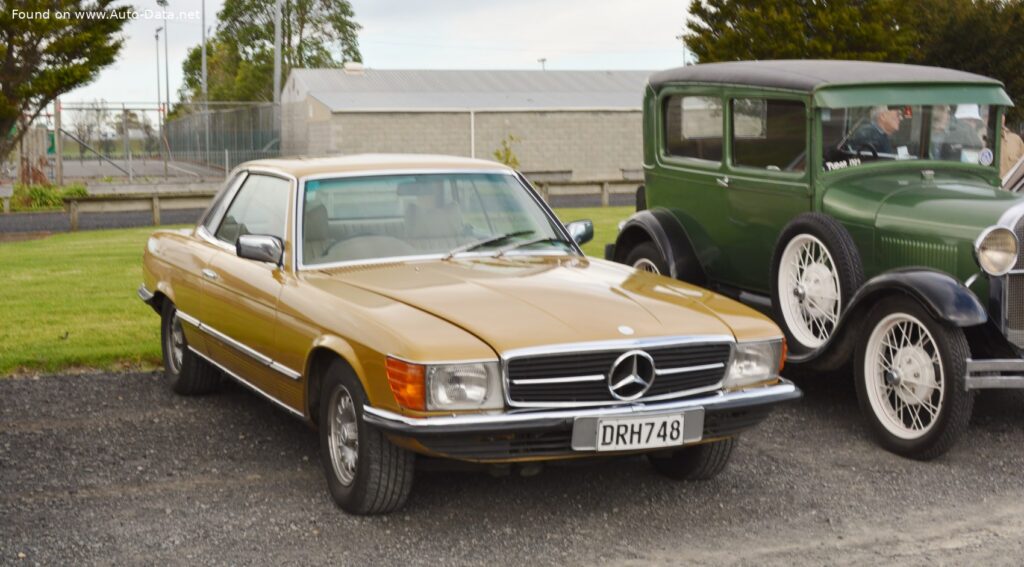
Mercedes-Benz SLC (C107) 280 SLC (177 Hp) Automatic: A Grand Tourer of Distinction
The Mercedes-Benz SLC (C107) represents a significant chapter in the German automaker’s illustrious history of luxury grand touring automobiles. Introduced in 1971, the C107 chassis served as the fixed-roof coupe counterpart to the popular R107 SL roadster. While sharing many mechanical components and stylistic cues with its open-top sibling, the SLC was distinctively engineered with a longer wheelbase, providing enhanced comfort and practicality for four occupants, making it a true continent-crossing cruiser. The 280 SLC variant, specifically the 177 Hp Automatic model produced between February 1976 and April 1978, offered a refined inline-six engine option that balanced performance with Mercedes-Benz’s renowned build quality and sophisticated engineering, particularly appealing to European markets where fuel efficiency and taxation often favored six-cylinder powerplants over the larger V8s available in other SLC models.
Engineering and Performance of the Mercedes-Benz SLC (C107) 280 SLC
Powertrain and Drivetrain
At the heart of the 280 SLC (C107) was the venerable M 110 E 28 inline-six engine, a powerplant celebrated for its smoothness and durability. This naturally aspirated 2.7-liter (2746 cm³ or 167.57 cu. in.) unit featured a Double Overhead Camshaft (DOHC) valvetrain with two valves per cylinder, a relatively advanced design for its time, contributing to its efficient breathing and refined operation. Fuel was delivered via a multi-port manifold injection system, ensuring precise fuel metering and consistent performance. With a compression ratio of 8.7:1, the engine produced a respectable 177 horsepower at 6000 rpm and 171.85 lb.-ft. of torque at 4500 rpm. This power output translated to a power-to-liter ratio of 64.5 Hp/l, indicative of a well-tuned, high-revving six-cylinder.
The engine was longitudinally mounted at the front, driving the rear wheels through a smooth-shifting 4-speed automatic transmission. This drivetrain architecture was typical for luxury cars of the era, prioritizing comfort and effortless cruising over raw sportiness. The automatic gearbox was perfectly matched to the engine’s torque characteristics, providing seamless acceleration and a relaxed driving experience. Performance figures for the 280 SLC were commendable for a luxury coupe weighing in at 3417.17 lbs. It could accelerate from 0 to 60 mph in approximately 9.6 seconds and reach a top speed of 121.17 mph (195 km/h). Fuel economy was rated at a combined 18.8 US mpg (12.5 l/100 km), which was considered reasonable for a vehicle of its size and luxury class in the mid-1970s.
Chassis and Suspension
The C107 platform utilized a robust and sophisticated suspension system designed to deliver Mercedes-Benz’s characteristic blend of ride comfort and predictable handling. The front suspension featured a double wishbone setup with a transverse stabilizer, providing excellent wheel control and minimizing body roll. At the rear, the SLC employed a trailing arm design, also complemented by a transverse stabilizer, ensuring stability and a smooth ride over various road surfaces. Braking performance was handled by a four-wheel disc system, with ventilated discs at the front for improved heat dissipation and solid discs at the rear, offering reassuring stopping power. Steering was managed by a hydraulic power-assisted cone worm with recirculation balls system, providing precise feedback and effortless maneuverability at low speeds, while maintaining stability at higher velocities.
Design and Features
The Mercedes-Benz SLC (C107) was a masterpiece of 1970s automotive design, embodying elegance and understated luxury. As a 2-door coupe with seating for five, its primary distinction from the R107 SL roadster was its fixed roof and, crucially, a significantly longer wheelbase (111.02 inches compared to the SL’s 96.9 inches). This extended length, measuring 187.01 inches overall, allowed for a more spacious rear passenger compartment, transforming the SLC into a genuine grand tourer capable of comfortably transporting four adults over long distances. The car’s width was 70.47 inches and its height 52.36 inches, giving it a low-slung, purposeful stance.
Aesthetically, the SLC shared the distinctive quad headlamps and ribbed taillights with the SL, but its unique roofline, featuring a generous glass area and a distinctive C-pillar design, set it apart. The SLC’s design was characterized by clean, elegant lines, a hallmark of Mercedes-Benz during this period. The large windows provided excellent visibility and contributed to a light and airy cabin atmosphere. Inside, the C107 SLC offered a luxurious and ergonomically designed environment. High-quality materials, including fine upholstery and wood trim (depending on specification), were standard. The dashboard was clear and functional, with all controls logically placed for the driver. Creature comforts, though not as extensive as modern vehicles, were advanced for the era, including hydraulic power steering and a sophisticated heating and ventilation system. Safety features for the time included a rigid passenger cell, impact-absorbing zones, and four-wheel disc brakes, reflecting Mercedes-Benz’s commitment to occupant protection.
Technical Specifications
| Category | Specification | Metric Value | US/Imperial Value |
|---|---|---|---|
General Information |
|||
| Brand | Mercedes-Benz | ||
| Model | SLC | ||
| Generation | SLC (C107) | ||
| Type (Engine) | 280 SLC (177 Hp) Automatic | ||
| Start of Production | February, 1976 | ||
| End of Production | April, 1978 | ||
| Powertrain Architecture | Internal Combustion Engine | ||
| Body Type | Coupe | ||
| Seats | 5 | ||
| Doors | 2 | ||
Performance Specs |
|||
| Fuel Consumption (Combined) | 12.5 l/100 km | 18.8 US mpg | |
| Fuel Type | Petrol (Gasoline) | ||
| Acceleration 0 – 62 mph | 10.1 sec | ||
| Acceleration 0 – 60 mph | 9.6 sec | ||
| Maximum Speed | 195 km/h | 121.17 mph | |
| Weight-to-Power Ratio | 8.8 kg/Hp | 114.2 Hp/tonne | |
| Weight-to-Torque Ratio | 6.7 kg/Nm | 150.3 Nm/tonne | |
Engine Specs |
|||
| Power | 177 Hp @ 6000 rpm | ||
| Power per Litre | 64.5 Hp/l | ||
| Torque | 233 Nm @ 4500 rpm | 171.85 lb.-ft. @ 4500 rpm | |
| Engine Layout | Front, Longitudinal | ||
| Engine Model/Code | M 110 E 28 / 110.986 | ||
| Engine Displacement | 2746 cm³ | 167.57 cu. in. | |
| Number of Cylinders | 6 | ||
| Engine Configuration | Inline | ||
| Cylinder Bore | 86 mm | 3.39 in. | |
| Piston Stroke | 78.8 mm | 3.1 in. | |
| Compression Ratio | 8.7:1 | ||
| Number of Valves per Cylinder | 2 | ||
| Fuel Injection System | Multi-port manifold injection | ||
| Engine Aspiration | Naturally aspirated engine | ||
| Valvetrain | DOHC | ||
| Engine Oil Capacity | 6 l | 6.34 US qt | |
| Coolant Capacity | 12 l | 12.68 US qt | |
Space, Volume and Weights |
|||
| Kerb Weight | 1550 kg | 3417.17 lbs. | |
| Max. Weight | 2040 kg | 4497.43 lbs. | |
| Max Load | 490 kg | 1080.27 lbs. | |
| Fuel Tank Capacity | 90 l | 23.78 US gal | |
Dimensions |
|||
| Length | 4750 mm | 187.01 in. | |
| Width | 1790 mm | 70.47 in. | |
| Height | 1330 mm | 52.36 in. | |
| Wheelbase | 2820 mm | 111.02 in. | |
| Front Track | 1452 mm | 57.17 in. | |
| Rear (Back) Track | 1440 mm | 56.69 in. | |
Drivetrain, Brakes and Suspension Specs |
|||
| Drivetrain Architecture | ICE drives rear wheels | ||
| Drive Wheel | Rear wheel drive | ||
| Number of Gears and Type of Gearbox | 4 gears, automatic transmission | ||
| Front Suspension | Double wishbone, Transverse stabilizer | ||
| Rear Suspension | Transverse stabilizer, Trailing arm | ||
| Front Brakes | Ventilated discs | ||
| Rear Brakes | Disc | ||
| Steering Type | Cone worm with recirculation balls | ||
| Power Steering | Hydraulic Steering | ||
| Tires Size | 195/70 R14 | ||
| Wheel Rims Size | 6.5J x 14 | ||
Legacy and Market Impact
The Mercedes-Benz SLC (C107) carved out a unique niche in the luxury automotive market during its production run. While often overshadowed by its more famous roadster sibling, the SL, the SLC held its own as a sophisticated and capable grand touring coupe. Its longer wheelbase and fixed roof design made it a more practical choice for those desiring Mercedes-Benz luxury and engineering prowess with the added benefit of rear seating and enhanced cabin refinement for extended journeys. In the European market, where the 280 SLC was particularly popular, it competed with other high-end coupes such as the BMW 6 Series (E24) and the Jaguar XJ-S, offering a distinct blend of Teutonic solidity and understated elegance.
The SLC’s reputation for exceptional build quality, engineering integrity, and long-term durability cemented its status as a premium vehicle. Mercedes-Benz’s commitment to robust construction meant that many SLCs have survived decades, becoming sought-after classics today. Although the C107 SLC was not officially sold in the United States in its 280 SLC guise (the US market primarily received V8-powered SLCs like the 350 SLC, 450 SLC, and later 380 SLC and 500 SLC), its impact was felt globally as part of the broader 107-chassis family. The 280 SLC represented a more economical and often preferred choice in markets sensitive to fuel costs and emissions, yet it never compromised on the luxury experience expected of a Mercedes-Benz.
Today, the Mercedes-Benz SLC (C107) is appreciated by collectors and enthusiasts for its classic styling, comfortable ride, and the unmistakable quality of a vintage Mercedes. The 280 SLC, with its smooth and reliable inline-six engine, offers a compelling entry point into classic Mercedes ownership, providing a balance of performance, economy, and timeless design. Its legacy is that of a dignified grand tourer, a testament to Mercedes-Benz’s engineering excellence in an era when luxury cars were built to last and to conquer continents with effortless grace.
