
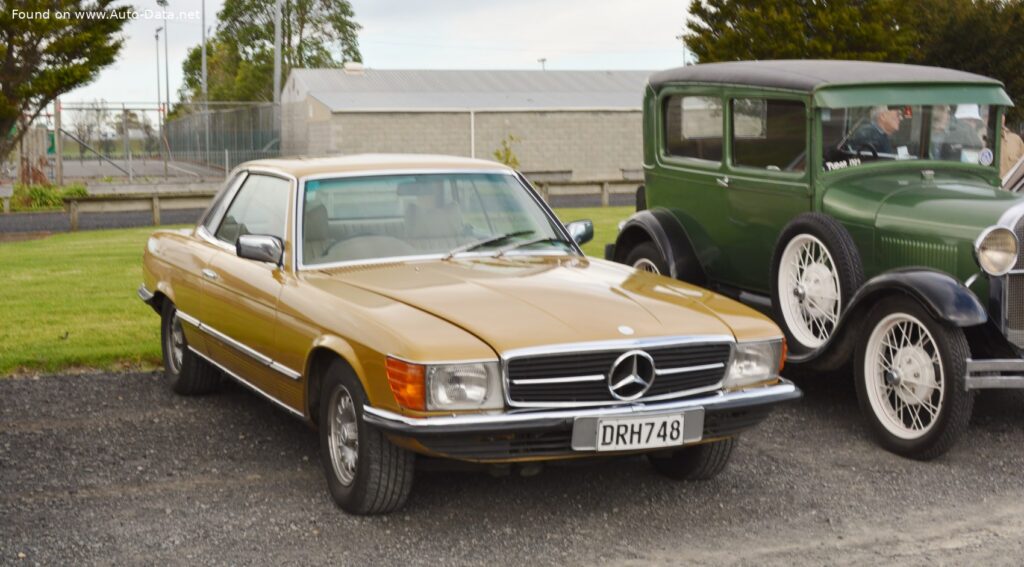
Introduction to the Mercedes-Benz SLC (C107) 280 SLC (185 Hp) Automatic
The Mercedes-Benz SLC (C107) represents a distinctive chapter in the Stuttgart automaker’s storied history, offering a unique blend of luxury, performance, and grand touring capability. Introduced in May 1974, the Mercedes-Benz SLC (C107) 280 SLC (185 Hp) Automatic was part of the C107 generation, which served as the fixed-roof coupe variant of the iconic R107 SL roadster. While often overshadowed by its more famous convertible sibling, the SLC carved out its own niche, providing a more practical and comfortable four-seater touring experience. Designed with a longer wheelbase than the SL, the C107 SLC was specifically engineered to accommodate rear passengers, making it an ideal choice for discerning buyers seeking a sophisticated and capable grand tourer for longer journeys. Its production run for this specific 280 SLC model spanned from May 1974 to February 1976, positioning it as a significant offering during the mid-1970s, a period marked by evolving automotive design and increasing demands for both luxury and efficiency.
The C107 generation, in general, was a testament to Mercedes-Benz’s commitment to engineering excellence and timeless design. The 280 SLC, with its inline-six engine, offered a compelling alternative to the larger V8-powered models, balancing power with improved fuel economy, a growing concern in the wake of the 1973 oil crisis. This model, equipped with a smooth automatic transmission, epitomized the refined driving experience that Mercedes-Benz was renowned for, catering to a clientele that valued comfort, safety, and understated elegance.
Engineering and Performance of the Mercedes-Benz SLC (C107)
Powertrain and Drivetrain
At the heart of the Mercedes-Benz SLC (C107) 280 SLC (185 Hp) Automatic was the venerable M 110 E 28 inline-six engine, specifically code 110.982. This powerplant was a sophisticated unit for its time, featuring a Dual Overhead Camshaft (DOHC) valvetrain with two valves per cylinder, a configuration that allowed for efficient breathing and robust performance. With an engine displacement of 2.7 liters (2746 cm3 or 167.57 cubic inches), the naturally aspirated engine delivered a respectable 185 horsepower at 6000 rpm. Torque output stood at 175.54 lb.-ft. (238 Nm) at 4500 rpm, providing ample pulling power for a car of its stature.
Fuel delivery was managed by a multi-port manifold injection system, a cutting-edge technology for the era that ensured precise fuel metering and improved efficiency compared to carbureted systems. The engine was longitudinally mounted at the front, driving the rear wheels through a robust 4-speed automatic transmission. This drivetrain architecture was a classic Mercedes-Benz setup, known for its durability and smooth power transfer, perfectly suited for the grand touring nature of the SLC.
Driving Dynamics and Efficiency
In terms of performance, the 280 SLC was capable of accelerating from 0 to 60 mph in approximately 9.6 seconds, with a top speed of 124.27 mph (200 km/h). While not a pure sports car, these figures were commendable for a luxury coupe of the mid-1970s, especially one prioritizing comfort and refinement. The weight-to-power ratio was 8.4 kg/Hp (119.4 Hp/tonne), indicating a well-balanced power-to-weight characteristic.
Fuel economy, a critical consideration during its production period, was rated at 18.8 US mpg (12.5 l/100 km) in a combined cycle. This was a reasonable figure for a luxury vehicle of its size and power, particularly when compared to the thirstier V8 variants. The large 23.78 US gallon (90 liter) fuel tank further enhanced its grand touring credentials, allowing for extended ranges between fill-ups.
The suspension system comprised a double wishbone setup with a transverse stabilizer at the front and a trailing arm design with a transverse stabilizer at the rear, providing a comfortable yet composed ride. Braking was handled by ventilated discs at the front and solid discs at the rear, offering confident stopping power. Hydraulic power steering, utilizing a cone worm with recirculation balls, ensured ease of maneuverability, a desirable trait for a luxury vehicle. The car rode on 195/70 R14 tires mounted on 6.5J x 14 wheel rims, a common specification for the period.
Design and Features of the Mercedes-Benz SLC (C107)
Exterior and Interior Aesthetics
The Mercedes-Benz C107 SLC shared its foundational design language with the R107 SL roadster but distinguished itself with a longer wheelbase (111.02 inches or 2820 mm) and a distinctive fixed roofline. This extended length gave the SLC a more substantial and elegant presence, measuring 187.01 inches (4750 mm) in length, 70.47 inches (1790 mm) in width, and 52.36 inches (1330 mm) in height. The design was characterized by its clean lines, prominent grille, and the signature Mercedes-Benz headlamp treatment. The expansive glass area, particularly the rear quarter windows, contributed to a light and airy cabin, enhancing visibility and passenger comfort. Unlike the SL, the SLC featured a fixed roof without the B-pillar, creating a “pillarless” hardtop appearance when the windows were down, a stylish touch common in luxury coupes of the era.
As a 2-door coupe designed to seat five occupants, the SLC offered genuine practicality for a luxury vehicle of its time. The rear seats, while not as spacious as those in a full-size sedan, were a significant advantage over the 2+2 arrangement or the strictly two-seater configuration of the SL. The interior was a sanctuary of luxury, adorned with high-quality materials, including fine upholstery, wood trim, and precise switchgear. Ergonomics were typically Mercedes-Benz, with clearly laid-out controls and a driver-focused cockpit.
Safety and Comfort Features
In the mid-1970s, safety features were primarily focused on passive protection and robust construction. The C107 SLC benefited from Mercedes-Benz’s reputation for building exceptionally solid vehicles, featuring a strong chassis and body structure designed to absorb impact forces. While not equipped with modern airbags or advanced driver-assistance systems, the inherent structural integrity provided a high degree of occupant protection for its time.
Comfort was paramount in the SLC. Beyond the plush seating and quiet cabin, standard features for a luxury car of this caliber would have included power windows, a sophisticated heating and ventilation system, and a quality sound system. The smooth ride afforded by the well-engineered suspension, combined with the effortless power delivery of the automatic transmission, made the 280 SLC an exceptional long-distance cruiser, living up to its grand touring designation. The curb weight of 3417.17 lbs (1550 kg) contributed to its solid road presence and stable handling. The maximum permissible weight was 4497.43 lbs (2040 kg), allowing for a maximum load of 1080.27 lbs (490 kg), ample for passengers and luggage.
Technical Specifications: Mercedes-Benz SLC (C107) 280 SLC (185 Hp) Automatic (1974-1976)
The following table details the core technical specifications for the Mercedes-Benz SLC (C107) 280 SLC (185 Hp) Automatic model:
| Category | Specification | Value (US Units) |
|---|---|---|
| General Information | Brand | Mercedes-Benz |
| Model | SLC | |
| Generation | SLC (C107) | |
| Type (Engine) | 280 SLC (185 Hp) Automatic | |
| Start of Production | May, 1974 | |
| End of Production | February, 1976 | |
| Body Type | Coupe | |
| Seats | 5 | |
| Doors | 2 | |
| Performance Specs | Fuel Consumption (Combined) | 18.8 US mpg |
| Fuel Type | Petrol (Gasoline) | |
| Acceleration 0 – 60 mph | 9.6 sec | |
| Maximum Speed | 124.27 mph | |
| Weight-to-Power Ratio | 8.4 kg/Hp | |
| Engine Specs | Power | 185 Hp @ 6000 rpm |
| Torque | 175.54 lb.-ft. @ 4500 rpm | |
| Engine Layout | Front, Longitudinal | |
| Engine Model/Code | M 110 E 28 / 110.982 | |
| Engine Displacement | 2.7 Liters (167.57 cu. in.) | |
| Number of Cylinders | 6 | |
| Engine Configuration | Inline | |
| Cylinder Bore | 3.39 in. (86 mm) | |
| Piston Stroke | 3.1 in. (78.8 mm) | |
| Compression Ratio | 9:1 | |
| Valves per Cylinder | 2 | |
| Fuel Injection System | Multi-port manifold injection | |
| Engine Aspiration | Naturally aspirated engine | |
| Valvetrain | DOHC | |
| Engine Oil Capacity | 6.34 US qt (6 liters) | |
| Coolant Capacity | 12.68 US qt (12 liters) | |
| Space, Volume and Weights | Kerb Weight | 3417.17 lbs (1550 kg) |
| Max. Weight | 4497.43 lbs (2040 kg) | |
| Max Load | 1080.27 lbs (490 kg) | |
| Fuel Tank Capacity | 23.78 US gal (90 liters) | |
| Dimensions | Length | 187.01 in. (4750 mm) |
| Width | 70.47 in. (1790 mm) | |
| Height | 52.36 in. (1330 mm) | |
| Wheelbase | 111.02 in. (2820 mm) | |
| Front Track | 57.17 in. (1452 mm) | |
| Rear Track | 56.69 in. (1440 mm) | |
| Drivetrain, Brakes and Suspension | Drivetrain Architecture | Rear-wheel drive |
| Gearbox Type | 4 gears, automatic transmission | |
| Front Suspension | Double wishbone, Transverse stabilizer | |
| Rear Suspension | Transverse stabilizer, Trailing arm | |
| Front Brakes | Ventilated discs | |
| Rear Brakes | Disc | |
| Steering Type | Cone worm with recirculation balls | |
| Power Steering | Hydraulic Steering | |
| Tires Size | 195/70 R14 | |
| Wheel Rims Size | 6.5J x 14 |
Legacy and Market Impact
The Mercedes-Benz C107 SLC, particularly the 280 SLC variant, holds a distinct place in automotive history, often recognized for its blend of luxury, durability, and understated elegance. While the R107 SL roadster garnered more attention as a glamorous status symbol, the SLC provided a more practical and refined grand touring experience for those who desired a fixed-roof coupe with genuine rear seating. Its reputation was built on Mercedes-Benz’s hallmark engineering prowess, resulting in a vehicle known for its exceptional build quality and longevity. Many SLCs have proven to be incredibly durable, enduring decades of use, a testament to their robust construction and meticulous design.
In its primary markets, particularly in Europe and to a lesser extent in the United States, the SLC competed with other luxury coupes of the era. Key rivals included the BMW 6 Series (E24), which offered a sportier driving experience, and the Jaguar XJ-S, known for its distinctive styling and powerful V12 engine. While American luxury coupes like the Cadillac Eldorado or Lincoln Mark IV offered a different interpretation of luxury, they were generally larger and softer, appealing to a distinct segment. The SLC, in contrast, offered a more European take on luxury grand touring, emphasizing precision engineering, dignified performance, and understated sophistication.
Historically, the SLC generation served as an important bridge for Mercedes-Benz. It showcased the brand’s ability to evolve its design language while retaining core values of quality and innovation. The 280 SLC, with its inline-six engine, represented a more fuel-efficient option within the C107 lineup, anticipating future trends towards smaller, yet still powerful, engines. Its DOHC engine, multi-port fuel injection, and advanced suspension system were indicative of Mercedes-Benz’s commitment to pushing technological boundaries in the luxury segment.
Today, the Mercedes-Benz SLC (C107) is appreciated by classic car enthusiasts for its unique character. It offers a more accessible entry point into classic Mercedes-Benz ownership compared to some of its rarer or more performance-oriented siblings, while still delivering the quintessential “over-engineered” quality that defines the brand. Its timeless design, comfortable interior, and capable performance ensure its enduring appeal as a classic grand tourer, representing an era when Mercedes-Benz truly excelled in creating vehicles that combined opulence with unwavering reliability.
