
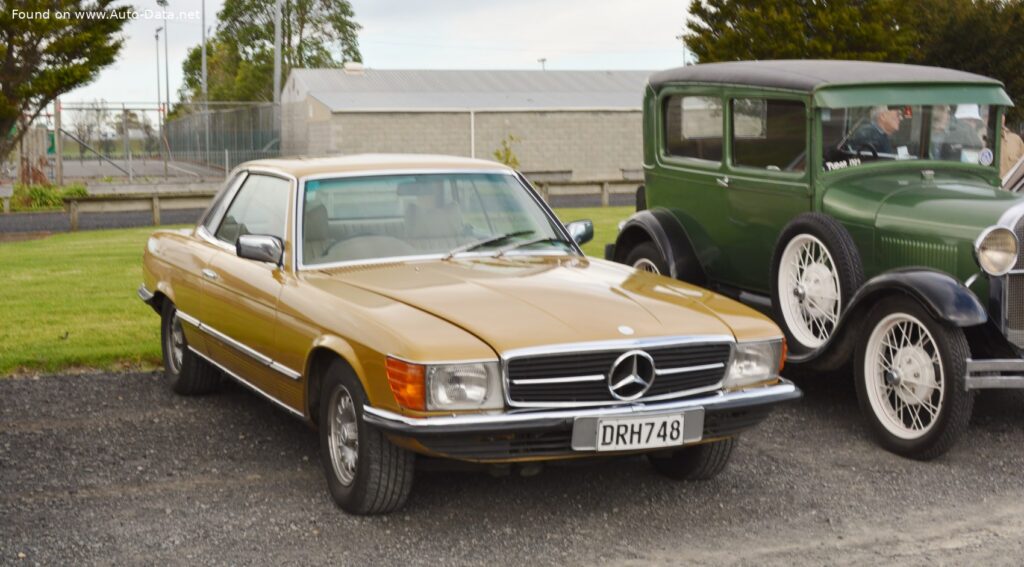
Introduction to the Mercedes-Benz SLC (C107)
The Mercedes-Benz SLC (C107) represents a distinctive chapter in the German automaker’s illustrious history, serving as the fixed-roof coupe variant of the iconic R107 SL roadster. Introduced in 1971, the C107 series was produced until 1981, offering a more luxurious and practical grand touring experience with its extended wheelbase and rear seating. Unlike its two-seater convertible sibling, the SLC was designed for longer journeys and a more composed ride, catering to a discerning clientele who desired Mercedes-Benz’s renowned engineering and comfort in a sophisticated coupe package.
The specific model under review, the Mercedes-Benz SLC (C107) 280 SLC (185 Hp) Automatic, was a significant offering during its production run from April 1978 to September 1981. This variant was particularly popular in European markets, providing a blend of refined performance and the timeless elegance characteristic of Mercedes-Benz design from that era. While the C107 series as a whole found its way to the United States, the 280 SLC, with its smaller-displacement inline-six engine, often played a more prominent role in regions where fuel efficiency and taxation favored smaller engines compared to the larger V8s typically offered in the American market. It embodied the brand’s commitment to robust engineering, safety, and a premium driving experience, setting a benchmark for luxury coupes of its time.
Engine and Performance: The Heart of the Mercedes-Benz SLC (C107)
At the core of the Mercedes-Benz SLC (C107) 280 SLC (185 Hp) Automatic lies the venerable M 110 E 28 engine, an inline-six cylinder unit renowned for its smooth operation and durability. This naturally aspirated 2.7-liter (2746 cm3 or 167.57 cu. in.) engine was a paragon of Mercedes-Benz engineering, featuring a Double Overhead Camshaft (DOHC) valvetrain with two valves per cylinder. This configuration, coupled with a multi-port manifold injection system, allowed the engine to breathe efficiently and deliver its power with a sophisticated linearity.
The M 110 engine in the 280 SLC produced a respectable 185 horsepower at 5800 rpm, demonstrating a healthy power output for its displacement, translating to approximately 67.4 horsepower per liter. Torque was equally impressive for the period, peaking at 177.01 lb.-ft. (240 Nm) at 4500 rpm. This torque curve provided ample motivation for the grand touring coupe, allowing for confident acceleration and relaxed cruising. Power was transmitted to the rear wheels via a smooth-shifting 4-speed automatic transmission, a common choice for luxury vehicles of the era, prioritizing comfort and ease of driving over outright sporty engagement.
Performance figures for the 280 SLC highlighted its capabilities as a capable cruiser. The car could accelerate from 0 to 60 mph in an estimated 9.6 seconds, a commendable time for a luxury coupe weighing 3417.17 lbs. (1550 kg) and equipped with an automatic transmission. Its top speed was rated at 121.17 mph (195 km/h), making it perfectly suited for sustained high-speed travel on European autobahns or American interstates. Fuel economy, while not a primary concern for luxury buyers of the period, was a reported 18.8 US mpg (12.5 l/100 km) combined, respectable for a powerful six-cylinder engine of its generation. The engine’s robust construction, including a 9:1 compression ratio and a bore of 3.39 inches (86 mm) with a stroke of 3.1 inches (78.79 mm), ensured longevity and a refined driving experience that Mercedes-Benz owners had come to expect.
Design and Features: The Enduring Elegance of the C107
The design of the Mercedes-Benz SLC (C107), particularly the 280 SLC, is a masterclass in classic Mercedes-Benz aesthetics: elegant, understated, and built to last. As a two-door coupe with seating for five, the C107 SLC distinguished itself from its SL roadster sibling by its longer wheelbase (111.02 inches or 2820 mm) and distinctive fixed roofline, which featured louvered rear quarter windows. These unique louvers, often a point of discussion among enthusiasts, were initially incorporated to conceal the fixed roof structure and contribute to the car’s aerodynamic profile, though they primarily became a signature styling cue for the SLC.
Measuring 187.01 inches (4750 mm) in length, 70.47 inches (1790 mm) in width, and 52.36 inches (1330 mm) in height, the SLC possessed a substantial road presence. Its proportions exuded a sense of solidity and luxury, characterized by clean lines, chrome accents, and the iconic Mercedes-Benz grille. The interior was a testament to Mercedes-Benz’s commitment to occupant comfort and safety, featuring high-quality materials, comfortable seating, and a well-appointed dashboard. While not laden with the digital interfaces of modern cars, the C107 offered features considered advanced for its time, such as air conditioning, power windows, and a sophisticated heating system.
Safety was a paramount consideration for Mercedes-Benz, even in the late 1970s. The 280 SLC incorporated a rigid body structure, energy-absorbing crumple zones, and a robust braking system. It featured ventilated discs at the front and solid discs at the rear, complemented by an Anti-lock Braking System (ABS) – a significant technological advancement for its era, enhancing stopping power and control in adverse conditions. The suspension system, comprising a double wishbone setup with a transverse stabilizer at the front and a trailing arm with a transverse stabilizer at the rear, provided a compliant yet controlled ride, perfectly suited for grand touring. Power steering, a hydraulic cone worm system with recirculation balls, ensured ease of maneuverability despite the car’s substantial size. The 195/70 R14 tires mounted on 6.5J x 14 wheel rims provided a comfortable ride and adequate grip.
Technical Specifications
General Information |
|
| Brand | Mercedes-Benz |
| Model | SLC |
| Generation | SLC (C107) |
| Type (Engine) | 280 SLC (185 Hp) Automatic |
| Start of Production | April, 1978 year |
| End of Production | September, 1981 year |
| Powertrain Architecture | Internal Combustion engine |
| Body type | Coupe |
| Seats | 5 |
| Doors | 2 |
Performance Specifications |
|
| Fuel consumption (economy) – combined | 12.5 l/100 km (18.8 US mpg) |
| Fuel Type | Petrol (Gasoline) |
| Acceleration 0 – 60 mph | 9.6 sec |
| Maximum speed | 121.17 mph (195 km/h) |
| Weight-to-power ratio | 8.4 kg/Hp, 119.4 Hp/tonne |
| Weight-to-torque ratio | 6.5 kg/Nm, 154.8 Nm/tonne |
Engine Specifications |
|
| Power | 185 Hp @ 5800 rpm |
| Power per liter | 67.4 Hp/l |
| Torque | 177.01 lb.-ft. (240 Nm) @ 4500 rpm |
| Engine layout | Front, Longitudinal |
| Engine Model/Code | M 110 E 28 / 110.986 |
| Engine displacement | 2.7 liters (2746 cm3 / 167.57 cu. in.) |
| Number of cylinders | 6 |
| Engine configuration | Inline |
| Cylinder Bore | 3.39 in. (86 mm) |
| Piston Stroke | 3.1 in. (78.79 mm) |
| Compression ratio | 9:1 |
| Number of valves per cylinder | 2 |
| Fuel injection system | Multi-port manifold injection |
| Engine aspiration | Naturally aspirated engine |
| Valvetrain | DOHC |
| Engine oil capacity | 6.34 US qt (6 l) |
| Coolant | 12.68 US qt (12 l) |
Space, Volume and Weights |
|
| Kerb Weight | 3417.17 lbs. (1550 kg) |
| Max. weight | 4497.43 lbs. (2040 kg) |
| Max load | 1080.27 lbs. (490 kg) |
| Fuel tank capacity | 23.78 US gal (90 l) |
Dimensions |
|
| Length | 187.01 in. (4750 mm) |
| Width | 70.47 in. (1790 mm) |
| Height | 52.36 in. (1330 mm) |
| Wheelbase | 111.02 in. (2820 mm) |
| Front track | 57.17 in. (1452 mm) |
| Rear (Back) track | 56.69 in. (1440 mm) |
Drivetrain, Brakes and Suspension Specs |
|
| Drivetrain Architecture | The Internal combustion engine (ICE) drives the rear wheels of the vehicle. |
| Drive wheel | Rear wheel drive |
| Number of gears and type of gearbox | 4 gears, automatic transmission |
| Front suspension | Double wishbone, Transverse stabilizer |
| Rear suspension | Transverse stabilizer, Trailing arm |
| Front brakes | Ventilated discs |
| Rear brakes | Disc |
| Assisting systems | ABS (Anti-lock braking system) |
| Steering type | Cone worm with recirculation balls |
| Power steering | Hydraulic Steering |
| Tires size | 195/70 R14 |
| Wheel rims size | 6.5J x 14 |
Legacy and Market Impact of the Mercedes-Benz SLC (C107)
The Mercedes-Benz SLC (C107) series, including the 280 SLC, holds a unique place in automotive history, often overshadowed by its more famous SL roadster sibling but recognized by enthusiasts for its distinct character and capabilities. The SLC’s longer wheelbase and rear seats made it a true 2+2 grand tourer, offering a more practical and comfortable option for those who appreciated the R107 platform but desired additional passenger capacity and the refinement of a fixed-roof coupe. Its production run from 1971 to 1981 saw it compete in the luxury coupe segment against formidable rivals from other European manufacturers.
In its primary European markets, the 280 SLC competed with vehicles like the BMW E9 coupe (3.0 CS/CSi) and later the E24 6 Series, as well as offerings from Porsche, such as the 928, and even some higher-end Italian coupes like the Alfa Romeo GTV6 or Lancia Gamma Coupe. While these competitors often offered different driving dynamics or styling philosophies, the SLC stood out for its unwavering commitment to build quality, safety, and a comfortable, refined driving experience. Mercedes-Benz’s reputation for engineering excellence and durability was a significant selling point, ensuring strong resale values and a loyal customer base.
The 280 SLC, with its inline-six engine, was particularly relevant in markets where fuel efficiency and vehicle taxation favored smaller displacement engines over the V8s commonly found in the 350 SLC, 450 SLC, and 500 SLC models. It offered a compelling balance of performance, luxury, and running costs, making it an accessible entry point into the Mercedes-Benz grand touring coupe lineup without sacrificing prestige. The inclusion of advanced features like ABS further cemented its status as a technologically progressive vehicle for its time.
Today, the Mercedes-Benz SLC (C107) is increasingly appreciated by classic car collectors and enthusiasts. Its elegant styling, robust mechanicals, and comfortable interior make it an appealing choice for those seeking a classic Mercedes-Benz that can still be enjoyed on modern roads. While the R107 SL roadsters often command higher prices, the SLC offers a similar level of build quality and classic appeal at a potentially more accessible price point, making it a smart choice for a discerning collector. The 280 SLC, in particular, represents a period of thoughtful engineering from Mercedes-Benz, combining performance, luxury, and a distinctive design that continues to captivate. Its legacy is one of understated elegance, reliable performance, and an enduring testament to the brand’s commitment to building exceptional automobiles.
