
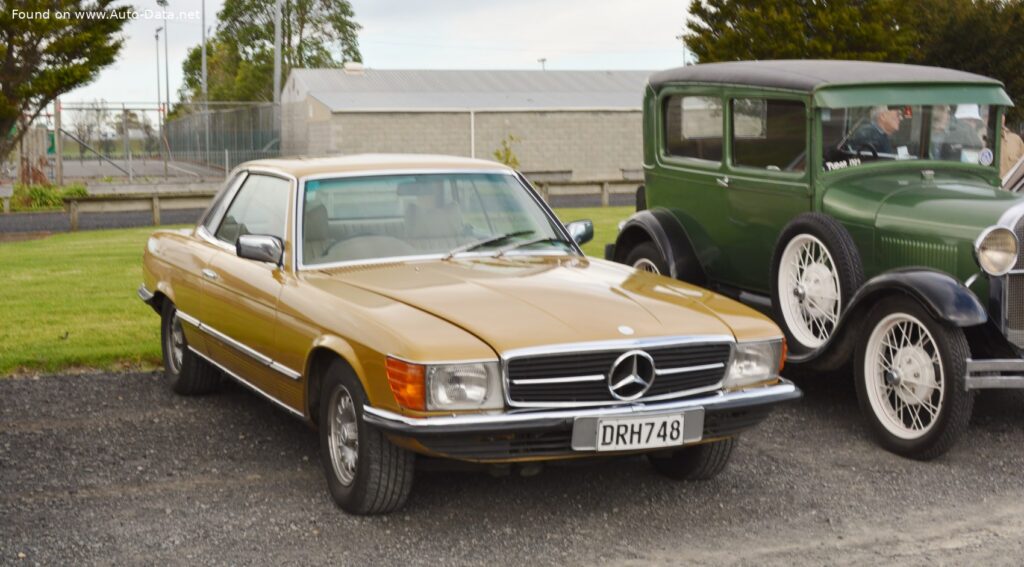
Mercedes-Benz SLC (C107) 450 SLC V8 (217 Hp) Automatic
The Mercedes-Benz SLC (C107) represents a distinctive chapter in the German automaker’s illustrious history, serving as a luxurious grand touring coupe built on the same platform as the iconic R107 SL roadster. Produced from November 1975 to October 1980, the C107 generation offered a more practical and spacious alternative to its two-seater sibling, featuring a longer wheelbase and a true 2+2 seating configuration. The 450 SLC V8 (217 Hp) Automatic variant, in particular, stood out for its blend of robust V8 power, sophisticated engineering, and the enduring elegance characteristic of Mercedes-Benz vehicles from the 1970s. This model was designed to appeal to buyers seeking a refined, comfortable, and capable long-distance cruiser, embodying the peak of luxury and performance for its era in a four-seat coupe format.
Engine and Performance of the Mercedes-Benz SLC (C107)
At the heart of the Mercedes-Benz SLC (C107) 450 SLC V8 lies the formidable M 117 E 45 engine, a naturally aspirated 4.5-liter (4520 cm3 or 275.83 cu. in.) V8 powerhouse. This front, longitudinally mounted engine, with its V-engine configuration and two valves per cylinder operated by a Single Overhead Camshaft (SOHC) valvetrain, was engineered for smooth power delivery and durability. Fueling was managed by a multi-port manifold injection system, a sophisticated setup for its time, ensuring efficient combustion and responsive throttle input.
The 450 SLC V8 delivered a robust 217 horsepower at 5000 rpm, translating to a power-per-liter output of 48 horsepower per liter, which was highly respectable for a luxury grand tourer of the mid-to-late 1970s. Torque figures were equally impressive, peaking at 265.52 lb.-ft. (360 Nm) at a relatively low 3250 rpm, providing ample pulling power across the rev range. This generous torque, coupled with the car’s 3-speed automatic transmission, ensured effortless acceleration and comfortable cruising.
Performance metrics highlight the 450 SLC V8’s capabilities as a swift grand tourer. The vehicle could accelerate from 0 to 60 mph in a brisk 8.8 seconds (0-100 km/h in 9.3 seconds), making it one of the quicker luxury coupes on the market. Its top speed was rated at 130.49 mph (210 km/h), allowing for sustained high-speed travel on autobahns and open highways. Despite its substantial curb weight of 3593.53 lbs (1630 kg), the power-to-weight ratio stood at a commendable 133.1 Hp per ton (7.5 kg/Hp), underscoring its dynamic potential. Fuel economy, while not the primary focus for such a luxury vehicle, was rated at a combined 16.2 US mpg (14.5 l/100 km), typical for a large V8 engine of the era. The substantial 23.78 US gallon (90 liter) fuel tank provided an excellent cruising range, further cementing its grand touring credentials.
Design and Features
The Mercedes-Benz SLC (C107), specifically the 450 SLC V8, presented itself as a sophisticated two-door coupe, embodying the clean, elegant design language prevalent in Mercedes-Benz models of the 1970s. Its most distinguishing feature, compared to the R107 SL, was its extended wheelbase of 111.02 inches (2820 mm), which accommodated a larger cabin and a pair of rear seats, transforming it into a genuine 2+2 coupe. This longer profile, measuring 187.01 inches (4750 mm) in length, gave the SLC a distinctive silhouette that was both graceful and substantial.
The exterior design was characterized by its wide stance, with a width of 70.47 inches (1790 mm) and a height of 52.36 inches (1330 mm), contributing to a stable and imposing road presence. The signature Mercedes-Benz grille, horizontal headlamps, and chrome accents underscored its luxury status. The fixed roof, unlike the convertible SL, allowed for a more rigid body structure and enhanced interior quietness, crucial for a grand touring vehicle.
Inside, the SLC offered a cabin designed for comfort and luxury. The 5-seat configuration provided ample space for front occupants and reasonable room for two adults in the rear for shorter journeys, a significant advantage over its two-seater sibling. Standard features for the era would have included power windows, air conditioning, and a high-quality audio system, all contributing to an opulent driving experience. Safety, a paramount concern for Mercedes-Benz, was addressed through a robust body structure, impact-absorbing zones, and advanced braking systems. The 450 SLC featured ventilated discs at the front and solid discs at the rear, providing strong and consistent stopping power. The hydraulic power steering, utilizing a cone worm with recirculation balls, ensured precise control and ease of maneuvering, a hallmark of Mercedes-Benz engineering. The vehicle rode on 205/70 R14 tires mounted on 6.5J x 14 wheel rims, a common setup for luxury cars of the period, balancing ride comfort with adequate grip.
Technical Specifications
| Category | Specification | Metric / US Equivalent |
|---|---|---|
| General Information | Brand | Mercedes-Benz |
| Model | SLC | |
| Generation | SLC (C107) | |
| Type (Engine) | 450 SLC V8 (217 Hp) Automatic | |
| Start of Production | November, 1975 | |
| End of Production | October, 1980 | |
| Powertrain Architecture | Internal Combustion engine | |
| Body Type | Coupe | |
| Seats | 5 | |
| Doors | 2 | |
| Performance Specs | Fuel Consumption (Combined) | 14.5 l/100 km / 16.2 US mpg |
| Fuel Type | Petrol (Gasoline) | |
| Acceleration 0-60 mph | 8.8 seconds | |
| Acceleration 0-100 km/h | 9.3 seconds | |
| Maximum Speed | 210 km/h / 130.49 mph | |
| Weight-to-Power Ratio | 7.5 kg/Hp / 133.1 Hp/tonne | |
| Weight-to-Torque Ratio | 4.5 kg/Nm / 220.9 Nm/tonne | |
| Engine Specs | Power | 217 Hp @ 5000 rpm |
| Power per Liter | 48 Hp/l | |
| Torque | 360 Nm @ 3250 rpm / 265.52 lb.-ft. @ 3250 rpm | |
| Engine Layout | Front, Longitudinal | |
| Engine Model/Code | M 117 E 45 / 117.985 | |
| Engine Displacement | 4520 cm3 / 275.83 cu. in. | |
| Number of Cylinders | 8 | |
| Engine Configuration | V-engine | |
| Cylinder Bore | 92 mm / 3.62 in. | |
| Piston Stroke | 85 mm / 3.35 in. | |
| Compression Ratio | 8.8:1 | |
| Valves per Cylinder | 2 | |
| Fuel Injection System | Multi-port manifold injection | |
| Engine Aspiration | Naturally aspirated engine | |
| Valvetrain | SOHC | |
| Engine Oil Capacity | 8 l / 8.45 US qt | |
| Engine Oil Specification | Not specified in data | |
| Coolant Capacity | 15 l / 15.85 US qt | |
| Space, Volume and Weights | Kerb Weight | 1630 kg / 3593.53 lbs |
| Max. Weight | 2120 kg / 4673.8 lbs | |
| Max Load | 490 kg / 1080.27 lbs | |
| Fuel Tank Capacity | 90 l / 23.78 US gal | |
| Dimensions | Length | 4750 mm / 187.01 in. |
| Width | 1790 mm / 70.47 in. | |
| Height | 1330 mm / 52.36 in. | |
| Wheelbase | 2820 mm / 111.02 in. | |
| Front Track | 1452 mm / 57.17 in. | |
| Rear (Back) Track | 1440 mm / 56.69 in. | |
| Drivetrain, Brakes and Suspension | Drivetrain Architecture | Internal combustion engine drives the rear wheels. |
| Drive Wheel | Rear wheel drive | |
| Number of Gears & Gearbox Type | 3 gears, automatic transmission | |
| Front Suspension | Double wishbone, Transverse stabilizer | |
| Rear Suspension | Threaded twist beam, Transverse stabilizer | |
| Front Brakes | Ventilated discs | |
| Rear Brakes | Disc | |
| Steering Type | Cone worm with recirculation balls | |
| Power Steering | Hydraulic Steering | |
| Tires Size | 205/70 R14 | |
| Wheel Rims Size | 6.5J x 14 |
Legacy and Market Impact of the Mercedes-Benz SLC (C107)
The Mercedes-Benz SLC (C107) holds a unique place in automotive history, often overshadowed by its more famous roadster sibling, the R107 SL. However, the SLC carved its own niche as a sophisticated, long-distance grand tourer designed for discerning buyers who desired Mercedes-Benz luxury and engineering prowess in a more practical 2+2 coupe format. Its production run from 1971 to 1981 (with the 450 SLC V8 specifically from 1975-1980) coincided with a period of evolving automotive design and engineering, and the C107 stood as a testament to Mercedes-Benz’s commitment to quality and innovation.
In its primary markets, including North America and Europe, the SLC competed against other premium luxury coupes such as the Jaguar XJ-S, BMW 6-Series (E24), and even some offerings from Cadillac or Lincoln in the US, albeit with a distinctly European flavor. The 450 SLC V8, with its powerful engine and refined automatic transmission, offered a compelling blend of performance and effortless cruising that was highly prized. Its solid build quality, comfortable ride, and timeless styling contributed to a reputation for reliability and longevity, making it a desirable pre-owned vehicle for many years after its initial production.
The SLC’s longer wheelbase and rear seats made it a more versatile vehicle than the SL, allowing it to serve as a primary family car for some, or a more practical option for those who occasionally needed to transport more than one passenger. This distinction, while subtle, was important to its target demographic. The car also gained a degree of fame through its successful participation in rallying, particularly the grueling East African Safari Rally, showcasing its inherent robustness and Mercedes-Benz’s engineering capabilities under extreme conditions.
Today, the Mercedes-Benz SLC (C107) is increasingly recognized by collectors and enthusiasts for its classic lines, enduring build quality, and the pleasure of driving a well-engineered V8-powered German coupe. While the R107 SL often commands higher prices, the SLC offers a more accessible entry point into classic Mercedes-Benz ownership, providing a similar level of luxury and driving experience with added practicality. Its historical significance lies in representing Mercedes-Benz’s commitment to offering a diverse range of luxury vehicles, demonstrating that elegance, performance, and practicality could coexist within a single, beautifully designed package. The 450 SLC V8 remains a cherished example of Mercedes-Benz’s golden age of engineering.
