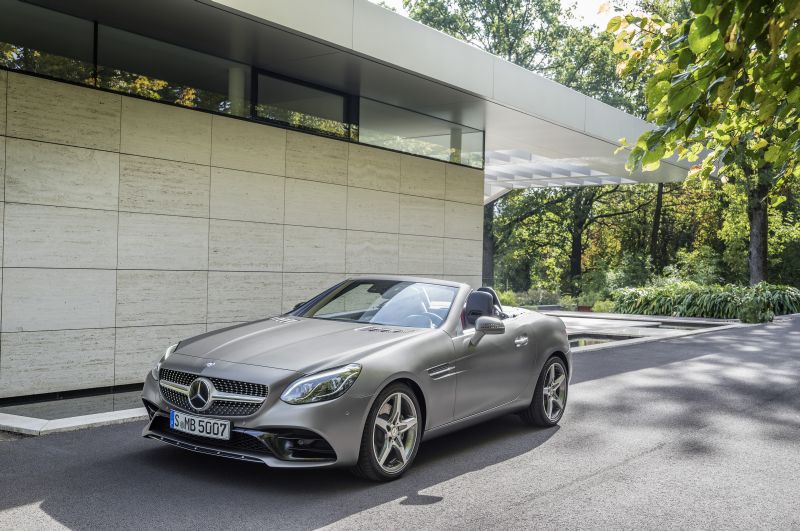
Mercedes-Benz SLC (R172 facelift 2016) SLC 250d (204 Hp) 9G-TRONIC
The Mercedes-Benz SLC (R172 facelift 2016) SLC 250d with the 9G-TRONIC transmission represents a significant evolution in the German automaker’s compact luxury roadster lineage. Introduced in April 2016 as a facelifted version of the R172 generation, the SLC marked a strategic rebranding from its predecessor, the SLK, aligning its nomenclature with the C-Class sedan, upon which it shared some architectural elements. This particular variant, the SLC 250d, was specifically tailored for the European market, where diesel powertrains in luxury vehicles are far more prevalent and appreciated for their blend of high torque, exceptional fuel efficiency, and long-distance cruising capability. As a two-door, two-seat coupe-cabriolet, it offered the versatility of open-air motoring with the security and refinement of a fixed-roof coupe, all within a compact and stylish package. Its production run for this specific configuration was relatively brief, spanning just one year from April 2016 to April 2017, making it a distinct and efficient option within the premium compact convertible segment.
Engine and Performance of the Mercedes-Benz SLC (R172 facelift 2016)
At the heart of the SLC 250d lies Mercedes-Benz’s renowned OM 651 DE 22 LA/651.980 engine, a sophisticated 2.1-liter (2143 cm³, or 130.77 cubic inches) inline-four cylinder diesel powerplant. This engine is a testament to modern diesel engineering, featuring a BiTurbo setup and an intercooler to maximize power delivery and efficiency. It generates a robust 204 horsepower at 3800 rpm, which, for a diesel of its size, is quite impressive. However, the true highlight of this engine is its prodigious torque output: a massive 368.78 lb-ft (500 Nm), available from a remarkably low 1600 to 1800 rpm. This broad and accessible torque band provides effortless acceleration and strong passing power, characteristic of a premium Mercedes-Benz.
Mated to this powerful diesel engine is Mercedes-Benz’s advanced 9G-TRONIC automatic transmission. This nine-speed gearbox is a marvel of engineering, designed to optimize both performance and fuel economy. Its multiple ratios allow the engine to consistently operate within its most efficient RPM range, ensuring smooth and rapid gear changes. The combination of the torquey diesel and the sophisticated transmission results in brisk acceleration, with the SLC 250d capable of sprinting from 0 to 60 mph in a mere 6.3 seconds (0-100 km/h in 6.6 seconds). The top speed is also respectable for a roadster, reaching 152.24 mph (245 km/h).
Beyond its performance, the SLC 250d truly shines in its fuel efficiency. For a luxury roadster, its consumption figures are outstanding: an estimated 50 to 53.5 US mpg (4.7-4.4 l/100 km) in combined driving conditions. Urban consumption ranges from 42.8 to 45.2 US mpg, while extra-urban driving can see figures as high as 56 to 60.3 US mpg. These figures are complemented by low CO2 emissions of 114-123 g/km, adhering to the stringent Euro 6 emission standard, which includes a particulate filter system. The powertrain architecture features a front, longitudinal engine layout driving the rear wheels, providing a classic sports car feel and balanced handling dynamics.
Design and Features
The Mercedes-Benz SLC (R172 facelift 2016) retains the sleek and athletic proportions of its SLK predecessor while incorporating updated styling cues that align it with Mercedes-Benz’s contemporary design language. As a coupe-cabriolet or roadster, its defining feature is the retractable hardtop, which seamlessly transforms the car from an elegant coupe into an open-air convertible at the touch of a button. This system offers the best of both worlds: the enhanced security, weather insulation, and refined aesthetics of a fixed roof, combined with the exhilarating experience of top-down driving.
Visually, the facelift brought a redesigned front fascia, featuring a more prominent diamond grille, updated LED headlamps, and revised bumpers that lend it a sharper, more aggressive look. At the rear, new LED taillights and a subtly reshaped bumper completed the modern refresh. The car’s compact dimensions – with a length of 162.72 inches, a width of 71.26 inches (78.98 inches including mirrors), and a height of 51.22 inches – contribute to its agile character and ease of maneuverability, particularly in urban environments. The wheelbase of 95.67 inches ensures a stable ride, while the minimum turning circle of 34.51 feet enhances its nimbleness.
Inside, the SLC 250d offers a luxurious and driver-focused cabin designed for two occupants. Mercedes-Benz spared no expense in material quality, with premium leather, high-quality plastics, and metallic accents throughout. Key features for this modern era included an updated infotainment system, often with a larger display and improved connectivity options, complementing the classic Mercedes-Benz analog instrumentation. Comfort features, typical for the brand, would have included multi-adjustable seats, dual-zone climate control, and potentially Mercedes’ innovative AIRSCARF neck-level heating system for comfortable top-down driving in cooler weather.
Safety was paramount, with the SLC 250d featuring a comprehensive array of passive and active safety systems. Standard equipment included an Anti-lock Braking System (ABS), multiple airbags, and an electronic stability program (ESP, though not explicitly listed, is a Mercedes standard). The car also featured ventilated discs at the front and solid discs at the rear for strong stopping power, complemented by independent multi-link suspension systems on both axles for precise handling and a comfortable ride. The electric power steering system provided responsive feedback and ease of use, making the SLC a joy to drive whether cruising or tackling winding roads.
Technical Specifications
| Category | Specification |
|---|---|
| General Information | |
| Brand | Mercedes-Benz |
| Model | SLC |
| Generation | SLC (R172 facelift 2016) |
| Type (Engine) | SLC 250d (204 Hp) 9G-TRONIC |
| Production Start | April, 2016 |
| Production End | April, 2017 |
| Powertrain Architecture | Internal Combustion Engine |
| Body Type | Coupe – Cabriolet, Roadster |
| Seats | 2 |
| Doors | 2 |
| Performance Specs | |
| Fuel Consumption (Urban) | 5.5-5.2 l/100 km (42.8 – 45.2 US mpg) |
| Fuel Consumption (Extra Urban) | 4.2-3.9 l/100 km (56 – 60.3 US mpg) |
| Fuel Consumption (Combined) | 4.7-4.4 l/100 km (50 – 53.5 US mpg) |
| CO2 Emissions | 114-123 g/km |
| Fuel Type | Diesel |
| Acceleration 0 – 60 mph | 6.3 sec |
| Acceleration 0 – 100 km/h | 6.6 sec |
| Maximum Speed | 152.24 mph (245 km/h) |
| Emission Standard | Euro 6 |
| Weight-to-Power Ratio | 7.5 kg/Hp (133.3 Hp/tonne) |
| Weight-to-Torque Ratio | 3.1 kg/Nm (326.8 Nm/tonne) |
| Engine Specs | |
| Power | 204 Hp @ 3800 rpm |
| Power per Liter | 95.2 Hp/l |
| Torque | 368.78 lb-ft (500 Nm) @ 1600-1800 rpm |
| Engine Layout | Front, Longitudinal |
| Engine Model/Code | OM 651 DE 22 LA/651.980 |
| Engine Displacement | 2.1 Liters (2143 cm³, 130.77 cu. in.) |
| Number of Cylinders | 4 |
| Engine Configuration | Inline |
| Compression Ratio | 16.2:1 |
| Fuel Injection System | Diesel Commonrail |
| Engine Aspiration | BiTurbo, Intercooler |
| Engine Oil Capacity | 6.87 US qt (6.5 l) |
| Coolant Capacity | 10.36 US qt (9.8 l) |
| Engine Systems | Particulate filter |
| Space, Volume and Weights | |
| Curb Weight | 3373.07 lbs (1530 kg) |
| Max. Weight | 4199.81 lbs (1905 kg) |
| Max Load | 826.73 lbs (375 kg) |
| Trunk (Boot) Space – Minimum | 6.36 cu. ft. (180 l) |
| Trunk (Boot) Space – Maximum | 10.06 cu. ft. (285 l) |
| Fuel Tank Capacity | 15.85 US gal (60 l) |
| Dimensions | |
| Length | 162.72 in (4133 mm) |
| Width | 71.26 in (1810 mm) |
| Width (incl. mirrors) | 78.98 in (2006 mm) |
| Height | 51.22 in (1301 mm) |
| Wheelbase | 95.67 in (2430 mm) |
| Front Track | 61.38 in (1559 mm) |
| Rear Track | 61.61 in (1565 mm) |
| Drag Coefficient (Cd) | 0.30 |
| Minimum Turning Circle | 34.51 ft (10.52 m) |
| Drivetrain, Brakes and Suspension Specs | |
| Drivetrain Architecture | Internal combustion engine (ICE) drives the rear wheels. |
| Drive Wheel | Rear wheel drive |
| Number of Gears and Type | 9 gears, automatic transmission G-TRONIC |
| Front Suspension | Independent multi-link suspension |
| Rear Suspension | Independent multi-link suspension |
| Front Brakes | Ventilated discs |
| Rear Brakes | Disc |
| Assisting Systems | ABS (Anti-lock braking system) |
| Steering Type | Steering rack and pinion |
| Power Steering | Electric Steering |
| Tires Size | 205/55 R16; 225/50 R16 |
| Wheel Rims Size | 16 inches |
Legacy and Market Impact
The Mercedes-Benz SLC (R172 facelift 2016), particularly the SLC 250d variant, occupied a unique niche within the European luxury roadster market. As the entry-level open-top model in Mercedes-Benz’s portfolio, it aimed to offer an accessible yet premium experience. Its rebranding from SLK to SLC was a strategic move to integrate it more clearly into the Mercedes-Benz car family, aligning with the C-Class and E-Class models. This particular diesel variant, however, highlighted a significant divergence from the typical North American luxury roadster market, where diesel engines are rarely offered in sports cars. In Europe, where fuel prices are higher and diesel technology is more widely accepted and refined, the SLC 250d’s combination of strong torque, remarkable fuel economy, and lower CO2 emissions made it an attractive proposition for buyers seeking a stylish and efficient daily driver or long-distance cruiser.
In its primary market, the SLC 250d competed against rivals such as the Audi TT Roadster and the BMW Z4. While the TT Roadster offered quattro all-wheel drive and a more modern digital cockpit, and the Z4 focused on a more traditional sporty driving experience, neither offered a direct diesel competitor in the same segment. Porsche’s 718 Boxster, while a more performance-oriented and higher-priced option, also exclusively offered gasoline engines. This left the SLC 250d with a distinct advantage for those prioritizing efficiency and torque without compromising on luxury and open-top enjoyment. Its reputation was built on its refined ride, sophisticated powertrain, and the comfort offered by its retractable hardtop, which provided superior insulation compared to soft-top rivals.
Despite its merits, the SLC 250d’s specific production window was brief, reflecting the broader market shift away from diesel engines in passenger cars, even in Europe, as well as the overall decline in demand for compact roadsters. Mercedes-Benz eventually discontinued the SLC line entirely in 2020, signaling the end of an era for its compact roadster segment. Nevertheless, the SLC (R172 facelift 2016) SLC 250d stands as a significant model, representing a peak in diesel powertrain application within a luxury sports convertible. It showcased Mercedes-Benz’s engineering prowess in delivering a car that was both exhilarating and economical, offering a unique blend of performance, efficiency, and timeless style that remains appealing to enthusiasts of modern classic roadsters today. Its legacy is one of a sophisticated, efficient, and thoroughly enjoyable two-seater convertible, perfectly suited for the European roads it was designed to conquer.