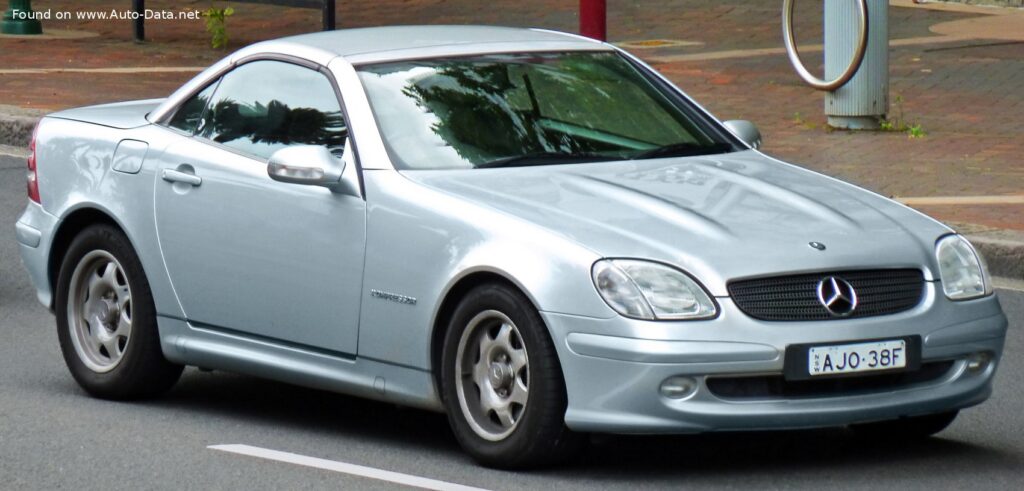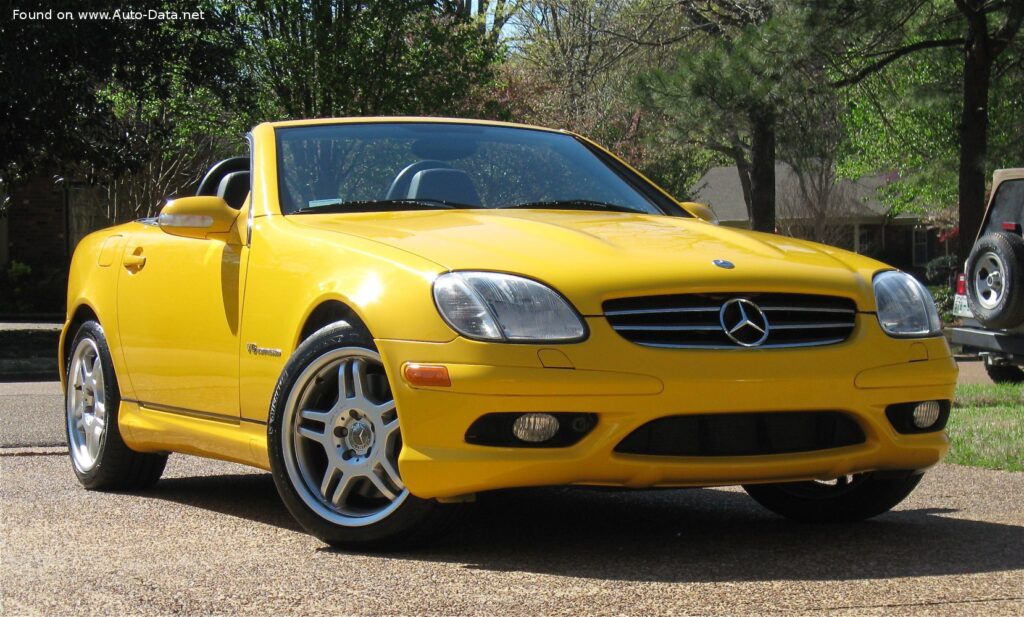
Introduction to the Mercedes-Benz SLK (R170, facelift 2000) SLK 320 V6
The Mercedes-Benz SLK-Class, designated by its internal chassis code R170, represented a significant entry by the German luxury automaker into the compact luxury roadster segment. Launched initially in 1996, the R170 quickly gained popularity for its innovative retractable hardtop, marketed as the “Vario-roof,” which offered the security and refinement of a coupe with the open-air exhilaration of a convertible. The model underwent a significant facelift in February 2000, bringing a host of cosmetic and mechanical enhancements to keep it competitive and fresh for the new millennium. Among the updated lineup, the Mercedes-Benz SLK (R170, facelift 2000) SLK 320 V6 (218 Hp) Automatic stood out as a performance-oriented variant, offering a compelling blend of power, luxury, and style.
This facelifted R170 generation, produced from February 2000 until April 2004, refined the original design, addressing early criticisms and enhancing the vehicle’s appeal. The SLK 320 V6, in particular, was positioned as the top naturally aspirated model, providing a more potent and sophisticated driving experience compared to its four-cylinder siblings. It was a direct competitor to other premium roadsters of its time, such as the BMW Z3 and the Porsche Boxster, carving out its niche with its unique hardtop design and unmistakable Mercedes-Benz luxury.
Engine and Performance: The Heart of the Mercedes-Benz SLK (R170) SLK 320 V6
Under the hood of the Mercedes-Benz SLK (R170, facelift 2000) SLK 320 V6 resided the venerable M 112.947 engine, a 3.2-liter (3199 cm3 or 195.21 cu. in.) naturally aspirated V6 powerplant. This engine was a hallmark of Mercedes-Benz engineering, known for its smooth operation, robust construction, and impressive power delivery. It produced a healthy 218 horsepower at 5700 rpm, translating to a power-per-liter output of 68.1 Hp/l. More importantly for real-world driving, the V6 delivered a substantial 308 Nm (227.17 lb.-ft.) of torque across a broad rev range, from 3000 to 4800 rpm. This wide torque band ensured excellent responsiveness and effortless acceleration in various driving conditions.
The engine’s layout was front, longitudinal, driving the rear wheels, adhering to the classic sports car architecture that enthusiasts appreciate. It featured a V-engine configuration with 6 cylinders, each equipped with 3 valves, utilizing a Single Overhead Camshaft (SOHC) valvetrain. Fuel delivery was managed by a multi-port manifold injection system, ensuring precise fueling and efficiency. With a compression ratio of 10:1, the engine ran smoothly on petrol (gasoline) and met the Euro 4 emission standard, respectable for its era.
Power was channeled to the rear wheels via a 5-speed automatic transmission, a common choice for Mercedes-Benz models emphasizing refined performance and ease of use. This combination allowed the SLK 320 V6 to accelerate from 0 to 60 mph in a swift 6.6 seconds (0-100 km/h in 6.9 seconds) and reach a top speed of 150.37 mph (242 km/h). Despite its performance credentials, the vehicle maintained a reasonable combined fuel consumption of 10.4 l/100 km (22.6 US mpg). The weight-to-power ratio stood at 6.1 kg/Hp (163.9 Hp/tonne), indicating a favorable power-to-weight balance for a spirited driving experience.
Design and Features: A Timeless Roadster Aesthetic
The Mercedes-Benz SLK (R170, facelift 2000) SLK 320 V6 retained the R170’s distinctive and appealing roadster silhouette, characterized by its compact dimensions and short overhangs. The facelift brought subtle but effective updates, including revised bumpers, side skirts, and clear-lens headlights, giving the car a more modern and aggressive appearance. The overall length of the vehicle was 157.87 inches (4010 mm), with a width of 67.52 inches (1715 mm) and a height of 50.35 inches (1279 mm). Its wheelbase measured 94.49 inches (2400 mm), contributing to its agile handling.
The defining feature of the SLK R170, and indeed a major selling point, was its electro-hydraulically operated Vario-roof. This innovative retractable hardtop could transform the car from a secure, weather-tight coupe into an open-top roadster in approximately 25 seconds, all at the touch of a button. This system offered significant advantages over traditional soft-tops, including enhanced security, better noise insulation, and improved weather protection, making the SLK a practical year-round sports car.
Inside, the SLK 320 V6 offered a premium two-seat cabin typical of Mercedes-Benz. While compact, the interior was well-appointed with quality materials and ergonomic controls. Features for the era included automatic climate control, a premium sound system, and a range of leather upholstery options. Safety was also a priority, with standard features like ABS (Anti-lock Braking System) and multiple airbags. The car’s suspension system comprised coil springs, double wishbones, and a transverse stabilizer at the front, paired with an independent multi-link suspension, coil springs, and a transverse stabilizer at the rear, ensuring a comfortable ride quality balanced with capable handling. Braking was handled by ventilated discs at the front and solid discs at the rear. The hydraulic power steering system, with a cone worm with recirculation balls, provided precise feedback to the driver.
Technical Specifications
| General Information | |
|---|---|
| Brand | Mercedes-Benz |
| Model | SLK |
| Generation | SLK (R170, facelift 2000) |
| Type (Engine) | SLK 320 V6 (218 Hp) Automatic |
| Start of Production | February, 2000 |
| End of Production | April, 2004 |
| Powertrain Architecture | Internal Combustion engine |
| Body type | Roadster |
| Seats | 2 |
| Doors | 2 |
| Performance Specifications | |
| Fuel consumption (economy) – urban (NEDC) | 15.1 l/100 km (15.6 US mpg) |
| Fuel consumption (economy) – extra urban (NEDC) | 7.7 l/100 km (30.5 US mpg) |
| Fuel consumption (economy) – combined (NEDC) | 10.4 l/100 km (22.6 US mpg) |
| CO2 emissions (NEDC) | 250 g/km |
| Fuel Type | Petrol (Gasoline) |
| Acceleration 0 – 60 mph | 6.6 sec |
| Acceleration 0 – 100 km/h | 6.9 sec |
| Maximum speed | 242 km/h (150.37 mph) |
| Emission standard | Euro 4 |
| Weight-to-power ratio | 6.1 kg/Hp (163.9 Hp/tonne) |
| Weight-to-torque ratio | 4.3 kg/Nm (231.6 Nm/tonne) |
| Engine Specifications | |
| Power | 218 Hp @ 5700 rpm |
| Power per liter | 68.1 Hp/l |
| Torque | 308 Nm @ 3000-4800 rpm (227.17 lb.-ft. @ 3000-4800 rpm) |
| Engine layout | Front, Longitudinal |
| Engine Model/Code | M 112.947 |
| Engine displacement | 3199 cm3 (3.2 l / 195.21 cu. in.) |
| Number of cylinders | 6 |
| Engine configuration | V-engine |
| Cylinder Bore | 89.9 mm (3.54 in.) |
| Piston Stroke | 84 mm (3.31 in.) |
| Compression ratio | 10:1 |
| Number of valves per cylinder | 3 |
| Fuel injection system | Multi-port manifold injection |
| Engine aspiration | Naturally aspirated engine |
| Valvetrain | SOHC |
| Engine oil capacity | 8 l (8.45 US qt) |
| Coolant capacity | 9.5 l (10.04 US qt) |
| Space, Volume and Weights | |
| Kerb Weight | 1330 kg (2932.15 lbs) |
| Max. weight | 1665 kg (3670.7 lbs) |
| Max load | 335 kg (738.55 lbs) |
| Trunk (boot) space – minimum | 145 l (5.12 cu. ft.) |
| Trunk (boot) space – maximum | 348 l (12.29 cu. ft.) |
| Fuel tank capacity | 60 l (15.85 US gal) |
| Max. roof load | 30 kg (66.14 lbs) |
| Dimensions | |
| Length | 4010 mm (157.87 in.) |
| Width | 1715 mm (67.52 in.) |
| Width including mirrors | 1950 mm (76.77 in.) |
| Height | 1279 mm (50.35 in.) |
| Wheelbase | 2400 mm (94.49 in.) |
| Front track | 1488 mm (58.58 in.) |
| Rear (Back) track | 1485 mm (58.46 in.) |
| Drag coefficient (Cd) | 0.33 |
| Minimum turning circle (turning diameter) | 10.6 m (34.78 ft.) |
| Drivetrain, Brakes and Suspension Specifications | |
| Drivetrain Architecture | The Internal combustion engine (ICE) drives the rear wheels of the vehicle. |
| Drive wheel | Rear wheel drive |
| Number of gears and type of gearbox | 5 gears, automatic transmission |
| Front suspension | Coil spring, Double wishbone, Transverse stabilizer |
| Rear suspension | Independent multi-link suspension, Transverse stabilizer, Coil spring |
| Front brakes | Ventilated discs |
| Rear brakes | Disc |
| Assisting systems | ABS (Anti-lock braking system) |
| Steering type | Cone worm with recirculation balls |
| Power steering | Hydraulic Steering |
| Tires size Front wheel | 205/55 R 16 91 V |
| Tires size Rear wheel | 225/50 R 16 92 V |
| Wheel rims size Front wheel | 7 J x 16 H 2 |
| Wheel rims size Rear wheel | 8 J x 16 H 2 |
Legacy and Market Impact
The Mercedes-Benz SLK (R170) series, and particularly the facelifted models like the SLK 320 V6, left a notable mark on the automotive landscape. When it first debuted, the SLK was a groundbreaking vehicle, largely due to its innovative Vario-roof. This feature democratized the retractable hardtop, a technology previously seen only on much more expensive or custom-built cars, making it accessible to a broader luxury market. This innovation forced competitors to rethink their convertible offerings and ultimately led to a widespread adoption of retractable hardtops across various segments.
In its primary markets, including the United States and Europe, the SLK 320 V6 competed fiercely with established rivals. Its main competitors included the BMW Z3 (and later the Z4), which offered a more traditional soft-top roadster experience with a focus on dynamic driving. The Porsche Boxster, with its mid-engine layout, provided a purer sports car experience, albeit at a higher price point. Audi also entered the fray with its TT Roadster, which offered a distinct design aesthetic and available all-wheel drive. The SLK distinguished itself with its blend of open-air freedom and coupe-like refinement, coupled with the prestige and comfort associated with the Mercedes-Benz brand.
The SLK 320 V6, with its potent V6 engine and smooth automatic transmission, appealed to buyers seeking a sporty yet comfortable luxury roadster. It wasn’t the most track-focused vehicle in its class, but it excelled as a stylish grand tourer for two, capable of both spirited drives on winding roads and relaxed cruising on highways. Its reputation was built on reliability, build quality, and the sophisticated engineering expected from Mercedes-Benz.
Today, the R170 generation, especially the facelifted V6 models, is regarded as a modern classic. It represents an era when Mercedes-Benz was pushing boundaries in design and technology, offering a distinct alternative in the luxury roadster segment. Its timeless styling, combined with the practicality of its retractable hardtop and the robust performance of the 3.2-liter V6, ensures its continued appeal among enthusiasts and collectors looking for an engaging and elegant open-top driving experience. The Mercedes-Benz SLK (R170, facelift 2000) SLK 320 V6 remains a testament to Mercedes-Benz’s ability to blend innovation, performance, and luxury into a desirable package.