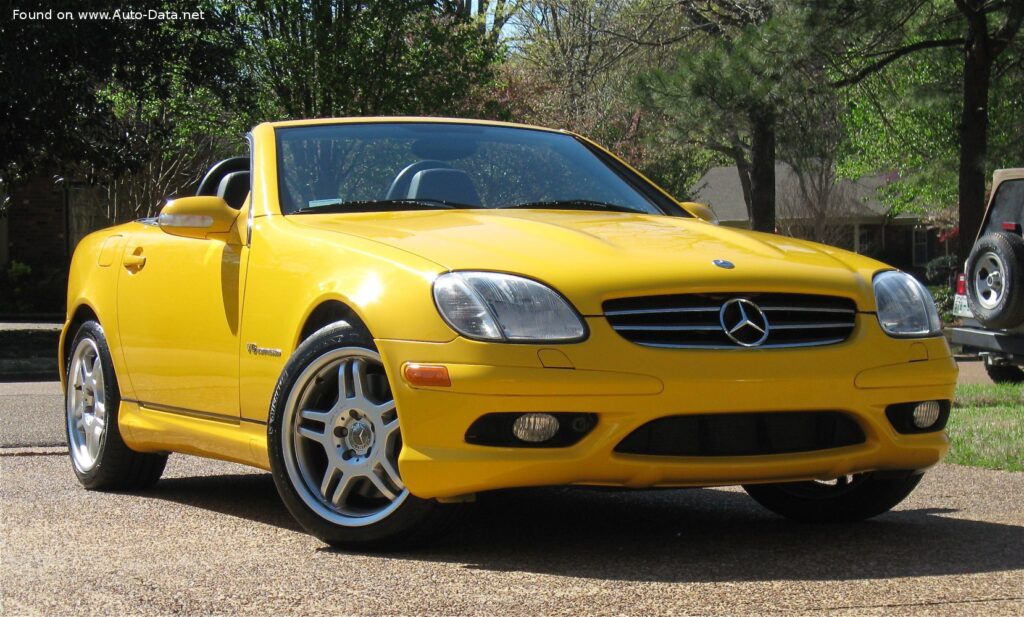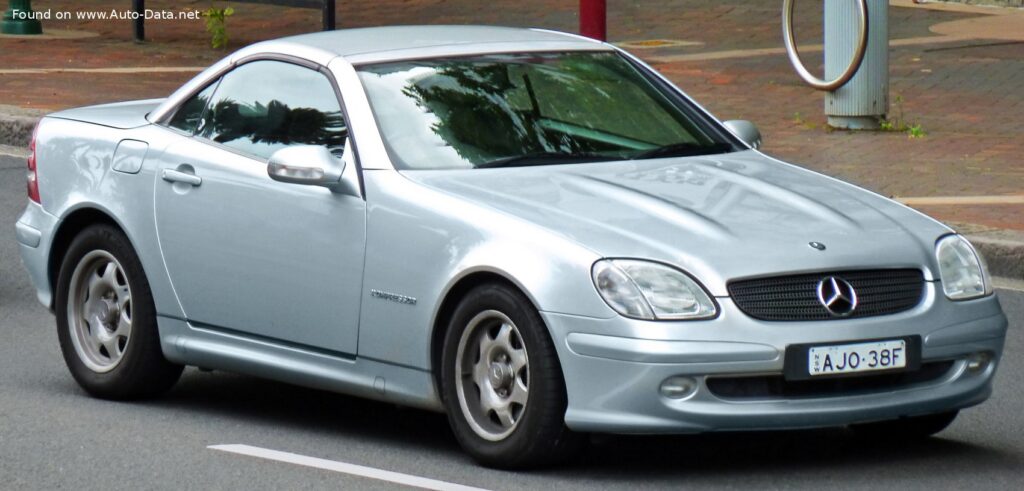
Mercedes-Benz SLK (R170) SLK 200 (136 Hp) Automatic: A Detailed Overview
The Mercedes-Benz SLK (R170) SLK 200 (136 Hp) Automatic represents a pivotal moment in the history of the German luxury automaker, marking Mercedes-Benz’s foray into the compact roadster segment. Launched in July 1996, the R170 generation of the SLK, an acronym for “Sportlich, Leicht, Kurz” (Sporty, Light, Short), quickly garnered attention for its innovative design and, most notably, its groundbreaking retractable hardtop roof, dubbed the “Vario-roof.” This particular variant, the SLK 200, served as an entry-level model primarily targeted at European and Asian markets, where smaller engine displacements were often favored due to tax structures and fuel efficiency considerations, distinguishing it from the supercharged 230 Kompressor and V6 320 models more commonly found in the North American market.
The R170 SLK was designed to capture a younger demographic for Mercedes-Benz, offering a blend of sporty aesthetics, premium quality, and open-air driving pleasure without the traditional compromises of a soft-top convertible. Its production ran from July 1996 to February 2000 for this specific 136 Hp automatic variant, becoming a significant competitor in the burgeoning premium roadster segment alongside rivals like the BMW Z3 and the Porsche Boxster. The SLK 200, despite its more modest power output compared to its siblings, still embodied the core principles of the R170 platform, offering a refined driving experience coupled with the engineering prowess expected from Mercedes-Benz.
Engine & Performance of the Mercedes-Benz SLK (R170) SLK 200 (136 Hp) Automatic
At the heart of the Mercedes-Benz SLK (R170) SLK 200 (136 Hp) Automatic lies a naturally aspirated 2.0-liter (1998 cm³) inline four-cylinder engine, designated by the code M 111.946. This powerplant was engineered for smooth operation and reliable performance, delivering 136 horsepower at 5500 rpm. Its multi-port manifold injection system ensured precise fuel delivery, contributing to both efficiency and responsive throttle feel. The engine’s architecture featured a DOHC (Double Overhead Camshaft) valvetrain with four valves per cylinder, a sophisticated setup for the era that maximized airflow and combustion efficiency.
Torque output for the SLK 200 stood at 140.14 lb.-ft. (190 Nm), available across a broad range from 3700 to 4500 rpm. This characteristic torque curve provided accessible power for everyday driving, making the car feel agile in urban environments and capable on the open road. Power was routed to the rear wheels via a 5-speed automatic transmission, emphasizing comfort and ease of use over raw performance. This drivetrain architecture, with its front-longitudinal engine layout and rear-wheel drive, maintained the classic sports car dynamic that enthusiasts appreciate.
Despite being the base engine, the SLK 200 offered respectable performance figures. It could accelerate from 0 to 60 mph in a calculated 9.2 seconds (0-100 km/h in 9.7 seconds) and reach a top speed of 126.14 mph (203 km/h). These numbers positioned it as a capable, if not blistering, performer in its class, perfectly suited for cruising and enjoying the open road. Fuel economy, a key consideration for this variant, was rated at a combined 25.3 US mpg (9.3 l/100 km) under the NEDC cycle, with urban consumption at 17.8 US mpg (13.2 l/100 km) and extra-urban at 33.1 US mpg (7.1 l/100 km). CO2 emissions were 220 g/km, reflecting the technology of its time.
Design & Features: The Mercedes-Benz SLK (R170) SLK 200
The R170 generation of the Mercedes-Benz SLK broke new ground with its distinctive design language and innovative features. As a two-door, two-seat roadster, its compact dimensions—157.28 inches (3995 mm) in length, 67.52 inches (1715 mm) in width, and 50.55 inches (1284 mm) in height—contributed to its sporty and nimble appearance. The wheelbase of 94.49 inches (2400 mm) further accentuated its short, athletic stance. A drag coefficient (Cd) of 0.33 was commendable for a roadster of its era, indicating careful aerodynamic optimization.
The most celebrated feature of the R170 SLK was undeniably its electro-hydraulically operated “Vario-roof.” This ingenious retractable hardtop could transform the car from a sleek coupe into an open-air roadster in just 25 seconds, offering the best of both worlds: the security and insulation of a fixed roof with the exhilaration of a convertible. This innovation was a significant selling point, providing a practical advantage over traditional soft-top rivals, particularly in varying weather conditions.
Inside, the SLK 200 offered a driver-focused cockpit with a blend of Mercedes-Benz’s characteristic quality and a youthful aesthetic. While specific interior features could vary by market and optional packages, the standard equipment typically included power windows, air conditioning, and a premium audio system. Safety was addressed with standard features such as ABS (Anti-lock Braking System) and front airbags, reflecting Mercedes-Benz’s commitment to occupant protection. The suspension system comprised a double wishbone setup with coil springs and a transverse stabilizer at the front, complemented by an independent multi-link suspension with coil springs at the rear, designed to provide a balanced ride quality that was both comfortable and engaging. Braking was handled by ventilated discs at the front and solid discs at the rear, ensuring confident stopping power.
Technical Specifications
| Category | Specification |
| Brand | Mercedes-Benz |
| Model | SLK |
| Generation | SLK (R170) |
| Type (Engine) | SLK 200 (136 Hp) Automatic |
| Start of Production | July, 1996 year |
| End of Production | February, 2000 year |
| Powertrain Architecture | Internal Combustion engine |
| Body type | Roadster |
| Seats | 2 |
| Doors | 2 |
| Fuel consumption (economy) – urban (NEDC) | 13.2 l/100 km (17.8 US mpg) |
| Fuel consumption (economy) – extra urban (NEDC) | 7.1 l/100 km (33.1 US mpg) |
| Fuel consumption (economy) – combined (NEDC) | 9.3 l/100 km (25.3 US mpg) |
| CO2 emissions (NEDC) | 220 g/km |
| Fuel Type | Petrol (Gasoline) |
| Acceleration 0 – 60 mph | 9.2 sec |
| Maximum speed | 126.14 mph (203 km/h) |
| Power | 136 Hp @ 5500 rpm |
| Torque | 140.14 lb.-ft. (190 Nm) @ 3700-4500 rpm |
| Engine layout | Front, Longitudinal |
| Engine Model/Code | M 111.946 |
| Engine displacement | 121.93 cu. in. (1998 cm³) |
| Number of cylinders | 4 |
| Engine configuration | Inline |
| Compression ratio | 10.4:1 |
| Number of valves per cylinder | 4 |
| Fuel injection system | Multi-port manifold injection |
| Engine aspiration | Naturally aspirated engine |
| Valvetrain | DOHC |
| Engine oil capacity | 5.81 US qt (5.5 l) |
| Coolant capacity | 8.45 US qt (8 l) |
| Kerb Weight | 2634.52 lbs. (1195 kg) |
| Max. weight | 3373.07 lbs. (1530 kg) |
| Max load | 738.55 lbs. (335 kg) |
| Trunk (boot) space – minimum | 5.12 cu. ft. (145 l) |
| Trunk (boot) space – maximum | 12.29 cu. ft. (348 l) |
| Fuel tank capacity | 14 US gal (53 l) |
| Length | 157.28 in. (3995 mm) |
| Width | 67.52 in. (1715 mm) |
| Height | 50.55 in. (1284 mm) |
| Wheelbase | 94.49 in. (2400 mm) |
| Front track | 58.58 in. (1488 mm) |
| Rear (Back) track | 57.91 in. (1471 mm) |
| Drag coefficient (Cd) | 0.33 |
| Minimum turning circle | 34.45 ft. (10.5 m) |
| Drive wheel | Rear wheel drive |
| Gearbox | 5 gears, automatic transmission |
| Front suspension | Coil spring, Double wishbone, Transverse stabilizer |
| Rear suspension | Independent multi-link suspension, Coil spring |
| Front brakes | Ventilated discs |
| Rear brakes | Disc |
| Assisting systems | ABS (Anti-lock braking system) |
| Steering type | Cone worm with recirculation balls |
| Power steering | Hydraulic Steering |
| Tires size | 205/60 R 15 91 H |
| Wheel rims size | 7 J x 15 H 2 |
Legacy & Market Impact of the Mercedes-Benz SLK (R170)
The Mercedes-Benz SLK (R170) made a significant splash in the automotive world upon its introduction, redefining the premium roadster segment. Its primary market impact was the popularization of the retractable hardtop, a feature that was revolutionary for a mass-produced car and quickly became a benchmark for other manufacturers. This innovation addressed the perennial compromises of traditional soft-top convertibles – security, noise, and weather insulation – offering a practical and elegant solution that resonated with buyers. The SLK’s success prompted rivals to develop similar systems, fundamentally altering the convertible landscape.
In its target markets, particularly Europe and Asia, the SLK 200 (136 Hp) Automatic served as a crucial entry point into the Mercedes-Benz brand for consumers seeking a stylish, open-top vehicle without the higher running costs or power output of its supercharged or V6 siblings. It competed directly with vehicles like the BMW Z3 1.9 and later the Audi TT Roadster, offering a distinct blend of luxury, innovation, and perceived prestige. While the Z3 emphasized a more direct, raw driving feel, and the TT offered a more avant-garde design, the SLK carved out its niche with its sophisticated Vario-roof and the inherent quality associated with the three-pointed star.
The R170 generation, including the SLK 200, successfully broadened Mercedes-Benz’s appeal, attracting a younger and more fashion-conscious clientele. It was often referred to as the “baby SL,” drawing parallels to the brand’s iconic SL-Class roadsters but in a more accessible and contemporary package. Its reputation was built on its stylish looks, innovative roof, and comfortable ride, making it a popular choice for daily driving and weekend excursions alike.
Historically, the Mercedes-Benz SLK (R170) SLK 200 (136 Hp) Automatic is remembered not just as a successful model but as a trendsetter. It demonstrated Mercedes-Benz’s ability to innovate beyond its traditional luxury sedan and coupe offerings, proving that the brand could deliver excitement and cutting-edge features in a compact, sporty package. Its legacy endures in the continued popularity of retractable hardtops across various segments and in its role as a pivotal model that helped shape Mercedes-Benz’s modern product portfolio, paving the way for subsequent generations of the SLK (later SLC) and influencing the broader convertible market. Even today, the R170 SLK remains a sought-after modern classic for its distinctive design and pioneering technology.