The Mercedes-Benz SLK (R171, Facelift 2008): A Refined Roadster Offering
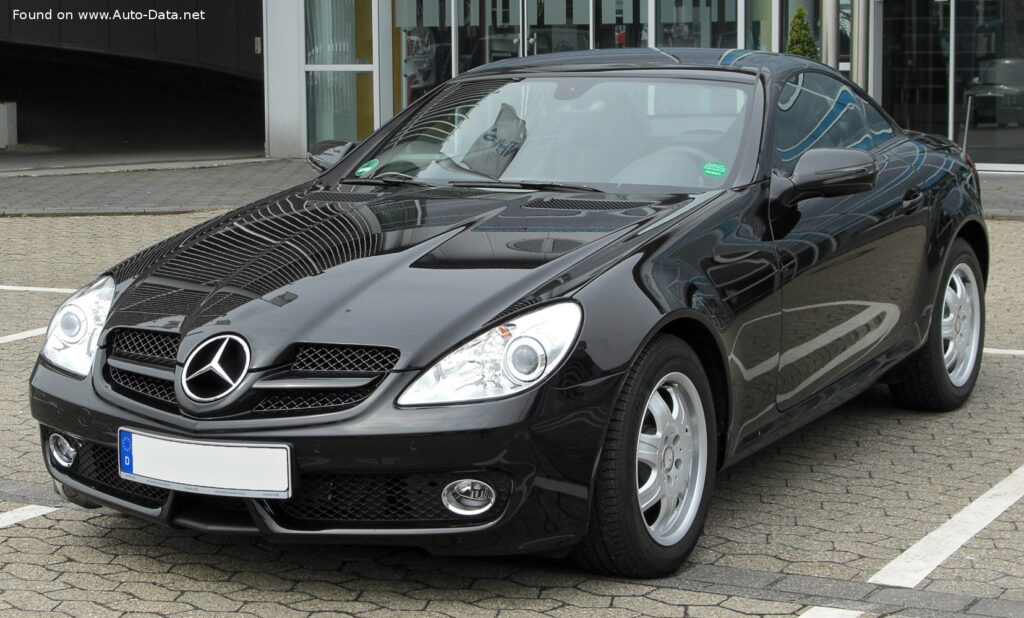
The Mercedes-Benz SLK, particularly the R171 generation, represented a significant chapter in the German automaker’s history of compact luxury roadsters. Introduced in 2004, the R171 built upon the success of its groundbreaking predecessor, the R170, which popularized the retractable hardtop “Vario-roof” concept. The model under scrutiny, the Mercedes-Benz SLK (R171, facelift 2008) SLK 200 Kompressor with an automatic transmission, embodies the refreshed iteration of this generation, produced from April 2008 until January 2011.
Positioned as a premium two-seat roadster, the SLK (R171) facelift aimed to solidify its standing in the competitive European luxury compact sports car segment. While the SLK nameplate was available in the United States, the SLK 200 Kompressor variant, with its supercharged 1.8-liter engine, was primarily tailored for the European and other international markets, offering a compelling blend of performance, efficiency, and Mercedes-Benz luxury. This specific model provided a more accessible entry point into the SLK lineup, without compromising on the driving pleasure or the distinctive styling that made the SLK a desirable choice.
Engine and Performance of the SLK 200 Kompressor
At the heart of the Mercedes-Benz SLK (R171, facelift 2008) SLK 200 Kompressor lies a sophisticated 1.8-liter (1796 cm³ or 109.6 cu. in.) M 271.954 inline-four engine. This powertrain stands out due to its “Kompressor” designation, indicating the use of a supercharger with an intercooler. This forced induction system was instrumental in extracting impressive power and torque from a relatively small displacement engine, a common strategy by European manufacturers to balance performance with fuel economy and emissions regulations.
The engine delivers a robust 184 horsepower at 5500 RPM, translating to a power-per-liter output of 102.4 HP/l. More critically for real-world driving, it produces 184.39 lb.-ft. of torque, available across a broad and usable rev range from 2800 to 5000 RPM. This wide torque band ensures responsive acceleration and flexible performance, making the SLK 200 Kompressor feel lively both in city traffic and on open roads. Power is sent to the rear wheels via a smooth-shifting 5-speed automatic transmission, emphasizing comfortable cruising while still allowing for spirited driving.
In terms of outright performance, the SLK 200 Kompressor is capable of accelerating from 0 to 60 mph in a respectable 7.5 seconds, with a top speed reaching 144.16 mph. These figures, while not in the realm of high-performance sports cars, were more than adequate for its segment, offering an engaging driving experience. Fuel efficiency, a key consideration for European buyers, was commendable for a luxury roadster of its era. The combined NEDC fuel consumption was rated between 28.7 and 29.4 US mpg, with CO2 emissions ranging from 190-196 g/km, meeting the Euro 5 emission standard.
Design, Features, and Engineering Excellence
The Mercedes-Benz SLK (R171) facelift retained the iconic roadster silhouette that defined the model, characterized by its long hood, short rear deck, and two-seat configuration. The facelift brought subtle yet impactful enhancements to its aesthetics and functionality. Exterior updates included redesigned front and rear bumpers, a revised grille, and darker-tinted taillights, giving the car a more contemporary and aggressive stance. The side mirrors also integrated arrow-shaped LED turn signals, a modern touch for the time.
The defining feature of the SLK, the “Vario-roof” retractable hardtop, remained a central highlight. This innovative system allowed the car to transform from an open-air roadster to a secure, weather-tight coupe in approximately 22 seconds, offering the best of both worlds. The interior also received refinements, including a new three-spoke multifunction steering wheel, updated instrument cluster graphics, and improved trim materials, enhancing the sense of luxury and driver engagement. Despite its compact footprint, the cabin offered surprising comfort for two occupants, with ergonomic controls and a premium ambiance.
Underneath its stylish skin, the SLK 200 Kompressor featured a well-engineered chassis. It utilized an independent McPherson strut front suspension and an independent multi-link rear suspension, both equipped with transverse stabilizers, to provide a balanced ride and precise handling. The hydraulic power steering, combined with a steering rack and pinion system, offered good feedback and responsiveness. Safety was paramount, with ventilated disc brakes up front and solid discs at the rear, complemented by an Anti-lock Braking System (ABS). Standard tire size was 205/55 R 16 on 7 J x 16 wheel rims, providing a good balance of grip and ride comfort.
Technical Specifications: Mercedes-Benz SLK 200 Kompressor (R171 Facelift)
| Category | Specification |
|---|---|
| General Information | |
| Brand | Mercedes-Benz |
| Model | SLK (R171, facelift 2008) |
| Type (Engine) | SLK 200 Kompressor (184 Hp) Automatic |
| Production Start | April, 2008 |
| Production End | January, 2011 |
| Powertrain Architecture | Internal Combustion Engine, Rear-Wheel Drive |
| Body Type | Roadster |
| Seats | 2 |
| Doors | 2 |
| Performance Specs | |
| Fuel Consumption (Urban NEDC) | 11.5-11.8 l/100 km (20.5 – 19.9 US mpg) |
| Fuel Consumption (Extra Urban NEDC) | 5.9-6.2 l/100 km (39.9 – 37.9 US mpg) |
| Fuel Consumption (Combined NEDC) | 8.0-8.2 l/100 km (29.4 – 28.7 US mpg) |
| CO2 Emissions (NEDC) | 190-196 g/km |
| Fuel Type | Petrol (Gasoline) |
| Acceleration 0-60 mph | 7.5 seconds |
| Acceleration 0-62 mph (0-100 km/h) | 7.9 seconds |
| Maximum Speed | 144.16 mph (232 km/h) |
| Emission Standard | Euro 5 |
| Weight-to-Power Ratio | 7.3 kg/Hp (137.3 Hp/tonne) |
| Weight-to-Torque Ratio | 5.4 kg/Nm (186.6 Nm/tonne) |
| Engine Specs | |
| Power | 184 Hp @ 5500 rpm |
| Power per liter | 102.4 Hp/l |
| Torque | 184.39 lb.-ft. (250 Nm) @ 2800-5000 rpm |
| Engine Layout | Front, Longitudinal |
| Engine Model/Code | M 271.954 |
| Engine Displacement | 1.8 liters (1796 cm³ / 109.6 cu. in.) |
| Number of Cylinders | 4 |
| Engine Configuration | Inline |
| Cylinder Bore | 3.23 in. (82 mm) |
| Piston Stroke | 3.35 in. (85 mm) |
| Compression Ratio | 8.5:1 |
| Valves per Cylinder | 4 |
| Fuel Injection System | Multi-port manifold injection |
| Engine Aspiration | Supercharger, Intercooler |
| Valvetrain | DOHC |
| Engine Oil Capacity | 5.81 US qt (5.5 l) |
| Coolant Capacity | 8.45 US qt (8 l) |
| Space, Volume and Weights | |
| Kerb Weight | 2954.19 lbs. (1340 kg) |
| Max. Weight | 3758.88 lbs. (1705 kg) |
| Max Load | 804.69 lbs. (365 kg) |
| Trunk (boot) Space – Minimum | 7.35 cu. ft. (208 l) |
| Fuel Tank Capacity | 18.49 US gal (70 l) |
| Max. Roof Load | 110.23 lbs. (50 kg) |
| Dimensions | |
| Length | 161.69 in. (4107 mm) |
| Width | 69.96 in. (1777 mm) |
| Width including mirrors | 78.94 in. (2005 mm) |
| Height | 51.02 in. (1296 mm) |
| Wheelbase | 95.67 in. (2430 mm) |
| Drag Coefficient (Cd) | 0.32 |
| Minimum Turning Circle | 34.48 ft. (10.51 m) |
| Drivetrain, Brakes and Suspension Specs | |
| Drive Wheel | Rear Wheel Drive |
| Gearbox Type | 5 gears, automatic transmission |
| Front Suspension | Independent type McPherson, Transverse stabilizer |
| Rear Suspension | Independent multi-link suspension, Transverse stabilizer |
| Front Brakes | Ventilated discs |
| Rear Brakes | Disc |
| Assisting Systems | ABS (Anti-lock braking system) |
| Steering Type | Steering rack and pinion |
| Power Steering | Hydraulic Steering |
| Tires Size | 205/55 R 16 |
| Wheel Rims Size | 7 J x 16 |
Legacy and Market Impact in the European Roadster Segment
The Mercedes-Benz SLK (R171, facelift 2008) SLK 200 Kompressor carved out a significant niche in the European luxury roadster market. It competed against formidable rivals such as the BMW Z4, Audi TT Roadster, and the Porsche Boxster. While the Z4 often emphasized a more direct, sporting feel and the Boxster offered superior outright performance, the SLK distinguished itself with its unique blend of Mercedes-Benz prestige, comfort, and the unparalleled versatility of its Vario-roof.
Its reputation was built on being a stylish, comfortable cruiser that could also deliver an engaging driving experience when called upon. The SLK 200 Kompressor, in particular, was lauded for its balance. It provided sufficient power and performance for most European driving conditions without incurring the higher running costs, insurance premiums, and fuel consumption associated with the larger V6 or V8 engine options available in the SLK lineup. This made it an attractive proposition for buyers seeking the Mercedes-Benz brand experience in a compact, open-top package, often serving as a stylish daily driver or a weekend pleasure car.
The R171 generation, including its facelift, played a crucial role in maintaining Mercedes-Benz’s presence in the premium compact roadster segment. Its elegant design, combined with advanced features like the retractable hardtop and the supercharged engine, cemented its status as a desirable vehicle. Even after its production ceased in 2011, making way for the R172 generation (which later became the SLC), the SLK (R171) continues to be a popular choice in the used car market, appreciated for its enduring style, robust engineering, and the timeless appeal of open-top motoring with the security of a coupe.