Mercedes-Benz SLK (R171, facelift 2008) SLK 300 V6 (231 Hp) 7G-TRONIC
The Mercedes-Benz SLK, a name derived from Sportlich, Leicht, Kurz (sporty, light, short), has long been synonymous with compact luxury roadster motoring. The R171 generation, produced from 2004 to 2011, marked a significant evolution for the model, introducing more aggressive styling and enhanced performance. The subject of this detailed analysis is the Mercedes-Benz SLK (R171, facelift 2008) SLK 300 V6 (231 Hp) 7G-TRONIC, a specific variant introduced in April 2009 as part of the R171’s mid-cycle refresh, and produced until January 2011. This iteration represented a refined blend of Mercedes-Benz luxury, open-top driving exhilaration, and competent V6 performance, cementing its position in the competitive premium compact roadster segment. While the SLK nameplate itself was globally recognized, the SLK 300 V6 variant was a key offering in markets like North America and Europe, providing a compelling balance between the entry-level four-cylinder models and the more potent AMG versions.
Engine and Performance of the SLK (R171, facelift 2008)
At the heart of the Mercedes-Benz SLK 300 V6 lies the M 272.942 engine, a naturally aspirated 3.0-liter (2996 cm³) V6 unit. This powertrain architecture, featuring a front, longitudinal layout, drives the rear wheels, adhering to the classic sports car configuration. With a compression ratio of 11.3:1 and a DOHC (Double Overhead Camshaft) valvetrain with four valves per cylinder, the engine is designed for both smooth power delivery and efficiency. Fuel is supplied via a multi-port manifold injection system, optimized for responsive throttle input.
The M 272 V6 delivers a robust 231 horsepower at 6000 rpm, translating to a power-per-liter output of 77.1 HP/l. Torque production is equally impressive, peaking at 221.27 lb.-ft. (300 Nm) across a broad range from 2500 to 5000 rpm. This wide torque band ensures strong acceleration from low speeds and flexible power delivery during spirited driving.
Power is channeled to the rear wheels through Mercedes-Benz’s sophisticated 7G-TRONIC automatic transmission, a 7-speed unit renowned for its smooth shifts and ability to optimize engine performance and fuel economy. This combination allows the SLK 300 V6 to accelerate from 0 to 60 mph in a brisk 5.9 seconds (0-100 km/h in 6.2 seconds) and reach an electronically limited top speed of 155.34 mph (250 km/h).
Despite its performance capabilities, Mercedes-Benz also focused on efficiency for its time. The combined fuel consumption (NEDC) is rated at approximately 26.1-26.4 US mpg (8.9-9.0 l/100 km), with extra-urban figures reaching 34.1-34.6 US mpg (6.8-6.9 l/100 km). CO2 emissions stand at 207-209 g/km, meeting the Euro 5 emission standard. The car’s weight-to-power ratio is 6.1 kg/Hp (165 Hp/tonne), and its weight-to-torque ratio is 4.7 kg/Nm (214.3 Nm/tonne), indicating a well-balanced power-to-weight dynamic for a car of its class.
Design and Features
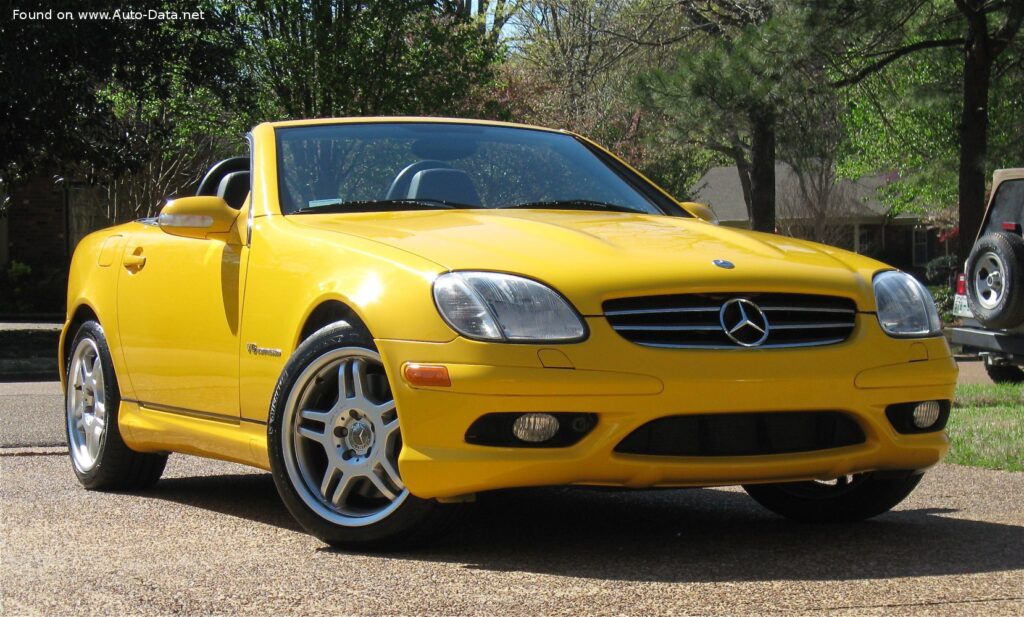
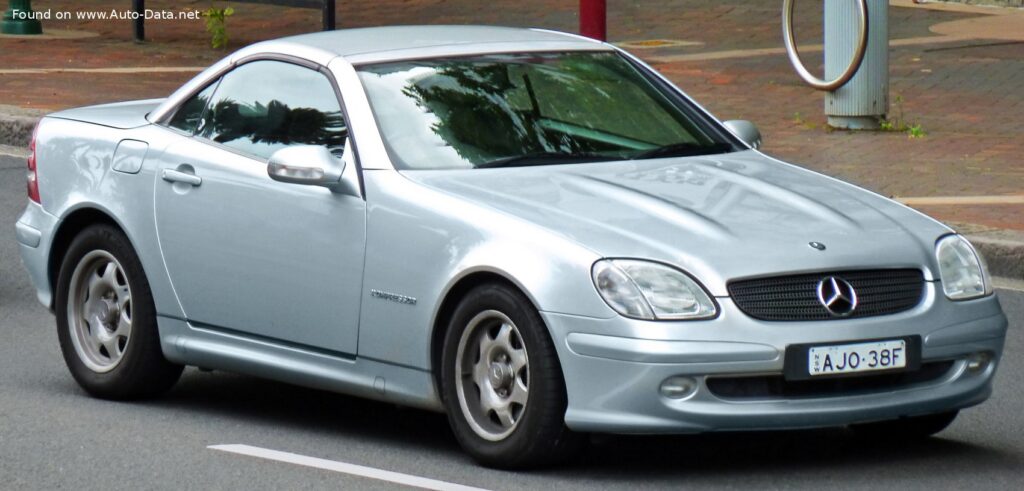
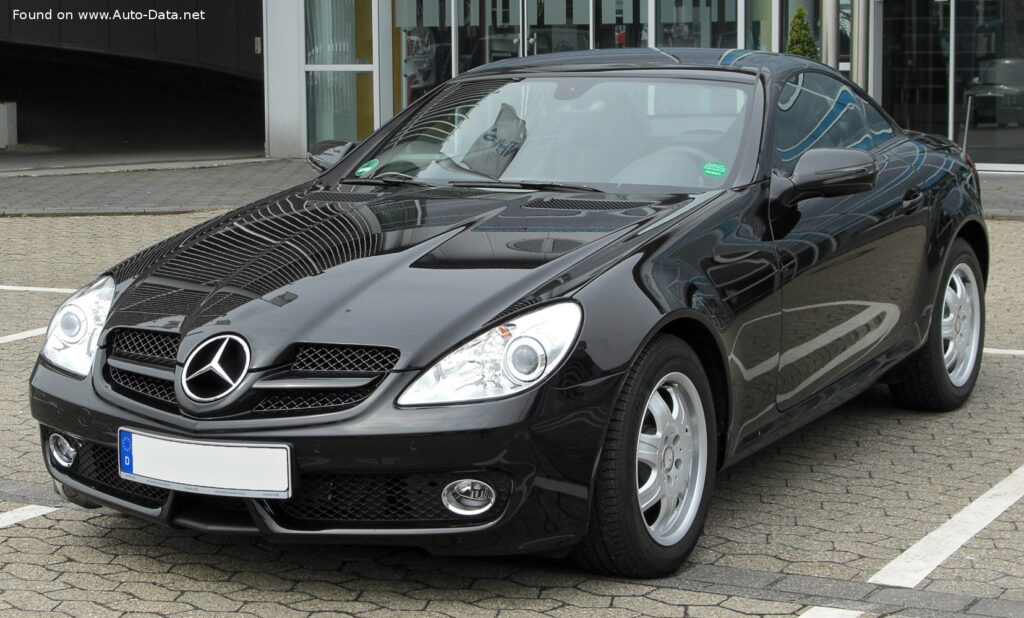
The Mercedes-Benz SLK (R171, facelift 2008) SLK 300 retains the iconic roadster silhouette of its generation, characterized by its long hood, short rear deck, and compact dimensions. As a two-door, two-seat roadster, its primary appeal lies in its open-air driving experience, facilitated by Mercedes-Benz’s innovative Vario-roof – a retractable hardtop that seamlessly transforms the car from a secure coupe to an open-top roadster in mere seconds. This feature provided the best of both worlds: the comfort and security of a fixed roof, and the exhilaration of a convertible.
The 2008 facelift brought subtle yet effective aesthetic enhancements to the R171. These included revised front and rear bumpers, a more pronounced grille, new taillight designs, and updated wheel options, all contributing to a sharper, more contemporary look. The car’s dimensions measure 161.69 inches (4107 mm) in length, 70.39 inches (1788 mm) in width (78.94 inches or 2005 mm including mirrors), and 51.02 inches (1296 mm) in height, with a wheelbase of 95.67 inches (2430 mm). Its drag coefficient (Cd) of 0.32 was competitive for a roadster, aiding both aerodynamics and fuel efficiency.
Inside, the SLK 300 offered a cabin focused on driver engagement and luxury. While specific infotainment details are not provided, typical Mercedes-Benz amenities for the era would include premium materials, ergonomic controls, and a focus on comfort for two occupants. Safety features were comprehensive, including ABS (Anti-lock Braking System) as standard, along with a suite of airbags and robust structural integrity inherent to Mercedes-Benz engineering.
The vehicle’s handling characteristics were underpinned by an independent McPherson-type front suspension with a transverse stabilizer and an independent multi-link rear suspension, also with a transverse stabilizer. This setup provided a balance of sporty handling and comfortable ride quality. Braking power came from ventilated discs at the front and disc brakes at the rear, ensuring confident stopping performance. Steering was handled by a hydraulic rack and pinion system, offering direct and communicative feedback. The car rode on 205/55 R16 tires on 7 J x 16 rims at the front, and wider 225/50 R16 tires on 8 J x 16 rims at the rear, contributing to its balanced stance and grip.
Technical Specifications
| Feature | Specification |
|---|---|
| **General Information** | |
| Brand | Mercedes-Benz |
| Model | SLK |
| Generation | SLK (R171, facelift 2008) |
| Type (Engine) | SLK 300 V6 (231 Hp) 7G-TRONIC |
| Start of Production | April, 2009 |
| End of Production | January, 2011 |
| Powertrain Architecture | Internal Combustion Engine |
| Body Type | Roadster |
| Seats | 2 |
| Doors | 2 |
| **Performance Specs** | |
| Fuel Consumption (Urban, NEDC) | 12.3-12.4 l/100 km (19.1 – 19 US mpg) |
| Fuel Consumption (Extra Urban, NEDC) | 6.8-6.9 l/100 km (34.6 – 34.1 US mpg) |
| Fuel Consumption (Combined, NEDC) | 8.9-9.0 l/100 km (26.4 – 26.1 US mpg) |
| CO2 Emissions (NEDC) | 207-209 g/km |
| Fuel Type | Petrol (Gasoline) |
| Acceleration 0-60 mph | 5.9 sec |
| Acceleration 0-100 km/h | 6.2 sec |
| Maximum Speed | 250 km/h (155.34 mph, Electronically limited) |
| Emission Standard | Euro 5 |
| Weight-to-Power Ratio | 6.1 kg/Hp (165 Hp/tonne) |
| Weight-to-Torque Ratio | 4.7 kg/Nm (214.3 Nm/tonne) |
| **Engine Specs** | |
| Power | 231 Hp @ 6000 rpm |
| Power per Liter | 77.1 Hp/l |
| Torque | 300 Nm (221.27 lb.-ft.) @ 2500-5000 rpm |
| Engine Layout | Front, Longitudinal |
| Engine Model/Code | M 272.942 |
| Engine Displacement | 2996 cm³ (182.83 cu. in.) |
| Number of Cylinders | 6 |
| Engine Configuration | V-engine |
| Cylinder Bore | 88 mm (3.46 in.) |
| Piston Stroke | 82.1 mm (3.23 in.) |
| Compression Ratio | 11.3:1 |
| Number of Valves per Cylinder | 4 |
| Fuel Injection System | Multi-port manifold injection |
| Engine Aspiration | Naturally aspirated engine |
| Valvetrain | DOHC |
| Engine Oil Capacity | 8 l (8.45 US qt) |
| Engine Oil Specification | Specific data not provided |
| Coolant Capacity | 7.1 l (7.5 US qt) |
| **Dimensions, Volume, and Weights** | |
| Kerb Weight | 1400 kg (3086.47 lbs) |
| Max. Weight | 1770 kg (3902.18 lbs) |
| Max Load | 370 kg (815.71 lbs) |
| Trunk (Boot) Space – Minimum | 208 l (7.35 cu. ft.) |
| Fuel Tank Capacity | 70 l (18.49 US gal) |
| Max. Roof Load | 50 kg (110.23 lbs) |
| Length | 4107 mm (161.69 in.) |
| Width | 1788 mm (70.39 in.) |
| Width (including mirrors) | 2005 mm (78.94 in.) |
| Height | 1296 mm (51.02 in.) |
| Wheelbase | 2430 mm (95.67 in.) |
| Drag Coefficient (Cd) | 0.32 |
| Minimum Turning Circle | 10.51 m (34.48 ft.) |
| **Drivetrain, Brakes, and Suspension** | |
| Drivetrain Architecture | Internal Combustion Engine drives rear wheels |
| Drive Wheel | Rear wheel drive |
| Gearbox Type | 7-speed automatic transmission (7G-TRONIC) |
| Front Suspension | Independent type McPherson, Transverse stabilizer |
| Rear Suspension | Independent multi-link suspension, Transverse stabilizer |
| Front Brakes | Ventilated discs |
| Rear Brakes | Disc |
| Assisting Systems | ABS (Anti-lock braking system) |
| Steering Type | Steering rack and pinion |
| Power Steering | Hydraulic Steering |
| Front Wheel Tires | 205/55 R 16 |
| Rear Wheel Tires | 225/50 R 16 |
| Front Wheel Rims | 7 J x 16 |
| Rear Wheel Rims | 8 J x 16 |
Legacy and Market Impact
The Mercedes-Benz SLK (R171, facelift 2008) SLK 300 V6 (231 Hp) 7G-TRONIC continued the R171 generation’s success, building upon its predecessor’s reputation for offering a premium, open-top driving experience. In the competitive luxury compact roadster segment, it faced formidable rivals such as the BMW Z4, Porsche Boxster, and Audi TT Roadster. The SLK 300 distinguished itself by striking a compelling balance between outright sportiness and the traditional Mercedes-Benz hallmarks of comfort, refinement, and prestige.
The facelifted R171, with its subtle aesthetic updates and powertrain refinements, helped maintain the SLK’s appeal during its later production years. The introduction of the SLK 300 nameplate, replacing the SLK 280, reflected a more direct alignment with Mercedes-Benz’s evolving nomenclature, and its V6 engine provided a sweet spot in the lineup – offering significantly more power than the four-cylinder models without the higher cost and specialized performance focus of the AMG variants.
Its signature retractable hardtop, a feature that many competitors did not offer at the time, remained a significant draw, providing enhanced security and year-round usability compared to traditional soft-top convertibles. This unique selling proposition, combined with the proven reliability and luxury associated with the Mercedes-Benz brand, ensured a strong market presence. The SLK 300 was particularly popular among buyers seeking a stylish, sophisticated, and engaging personal luxury car for weekend drives or daily commutes, without compromising on premium features or comfort.
Historically, the R171 generation, and especially its refined facelift models like the SLK 300, contributed significantly to the SLK’s enduring legacy as a desirable and accessible entry point into Mercedes-Benz’s performance-oriented vehicles. It paved the way for its successor, the R172 generation (later rebranded as the SLC), by solidifying the formula of a compact, luxurious, and dynamic roadster that could appeal to a broad range of discerning enthusiasts. Today, these models are appreciated for their timeless design, robust engineering, and the quintessential Mercedes-Benz driving experience they offer.