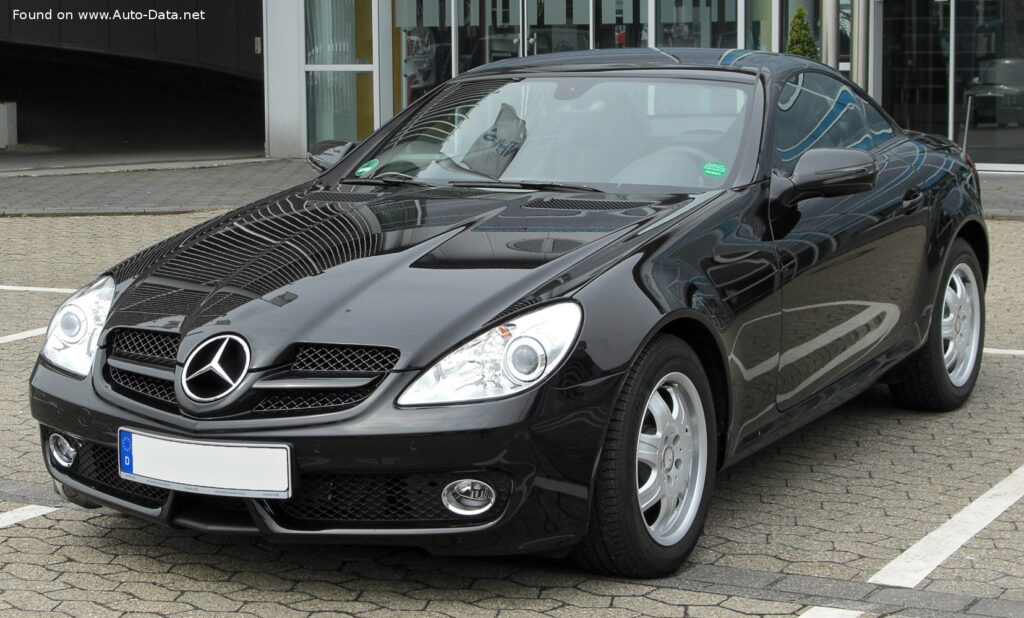
As an international automotive expert, I present a detailed analysis of the Mercedes-Benz SLK (R171, facelift 2008) SLK 350 V6.
The Mercedes-Benz SLK (R171, Facelift 2008): A Refined Roadster
The Mercedes-Benz SLK, particularly the R171 generation, represents a significant chapter in the German automaker’s history of luxury roadsters. Launched in 2004, the R171 series built upon the success of its predecessor, the R170, by offering a more aggressive design, enhanced technology, and improved driving dynamics. The focus keyword for this discussion, the Mercedes-Benz SLK (R171, facelift 2008) SLK 350 V6 (305 Hp), signifies the mid-cycle refresh that arrived in April 2008. This facelifted model brought a host of updates, sharpening its aesthetics, refining its interior, and most notably, boosting the performance of its already potent V6 engine. Positioned in the premium compact roadster segment, the SLK 350 V6 offered a compelling blend of open-air motoring, sophisticated luxury, and genuine sports car performance, targeting discerning buyers in key markets like North America and Europe.
The R171 generation was particularly known for its distinctive “Formula 1” inspired nose, a design cue that resonated with the brand’s motorsport heritage. The 2008 facelift further honed this design, alongside introducing new engine options and technological advancements. This specific variant, the SLK 350 V6, was a popular choice, striking an excellent balance between the entry-level four-cylinder models and the high-performance AMG variants. It offered a thrilling driving experience without the more extreme characteristics or price tag of the SLK 55 AMG, making it a well-rounded and desirable two-seat roadster.
Engine and Performance: The Heart of the SLK 350 V6
At the core of the Mercedes-Benz SLK (R171, facelift 2008) SLK 350 V6 lies a robust and melodious naturally aspirated V6 engine, designated M 272.969. This 3.5-liter (3498 cm3 or 213.46 cu. in.) powerplant was significantly upgraded for the facelift, pushing output to an impressive 305 horsepower at 6500 rpm. This represented a substantial increase over the pre-facelift 3.5-liter V6, enhancing the car’s sporting credentials. Torque figures also saw a healthy bump, reaching 265.52 lb.-ft. (360 Nm) at a relatively accessible 4900 rpm, ensuring strong pulling power across a broad rev range.
The engine’s architecture features a V-engine configuration with six cylinders, each boasting four valves, operated by a Double Overhead Camshaft (DOHC) valvetrain. Fuel delivery is handled by a multi-port manifold injection system, a tried-and-true method for reliable and efficient combustion. With a compression ratio of 11.7:1, the engine is designed for optimal power generation from premium gasoline. Power is sent to the rear wheels via a standard 6-speed manual transmission, offering an engaging and direct driving experience for enthusiasts. This powertrain architecture, with its front-longitudinal engine layout and rear-wheel drive, is classic sports car territory, providing balanced handling and excellent traction.
Performance metrics for the SLK 350 V6 facelift are genuinely impressive for a car of its class and era. It sprints from 0 to 60 mph in a swift 5.1 seconds (0-100 km/h in 5.4 seconds) and reaches an electronically limited top speed of 155.34 mph (250 km/h). The power-to-weight ratio is a commendable 213.3 horsepower per tonne (4.7 kg/Hp), highlighting the car’s lightweight construction and potent engine. Despite its performance focus, Mercedes-Benz also paid attention to efficiency for the time, with a combined fuel economy (NEDC) of 24.2 US mpg (9.7 l/100 km) and CO2 emissions rated at 227 g/km, meeting Euro 5 emission standards.
Design and Features: Form Meets Function in the R171 Facelift
The Mercedes-Benz SLK (R171, facelift 2008) retains its distinctive roadster body type, a sleek two-door, two-seat configuration that is synonymous with open-air driving pleasure. The R171’s design was a significant departure from its more rounded predecessor, adopting sharper lines and a more aggressive stance. The facelift in 2008 subtly enhanced these characteristics, introducing redesigned front and rear bumpers, a modified grille, and darker tinted taillights, giving the car a more contemporary and sophisticated appearance. The “Formula 1” inspired nose, a central design element, was subtly refined to integrate more seamlessly with the updated fascia.
A hallmark feature of the SLK is its innovative vario-roof, a retractable hardtop that allows the car to transform from a sleek coupe to an open-top roadster in a matter of seconds. This feature provided the best of both worlds: the security and insulation of a fixed roof, combined with the exhilaration of open-air motoring. Inside, the facelift brought higher-quality materials, new steering wheel designs, and updated infotainment options. The cockpit remained driver-focused, with intuitive controls and comfortable, supportive seats that were ideal for both spirited driving and long-distance cruises. Safety was paramount, as expected from Mercedes-Benz, with features like ABS (Anti-lock Braking System) and a robust chassis providing a secure driving environment. The hydraulic power steering system, combined with independent McPherson front suspension and multi-link rear suspension, ensured precise handling and a comfortable ride.
The SLK 350 V6 rode on a staggered wheel and tire setup, with 225/45 R 17 tires on 7.5 J x 17 rims at the front and wider 245/40 R 17 tires on 8.5 J x 17 rims at the rear. This configuration enhanced both grip and aesthetic appeal. Ventilated disc brakes on both the front and rear provided strong and consistent stopping power, essential for a performance-oriented roadster. The car’s compact dimensions, with a length of 161.69 inches (4107 mm), a width of 70.39 inches (1788 mm), and a height of 51.1 inches (1298 mm), contributed to its nimble handling and ease of maneuverability, further aided by a tight turning circle of 34.48 feet (10.51 meters).
Technical Specifications
| Category | Specification |
|---|---|
| Brand | Mercedes-Benz |
| Model | SLK |
| Generation | SLK (R171, facelift 2008) |
| Type (Engine) | SLK 350 V6 (305 Hp) |
| Start of Production | April, 2008 |
| End of Production | January, 2011 |
| Powertrain Architecture | Internal Combustion Engine |
| Body Type | Roadster |
| Seats | 2 |
| Doors | 2 |
| Fuel Consumption (Urban NEDC) | 14.5 l/100 km (16.2 US mpg) |
| Fuel Consumption (Extra Urban NEDC) | 7 l/100 km (33.6 US mpg) |
| Fuel Consumption (Combined NEDC) | 9.7 l/100 km (24.2 US mpg) |
| CO2 Emissions (NEDC) | 227 g/km |
| Fuel Type | Petrol (Gasoline) |
| Acceleration 0-60 mph | 5.1 sec |
| Maximum Speed | 155.34 mph (250 km/h, Electronically limited) |
| Emission Standard | Euro 5 |
| Weight-to-Power Ratio | 4.7 kg/Hp (213.3 Hp/tonne) |
| Weight-to-Torque Ratio | 4 kg/Nm (251.7 Nm/tonne) |
| Power | 305 Hp @ 6500 rpm |
| Power per Liter | 87.2 Hp/l |
| Torque | 265.52 lb.-ft. (360 Nm) @ 4900 rpm |
| Engine Layout | Front, Longitudinal |
| Engine Model/Code | M 272.969 |
| Engine Displacement | 3498 cm3 (213.46 cu. in.) |
| Number of Cylinders | 6 |
| Engine Configuration | V-engine |
| Cylinder Bore | 92.9 mm (3.66 in.) |
| Piston Stroke | 86 mm (3.39 in.) |
| Compression Ratio | 11.7:1 |
| Number of Valves per Cylinder | 4 |
| Fuel Injection System | Multi-port manifold injection |
| Engine Aspiration | Naturally aspirated engine |
| Valvetrain | DOHC |
| Engine Oil Capacity | 8 l (8.45 US qt) |
| Coolant Capacity | 10.2 l (10.78 US qt) |
| Curb Weight | 3152.61 lbs. (1430 kg) |
| Max. Weight | 3968.32 lbs. (1800 kg) |
| Max Load | 815.71 lbs. (370 kg) |
| Trunk (Boot) Space – Minimum | 7.35 cu. ft. (208 l) |
| Fuel Tank Capacity | 18.49 US gal (70 l) |
| Max. Roof Load | 110.23 lbs. (50 kg) |
| Length | 161.69 in. (4107 mm) |
| Width | 70.39 in. (1788 mm) |
| Width Including Mirrors | 78.94 in. (2005 mm) |
| Height | 51.1 in. (1298 mm) |
| Wheelbase | 95.67 in. (2430 mm) |
| Front Track | 60.08 in. (1526 mm) |
| Rear (Back) Track | 60.98 in. (1549 mm) |
| Drag Coefficient (Cd) | 0.32 |
| Minimum Turning Circle | 34.48 ft. (10.51 m) |
| Drivetrain Architecture | Internal combustion engine drives rear wheels |
| Drive Wheel | Rear wheel drive |
| Number of Gears and Type of Gearbox | 6 gears, manual transmission |
| Front Suspension | Independent type McPherson, Transverse stabilizer |
| Rear Suspension | Independent multi-link suspension, Transverse stabilizer |
| Front Brakes | Ventilated discs |
| Rear Brakes | Ventilated discs |
| Assisting Systems | ABS (Anti-lock braking system) |
| Steering Type | Steering rack and pinion |
| Power Steering | Hydraulic Steering |
| Front Wheel Tires | 225/45 R 17 |
| Rear Wheel Tires | 245/40 R 17 |
| Front Wheel Rims | 7.5 J x 17 |
| Rear Wheel Rims | 8.5 J x 17 |
Legacy and Market Impact of the Mercedes-Benz SLK (R171, Facelift 2008)
The Mercedes-Benz SLK (R171, facelift 2008) SLK 350 V6 carved out a significant niche in the competitive luxury roadster market during its production run from 2008 to 2011. Its blend of striking aesthetics, a sophisticated retractable hardtop, and potent V6 performance made it a compelling alternative to rivals. In the United States and Europe, its primary markets, it competed directly with established players like the BMW Z4 and the Porsche Boxster. While the Z4 often emphasized a more direct, sporting feel and the Boxster focused on pure driving dynamics, the SLK 350 V6 positioned itself as a more luxurious and comfortable grand tourer with a sporting edge.
The R171 generation, and particularly the facelifted SLK 350 V6, garnered a strong reputation for its build quality, refined ride, and the engineering prowess synonymous with Mercedes-Benz. The smooth and powerful M 272 V6 engine was a particular highlight, praised for its willingness to rev and its satisfying exhaust note. The availability of a 6-speed manual transmission, alongside the more common automatic option (not detailed in the provided data but historically offered), appealed to driving purists seeking a more engaging connection with the car. This combination of performance, luxury, and the unique vario-roof technology contributed to its success and enduring appeal.
Historically, the SLK (R171) is remembered as a well-executed generation that matured the SLK nameplate significantly. The 2008 facelift ensured it remained fresh and competitive against newer entrants and updated rivals. Its influence can be seen in subsequent Mercedes-Benz roadster designs, particularly in how it balanced sporty ambition with everyday usability and luxury appointments. Today, the SLK 350 V6 facelift models are considered desirable modern classics, offering an accessible entry into Mercedes-Benz roadster ownership with robust performance and timeless styling. Its legacy is one of a stylish, capable, and technologically advanced two-seater that successfully upheld the Mercedes-Benz tradition of combining luxury with driving pleasure.