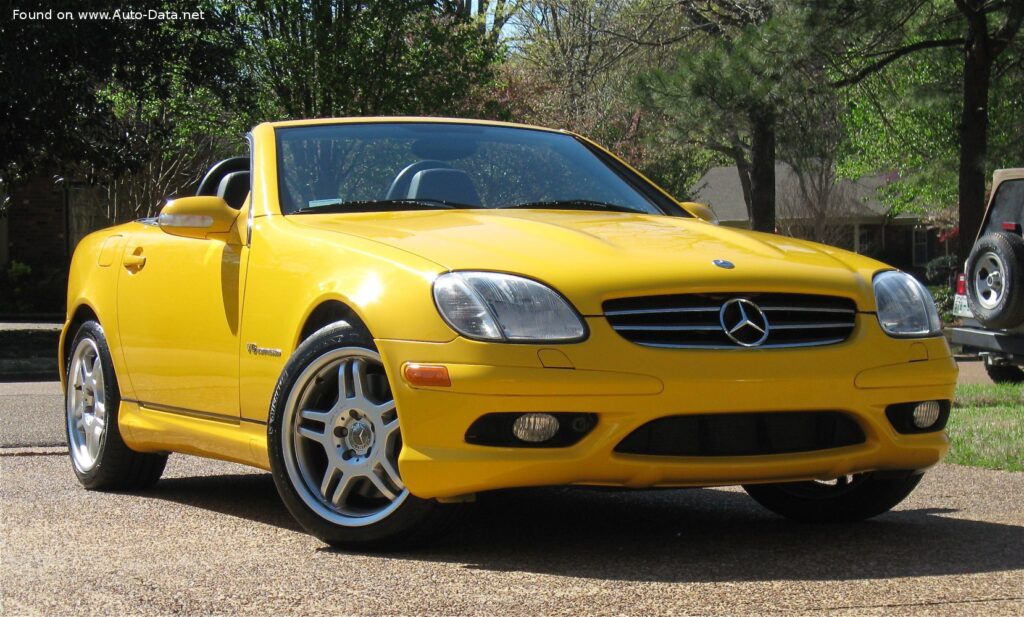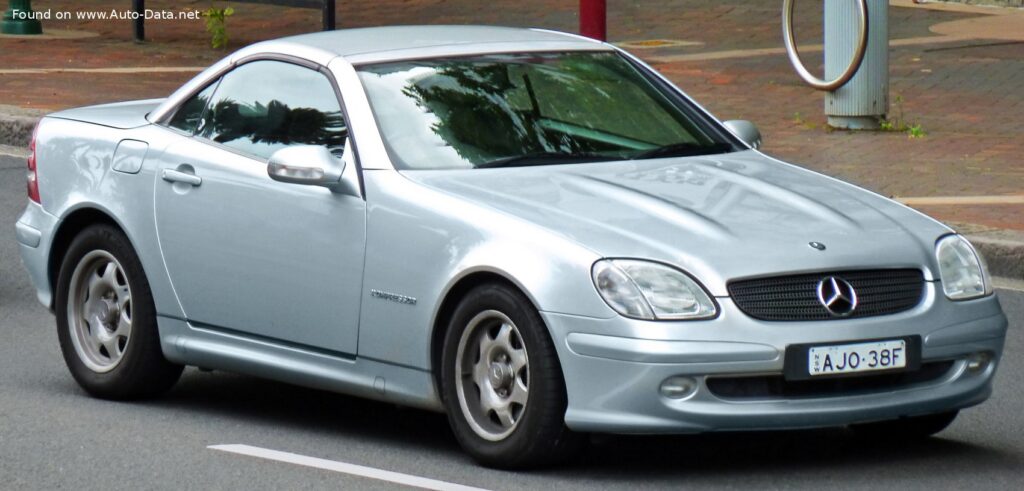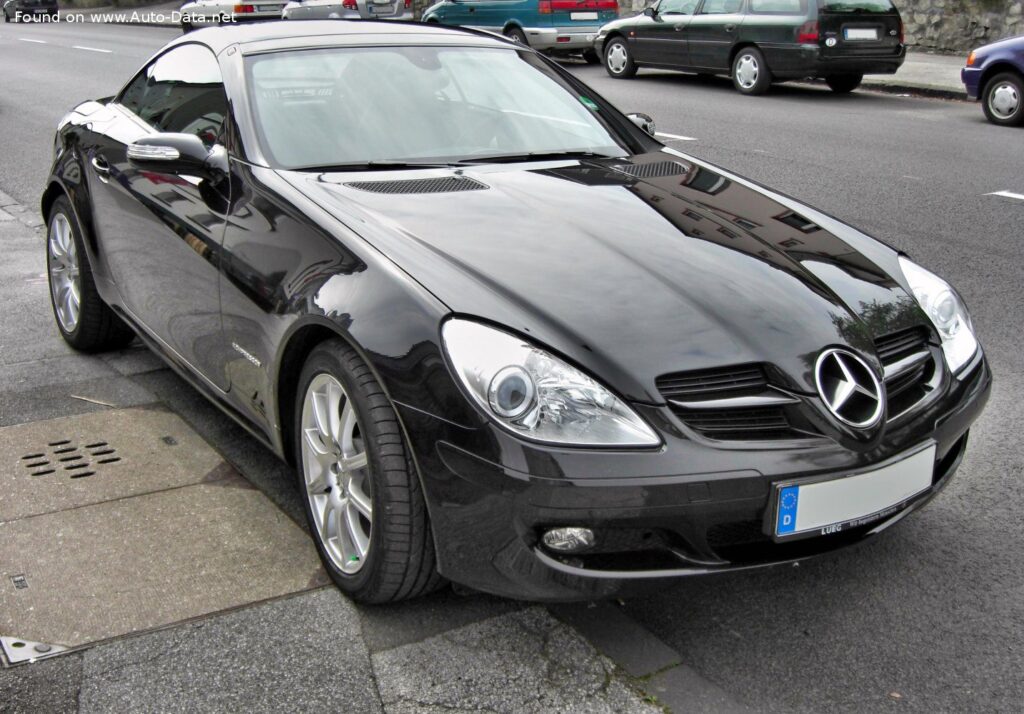
The early 2000s marked a vibrant era for compact luxury roadsters in North America, and amidst this exciting landscape, the Mercedes-Benz SLK (R171) emerged as a compelling choice. Building upon the success of its groundbreaking predecessor, the R171 generation, particularly models like the SLK 280 V6, cemented its place as a desirable blend of style, performance, and everyday usability. It wasn’t just another convertible; it was a statement of accessible luxury and engineering prowess, offering the open-air thrill of a roadster with the security and refinement of a coupe, thanks to its signature retractable hardtop.
For drivers across the United States and Canada, the SLK (R171) represented an aspirational yet attainable slice of the Mercedes-Benz dream. It offered a sophisticated alternative to rivals, delivering a distinct driving experience that combined spirited performance with the unmistakable prestige of the three-pointed star. The SLK 280 V6, in particular, carved out a niche as a well-balanced option within the lineup, providing ample power and refinement without the higher price tag of its more potent siblings, making it a significant player in the North American premium compact segment.
The Mercedes-Benz SLK (R171) SLK 280 V6: A Mid-Range Roadster Powerhouse
Introduced in April 2005, the Mercedes-Benz SLK (R171) SLK 280 V6 served as a crucial part of the second-generation SLK roadster family. Positioned to offer a compelling balance of performance and efficiency, it quickly became a popular choice for those seeking a stylish two-seater convertible with the inherent quality and luxury expected from Mercedes-Benz. Production of this specific variant ran until December 2007, making it a relatively short-lived but impactful model within the R171’s lifecycle.
Powertrain and Performance
At the heart of the SLK 280 V6 lay Mercedes-Benz’s M 272.942 engine, a naturally aspirated V-configuration six-cylinder powerplant. With a displacement of 2996 cubic centimeters (182.83 cu. in.), this sophisticated engine was designed for smooth power delivery and a refined auditory experience. Featuring a DOHC (Double Overhead Camshaft) valvetrain with four valves per cylinder and multi-port manifold injection, it was engineered for optimal combustion and efficiency.
The engine produced a robust 231 horsepower at 6000 rpm, translating to a power-to-liter ratio of 77.1 Hp/l. More importantly for real-world driving, it delivered a healthy 300 Nm (221.27 lb.-ft.) of torque across a broad and accessible rev range, from 2400 to 5000 rpm. This wide torque band ensured responsive acceleration and effortless cruising. Paired primarily with a precise 6-speed manual transmission, the SLK 280 V6 could sprint from 0 to 60 mph in a brisk 6 seconds flat, with 0-100 km/h achieved in 6.3 seconds. Its top speed was electronically limited to 250 km/h (155.34 mph), a common practice for German luxury vehicles.
Fuel economy for the SLK 280 V6 was respectable for its class and era, with combined figures ranging from 9.7-9.9 l/100 km, equating to approximately 23.8-24.2 US mpg. Urban consumption was rated at 13.8-14.0 l/100 km (16.8-17 US mpg), while extra-urban driving could yield 7.2-7.4 l/100 km (31.8-32.7 US mpg). The vehicle met Euro 4 emission standards, with CO2 emissions between 231-236 g/km.
The SLK 280 V6 featured a classic rear-wheel-drive architecture, with the engine mounted longitudinally at the front. This setup contributed to a balanced weight distribution and engaging driving dynamics. The suspension system comprised an independent McPherson type with a transverse stabilizer at the front and an independent multi-link suspension with a transverse stabilizer at the rear, providing a blend of ride comfort and sporty handling. Stopping power was assured by ventilated disc brakes at the front and disc brakes at the rear, complemented by an Anti-lock Braking System (ABS) for enhanced safety.
Design and Features
The R171 generation of the SLK marked a significant departure from its predecessor’s styling, adopting a sharper, more aggressive aesthetic that drew inspiration from the iconic Mercedes-Benz SLR McLaren supercar. This design language was evident in the long hood, short rear deck, and the distinctive “Formula 1” nose cone, which gave the SLK 280 V6 a far more athletic and contemporary appearance. Its compact dimensions—measuring 160.98 inches in length, 70.39 inches in width, and 51.1 inches in height—contributed to its agile feel and easy maneuverability.
A defining innovation for the SLK, carried over and refined in the R171, was the electro-hydraulically operated Vario-roof. This retractable hardtop transformed the car from a sleek coupe into an open-air roadster in just 22 seconds, offering the best of both worlds: the security and quietness of a fixed roof, and the exhilaration of top-down motoring. This feature was a major selling point in North America, allowing drivers to enjoy their convertible year-round, regardless of weather conditions.
Inside, the SLK 280 V6 offered a premium, driver-focused cockpit. While specific infotainment details are not exhaustive in the technical data, Mercedes-Benz of this era typically included well-appointed interiors with high-quality materials, comfortable leather seating, and a range of optional features such as heated seats, premium audio systems, and integrated navigation. Safety was paramount, with standard features like the Anti-lock Braking System (ABS) and a comprehensive airbag system providing peace of mind. The hydraulic power steering system, a rack and pinion setup, offered direct feedback, contributing to the car’s engaging driving experience.
Market Legacy
Upon its introduction, the Mercedes-Benz SLK (R171) SLK 280 V6 entered a competitive North American market for premium two-seat roadsters. Its primary rivals included the BMW Z4, Porsche Boxster, and the Audi TT Roadster. While the SLK 280 V6 didn’t quite match the raw, unfiltered driving dynamics of a Boxster or the precise steering of a Z4 for some enthusiasts, it offered a compelling blend of Mercedes-Benz luxury, a more comfortable ride, and the unique versatility of its Vario-roof. Its sophisticated styling, often compared to the much more expensive SLR McLaren, also gave it a significant visual advantage.
Launch pricing (MSRP) for the SLK 280 in North America would have typically started in the low to mid-$40,000 range (USD), positioning it as an attractive entry point into the Mercedes-Benz convertible lineup, below the more powerful SLK 350 and the later SLK 55 AMG. This pricing made it competitive with its European counterparts while offering a distinct character.
North American drivers generally received the R171 generation, including the SLK 280 V6, very positively. Its improved performance, more engaging handling compared to the first-generation R170, and striking design resonated with buyers seeking a stylish and luxurious daily driver that could also provide spirited weekend enjoyment. The retractable hardtop remained a critical differentiator, appealing to those who wanted the best of both coupe and convertible worlds without compromise. While some purists might have yearned for a more visceral driving experience, the SLK 280 V6 successfully carved out a niche for itself as a refined, elegant, and thoroughly enjoyable premium roadster, solidifying the SLK’s enduring appeal in the North American automotive landscape.
Technical Specifications
| Category | Specification | Value |
|---|---|---|
| General Information | ||
| Brand | Mercedes-Benz | |
| Model | SLK | |
| Generation | SLK (R171) | |
| Type (Engine) | SLK 280 V6 (231 Hp) | |
| Start of Production | April, 2005 | |
| End of Production | December, 2007 | |
| Powertrain Architecture | Internal Combustion Engine | |
| Body Type | Roadster | |
| Seats | 2 | |
| Doors | 2 | |
| Performance Specifications | ||
| Fuel Consumption – Urban (NEDC) | 13.8-14.0 l/100 km (16.8-17 US mpg) | |
| Fuel Consumption – Extra Urban (NEDC) | 7.2-7.4 l/100 km (31.8-32.7 US mpg) | |
| Fuel Consumption – Combined (NEDC) | 9.7-9.9 l/100 km (23.8-24.2 US mpg) | |
| CO2 Emissions (NEDC) | 231-236 g/km | |
| Fuel Type | Petrol (Gasoline) | |
| Acceleration 0 – 60 mph | 6 seconds | |
| Acceleration 0 – 100 km/h | 6.3 seconds | |
| Maximum Speed | 250 km/h (155.34 mph, Electronically limited) | |
| Emission Standard | Euro 4 | |
| Weight-to-Power Ratio | 5.9 kg/Hp (169.2 Hp/tonne) | |
| Weight-to-Torque Ratio | 4.6 kg/Nm (219.8 Nm/tonne) | |
| Engine Specifications | ||
| Power | 231 Hp @ 6000 rpm | |
| Power per Liter | 77.1 Hp/l | |
| Torque | 300 Nm (221.27 lb.-ft.) @ 2400-5000 rpm | |
| Engine Layout | Front, Longitudinal | |
| Engine Model/Code | M 272.942 | |
| Engine Displacement | 2996 cm³ (182.83 cu. in.) | |
| Number of Cylinders | 6 | |
| Engine Configuration | V-engine | |
| Cylinder Bore | 88 mm (3.46 in.) | |
| Piston Stroke | 82.1 mm (3.23 in.) | |
| Compression Ratio | 11.1:1 | |
| Number of Valves per Cylinder | 4 | |
| Fuel Injection System | Multi-port manifold injection | |
| Engine Aspiration | ||