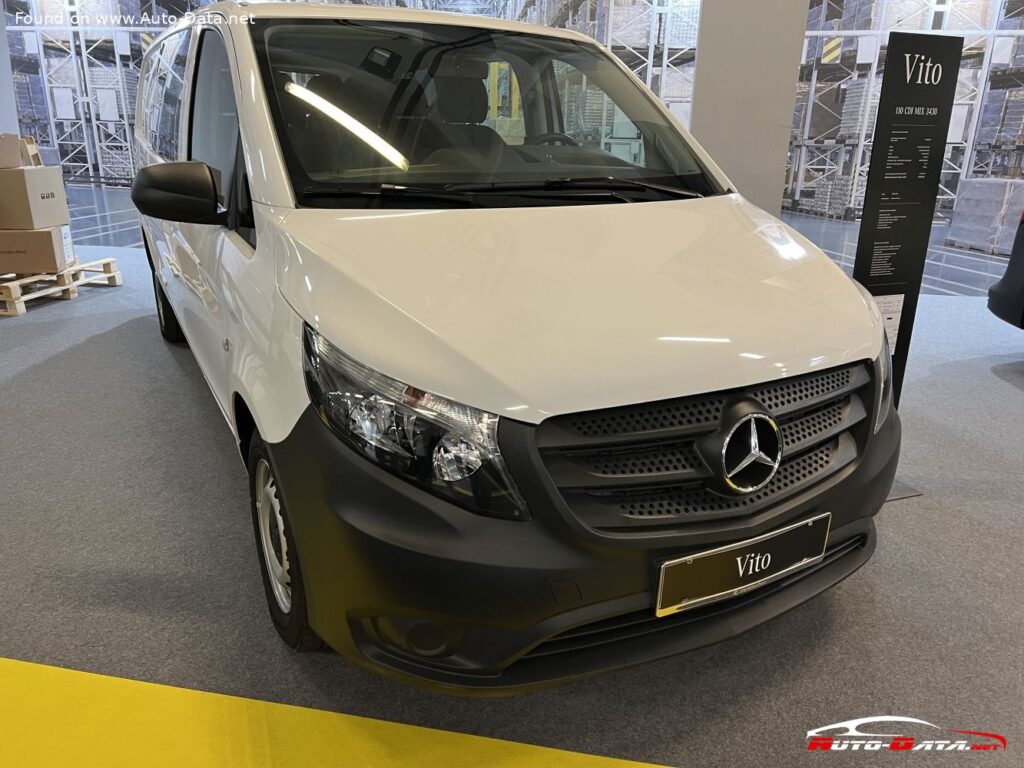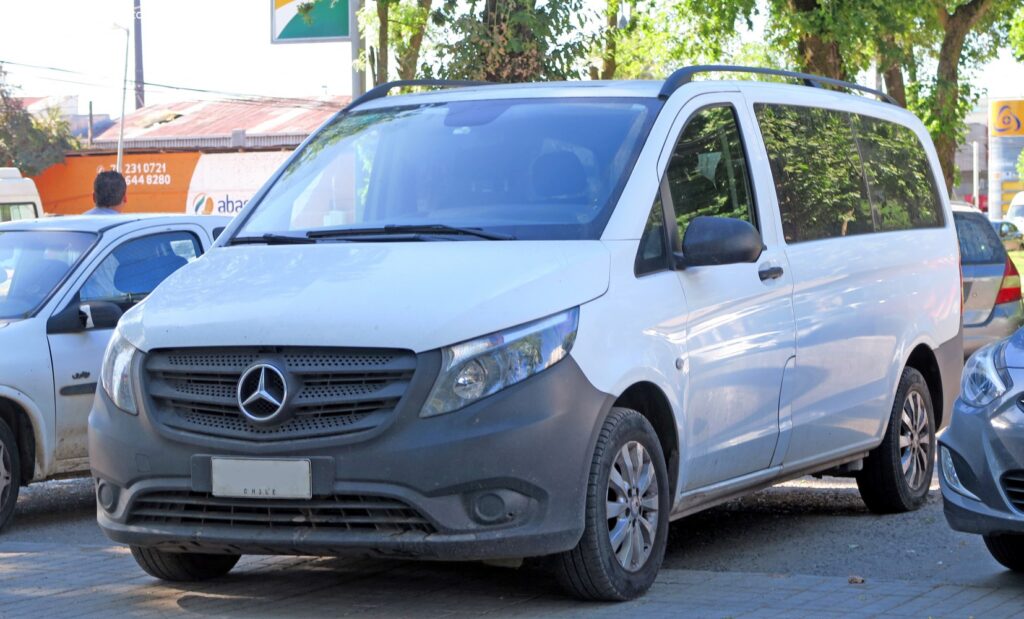
The Mercedes-Benz Vito (W447) Tourer Long 114 CDI (136 Hp) represents a cornerstone in the European and international light commercial vehicle (LCV) and passenger van segments, embodying Mercedes-Benz’s commitment to versatility, efficiency, and comfort. Produced from October 2014 to February 2019, this generation, known as the W447, succeeded previous iterations by offering significant advancements in powertrain technology, safety features, and overall refinement. Unlike some of its more luxurious siblings or commercial derivatives, the Tourer Long variant is specifically designed as a multi-passenger vehicle, capable of seating up to nine occupants, making it an ideal choice for shuttle services, large families, or businesses requiring robust people-moving capabilities. While not a common sight in the North American passenger vehicle market in this specific configuration, the Vito plays a critical role in its primary markets, offering a compelling blend of Mercedes-Benz engineering quality with pragmatic utility in a spacious and adaptable package.
Powertrain and Performance of the Mercedes-Benz Vito (W447) Tourer Long
Engine Configuration and Output
At the heart of the Mercedes-Benz Vito (W447) Tourer Long 114 CDI lies a robust and efficient 2.1-liter (2143 cubic centimeters or 130.77 cubic inches) inline-four turbo-diesel engine, internally designated as the OM651 DE22LA. This powerplant is a testament to Mercedes-Benz’s expertise in diesel engineering, designed to deliver a harmonious balance of power, torque, and fuel economy, crucial for a vehicle of its size and intended use. The engine features a sophisticated Commonrail direct fuel injection system, ensuring precise fuel delivery for optimal combustion and efficiency. Further enhancing its performance and responsiveness, the OM651 is equipped with a turbocharger and an intercooler, which work in tandem to force more air into the engine, resulting in greater power output and improved throttle response across the rev range.
In the 114 CDI variant, this engine generates a respectable 136 horsepower (Hp) at 3800 rpm. While this might not appear staggering by modern passenger car standards, it is important to consider the vehicle’s purpose. For a people mover or commercial van, accessible torque is often more critical than peak horsepower. The Vito 114 CDI excels in this regard, producing a substantial 330 Newton-meters (Nm) or 243.4 pound-feet (lb.-ft.) of torque, available across a broad and highly usable band from a low 1200 rpm up to 2400 rpm. This wide torque plateau ensures strong pulling power from low speeds, making it adept at carrying heavy loads, navigating urban traffic, and maintaining momentum on highways, even when fully laden with passengers or cargo.
Power is transmitted to the rear wheels via a durable 6-speed manual transmission. This rear-wheel-drive architecture is a common and advantageous choice for vans, as it provides superior traction when the vehicle is loaded, and allows for a simpler front suspension and steering setup. The powertrain architecture, with the internal combustion engine driving the rear wheels, ensures predictable handling characteristics, especially under varying load conditions. The engine’s compression ratio stands at 16.2:1, indicative of its diesel nature, optimized for efficiency and power delivery. With four valves per cylinder, the engine breathes efficiently, contributing to its overall performance and emissions control.
Fuel Efficiency and Environmental Compliance
Fuel economy is a significant consideration for commercial operators and large families, and the Vito (W447) Tourer Long 114 CDI delivers commendable figures for its class. According to official measurements, the combined fuel consumption is rated at 6.6 liters per 100 kilometers, which translates to an impressive 35.6 US miles per gallon (mpg). In urban driving, the consumption rises slightly to 7.2 l/100 km (32.7 US mpg), while extra-urban driving sees it drop to 6.4 l/100 km (36.8 US mpg), highlighting its efficiency on longer journeys. These figures are instrumental in reducing running costs over the vehicle’s lifespan.
In terms of environmental responsibility, the Vito 114 CDI adheres to the stringent Euro 6c emission standard, a testament to its advanced diesel particulate filter system and efficient combustion processes. Its CO2 emissions are rated at 176 grams per kilometer, reflecting a concerted effort by Mercedes-Benz to minimize the environmental impact of its commercial vehicles. The vehicle also incorporates an AdBlue tank with an 11.5-liter (3.04 US gallon) capacity, which is integral to its Selective Catalytic Reduction (SCR) system, further reducing harmful nitrogen oxide emissions.
The weight-to-power ratio of 14.1 kg/Hp and a weight-to-torque ratio of 5.8 kg/Nm underscore the practical performance of this vehicle. These ratios indicate that the engine is well-matched to the vehicle’s kerb weight, providing sufficient power for acceleration and ample torque for hauling, ensuring that the Vito feels capable and unburdened even when transporting its maximum payload or passengers.
Design, Utility, and Features of the Mercedes-Benz Vito (W447) Tourer Long
Body and Interior Versatility
The Mercedes-Benz Vito (W447) Tourer Long, with its van body type and designation, is engineered for maximum utility and passenger comfort. This specific variant is configured with 4 or 5 doors, typically featuring a large rear tailgate and sliding side doors that provide excellent access to the cabin, particularly in tight parking spaces. Crucially, the Tourer Long offers seating for up to nine individuals, arranged in a flexible layout that can be adapted to various needs. This high seating capacity makes it an invaluable asset for commercial passenger transport, such as hotel shuttles or airport transfers, as well as for large families requiring substantial space.
Dimensionally, the Vito Tourer Long is substantial, measuring 5140 mm (202.36 inches) in length, 1928 mm (75.91 inches) in width, and standing between 1890-1910 mm (74.41-75.2 inches) in height. Its generous 3200 mm (125.98 inches) wheelbase contributes significantly to a stable ride and expansive interior volume, benefiting passenger comfort on longer journeys. Despite its considerable size, the Vito maintains a respectable minimum turning circle of 12.9 meters (42.32 feet), aiding maneuverability in urban environments and during parking.
The interior space is not only optimized for passengers but also for cargo. Even with all nine seats in place, the Vito Tourer Long offers a minimum trunk (boot) space of 990 liters (34.96 cubic feet), allowing for luggage or equipment alongside passengers. This impressive volume can be further expanded by reconfiguring or removing seats, transforming the Tourer into an even more capable cargo carrier when needed. The maximum load capacity ranges from 1253 to 1280 kg (2762.39 to 2821.92 lbs), demonstrating its robust construction and ability to handle significant payloads.
Chassis, Safety, and Practical Features
The chassis of the Vito (W447) Tourer Long is designed to provide a stable and comfortable ride, essential for a vehicle that often carries multiple passengers. The front suspension features an independent McPherson strut setup with coil springs and an anti-roll bar, which helps to maintain tire contact with the road and reduce body roll during cornering. This configuration contributes to a more car-like driving experience compared to some traditional vans, enhancing driver confidence and passenger comfort. Braking performance is handled by disc brakes on both the front and rear axles, providing strong, consistent stopping power. An Anti-lock Braking System (ABS) is standard, a fundamental safety feature that helps prevent wheel lock-up during hard braking, allowing the driver to maintain steering control.
The vehicle’s kerb weight ranges from 1920-1947 kg (4232.88 – 4292.4 lbs), with a maximum permissible weight of 3200 kg (7054.79 lbs). This robust construction also supports significant towing capabilities, with a permitted trailer load of 2000 kg (4409.25 lbs) when equipped with brakes, and 750 kg (1653.47 lbs) for unbraked trailers. A maximum roof load of 150 kg (330.69 lbs) further extends its utility, allowing for the transport of additional gear, such as roof boxes or bike racks.
The Vito Tourer Long is fitted with commercial-grade tires, typically 195/65 R16C 100 T or 205/65 R16C 101H, mounted on 6.5J x 16 wheel rims. These tires are designed for durability, load-bearing capacity, and stable handling, reinforcing the vehicle’s commercial and passenger-carrying credentials. The inclusion of an 11.1 US quart (10.5 liters) engine oil capacity and a 10.99 US quart (10.4 liters) coolant capacity underscores the engineering for sustained operation and reliability, typical of Mercedes-Benz’s commercial offerings. Overall, the Mercedes-Benz Vito (W447) Tourer Long 114 CDI (136 Hp) stands as a highly competent and versatile vehicle, blending practicality with the inherent quality expected from its esteemed manufacturer.
Technical Specifications
| Brand | Mercedes-Benz |
| Model | Vito |
| Generation | Vito (W447) Tourer Long |
| Type (Engine) | 114 CDI (136 Hp) |
| Start of production | October, 2014 year |
| End of production | February, 2019 year |
| Powertrain Architecture | Internal Combustion engine |
| Body type | Van |
| Seats | 9 |
| Doors | 4/5 |
| Fuel consumption (economy) – urban | 7.2 l/100 km (32.7 US mpg) |
| Fuel consumption (economy) – extra urban | 6.4 l/100 km (36.8 US mpg) |
| Fuel consumption (economy) – combined | 6.6 l/100 km (35.6 US mpg) |
| CO2 emissions | 176 g/km |
| Fuel Type | Diesel |
| Emission standard | Euro 6c |
| Weight-to-power ratio | 14.1 kg/Hp (70.8 Hp/tonne) |
| Weight-to-torque ratio | 5.8 kg/Nm (171.9 Nm/tonne) |
| Power | 136 Hp @ 3800 rpm. |
| Power per litre | 63.5 Hp/l |
| Torque | 330 Nm @ 1200-2400 rpm (243.4 lb.-ft. @ 1200-2400 rpm) |
| Engine layout | Front, Longitudinal |
| Engine Model/Code | OM651 DE22LA |
| Engine displacement | 2143 cm3 (130.77 cu. in.) |
| Number of cylinders | 4 |
| Engine configuration | Inline |
| Cylinder Bore | 83 mm (3.27 in.) |
| Piston Stroke | 99 mm (3.9 in.) |
| Compression ratio | 16.2:1 |
| Number of valves per cylinder | 4 |
| Fuel injection system | Diesel Commonrail |
| Engine aspiration | Turbocharger, Intercooler |
| Engine oil capacity | 10.5 l (11.1 US qt) |
| Coolant | 10.4 l (10.99 US qt) |
| Engine systems | Particulate filter |
| Kerb Weight | 1920-1947 kg (4232.88 – 4292.4 lbs.) |
| Max. weight | 3200 kg (7054.79 lbs.) |
| Max load | 1253-1280 kg (2762.39 – 2821.92 lbs.) |
| Trunk (boot) space – minimum | 990 l (34.96 cu. ft.) |
| Fuel tank capacity | 57 l (15.06 US gal) |
| AdBlue tank | 11.5 l (3.04 US gal) |
| Max. roof load | 150 kg (330.69 lbs.) |
| Permitted trailer load with brakes (12%) | 2000 kg (4409.25 lbs.) |
| Permitted trailer load without brakes | 750 kg (1653.47 lbs.) |
| Length | 5140 mm (202.36 in.) |
| Width | 1928 mm (75.91 in.) |
| Height | 1890-1910 mm (74.41 – 75.2 in.) |
| Wheelbase | 3200 mm (125.98 in.) |
| Minimum turning circle (turning diameter) | 12.9 m (42.32 ft.) |
| Drivetrain Architecture | The Internal combustion engine (ICE) drives the rear wheels of the vehicle. |
| Drive wheel | Rear wheel drive |
| Number of gears and type of gearbox | 6 gears, manual transmission |
| Front suspension | Independent, type McPherson with coil spring and anti-roll bar |
| Front brakes | Disc |
| Rear brakes | Disc |
| Assisting systems | ABS (Anti-lock braking system) |
| Tires size | 195/65 R16C 100 T; 205/65 R16C 101H |
| Wheel rims size | 6.5J x 16 |