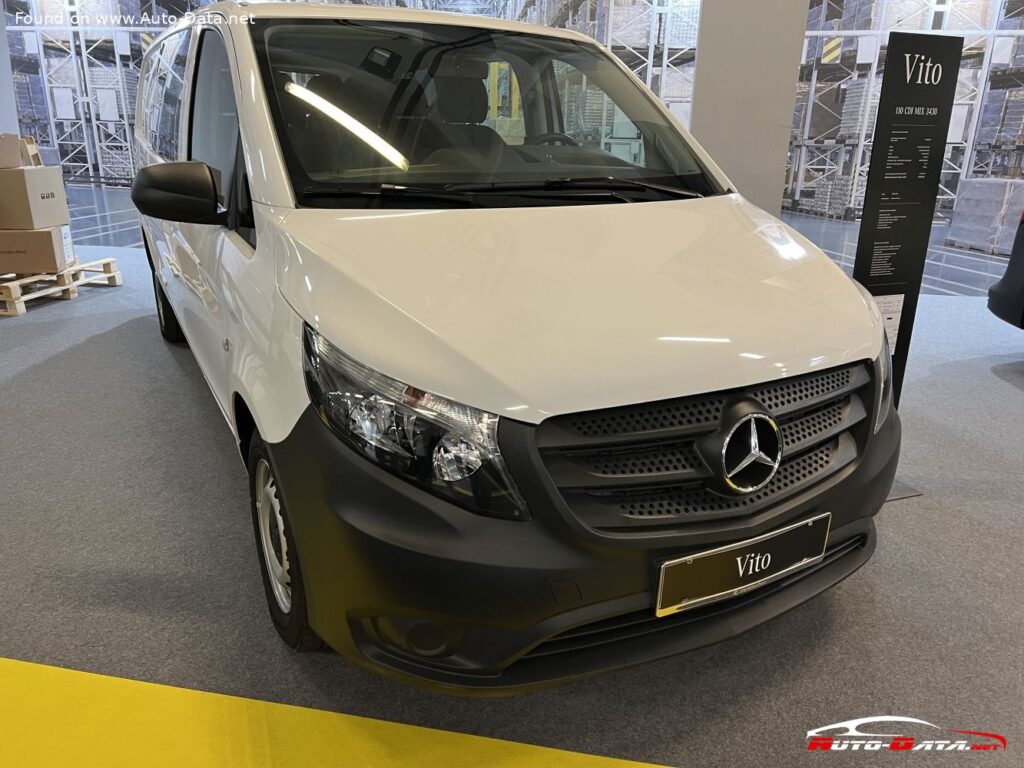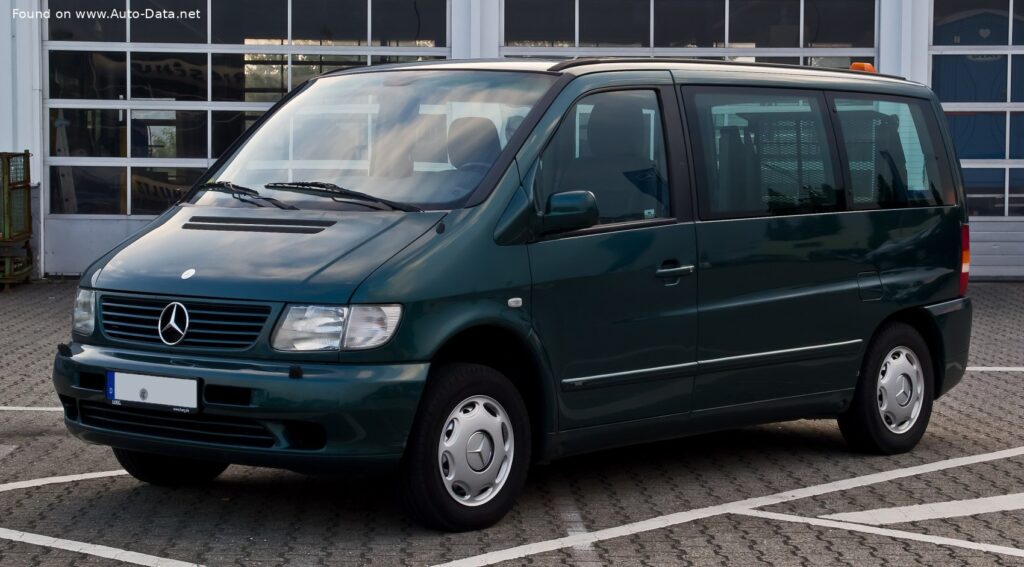
The Mercedes-Benz Vito (W638) V 220 CDI (122 Hp), produced from 1999 to 2003, represents a significant chapter in the German automaker’s history of light commercial vehicles and people movers. While not widely sold in the United States, the W638 generation Vito established a strong presence across European and international markets as a versatile, front-wheel-drive van. This particular variant, the V 220 CDI, was a popular choice, offering a compelling blend of diesel efficiency, robust performance, and Mercedes-Benz’s renowned build quality in a practical package. Positioned as both a workhorse for businesses and a spacious family vehicle, the Vito (W638) underscored Mercedes-Benz’s commitment to diverse mobility solutions beyond its luxury passenger car lineup.
Engineering and Performance of the Mercedes-Benz Vito (W638)
At the heart of the Mercedes-Benz Vito (W638) V 220 CDI (122 Hp) lies a meticulously engineered powertrain designed for durability and efficiency, a hallmark of Mercedes-Benz’s diesel offerings. This specific model is powered by the OM 611 DE22LA engine, an inline four-cylinder diesel unit with a displacement of 2148 cm3 (131.08 cu. in.). The “CDI” designation signifies Common Rail Direct Injection, a revolutionary fuel injection system for its time that dramatically improved fuel economy, reduced emissions, and enhanced engine refinement compared to earlier diesel technologies. With a compression ratio of 19:1, this engine is optimized for the inherent efficiency of diesel combustion.
The OM 611 engine is further bolstered by a turbocharger and intercooler, ensuring a consistent supply of dense, cool air for optimal combustion. This configuration allows the V 220 CDI to produce a respectable 122 horsepower at 3800 rpm, translating to a power per liter output of 56.8 Hp/l. More critically for a vehicle of its type, the engine generates a robust 221.27 lb.-ft. (300 Nm) of torque, which peaks at a low 1800 rpm. This broad and accessible torque band is crucial for a commercial or passenger van, providing excellent pulling power for heavy loads and smooth acceleration from a standstill, rather than requiring high engine speeds.
Power is delivered to the front wheels via a 5-speed manual transmission, a choice that emphasizes driver engagement and allows for precise control over the engine’s output. The front-wheel-drive architecture, a departure from Mercedes-Benz’s traditional rear-wheel-drive setup for vans, contributes to improved interior space and potentially better traction in certain conditions. While not designed for outright speed, the Vito (W638) V 220 CDI offers adequate performance for its segment. It achieves 0 to 60 mph in a calculated 16.6 seconds, with a top speed of 101.9 mph (164 km/h). These figures reflect its purpose as a reliable transporter of people and goods, where consistent performance and fuel economy take precedence over rapid acceleration. The vehicle’s weight-to-power ratio stands at 16.5 kg/Hp, and its weight-to-torque ratio at 6.7 kg/Nm, indicative of its balanced design for utility.
Design and Features of the Mercedes-Benz Vito (W638)
The Mercedes-Benz Vito (W638) represented a contemporary approach to van design during its production run, blending practicality with a touch of Mercedes-Benz’s characteristic aesthetic. As a van body type with five doors and seating for seven, its design prioritized maximizing interior volume and passenger comfort. The exterior styling was functional yet clean, with a relatively short nose and a tall, boxy rear section to optimize cargo and passenger space. The five-door configuration typically included a large rear liftgate or barn doors and sliding doors on one or both sides, facilitating easy access for passengers or loading/unloading goods, a crucial aspect for its commercial and family-hauling roles.
Inside, the W638 Vito offered a versatile cabin layout. The seven-seat configuration, common for passenger variants, provided ample room for occupants, making it a popular choice for shuttle services, large families, or as a touring vehicle. The seats were often designed for flexibility, allowing for various arrangements or removal to create larger cargo areas. For its era, the interior materials were durable and functional, built to withstand the rigors of daily use. While not adorned with the luxurious appointments of Mercedes-Benz’s sedan lineup, the Vito’s cabin reflected a focus on ergonomics and user-friendliness, with controls placed intuitively for the driver.
Safety features for the W638 generation, while not as extensive as modern vehicles, were robust for its time. The vehicle was equipped with disc brakes on both the front and rear axles, providing strong and consistent stopping power. A hydraulic power steering system, specifically a steering rack and pinion setup, ensured comfortable maneuverability, particularly important for a vehicle of its size, aiding in urban environments and tight parking situations. The minimum turning circle of 32.48 feet (9.9 m) further enhanced its agility. The standard tire size was 195/70 R15, a practical choice offering a balance of load-carrying capacity and ride comfort. With a substantial kerb weight of 4431.29 lbs. (2010 kg) and a maximum gross weight of 5952.48 lbs. (2700 kg), the Vito (W638) was engineered to handle significant payloads, offering a maximum load capacity of 1521.19 lbs. (690 kg). Its 20.61 US gallon (78 l) fuel tank provided a commendable range, reducing the frequency of refueling stops, which was a significant advantage for commercial operators and long-distance travel alike.
Technical Specifications: Mercedes-Benz Vito (W638) V 220 CDI (122 Hp)
| Brand | Mercedes-Benz |
| Model | Vito |
| Generation | Vito (W638) |
| Type (Engine) | V 220 CDI (122 Hp) |
| Start of production | 1999 year |
| End of production | 2003 year |
| Powertrain Architecture | Internal Combustion engine |
| Body type | Van |
| Seats | 7 |
| Doors | 5 |
| Fuel Type | Diesel |
| Acceleration 0 – 60 mph | 16.6 sec |
| Acceleration 0 – 62 mph (0 – 100 km/h) | 17.5 sec |
| Maximum speed | 101.9 mph (164 km/h) |
| Weight-to-power ratio | 16.5 kg/Hp, 60.7 Hp/tonne |
| Weight-to-torque ratio | 6.7 kg/Nm, 149.3 Nm/tonne |
| Power | 122 Hp @ 3800 rpm. |
| Power per litre | 56.8 Hp/l |
| Torque | 221.27 lb.-ft. (300 Nm) @ 1800 rpm. |
| Engine layout | Front, Longitudinal |
| Engine Model/Code | OM 611 DE22LA |
| Engine displacement | 131.08 cu. in. (2148 cm3) |
| Number of cylinders | 4 |
| Engine configuration | Inline |
| Compression ratio | 19:1 |
| Number of valves per cylinder | 2 |
| Fuel injection system | Diesel Commonrail |
| Engine aspiration | Turbocharger, Intercooler |
| Engine oil capacity | 7.93 US qt (7.5 l) |
| Coolant | 11.73 US qt (11.1 l) |
| Kerb Weight | 4431.29 lbs. (2010 kg) |
| Max. weight | 5952.48 lbs. (2700 kg) |
| Max load | 1521.19 lbs. (690 kg) |
| Fuel tank capacity | 20.61 US gal (78 l) |
| Minimum turning circle (turning diameter) | 32.48 ft. (9.9 m) |
| Drivetrain Architecture | The Internal combustion engine (ICE) drives the front wheels of the vehicle. |
| Drive wheel | Front wheel drive |
| Number of gears and type of gearbox | 5 gears, manual transmission |
| Front brakes | Disc |
| Rear brakes | Disc |
| Steering type | Steering rack and pinion |
| Power steering | Hydraulic Steering |
| Tires size | 195/70 R15 |