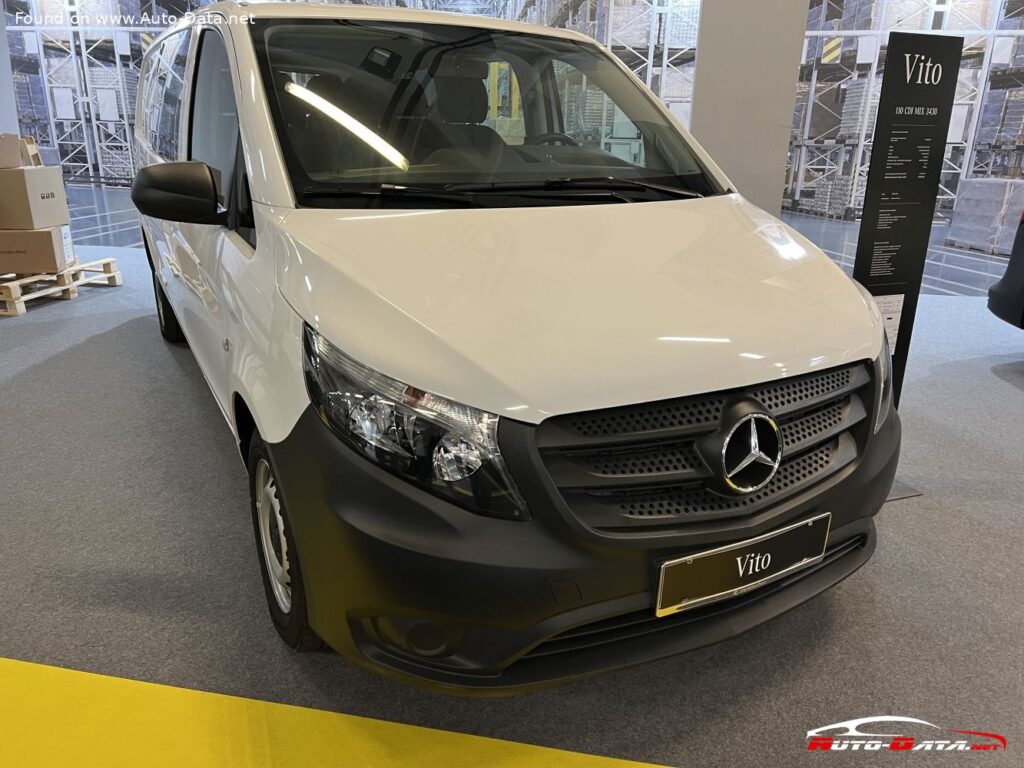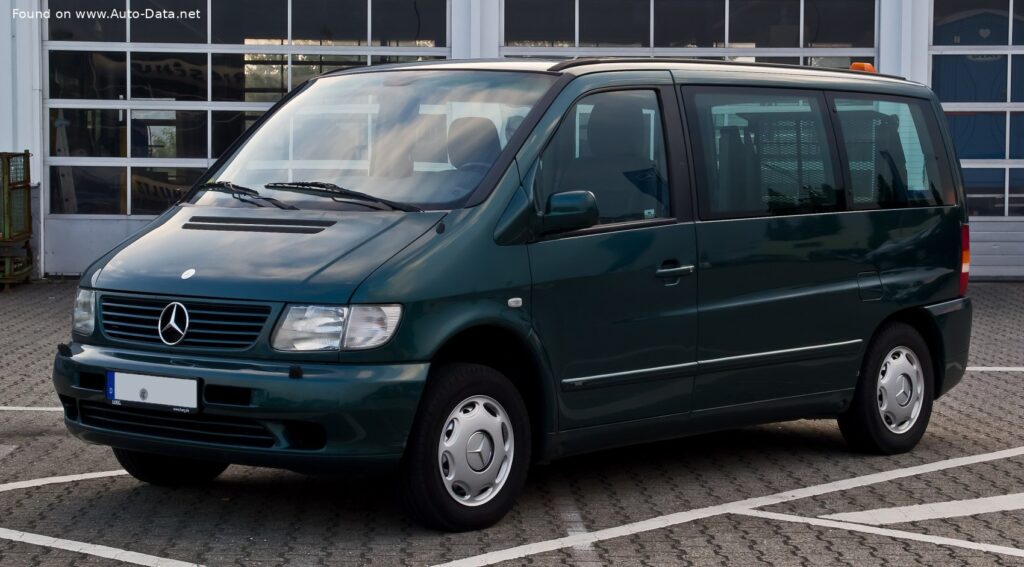
The Mercedes-Benz Vito (W638) represents a pivotal moment for the German automaker, marking its entry into the modern light commercial vehicle and multi-purpose vehicle (MPV) segment with a significant departure from traditional Mercedes-Benz engineering principles. Introduced in August 1996, the W638 generation of the Vito was designed to be a versatile workhorse and a family hauler for the European market, offering a blend of Mercedes-Benz quality and practicality. The V 230 variant, specifically the 143 Hp Manual 5-speed model, was a popular choice, embodying the generation’s focus on efficiency and adaptability. Unlike many of its predecessors and contemporaries from Mercedes-Benz, the W638 Vito adopted a front-wheel-drive powertrain architecture, a decision that maximized interior space and facilitated a lower loading floor, crucial attributes for both commercial and passenger applications. This model quickly established itself as a robust and reliable option for businesses and large families across Europe, offering a comprehensive package of performance, utility, and comfort that was competitive in its class.
Engine and Performance of the Mercedes-Benz Vito (W638) V 230 (143 Hp) Manual 5-speed
At the heart of the Mercedes-Benz Vito (W638) V 230 (143 Hp) Manual 5-speed lies a robust and well-proven M 111 E 23 engine, also known by its code 111.978. This inline-four-cylinder powerplant boasts a displacement of 2295 cubic centimeters, or approximately 2.3 liters, a size well-suited for the demands placed on a vehicle of the Vito’s stature. Engineered with a Double Overhead Camshaft (DOHC) valvetrain and four valves per cylinder, this naturally aspirated engine was designed for smooth power delivery and durability. Fuel is managed through a multi-port manifold injection system, ensuring precise fuel delivery and optimal combustion efficiency for its era. The engine’s bore measures 3.58 inches (90.9 mm) and its piston stroke is 3.48 inches (88.4 mm), contributing to its balanced characteristics.
The M 111 engine in the V 230 configuration generates a respectable 143 horsepower at 5000 revolutions per minute, delivering a power output of approximately 62.3 horsepower per liter of displacement. This power, coupled with a solid torque figure of 154.89 lb.-ft. (210 Nm) available at 4000 rpm, provides the Vito with ample capability for hauling passengers or cargo. The torque curve is designed to be accessible across a broad rpm range, which is beneficial for a vehicle that often operates under varying load conditions, making it feel responsive in city driving and capable on highways. The engine’s compression ratio stands at 8.8:1, indicating a design focused on reliability and compatibility with standard gasoline fuels.
Power is channeled to the front wheels via a 5-speed manual transmission, a choice that gave the driver full control over the engine’s output and contributed to the vehicle’s overall efficiency. This drivetrain architecture, with the engine mounted transversely at the front, was a significant departure for Mercedes-Benz and was optimized for space utilization and improved traction in certain conditions. In terms of acceleration, the Vito V 230 is capable of reaching 60 mph from a standstill in an estimated 13.8 seconds, with a 0-100 km/h sprint completed in 14.5 seconds. Its maximum speed is rated at 108.12 mph (174 km/h), which is more than adequate for typical van operations and highway cruising. The vehicle’s weight-to-power ratio is 14 kg/Hp, or approximately 71.5 Hp per tonne, while the weight-to-torque ratio is 9.5 kg/Nm, or 105 Nm per tonne, figures that underscore its utility-focused performance metrics.
Fuel economy for the V 230 manual variant was competitive for a vehicle of its size and purpose in the late 1990s. In urban driving conditions, it achieved approximately 14.3 US miles per gallon (16.5 l/100 km). On extra-urban routes, efficiency improved significantly to an estimated 27 US miles per gallon (8.7 l/100 km). The combined fuel consumption figure settled at around 20.3 US miles per gallon (11.6 l/100 km), making it a reasonably economical choice for operators and families concerned with running costs. The fuel tank capacity of 20.61 US gallons (78 liters) provided a commendable cruising range, reducing the frequency of fuel stops during long journeys. The engine requires 7.5 liters (7.93 US quarts) of engine oil and utilizes an 8.7-liter (9.19 US quarts) coolant system, indicative of its robust thermal management design.
Design and Features of the Mercedes-Benz Vito (W638)
The Mercedes-Benz Vito (W638) V 230 was fundamentally designed as a versatile van, offering a pragmatic yet sophisticated solution for both commercial and passenger transport needs. Its body type is a traditional van configuration, featuring five doors and seating for up to seven occupants in its V 230 variant. This multi-seat arrangement highlighted its dual-purpose nature, capable of serving as a family MPV during the week and a cargo carrier for weekend projects, or as a dedicated shuttle vehicle. The design aesthetic of the W638 was characteristic of Mercedes-Benz vehicles of the mid-to-late 1990s, with smooth, aerodynamic lines and a functional, unpretentious stance that prioritized utility and interior volume.
Dimensionally, the Vito (W638) was engineered for maneuverability in urban environments while still providing substantial interior space. It measures 183.43 inches (4659 mm) in length, with a width of 74.02 inches (1880 mm) and a height of 72.6 inches (1844 mm). These dimensions contribute to its commanding road presence and generous cabin volume. A significant wheelbase of 118.11 inches (3000 mm) played a crucial role in providing a stable ride and maximizing interior room, particularly for rear passengers or cargo. The front track of 63.78 inches (1620 mm) and a rear track of 64.17 inches (1630 mm) further enhanced its stability and handling characteristics.
The chassis and suspension setup of the W638 Vito were carefully considered to balance ride comfort with load-carrying capability. The front suspension employs an independent McPherson strut type, a common and effective design for front-wheel-drive vehicles, offering a good compromise between ride quality and precise steering. At the rear, a trailing arm suspension system was utilized, chosen for its compact nature and ability to maintain a flat load floor, which is essential for a van. Braking performance was a key safety consideration; the Vito (W638) was equipped with ventilated disc brakes at the front for superior heat dissipation and solid disc brakes at the rear, ensuring consistent stopping power. A critical safety feature for its time, the Anti-lock Braking System (ABS), was standard, significantly enhancing vehicle control during emergency braking maneuvers.
Steering was managed by a hydraulic rack and pinion system, providing direct and predictable feedback to the driver, which was appreciated in a vehicle of this size. The hydraulic power steering made low-speed maneuvers and parking much easier, a practical benefit for a van often navigating tight city streets. The vehicle rode on 195/70 R15 tires, mounted on 6J x 15 wheel rims both front and rear. This tire and wheel combination provided a good balance of load capacity, ride comfort, and grip, suitable for various road conditions. The kerb weight of the V 230 was 4409.25 pounds (2000 kg), with a maximum permissible weight of 5798.16 pounds (2630 kg), allowing for a substantial maximum load capacity of 1388.91 pounds (630 kg). This robust load capacity underscores its utility as a versatile commercial and passenger vehicle, capable of handling significant payloads or a full complement of passengers and their luggage. The thoughtful integration of these design elements and features solidified the Mercedes-Benz Vito (W638) V 230 as a highly competent and adaptable vehicle in its market segment.
Technical Specifications
| Brand | Mercedes-Benz |
| Model | Vito |
| Generation | Vito (W638) |
| Type (Engine) | V 230 (143 Hp) Manual 5-speed |
| Start of production | August, 1996 year |
| End of production | February, 1999 year |
| Powertrain Architecture | Internal Combustion engine |
| Body type | Van |
| Seats | 7 |
| Doors | 5 |
| Fuel consumption (economy) – urban | 16.5 l/100 km (14.3 US mpg) |
| Fuel consumption (economy) – extra urban | 8.7 l/100 km (27 US mpg) |
| Fuel consumption (economy) – combined | 11.6 l/100 km (20.3 US mpg) |
| Fuel Type | Petrol (Gasoline) |
| Acceleration 0 – 60 mph | 13.8 sec |
| Acceleration 0 – 100 km/h | 14.5 sec |
| Maximum speed | 174 km/h (108.12 mph) |
| Weight-to-power ratio | 14 kg/Hp (71.5 Hp/tonne) |
| Weight-to-torque ratio | 9.5 kg/Nm (105 Nm/tonne) |
| Power | 143 Hp @ 5000 rpm. |
| Power per liter | 62.3 Hp/l |
| Torque | 210 Nm @ 4000 rpm (154.89 lb.-ft. @ 4000 rpm) |
| Engine layout | Front, Transverse |
| Engine Model/Code | M 111 E 23 / 111.978 |
| Engine displacement | 2295 cm3 (140.05 cu. in.) |
| Number of cylinders | 4 |
| Engine configuration | Inline |
| Cylinder Bore | 90.9 mm (3.58 in.) |
| Piston Stroke | 88.4 mm (3.48 in.) |
| Compression ratio | 8.8:1 |
| Number of valves per cylinder | 4 |
| Fuel injection system | Multi-port manifold injection |
| Engine aspiration | Naturally aspirated engine |
| Valvetrain | DOHC |
| Engine oil capacity | 7.5 l (7.93 US qt) |
| Coolant | 8.7 l (9.19 US qt) |
| Kerb Weight | 2000 kg (4409.25 lbs.) |
| Max. weight | 2630 kg (5798.16 lbs.) |
| Max load | 630 kg (1388.91 lbs.) |
| Fuel tank capacity | 78 l (20.61 US gal) |
| Length | 4659 mm (183.43 in.) |
| Width | 1880 mm (74.02 in.) |
| Height | 1844 mm (72.6 in.) |
| Wheelbase | 3000 mm (118.11 in.) |
| Front track | 1620 mm (63.78 in.) |
| Rear (Back) track | 1630 mm (64.17 in.) |
| Drivetrain Architecture | Front wheel drive. Internal Combustion engine. |
| Drive wheel | Front wheel drive |
| Number of gears and type of gearbox | 5 gears, manual transmission |
| Front suspension | Independent type McPherson |
| Rear suspension | Trailing arm |
| Front brakes | Ventilated discs |
| Rear brakes | Disc |
| Assisting systems | ABS (Anti-lock braking system) |
| Steering type | Steering rack and pinion |
| Power steering | Hydraulic Steering |
| Tires size | Front: 195/70 R15, Rear: 195/70 R15 |
| Wheel rims size | Front: 6J x 15, Rear: 6J x 15 |