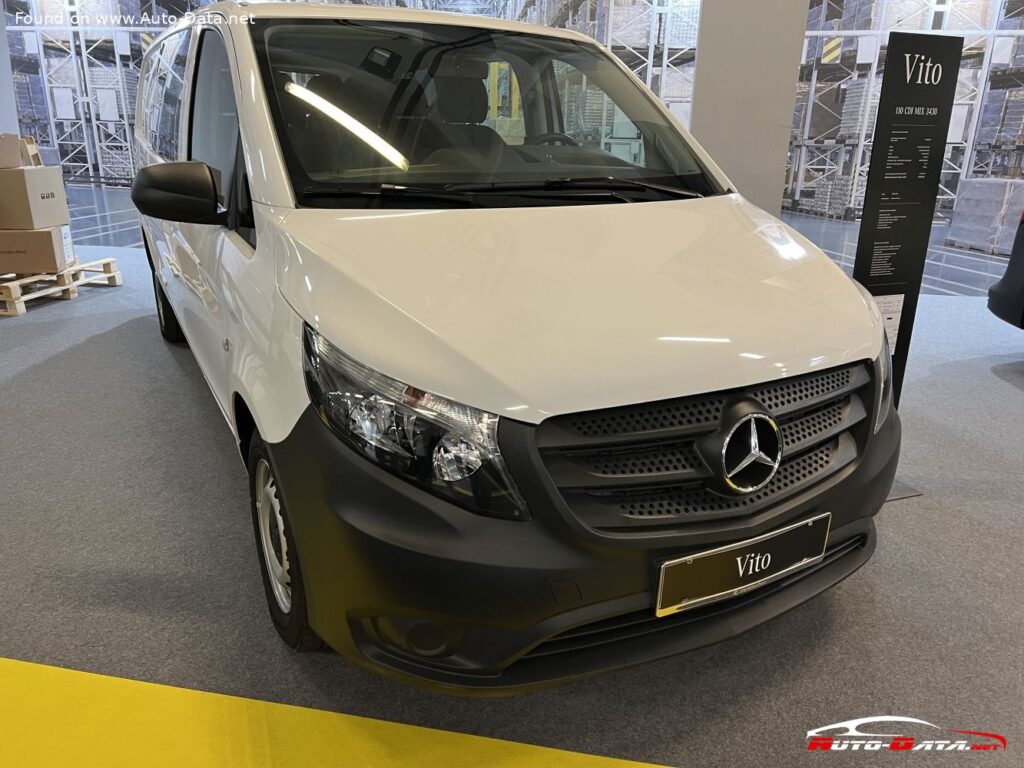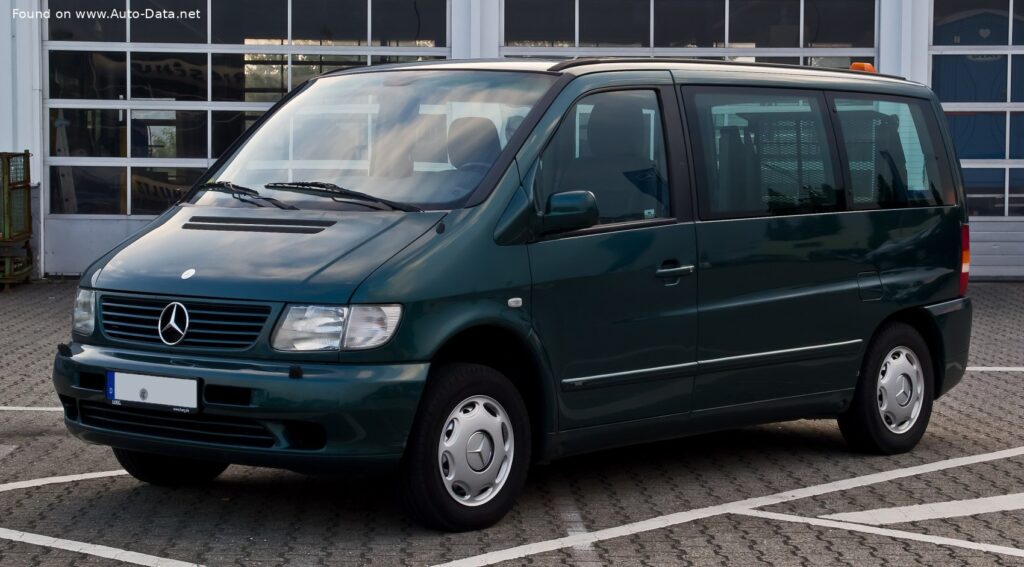
The Mercedes-Benz Vito (W638) represented a significant strategic shift for the venerable German automaker, marking its ambitious entry into the burgeoning compact van segment. Launched in 1996, this first-generation Vito, alongside its more passenger-oriented sibling, the V-Class, was engineered primarily for the European market, where it quickly established a reputation for its blend of Mercedes-Benz quality, versatility, and practical design. Breaking from the traditional rear-wheel-drive layout common in its commercial vehicles, the W638 adopted a front-wheel-drive architecture, a decision aimed at maximizing interior space, improving fuel efficiency, and enhancing maneuverability in urban environments. The specific variant, the V 230 TD (98 Hp), offered a compelling package for both commercial users seeking a robust workhorse and private buyers desiring a spacious, comfortable multi-purpose vehicle, embodying the brand’s commitment to engineering excellence across its diverse product portfolio.
Engineering and Performance of the Mercedes-Benz Vito (W638) V 230 TD
At the heart of the Mercedes-Benz Vito (W638) V 230 TD (98 Hp) lay a robust and dependable diesel powertrain, meticulously designed to deliver a balance of power, fuel efficiency, and longevity. The engine, designated as the OM 601 D 23 LA, was a 2.3-liter (2299 cm³ or 140.29 cu. in.) inline four-cylinder unit. This configuration, common for commercial applications of its era, was celebrated for its inherent balance and smooth operation. Producing 98 horsepower, the engine delivered a respectable power output for a van of its size and intended use, translating to a power-per-liter figure of 42.6 Hp/l. While not a performance-oriented figure, it was entirely adequate for hauling cargo or passengers efficiently across various terrains and conditions prevalent in Europe.
A key technological highlight of this powertrain was its turbocharger, which significantly enhanced the engine’s torque delivery and overall responsiveness, especially at lower RPMs. The turbocharger allowed the 2.3-liter diesel to operate with greater efficiency, providing ample pulling power without necessitating a larger, heavier, and more fuel-thirsty engine. Complementing the turbocharger was a sophisticated precombustion chamber injection system. This indirect injection method was a hallmark of diesel technology in the mid-to-late 1990s, known for its ability to reduce combustion noise and produce a smoother power delivery compared to direct injection systems of the time, while still offering excellent fuel economy. This design choice contributed to a more refined driving experience, a characteristic not always expected in the commercial van segment.
The powertrain architecture of the V 230 TD was centered around a front-wheel-drive system. This layout was a deliberate engineering choice for the W638 platform, diverging from Mercedes-Benz’s traditional rear-wheel-drive setup for larger vans like the Sprinter. The front-wheel-drive configuration offered several distinct advantages relevant to the Vito’s market segment. Firstly, it allowed for a lower load floor, which greatly improved ease of loading and unloading cargo, a critical factor for commercial users. Secondly, by eliminating the need for a bulky transmission tunnel running through the cabin, it maximized interior space for both passengers and cargo, making the Vito a highly versatile vehicle. Furthermore, front-wheel drive generally provides superior traction in adverse weather conditions, a valuable attribute for a vehicle expected to operate reliably year-round. The engine oil capacity was substantial at 9.5 liters (10.04 US quarts), indicating a design focused on durability and extended service intervals, while the cooling system held 9 liters (9.51 US quarts) of coolant, ensuring optimal thermal management under various operating loads.
Design and Features of the Mercedes-Benz Vito (W638)
The Mercedes-Benz Vito (W638) was conceived as a highly adaptable vehicle, evident in its pragmatic yet distinctive design. Its body type was a classic van, characterized by its boxy, functional shape that prioritized interior volume and utility. With five doors, including two front doors, two sliding side doors (often one on each side, depending on configuration), and a large rear tailgate or barn doors, access to both the passenger compartment and the cargo area was exceptionally convenient. The passenger variant, often referred to as the V-Class, was typically configured with seven seats, offering flexible seating arrangements that could be easily reconfigured or removed to accommodate varying passenger and cargo needs. This modularity was a significant selling point, allowing the Vito/V-Class to transition seamlessly between family hauler, executive shuttle, and commercial delivery vehicle.
Aesthetically, the W638 Vito presented a clean, unpretentious design, reflecting its utilitarian purpose. The front fascia featured Mercedes-Benz’s signature grille, flanked by large, functional headlamps that provided excellent illumination. The overall silhouette was aerodynamic for a van of its size, contributing to improved fuel efficiency and reduced wind noise at highway speeds. Inside, the cabin was designed with ergonomics and durability in mind. While not opulent, the materials were robust, capable of withstanding the rigors of commercial use or the demands of a busy family. Driver comfort was addressed with an elevated driving position, offering excellent visibility, and a straightforward dashboard layout that placed essential controls within easy reach.
In terms of features, for a vehicle of its era and segment, the Vito (W638) incorporated a level of refinement and safety technology that underscored its Mercedes-Benz heritage. While advanced driver-assistance systems were still nascent, the Vito featured fundamental safety equipment such as anti-lock brakes (ABS), which was becoming standard on many Mercedes-Benz models across its lineup, enhancing braking performance and control in emergency situations. The front-wheel-drive layout, combined with a well-tuned suspension system, provided stable and predictable handling characteristics, crucial for a vehicle that might be driven fully loaded. The robust body structure was engineered to provide passive safety, offering protection to occupants in the event of a collision. Furthermore, the practical interior design included numerous storage compartments, durable upholstery, and effective climate control systems, all contributing to a comfortable and efficient environment for both driver and passengers over long journeys or during demanding workdays. The adaptability of the seating and cargo space was a defining feature, allowing owners to tailor the vehicle to their exact requirements, whether transporting goods, equipment, or an entire family.
Technical Specifications: Mercedes-Benz Vito (W638) V 230 TD (98 Hp)
| Brand | Mercedes-Benz |
| Model | Vito |
| Generation | Vito (W638) |
| Type (Engine) | V 230 TD (98 Hp) |
| Start of Production | 1996 year |
| End of Production | 1999 year |
| Powertrain Architecture | Internal Combustion engine |
| Body Type | Van |
| Seats | 7 |
| Doors | 5 |
| Fuel Type | Diesel |
| Power | 98 Hp |
| Power per Liter | 42.6 Hp/l |
| Engine Model/Code | OM 601 D 23 LA |
| Engine Displacement | 2299 cm³ (140.29 cu. in.) |
| Number of Cylinders | 4 |
| Engine Configuration | Inline |
| Fuel Injection System | Precombustion chamber injection |
| Engine Aspiration | Turbocharger |
| Engine Oil Capacity | 9.5 l (10.04 US qt) |
| Coolant Capacity | 9 l (9.51 US qt) |
| Drivetrain Architecture | Internal combustion engine (ICE) drives the front wheels |
| Drive Wheel | Front wheel drive |