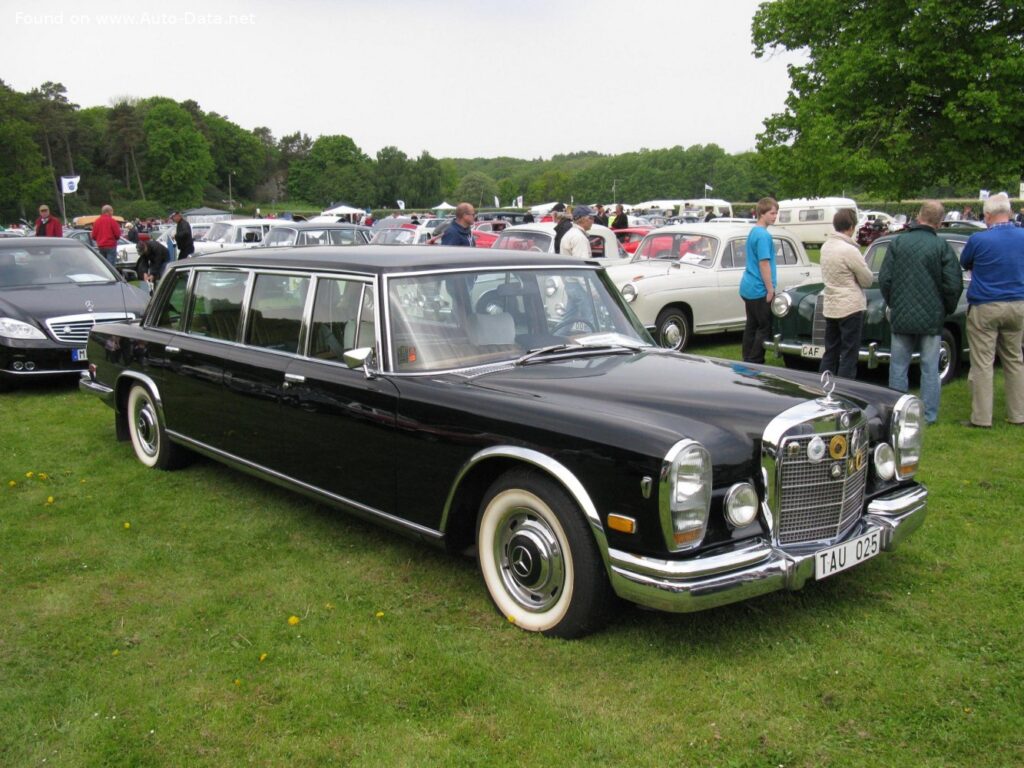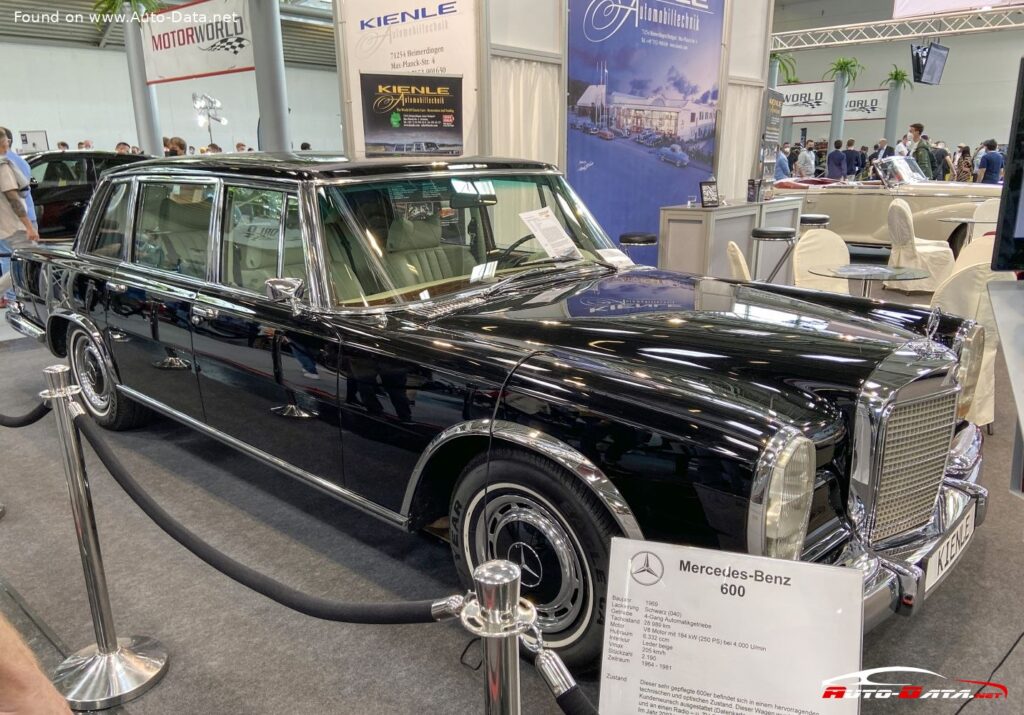
The Mercedes-Benz W100, widely known as the “Grand Mercedes,” represents a pinnacle of automotive engineering and luxury from the mid-20th century. Introduced in September 1964 and produced until June 1981, this iconic vehicle transcended its role as a mere automobile to become a symbol of prestige, power, and unparalleled comfort. The specific variant, the Mercedes-Benz W100 600 V8 (250 Hp) Automatic, embodies the essence of this generation, offering a blend of formidable performance and stately presence. Designed primarily for heads of state, royalty, and the global elite, the W100 was not merely a car but a statement of uncompromising quality and technological advancement for its era. Its market segment was exclusively the ultra-luxury and executive transport sector, where it competed with very few equals, establishing a legendary status that endures to this day.
The Engineering Marvel of the Mercedes-Benz W100
At the heart of the Mercedes-Benz W100 600 V8 (250 Hp) Automatic lies one of Mercedes-Benz’s most revered powerplants: the M 100.980 engine. This naturally aspirated V-engine was a technological tour de force for its time, designed to deliver smooth, abundant power befitting a vehicle of the W100’s stature. With an impressive engine displacement of 6332 cm3 (386.4 cubic inches), this V8 unit generated 250 horsepower at 4000 rpm, translating to a robust 39.5 Hp per liter. More critically for a vehicle of its considerable mass, the engine produced a formidable 368.78 lb.-ft. of torque at a relatively low 2800 rpm. This substantial torque output ensured effortless acceleration and superior cruising capability, even when fully laden.
The M 100 engine featured an overhead camshaft (SOHC) valvetrain with two valves per cylinder and a multi-port manifold injection system, which was quite advanced for the mid-1960s. Its compression ratio of 9:1 struck an excellent balance between performance and reliability, allowing the engine to operate smoothly on available premium petrol (gasoline) fuels. The engine’s cylinder bore measured 4.06 inches (103 mm) with a piston stroke of 3.74 inches (95 mm), a configuration optimized for torque delivery and durability. The maximum engine speed of 4800 rpm underscored its robust, unstressed design, built for longevity and continuous high-speed operation. The powertrain architecture featured a front, longitudinal engine layout, driving the rear wheels, a classic arrangement for luxury vehicles emphasizing balanced weight distribution and traditional handling characteristics.
Performance and Drivetrain Dynamics
Despite its substantial curb weight of 5456.44 lbs. (2475 kg), the Mercedes-Benz W100 600 V8 (250 Hp) Automatic delivered impressive performance figures for its class and era. The vehicle could accelerate from 0 to 60 mph in a swift 9.2 seconds, a testament to the M100 engine’s power and the efficiency of its 4-speed automatic transmission. This acceleration figure was remarkable for a luxury sedan of its size and weight from the 1960s. The top speed was rated at 127.38 mph (205 km/h), allowing the “Grand Mercedes” to maintain a comfortable pace on the nascent European autobahns and American interstates. The weight-to-power ratio stood at 9.9 kg/Hp (101 Hp/tonne), while the weight-to-torque ratio was 5 kg/Nm (202 Nm/tonne), indicating a well-engineered balance between mass and motive force.
Fuel consumption, while not a primary concern for its target clientele, was recorded at an extra-urban economy of 13.2 US mpg (17.8 l/100 km). This figure reflected the demands of moving such a large and powerful vehicle, yet it was competitive within its exclusive segment. The drivetrain architecture was straightforward yet robust: the internal combustion engine drove the rear wheels, providing predictable handling and a sense of traditional luxury car dynamics. The 4-speed automatic transmission was chosen for its smooth shifts and reliability, contributing to the effortless driving experience expected by the W100’s discerning owners.
Design and Features of the Mercedes-Benz W100
The Mercedes-Benz W100 was exclusively offered as a 4-door sedan, though various custom body styles, including Pullman limousines and Landaulets, were also available based on this platform. The standard sedan itself was a magnificent machine, measuring 218.11 inches (5540 mm) in length, 76.77 inches (1950 mm) in width, and 58.46 inches (1485 mm) in height. Its imposing dimensions were complemented by a generous wheelbase of 125.98 inches (3200 mm), which contributed significantly to its commanding road presence and exceptionally stable ride. The design was characterized by a classic, timeless elegance, featuring clean lines, a prominent grille, and subtle chrome accents that conveyed luxury without ostentation. The vehicle could comfortably accommodate 5 to 6 occupants, with ample legroom and head space.
Beyond its aesthetic appeal, the W100 incorporated groundbreaking features for its time, many of which were hydraulically operated. While the provided data explicitly mentions hydraulic power steering, the W100 was renowned for its complex high-pressure hydraulic system that powered everything from the automatic windows and seats to the trunk lid and even the doors. This system was designed to provide silent and effortless operation of these features, a hallmark of its supreme luxury. The vehicle’s ride quality was legendary, largely attributed to its sophisticated air suspension system. The front suspension utilized a double wishbone setup with a transverse stabilizer and air springs, while the rear suspension also featured air springs and a transverse stabilizer. This advanced air suspension allowed for a remarkably smooth and controlled ride, effectively isolating occupants from road imperfections and maintaining a consistent ride height even with varying loads. The ride height itself was adjustable, ranging from 7.87 to 9.84 inches (200-250 mm), offering versatility for different driving conditions.
For braking, the W100 was equipped with disc brakes at both the front and rear, a significant safety feature for a vehicle of its size and speed in that era. This provided superior stopping power and fade resistance compared to drum brakes. The steering system was a cone worm with recirculation balls, combined with the hydraulic power steering, ensuring precise control and reduced effort for the driver. The minimum turning circle of 40.68 feet (12.4 meters) was quite agile for such a large vehicle, aiding maneuverability in urban environments. The vehicle rode on 6.5J x 15-inch wheel rims, which were suitably proportioned for its grand dimensions and contributed to its stately appearance. The trunk space offered a generous 20.48 cubic feet (580 liters), providing ample room for luggage, further underscoring its capabilities as a long-distance touring machine or a state limousine.
The Enduring Legacy of the Grand Mercedes
The Mercedes-Benz W100 600 V8 (250 Hp) Automatic remains an icon of automotive history, celebrated for its engineering excellence, unparalleled luxury, and the sheer ambition of its design. Its long production run, spanning almost two decades, is a testament to its timeless appeal and enduring quality. It served as the preferred mode of transport for numerous world leaders, celebrities, and industrialists, solidifying its place as a symbol of ultimate automotive prestige. Today, the W100 is highly sought after by collectors and enthusiasts worldwide, admired not only for its historical significance but also for its remarkable mechanical sophistication and its commanding presence. It stands as a magnificent representation of an era when Mercedes-Benz pushed the boundaries of automotive luxury and engineering to create a truly “Grand Mercedes.”
Technical Specifications: Mercedes-Benz W100 600 V8 (250 Hp) Automatic
| Brand | Mercedes-Benz |
| Model | W100 |
| Generation | W100 |
| Type (Engine) | 600 V8 (250 Hp) Automatic |
| Start of production | September, 1964 year |
| End of production | June, 1981 year |
| Powertrain Architecture | Internal Combustion engine |
| Body type | Sedan |
| Seats | 5-6 |
| Doors | 4 |
| Fuel consumption (economy) – extra urban | 13.2 US mpg (17.8 l/100 km) |
| Fuel Type | Petrol (Gasoline) |
| Acceleration 0 – 60 mph | 9.2 sec |
| Maximum speed | 127.38 mph (205 km/h) |
| Weight-to-power ratio | 9.9 kg/Hp, 101 Hp/tonne |
| Weight-to-torque ratio | 5 kg/Nm, 202 Nm/tonne |
| Power | 250 Hp @ 4000 rpm. |
| Power per litre | 39.5 Hp/l |
| Torque | 368.78 lb.-ft. (500 Nm) @ 2800 rpm. |
| Maximum engine speed | 4800 rpm. |
| Engine layout | Front, Longitudinal |
| Engine Model/Code | M 100.980 |
| Engine displacement | 6.3 Liters (6332 cm3, 386.4 cu. in.) |
| Number of cylinders | 8 |
| Engine configuration | V-engine |
| Cylinder Bore | 4.06 in. (103 mm) |
| Piston Stroke | 3.74 in. (95 mm) |
| Compression ratio | 9:1 |
| Number of valves per cylinder | 2 |
| Fuel injection system | Multi-port manifold injection |
| Engine aspiration | Naturally aspirated engine |
| Valvetrain | SOHC |
| Kerb Weight | 5456.44 lbs. (2475 kg) |
| Max. weight | 6735.12 lbs. (3055 kg) |
| Max load | 1278.68 lbs. (580 kg) |
| Trunk (boot) space – minimum | 20.48 cu. ft. (580 l) |
| Fuel tank capacity | 29.59 US gal (112 l) |
| Length | 218.11 in. (5540 mm) |
| Width | 76.77 in. (1950 mm) |
| Height | 58.46 in. (1485 mm) |
| Wheelbase | 125.98 in. (3200 mm) |
| Front track | 62.48 in. (1587 mm) |
| Rear (Back) track | 62.24 in. (1581 mm) |
| Ride height (ground clearance) | 7.87 – 9.84 in. (200-250 mm) |
| Minimum turning circle (turning diameter) | 40.68 ft. (12.4 m) |
| Drivetrain Architecture | The Internal combustion engine (ICE) drives the rear wheels of the vehicle. |
| Drive wheel | Rear wheel drive |
| Number of gears and type of gearbox | 4 gears, automatic transmission |
| Front suspension | Double wishbone, Transverse stabilizer, Air suspension |
| Rear suspension | Air suspension, Transverse stabilizer |
| Front brakes | Disc |
| Rear brakes | Disc |
| Steering type | Cone worm with recirculation balls |
| Power steering | Hydraulic Steering |
| Wheel rims size | 6.5J x 15 |