
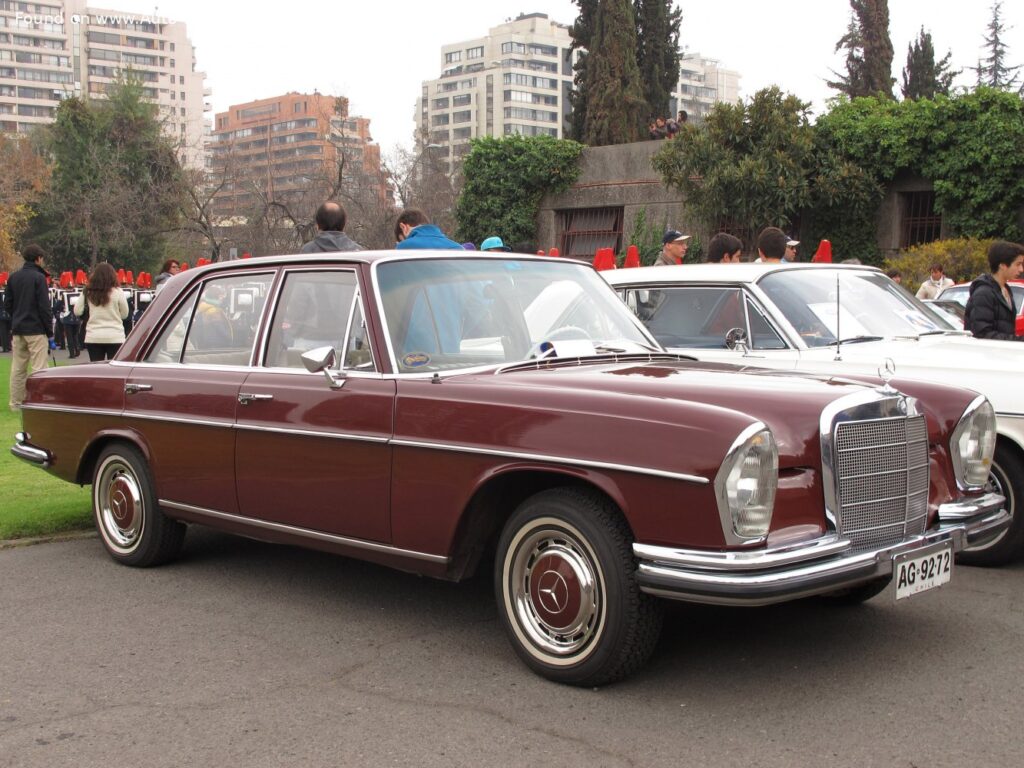
The Mercedes-Benz W108 250 SE (150 Hp) Automatic represents a pinnacle of luxury and engineering prowess from the mid-1960s, embodying the brand’s commitment to sophisticated design and robust performance. Introduced in August 1965 and produced until January 1968, this generation of Mercedes-Benz sedans, known internally as the W108, succeeded the iconic “Fintail” models while refining their elegant aesthetic. Positioned in the executive and luxury car segment, the 250 SE was designed to offer discerning buyers a blend of comfort, prestige, and reliable motoring, setting a benchmark for automotive excellence during its relatively short production run. Its architecture, an internal combustion engine driving the rear wheels, was a conventional yet highly refined setup for the era, ensuring predictable handling and a smooth ride characteristic of Mercedes-Benz vehicles.
Engine and Performance: The Heart of the Mercedes-Benz W108 250 SE (150 Hp) Automatic
At the core of the Mercedes-Benz W108 250 SE (150 Hp) Automatic lies the venerable M 129 I / 129.980 engine, a naturally aspirated inline-six cylinder unit that exemplifies Mercedes-Benz’s engineering philosophy of durability and smooth power delivery. With an engine displacement of 2496 cm3, or approximately 2.5 liters (152.32 cu. in.), this powerplant was meticulously crafted to provide a balance of refined performance and efficiency for its time. It produced a respectable 150 horsepower at 5500 rpm, a substantial figure for a luxury sedan of the mid-1960s, delivering a power-per-liter ratio of 60.1 horsepower per liter. Torque was equally impressive, peaking at 159.31 lb.-ft. (216 Nm) at a relatively accessible 4200 rpm, ensuring robust acceleration and confident cruising.
The engine’s configuration was a front-mounted, longitudinal layout, driving the rear wheels through a sophisticated 4-speed automatic transmission. This drivetrain architecture was a hallmark of luxury vehicles, prioritizing smoothness and passenger comfort over raw sportiness. The adoption of a multi-port manifold injection system, rather than carburetors, was a significant technological advancement for its era, contributing to more precise fuel delivery, improved efficiency, and reduced emissions. Coupled with a Single Overhead Camshaft (SOHC) valvetrain with two valves per cylinder, the engine was both advanced and robust. Its compression ratio of 9.3:1 was optimized for the petrol (gasoline) fuel available at the time. The 250 SE could accelerate from 0 to 60 mph in a brisk 11.4 seconds, reaching a maximum speed of 114.95 mph (185 km/h). These figures underscored its capability as a high-speed cruiser, perfectly suited for the burgeoning autobahn network in Europe and the expanding interstate highway system in the United States. Fuel economy, while not a primary concern for luxury car buyers in this period, was rated at an admirable 20.1 US mpg (11.7 l/100 km) in a combined cycle, a testament to its efficient engineering. The engine required 5.5 liters (5.81 US qt) of oil and utilized an 11.4-liter (12.05 US qt) coolant system, indicative of its robust cooling requirements for sustained performance.
Design and Features: Elegance and Innovation
The Mercedes-Benz W108 series, including the 250 SE, marked a significant evolution in the brand’s design language. Moving away from the more pronounced “fintails” of its predecessors, the W108 adopted a cleaner, more rectilinear aesthetic, characterized by its elegant, stately lines and expansive glass areas. This 4-door, 5-seat sedan exuded an air of understated luxury and timeless sophistication. Its dimensions—a length of 192.91 inches (4900 mm), a width of 71.26 inches (1810 mm), and a height of 56.69 inches (1440 mm)—provided a commanding road presence while offering generous interior space for its occupants. The substantial wheelbase of 108.27 inches (2750 mm) contributed significantly to its renowned ride comfort and stability.
Beyond its visual appeal, the W108 250 SE was engineered with advanced features for its time, particularly in its chassis and suspension. The front suspension utilized a double wishbone setup, providing precise steering and excellent road holding. More notably, the rear suspension featured a sophisticated system incorporating a hydro-pneumatic element combined with a trailing arm. This was a cutting-edge design for the 1960s, designed to maintain a consistent ride height irrespective of load and to offer superior ride quality, effectively isolating occupants from road imperfections. This system was a precursor to more advanced hydraulic suspensions seen in later luxury vehicles, highlighting Mercedes-Benz’s leadership in ride comfort technology.
Braking performance was also a strong suit, with disc brakes fitted on both the front and rear wheels. This was a considerable safety and performance advantage in the mid-1960s, as many competitors still relied on drum brakes, especially at the rear. The disc brake system provided more effective and fade-resistant stopping power, crucial for a vehicle capable of high speeds. Steering was managed by a cone worm with recirculation balls system, known for its precision and durability. The car rode on 6J x 14-inch wheel rims, providing a good balance between comfort and handling. With a kerb weight of 3262.84 lbs. (1480 kg) and a maximum permissible weight of 4365.15 lbs. (1980 kg), the 250 SE was a solidly built vehicle, capable of carrying a significant load of 1102.31 lbs. (500 kg). The 21.66 US gallon (82-liter) fuel tank capacity ensured an ample cruising range, suitable for long-distance travel, reinforcing its luxury touring credentials.
Technical Specifications
| Brand | Mercedes-Benz |
| Model | W108 |
| Generation | W108 |
| Type (Engine) | 250 SE (150 Hp) Automatic |
| Start of production | August, 1965 year |
| End of production | January, 1968 year |
| Powertrain Architecture | Internal Combustion engine |
| Body type | Sedan |
| Seats | 5 |
| Doors | 4 |
| Fuel consumption (combined) | 20.1 US mpg (11.7 l/100 km) |
| Fuel Type | Petrol (Gasoline) |
| Acceleration 0 – 60 mph | 11.4 sec |
| Maximum speed | 114.95 mph (185 km/h) |
| Weight-to-power ratio | 9.9 kg/Hp, 101.4 Hp/tonne |
| Weight-to-torque ratio | 6.9 kg/Nm, 145.9 Nm/tonne |
| Power | 150 Hp @ 5500 rpm |
| Power per liter | 60.1 Hp/l |
| Torque | 159.31 lb.-ft. (216 Nm) @ 4200 rpm |
| Engine layout | Front, Longitudinal |
| Engine Model/Code | M 129 I / 129.980 |
| Engine displacement | 2.5 l (2496 cm3, 152.32 cu. in.) |
| Number of cylinders | 6 |
| Engine configuration | Inline |
| Cylinder Bore | 3.23 in. (82 mm) |
| Piston Stroke | 3.1 in. (78.8 mm) |
| Compression ratio | 9.3:1 |
| Number of valves per cylinder | 2 |
| Fuel injection system | Multi-port manifold injection |
| Engine aspiration | Naturally aspirated engine |
| Valvetrain | SOHC |
| Engine oil capacity | 5.81 US qt (5.5 l) |
| Coolant | 12.05 US qt (11.4 l) |
| Kerb Weight | 3262.84 lbs. (1480 kg) |
| Max. weight | 4365.15 lbs. (1980 kg) |
| Max load | 1102.31 lbs. (500 kg) |
| Fuel tank capacity | 21.66 US gal (82 l) |
| Length | 192.91 in. (4900 mm) |
| Width | 71.26 in. (1810 mm) |
| Height | 56.69 in. (1440 mm) |
| Wheelbase | 108.27 in. (2750 mm) |
| Front track | 58.35 in. (1482 mm) |
| Rear (Back) track | 58.46 in. (1485 mm) |
| Drivetrain Architecture | The Internal combustion engine (ICE) drives the rear wheels of the vehicle. |
| Drive wheel | Rear wheel drive |
| Number of gears and type of gearbox | 4 gears, automatic transmission |
| Front suspension | Double wishbone |
| Rear suspension | Hydro-pneumatic element, Trailing arm |
| Front brakes | Disc |
| Rear brakes | Disc |
| Steering type | Cone worm with recirculation balls |
| Wheel rims size | 6J x 14 |
