
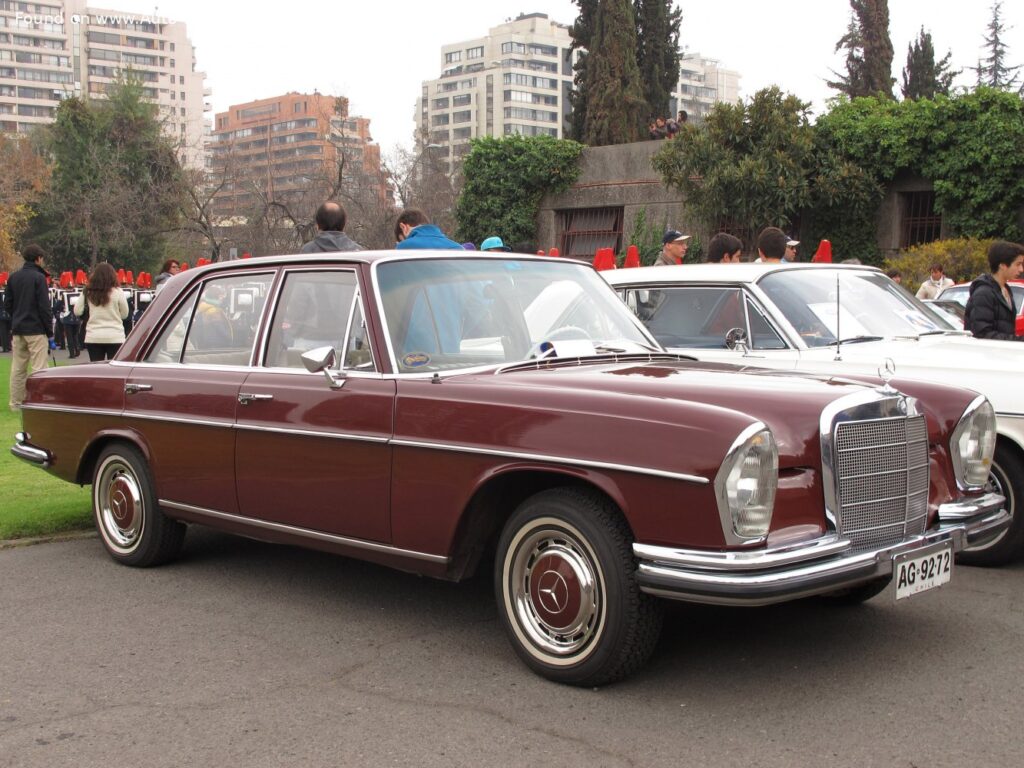
The Mercedes-Benz W108 series represents a pinnacle of luxury and engineering from the late 1960s and early 1970s, establishing the German marque’s reputation for elegant, robust, and technologically advanced automobiles. Among its distinguished variants, the Mercedes-Benz W108 280 SE 3.5 V8 (200 Hp) Automatic stands out as a particularly desirable model, blending the W108’s timeless design with a powerful and refined V8 engine. Produced from July 1970 to September 1972, this generation of Mercedes-Benz luxury sedans was primarily aimed at discerning buyers in Europe and other global markets who sought a sophisticated driving experience coupled with significant performance for its era. While not as universally common in the United States as later S-Class models, its influence on the American luxury car market was undeniable, setting benchmarks for quality, comfort, and safety that resonated deeply with automotive enthusiasts and luxury car owners. The 280 SE 3.5 V8 represented a significant upgrade in power over its six-cylinder siblings, marking a strategic move by Mercedes-Benz to compete with the growing demand for V8-powered luxury vehicles from both European and American manufacturers.
Engine and Performance of the Mercedes-Benz W108 280 SE 3.5 V8 (200 Hp) Automatic
At the heart of the Mercedes-Benz W108 280 SE 3.5 V8 (200 Hp) Automatic lies a meticulously engineered M 116 E 35 / 116.980 V8 engine. This naturally aspirated, front-longitudinal powerplant boasts a displacement of 3.5 liters (3499 cm3 or 213.52 cu. in.), a significant leap from the inline-six engines that characterized earlier W108 models. The V8 configuration, with its eight cylinders and a 9.5:1 compression ratio, was designed for smooth power delivery and a refined driving experience. Each cylinder features two valves, operated by a Single OverHead Camshaft (SOHC) valvetrain, a common and reliable design for its time. Fuel delivery was managed by a sophisticated multi-port manifold injection system, which was advanced for the early 1970s and contributed to the engine’s efficiency and responsiveness.
With a robust output of 200 horsepower at 5800 rpm and a substantial peak torque of 210.94 lb.-ft. (286 Nm) at 4000 rpm, the 280 SE 3.5 V8 offered impressive performance for a luxury sedan of its vintage. This power translated into a respectable 0-60 mph acceleration time of just 8.9 seconds (0-100 km/h in 9.4 seconds), allowing the vehicle to keep pace with, and often outshine, many of its contemporaries. The top speed was rated at 127.38 mph (205 km/h), providing effortless cruising capabilities on the newly developing highway networks. Power was routed to the rear wheels via a smooth and reliable 4-speed automatic transmission, enhancing the car’s luxurious character by minimizing driver effort. The powertrain architecture, driving the rear wheels, provided a balanced and engaging driving dynamic, a hallmark of Mercedes-Benz engineering.
Despite its significant power, the engine’s design also considered the practicalities of a luxury grand tourer. The engine oil capacity stands at 7.5 liters (7.93 US qt), and the cooling system holds 13.2 liters (13.95 US qt), indicating robust systems designed for durability and consistent performance. The combined fuel consumption, while substantial by modern standards, was competitive for a large V8 sedan of its era, achieving approximately 18.1 US mpg (13 l/100 km). This blend of power, refinement, and relative efficiency for its class solidified the 280 SE 3.5 V8’s position as a highly capable and desirable luxury vehicle.
Design and Features
The Mercedes-Benz W108 series, including the 280 SE 3.5 V8, is renowned for its elegant and timeless design, embodying the “fintail” era’s transition into more modern, upright styling. As a four-door sedan, it offered comfortable seating for five occupants, making it an ideal choice for executive transport or luxurious family travel. The car’s dimensions contribute to its commanding presence: a length of 192.91 inches (4900 mm), a width of 71.26 inches (1810 mm), and a height of 56.69 inches (1440 mm). These generous proportions, combined with a substantial wheelbase of 108.27 inches (2750 mm), provided ample interior space and contributed to a stable and comfortable ride.
The exterior design is characterized by clean lines, a prominent grille adorned with the iconic three-pointed star, and tasteful chrome accents that highlight its premium status. The large glass areas provided excellent visibility, a testament to the thoughtful design. Beneath its elegant skin, the W108 featured advanced engineering for its time. The suspension system was designed to deliver a smooth and controlled ride, crucial for a luxury vehicle. The front suspension utilized a double wishbone setup, known for its precision and ability to maintain wheel alignment. At the rear, Mercedes-Benz employed a sophisticated hydro-pneumatic element combined with a trailing arm design, offering a blend of comfort and stability that was highly regarded. This innovative rear suspension was a key factor in the W108’s renowned ride quality, effectively absorbing road imperfections and providing a serene cabin environment.
For braking, the 280 SE 3.5 V8 was equipped with disc brakes on both the front and rear wheels, providing superior stopping power and fade resistance compared to the drum brakes still prevalent on many cars of the period. Steering was managed by a cone worm with recirculation balls system, complemented by hydraulic power steering, ensuring effortless maneuverability despite the car’s size and weight. The vehicle rolled on 6J x 14-inch wheel rims, a practical size that balanced ride comfort with handling characteristics. With a curb weight of 3417.17 lbs. (1550 kg) and a maximum permissible weight of 4530.5 lbs. (2055 kg), the W108 280 SE 3.5 V8 was a solidly built machine, reflecting Mercedes-Benz’s commitment to durability and safety engineering, which were evolving standards in the early 1970s. Its robust construction and refined features solidified its reputation as a benchmark for luxury sedans globally.
Technical Specifications
| Brand | Mercedes-Benz |
| Model | W108 |
| Generation | W108 |
| Type (Engine) | 280 SE 3.5 V8 (200 Hp) Automatic |
| Start of production | July, 1970 year |
| End of production | September, 1972 year |
| Powertrain Architecture | Internal Combustion engine |
| Body type | Sedan |
| Seats | 5 |
| Doors | 4 |
| Fuel consumption (combined) | 18.1 US mpg (13 l/100 km) |
| Fuel Type | Petrol (Gasoline) |
| Acceleration 0 – 60 mph | 8.9 sec |
| Acceleration 0 – 100 km/h | 9.4 sec |
| Maximum speed | 127.38 mph (205 km/h) |
| Weight-to-power ratio | 7.8 kg/Hp, 129 Hp/tonne |
| Weight-to-torque ratio | 5.4 kg/Nm, 184.5 Nm/tonne |
| Power | 200 Hp @ 5800 rpm |
| Power per liter | 57.2 Hp/l |
| Torque | 210.94 lb.-ft. (286 Nm) @ 4000 rpm |
| Engine layout | Front, Longitudinal |
| Engine Model/Code | M 116 E 35 / 116.980 |
| Engine displacement | 3.5 l (3499 cm3, 213.52 cu. in.) |
| Number of cylinders | 8 |
| Engine configuration | V-engine |
| Cylinder Bore | 3.62 in. (92 mm) |
| Piston Stroke | 2.59 in. (65.8 mm) |
| Compression ratio | 9.5:1 |
| Number of valves per cylinder | 2 |
| Fuel injection system | Multi-port manifold injection |
| Engine aspiration | Naturally aspirated engine |
| Valvetrain | SOHC |
| Engine oil capacity | 7.93 US qt (7.5 l) |
| Coolant | 13.95 US qt (13.2 l) |
| Kerb Weight | 3417.17 lbs. (1550 kg) |
| Max. weight | 4530.5 lbs. (2055 kg) |
| Max load | 1113.33 lbs. (505 kg) |
| Fuel tank capacity | 21.66 US gal (82 l) |
| Length | 192.91 in. (4900 mm) |
| Width | 71.26 in. (1810 mm) |
| Height | 56.69 in. (1440 mm) |
| Wheelbase | 108.27 in. (2750 mm) |
| Front track | 58.35 in. (1482 mm) |
| Rear (Back) track | 58.46 in. (1485 mm) |
| Drivetrain Architecture | The Internal combustion engine (ICE) drives the rear wheels of the vehicle. |
| Drive wheel | Rear wheel drive |
| Number of gears and type of gearbox | 4 gears, automatic transmission |
| Front suspension | Double wishbone |
| Rear suspension | Hydro-pneumatic element, Trailing arm |
| Front brakes | Disc |
| Rear brakes | Disc |
| Steering type | Cone worm with recirculation balls |
| Power steering | Hydraulic Steering |
| Wheel rims size | 6J x 14 |
