
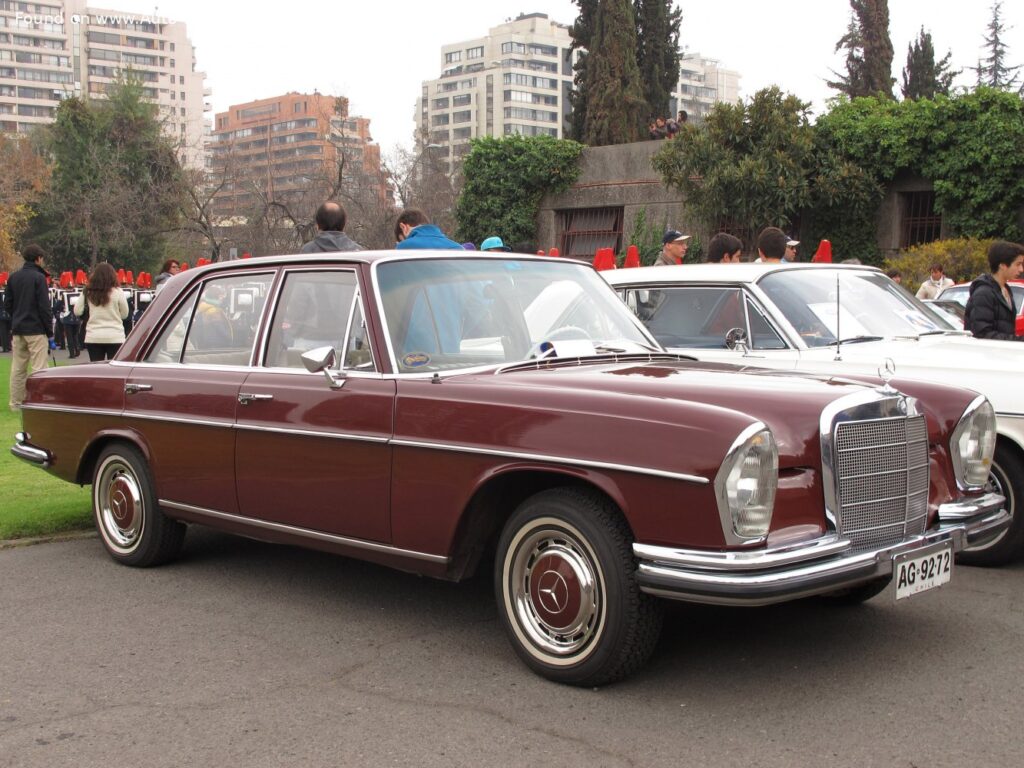
The early 1970s marked a significant period for luxury automotive design and engineering, and few vehicles exemplified this better than the Mercedes-Benz W108 series. Among its distinguished variants, the Mercedes-Benz W108 280 SE 4.5 V8 Automatic stood out as a beacon of power, refinement, and sophisticated comfort. Produced for a relatively short but impactful period between May 1971 and November 1972, this particular model represented a strategic evolution within the W108 lineup, primarily catering to markets, particularly North America, that demanded more potent engines for their flagship sedans. It seamlessly blended the W108’s established reputation for robust build quality and elegant styling with a new level of V8 performance, setting a benchmark for luxury sedans of its era.
The W108 Legacy and the Mercedes-Benz W108 280 SE 4.5 V8 Automatic
The Mercedes-Benz W108 generation, introduced in 1965, was a direct successor to the “Fintail” W111/W112 series, shedding the distinctive tailfins for a more understated, timeless design that emphasized horizontal lines and a commanding presence. Designed by Paul Bracq, the W108 quickly became synonymous with executive transport and personal luxury, earning a reputation for its exceptional ride quality, advanced engineering, and unwavering durability. Initially offered with inline-six engines, the demand for greater power, especially in the crucial American market, led to the introduction of V8 options. The 280 SE 4.5 V8 Automatic was a pinnacle of this development, specifically designed to address the need for effortless cruising and formidable acceleration that was becoming increasingly desired by discerning buyers.
While the W108 series was a global success, the 4.5-liter V8 engine was largely a response to specific market requirements, especially in the United States, where emission regulations and consumer preferences favored larger displacement engines. This variant allowed Mercedes-Benz to maintain its competitive edge against American luxury marques and other European contenders, offering a compelling blend of traditional German craftsmanship with a distinctly American appetite for V8 power. The 280 SE 4.5 V8 Automatic didn’t just offer an engine upgrade; it enhanced the entire driving experience, transforming the already capable W108 into a more dynamic and responsive machine, solidifying its status as a grand touring sedan capable of effortlessly traversing continents.
Engine and Performance
At the heart of the Mercedes-Benz W108 280 SE 4.5 V8 Automatic was the robust M 117 E 45 / 117.984 engine, a 4.5-liter (275.83 cu. in.) naturally aspirated V8. This powerhouse delivered a substantial 198 horsepower at 4500 rpm, a figure that was genuinely impressive for a luxury sedan in the early 1970s. Complementing this power was a generous 264.05 lb.-ft. of torque, peaking at a relatively low 3000 rpm, which contributed significantly to the car’s effortless acceleration and flexible driving characteristics. The engine’s configuration featured a V-engine design with eight cylinders, a bore of 3.62 inches, and a piston stroke of 3.35 inches, culminating in an 8:1 compression ratio. Fuel delivery was managed by a sophisticated multi-port manifold injection system, a cutting-edge technology for its time that ensured efficient combustion and smoother power delivery compared to carbureted setups. The valvetrain was a Single Overhead Camshaft (SOHC) design with two valves per cylinder, a proven configuration for reliability and performance.
Power was channeled to the rear wheels via a smooth-shifting 3-speed automatic transmission, perfectly matched to the V8’s torque characteristics to provide a refined and unhurried driving experience. Despite its luxury orientation and considerable curb weight of 3692.74 lbs., the 280 SE 4.5 V8 could accelerate from 0 to 60 mph in a brisk 9.6 seconds (0-100 km/h in 10.1 seconds), and reach a maximum speed of 124.27 mph (200 km/h). These performance figures placed it firmly among the fastest and most capable luxury sedans of its era. Fuel economy, while not a primary concern for buyers of such a vehicle, was rated at approximately 15.7 US mpg (combined), a reasonable figure given the engine’s displacement and the vehicle’s weight. The car’s weight-to-power ratio of 8.5 kg/Hp (118.2 Hp/tonne) and weight-to-torque ratio of 4.7 kg/Nm (213.7 Nm/tonne) further underscore the thoughtful engineering that balanced luxury with dynamic capabilities.
Chassis, Suspension, and Driving Dynamics
Beyond its powerful engine, the Mercedes-Benz W108 280 SE 4.5 V8 Automatic was renowned for its sophisticated chassis and suspension system, which provided a ride quality that was both supremely comfortable and remarkably composed. The front suspension utilized a double wishbone setup, a design that offered excellent wheel control and precise steering response. At the rear, Mercedes-Benz employed a truly innovative hydro-pneumatic element combined with a trailing arm, a system that allowed for self-leveling capabilities and superior isolation from road imperfections. This advanced rear suspension contributed significantly to the W108’s legendary “magic carpet” ride, ensuring occupants experienced minimal disturbance even over rough surfaces.
Braking performance was handled by disc brakes on both the front and rear axles, providing confident stopping power for a vehicle of its size and performance. Steering was managed by a cone worm with recirculation balls system, augmented by hydraulic power steering, which offered a precise and relatively light steering feel, making the large sedan surprisingly maneuverable in urban environments and stable at highway speeds. The vehicle rode on 6J x 14 inch wheel rims, shod with tires that were carefully chosen to complement the suspension’s characteristics. The combination of its robust drivetrain architecture, rear-wheel-drive configuration, and meticulously engineered suspension components ensured that the 280 SE 4.5 V8 Automatic delivered a driving experience that was both engaging for the driver and supremely comfortable for all five occupants, solidifying its reputation as a true grand tourer.
Design, Interior, and Features
The Mercedes-Benz W108 series, including the 280 SE 4.5 V8 Automatic, is celebrated for its timeless and elegant design. With its clean lines, expansive glasshouse, and lack of the earlier “fintails,” the W108 exuded an understated sophistication that has aged remarkably well. Its four-door sedan body type offered spacious accommodation for five passengers, making it an ideal choice for executive travel or luxurious family excursions. The car’s dimensions—192.91 inches in length, 71.26 inches in width, and 56.69 inches in height—gave it a substantial and authoritative presence on the road. A generous wheelbase of 108.27 inches contributed to both its stable ride and expansive interior volume, while the front track of 58.35 inches and rear track of 58.46 inches ensured a balanced stance.
Inside, the 280 SE 4.5 V8 Automatic was a sanctuary of luxury and craftsmanship. While specific feature lists from the era are less granular than modern specifications, one can infer the presence of high-quality materials such as fine leather or velour upholstery, polished wood trim, and precise chrome accents, all meticulously assembled to Mercedes-Benz’s exacting standards. The dashboard layout was ergonomic and intuitive, featuring clear instrumentation. Comfort amenities would have included excellent sound insulation, an efficient heating and ventilation system, and possibly power windows and air conditioning as optional or standard features in higher trims, particularly for the U.S. market. The substantial curb weight of 3692.74 lbs. (1675 kg) and a maximum permissible weight of 4720.1 lbs. (2141 kg), allowing for a maximum load of 1027.35 lbs. (466 kg), underscored the car’s solid construction and its capacity for carrying passengers and luggage in supreme comfort. A fuel tank capacity of 21.66 US gallons (82 liters) provided ample range for long-distance cruising, further enhancing its grand touring credentials. The W108’s design philosophy prioritized safety, comfort, and durability, embodying a commitment to engineering excellence that made it a classic long before its production run concluded.
Technical Specifications
| Brand | Mercedes-Benz |
| Model | W108 |
| Generation | W108 |
| Type (Engine) | 280 SE 4.5 V8 (198 Hp) Automatic |
| Start of Production | May, 1971 year |
| End of Production | November, 1972 year |
| Powertrain Architecture | Internal Combustion engine |
| Body type | Sedan |
| Seats | 5 |
| Doors | 4 |
| Fuel consumption (economy) – combined | 15 l/100 km (15.7 US mpg, 18.8 UK mpg, 6.7 km/l) |
| Fuel Type | Petrol (Gasoline) |
| Acceleration 0 – 100 km/h | 10.1 sec |
| Acceleration 0 – 62 mph | 10.1 sec |
| Acceleration 0 – 60 mph (Calculated) | 9.6 sec |
| Maximum speed | 200 km/h (124.27 mph) |
| Weight-to-power ratio | 8.5 kg/Hp, 118.2 Hp/tonne |
| Weight-to-torque ratio | 4.7 kg/Nm, 213.7 Nm/tonne |
| Power | 198 Hp @ 4500 rpm. |
| Power per litre | 43.8 Hp/l |
| Torque | 358 Nm @ 3000 rpm (264.05 lb.-ft. @ 3000 rpm) |
| Engine layout | Front, Longitudinal |
| Engine Model/Code | M 117 E 45 / 117.984 |
| Engine displacement | 4520 cm3 (275.83 cu. in.) |
| Number of cylinders | 8 |
| Engine configuration | V-engine |
| Cylinder Bore | 92 mm (3.62 in.) |
| Piston Stroke | 85 mm (3.35 in.) |
| Compression ratio | 8:1 |
| Number of valves per cylinder | 2 |
| Fuel injection system | Multi-port manifold injection |
| Engine aspiration | Naturally aspirated engine |
| Valvetrain | SOHC |
| Kerb Weight | 1675 kg (3692.74 lbs.) |
| Max. weight | 2141 kg (4720.1 lbs.) |
| Max load | 466 kg (1027.35 lbs.) |
| Fuel tank capacity | 82 l (21.66 US gal | 18.04 UK gal) |
| Length | 4900 mm (192.91 in.) |
| Width | 1810 mm (71.26 in.) |
| Height | 1440 mm (56.69 in.) |
| Wheelbase | 2750 mm (108.27 in.) |
| Front track | 1482 mm (58.35 in.) |
| Rear (Back) track | 1485 mm (58.46 in.) |
| Drivetrain Architecture | The Internal combustion engine (ICE) drives the rear wheels of the vehicle. |
| Drive wheel | Rear wheel drive |
| Number of gears and type of gearbox | 3 gears, automatic transmission |
| Front suspension | Double wishbone |
| Rear suspension | Hydro-pneumatic element, Trailing arm |
| Front brakes | Disc |
| Rear brakes | Disc |
| Steering type | Cone worm with recirculation balls |
| Power steering | Hydraulic Steering |
| Wheel rims size | 6J x 14 |
