
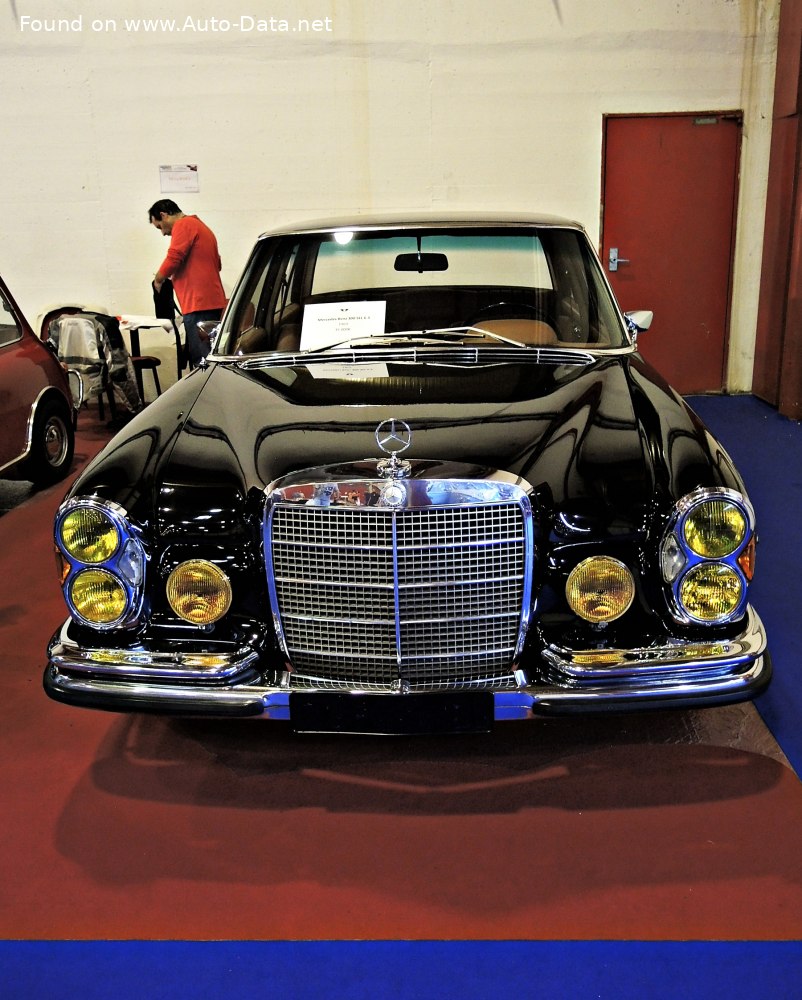
The Mercedes-Benz W109 SEL 300 SEL (170 Hp), produced from September 1965 to December 1967, represents a pinnacle of luxury and engineering prowess from the mid-1960s. As part of the W108/W109 “S-Class” generation, this particular model was a long-wheelbase variant (hence “L” for Lang) equipped with a sophisticated air suspension system, setting it apart from its W108 counterparts. Positioned as a flagship luxury sedan, the 300 SEL was designed to offer unparalleled comfort, performance, and refinement for discerning clientele, solidifying Mercedes-Benz’s reputation for building some of the world’s finest automobiles. Its relatively short production run underscores its exclusivity and status as a highly sought-after classic today.
The Legacy of the Mercedes-Benz W109 SEL 300 SEL
The Mercedes-Benz W109 SEL 300 SEL stands as a testament to the brand’s commitment to luxury and innovation during a transformative era for the automotive industry. Introduced as an evolution of the W111/W112 “Fintail” series, the W108 and W109 models shed the flamboyant tailfins for a cleaner, more timeless design, often referred to as the “New Generation” sedans. The W109 series, in particular, was distinguished by its standard air suspension, a feature typically reserved for the top-tier 300 models. The “SEL” designation was crucial, indicating a Sonderklasse (Special Class) vehicle with an extended wheelbase, providing superior rear passenger legroom and comfort. This strategic positioning allowed Mercedes-Benz to compete directly with high-end luxury vehicles from other European manufacturers, offering a blend of robust German engineering and opulent amenities.
During its production years, from late 1965 to late 1967, the W109 SEL 300 SEL was not merely a mode of transport but a statement of prestige and technological advancement. Its understated elegance, combined with a focus on ride quality and safety features that were advanced for its time, resonated with heads of state, industrialists, and celebrities worldwide. While not as widely known in the US market as some later S-Class generations due to its specific European focus and limited production numbers, its influence on subsequent Mercedes-Benz luxury sedans is undeniable. It laid the groundwork for the modern S-Class ethos: a vehicle that combines cutting-edge technology, powerful performance, and supreme comfort in a sophisticated package. The W109 SEL 300 SEL solidified Mercedes-Benz’s position as a global leader in the premium automotive segment, demonstrating that luxury could be synonymous with engineering excellence and refined performance.
Engine and Performance
At the heart of the 1965-1967 Mercedes-Benz W109 SEL 300 SEL was a meticulously engineered 3.0-liter (2996 cm³ or 182.83 cubic inches) inline-six engine, designated with the model code M 189 VII / 189.988. This naturally aspirated, front-longitudinal powerplant was a marvel of its time, featuring a Single Overhead Camshaft (SOHC) valvetrain with two valves per cylinder. Fuel delivery was handled by a multi-port manifold injection system, a sophisticated technology for the mid-1960s that contributed to both efficiency and responsive power delivery, especially when compared to carbureted rivals. With a compression ratio of 8.8:1, the engine produced a robust 170 horsepower at 5400 rpm, translating to a respectable power per liter output of 56.7 Hp/l. Torque figures were equally impressive for a luxury sedan of this era, peaking at 183.65 lb.-ft. (249 Nm) at 4000 rpm, providing ample thrust for smooth acceleration and effortless cruising.
Power was transferred to the rear wheels via a 4-speed manual transmission, a common configuration for European luxury cars of the period, offering drivers direct engagement with the vehicle’s capabilities. Despite its substantial curb weight of 3615.58 pounds (1640 kg), the 300 SEL delivered commendable performance. It could accelerate from 0 to 60 mph in a swift 10.6 seconds, with 0-62 mph (0-100 km/h) achieved in 11.2 seconds. The maximum speed was rated at 118.06 mph (190 km/h), allowing it to maintain high speeds on autobahns and highways with ease. These figures underscored its dual nature as both a luxurious cruiser and a capable performer. The weight-to-power ratio stood at 9.6 kg/Hp (approximately 21.16 lbs/Hp), while the weight-to-torque ratio was 6.6 kg/Nm. Fuel economy, while not a primary concern for luxury buyers of the era, was rated at an average of 18.8 US mpg (12.5 l/100 km) in a combined cycle, which was reasonable for a large, powerful vehicle of its class and vintage. The 82-liter (21.66 US gallon) fuel tank provided a significant cruising range, further enhancing its long-distance touring credentials.
Design, Features, and Innovation
The design of the Mercedes-Benz W109 SEL 300 SEL embodies the timeless elegance and functional aesthetic that became a hallmark of the brand. As a full-size, 4-door, 5-seat sedan, its proportions were stately and commanding, measuring 196.85 inches (5000 mm) in length, 71.26 inches (1810 mm) in width, and 56.69 inches (1440 mm) in height. The generous wheelbase of 112.2 inches (2850 mm) not only contributed to its imposing presence but also ensured a capacious and comfortable cabin, especially for rear passengers. The front track measured 58.35 inches (1482 mm) and the rear track 58.46 inches (1485 mm), providing a stable and planted stance.
One of the most significant technological advancements and defining features of the W109 SEL was its sophisticated air suspension system. Both the front and rear axles were equipped with air suspension, complemented by a double wishbone setup at the front and trailing arms at the rear. This system provided an exceptionally smooth and compliant ride, effectively isolating occupants from road imperfections—a crucial attribute for a luxury vehicle. Beyond comfort, the air suspension also offered self-leveling capabilities, maintaining a consistent ride height regardless of load, which was revolutionary for its time. Braking performance was handled by disc brakes on both the front and rear wheels, offering superior stopping power and fade resistance compared to drum brake setups still common on many vehicles. Steering was managed by a cone worm with recirculation balls system, augmented by hydraulic power steering, ensuring effortless maneuverability despite the car’s size and weight. The car rode on 6J x 14 wheel rims, typical for the period, which provided a balanced aesthetic and contributed to ride comfort.
Inside, the W109 SEL 300 SEL exuded an atmosphere of refined luxury. While specific interior features varied by market and individual customization, standard appointments would have included high-quality upholstery, genuine wood trim, and meticulous craftsmanship throughout the cabin. Safety, though not as comprehensively addressed as in modern vehicles, was a consideration, with a robust chassis and an emphasis on occupant protection through thoughtful engineering. The overall design language was one of understated opulence, focusing on quality, durability, and a driving experience that was both powerful and supremely comfortable, setting a high benchmark for luxury sedans for decades to come.
Technical Specifications
| Brand | Mercedes-Benz |
| Model | W109 |
| Generation | W109 SEL |
| Type (Engine) | 300 SEL (170 Hp) |
| Start of production | September, 1965 year |
| End of production | December, 1967 year |
| Powertrain Architecture | Internal Combustion engine |
| Body type | Sedan |
| Seats | 5 |
| Doors | 4 |
| Fuel consumption (combined) | 12.5 l/100 km | 18.8 US mpg |
| Fuel Type | Petrol (Gasoline) |
| Acceleration 0 – 60 mph | 10.6 sec |
| Acceleration 0 – 100 km/h | 11.2 sec |
| Maximum speed | 190 km/h | 118.06 mph |
| Weight-to-power ratio | 9.6 kg/Hp |
| Weight-to-torque ratio | 6.6 kg/Nm |
| Power | 170 Hp @ 5400 rpm. |
| Power per liter | 56.7 Hp/l |
| Torque | 249 Nm @ 4000 rpm. | 183.65 lb.-ft. @ 4000 rpm. |
| Engine layout | Front, Longitudinal |
| Engine Model/Code | M 189 VII / 189.988 |
| Engine displacement | 2996 cm3 | 3.0 l | 182.83 cu. in. |
| Number of cylinders | 6 |
| Engine configuration | Inline |
| Cylinder Bore | 85 mm | 3.35 in. |
| Piston Stroke | 88 mm | 3.46 in. |
| Compression ratio | 8.8:1 |
| Number of valves per cylinder | 2 |
| Fuel injection system | Multi-port manifold injection |
| Engine aspiration | Naturally aspirated engine |
| Valvetrain | SOHC |
| Kerb Weight | 1640 kg | 3615.58 lbs. |
| Max. weight | 2140 kg | 4717.89 lbs. |
| Max load | 500 kg | 1102.31 lbs. |
| Fuel tank capacity | 82 l | 21.66 US gal |
| Length | 5000 mm | 196.85 in. |
| Width | 1810 mm | 71.26 in. |
| Height | 1440 mm | 56.69 in. |
| Wheelbase | 2850 mm | 112.2 in. |
| Front track | 1482 mm | 58.35 in. |
| Rear (Back) track | 1485 mm | 58.46 in. |
| Drivetrain Architecture | Internal combustion engine drives the rear wheels. |
| Drive wheel | Rear wheel drive |
| Number of gears and type of gearbox | 4 gears, manual transmission |
| Front suspension | Double wishbone, Air suspension |
| Rear suspension | Air suspension, Trailing arm |
| Front brakes | Disc |
| Rear brakes | Disc |
| Steering type | Cone worm with recirculation balls |
| Power steering | Hydraulic Steering |
| Wheel rims size | 6J x 14 |
