
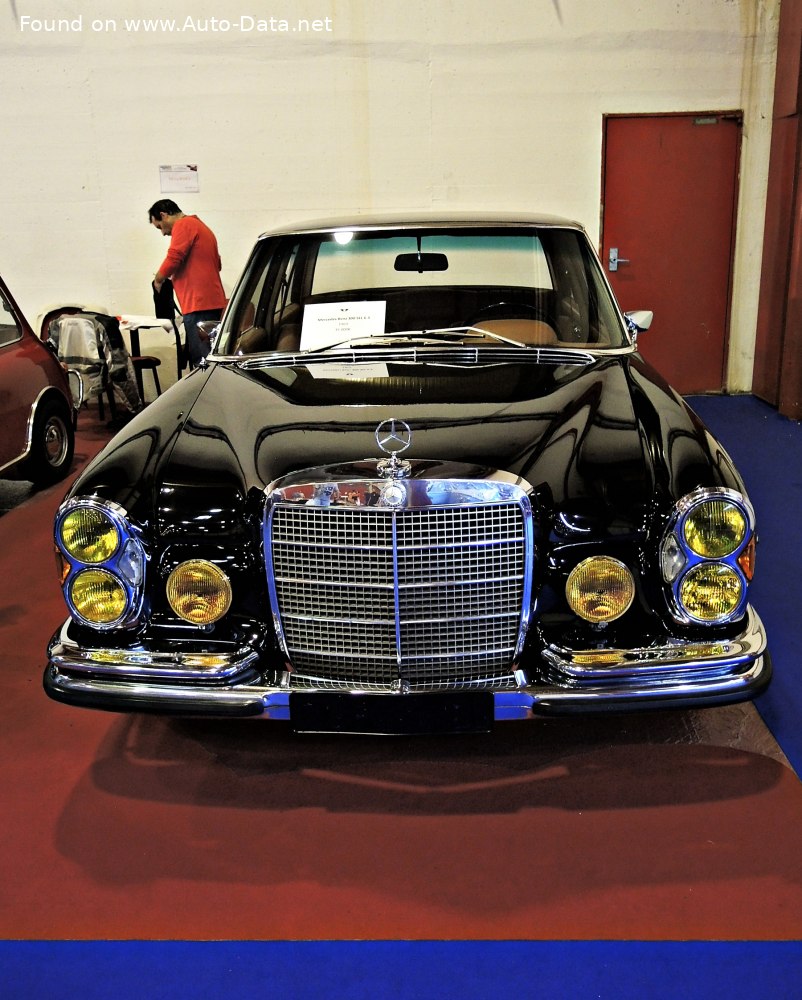
The Mercedes-Benz W109 SEL 300 SEL 3.5 V8 (200 Hp) Automatic represents a pinnacle of luxury and engineering prowess from the late 1960s and early 1970s, serving as a flagship model for the Stuttgart-based automaker. Produced from August 1969 to September 1972, this vehicle belonged to the W109 generation, which itself was an extended-wheelbase variant of the W108/W109 series. The “SEL” designation proudly indicated its extended length, offering superior rear passenger comfort, a hallmark of Mercedes-Benz’s commitment to executive luxury. During its production run, the 300 SEL 3.5 V8 was a direct competitor to other high-end luxury sedans globally, carving out a niche for discerning buyers who demanded both performance and unparalleled refinement. Its introduction marked a significant shift for the brand, bringing a more potent, modern V8 engine option to its top-tier luxury sedans, a move that solidified its reputation for combining opulent comfort with robust, highway-capable performance.
Engineering Excellence and Performance of the Mercedes-Benz W109 SEL 300 SEL 3.5 V8 (200 Hp) Automatic
At the heart of the Mercedes-Benz W109 SEL 300 SEL 3.5 V8 (200 Hp) Automatic lay a sophisticated powertrain designed for effortless power delivery and smooth operation. The engine, designated M 116 E 35 / 116.981, was a naturally aspirated V-engine with eight cylinders, boasting a displacement of 3.5 liters (3499 cm³ or 213.52 cu. in.). This engine was a significant step forward for Mercedes-Benz, offering a compelling blend of power and refinement. It produced a robust 200 horsepower at 5800 rpm and an impressive 210.94 lb.-ft. of torque at 4000 rpm, figures that were highly competitive for a luxury sedan of its era.
What made this engine particularly noteworthy was its advanced fuel injection system. Unlike many contemporaries still relying on carburetion, the 300 SEL 3.5 utilized multi-port manifold injection. This technology not only improved fuel efficiency but also ensured more precise fuel delivery, leading to smoother idling, better throttle response, and reduced emissions. The engine featured a Single Overhead Camshaft (SOHC) valvetrain with two valves per cylinder, a configuration chosen for its balance of performance and reliability. With a compression ratio of 9.5:1, the engine was designed to run on premium petrol (gasoline), delivering its power efficiently and effectively.
The performance metrics of the 300 SEL 3.5 V8 were impressive for a vehicle of its size and luxury class. It could accelerate from 0 to 60 mph in a swift 8.9 seconds, making it one of the faster luxury sedans of its time. Its maximum speed of 127.38 mph (205 km/h) further underscored its capabilities as a grand tourer, able to maintain high cruising speeds with ease on the autobahns of Europe and the burgeoning interstate highway systems in the U.S. Power was sent to the rear wheels via a smooth-shifting 4-speed automatic transmission, which perfectly complemented the engine’s character, providing seamless gear changes that enhanced the overall driving experience. The vehicle’s weight-to-power ratio stood at 8.2 kg/Hp (122.7 Hp/tonne), indicating a well-balanced power-to-weight characteristic for comfortable and confident acceleration.
Fuel economy, while not the primary concern for buyers of such a luxury vehicle, was rated at 18.1 US mpg (13 l/100 km) in combined driving conditions. This was a respectable figure for a large, V8-powered luxury car from the late 1960s, reflecting the efficiency gains from the fuel injection system. The internal combustion engine (ICE) architecture, with its front, longitudinal engine layout, ensured a classic, balanced weight distribution, contributing to the car’s stable and predictable handling.
Timeless Design and Advanced Features
The design of the Mercedes-Benz W109 SEL, particularly the 300 SEL 3.5 V8, epitomized understated elegance and functional luxury. As a four-door sedan with five seats, its body style exuded a commanding presence without resorting to ostentation. The W109 generation is often celebrated for its clean lines and classic proportions, representing a transition from the earlier “fintail” designs to the more modern, enduring aesthetic that would define Mercedes-Benz for decades. Its generous dimensions – a length of 196.85 inches, a width of 71.26 inches, and a height of 56.69 inches – contributed to its imposing road presence and an exceptionally spacious interior.
A standout feature that truly set the W109 SEL apart from its contemporaries was its standard air suspension system. Both the front and rear axles benefited from this advanced technology. The front utilized a double wishbone setup paired with air springs, while the rear featured a trailing arm design also with air suspension. This system provided an unparalleled level of ride comfort, effectively isolating occupants from road imperfections and maintaining a consistent ride height regardless of load. It was a technological marvel for its time, significantly enhancing the luxury experience and contributing to the W109’s reputation as a supremely comfortable cruiser.
Safety and handling were also paramount in the design of the 300 SEL 3.5 V8. It was equipped with disc brakes on both the front and rear wheels, a sophisticated braking setup for the era that offered superior stopping power and fade resistance compared to drum brake systems still common on many vehicles. Steering was managed by a hydraulic power steering system, employing a cone worm with recirculation balls mechanism, ensuring light and precise control for a car of its size. The vehicle rode on 6J x 14-inch wheel rims, providing a good balance between comfort and handling.
Inside, the W109 SEL offered an environment of refined luxury. While specific interior details are not provided in the data, the era and class of the vehicle suggest high-quality materials such as fine wood trim, leather upholstery, and meticulous craftsmanship. The extended wheelbase of 112.2 inches (2850 mm) translated directly into exceptional legroom for rear passengers, making it an ideal vehicle for chauffeured journeys or long-distance travel. The vehicle’s curb weight of 3593.53 lbs (1630 kg) and a maximum permissible weight of 4695.85 lbs (2130 kg) underscored its robust construction and ability to carry its occupants and their luggage in absolute comfort and safety.
Technical Specifications: Mercedes-Benz W109 SEL 300 SEL 3.5 V8 (200 Hp) Automatic
| Brand | Mercedes-Benz |
| Model | W109 |
| Generation | W109 SEL |
| Type (Engine) | 300 SEL 3.5 V8 (200 Hp) Automatic |
| Start of production | August, 1969 year |
| End of production | September, 1972 year |
| Powertrain Architecture | Internal Combustion engine |
| Body type | Sedan |
| Seats | 5 |
| Doors | 4 |
| Fuel consumption (combined) | 18.1 US mpg (13 l/100 km) |
| Fuel Type | Petrol (Gasoline) |
| Acceleration 0 – 60 mph | 8.9 sec |
| Maximum speed | 127.38 mph (205 km/h) |
| Weight-to-power ratio | 8.2 kg/Hp |
| Power | 200 Hp @ 5800 rpm |
| Power per liter | 57.2 Hp/l |
| Torque | 210.94 lb.-ft. @ 4000 rpm (286 Nm) |
| Engine layout | Front, Longitudinal |
| Engine Model/Code | M 116 E 35 / 116.981 |
| Engine displacement | 3.5 l (3499 cm³ / 213.52 cu. in.) |
| Number of cylinders | 8 |
| Engine configuration | V-engine |
| Cylinder Bore | 3.62 in. (92 mm) |
| Piston Stroke | 2.59 in. (65.81 mm) |
| Compression ratio | 9.5:1 |
| Number of valves per cylinder | 2 |
| Fuel injection system | Multi-port manifold injection |
| Engine aspiration | Naturally aspirated engine |
| Valvetrain | SOHC |
| Kerb Weight | 3593.53 lbs (1630 kg) |
| Max. weight | 4695.85 lbs (2130 kg) |
| Max load | 1102.31 lbs (500 kg) |
| Fuel tank capacity | 21.66 US gal (82 l) |
| Length | 196.85 in. (5000 mm) |
| Width | 71.26 in. (1810 mm) |
| Height | 56.69 in. (1440 mm) |
| Wheelbase | 112.2 in. (2850 mm) |
| Front track | 58.35 in. (1482 mm) |
| Rear (Back) track | 58.46 in. (1485 mm) |
| Drivetrain Architecture | Internal Combustion engine (ICE) drives the rear wheels. |
| Drive wheel | Rear wheel drive |
| Number of gears and type of gearbox | 4 gears, automatic transmission |
| Front suspension | Double wishbone, Air suspension |
| Rear suspension | Air suspension, Trailing arm |
| Front brakes | Disc |
| Rear brakes | Disc |
| Steering type | Cone worm with recirculation balls |
| Power steering | Hydraulic Steering |
| Wheel rims size | 6J x 14 |
